 Written by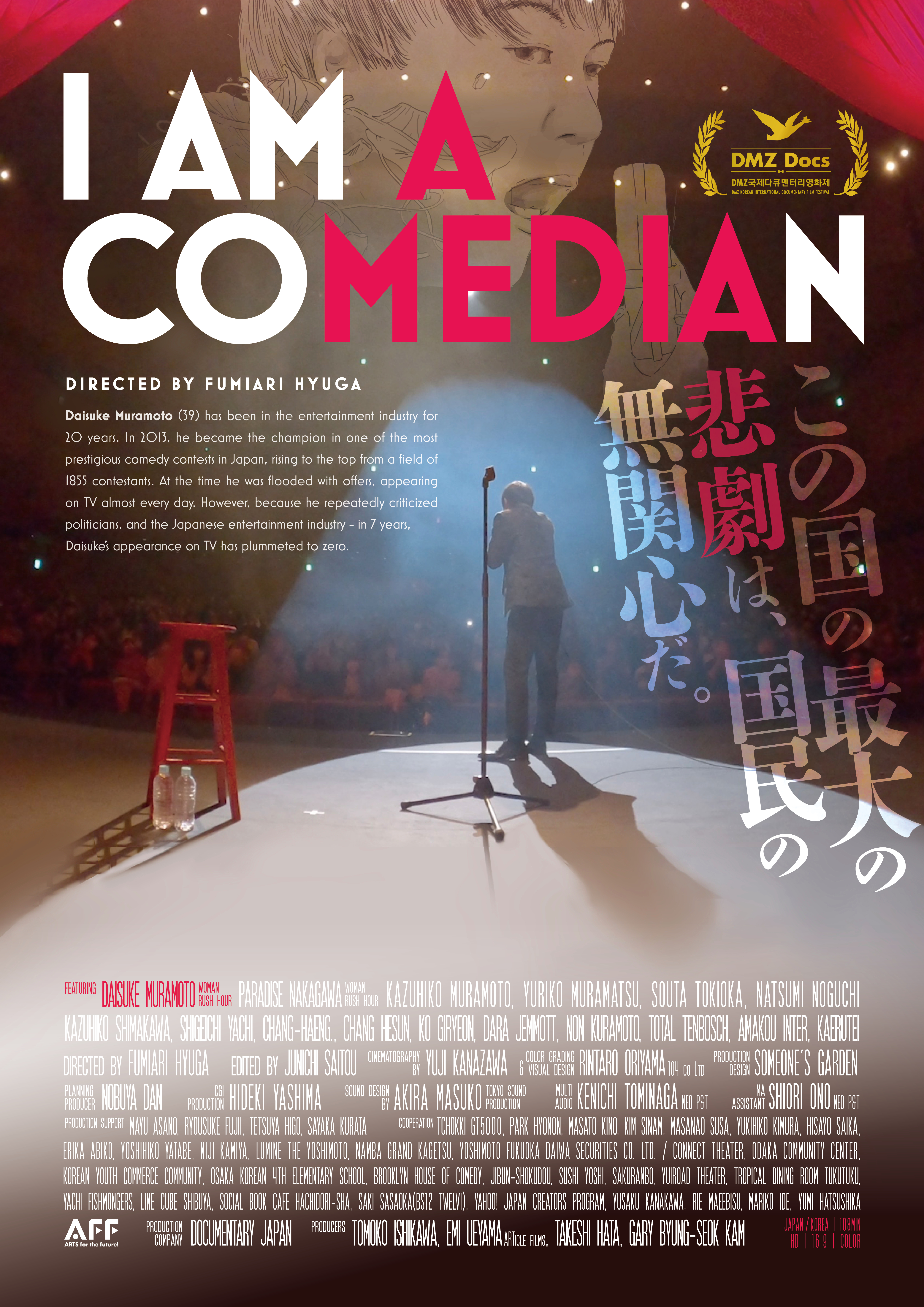
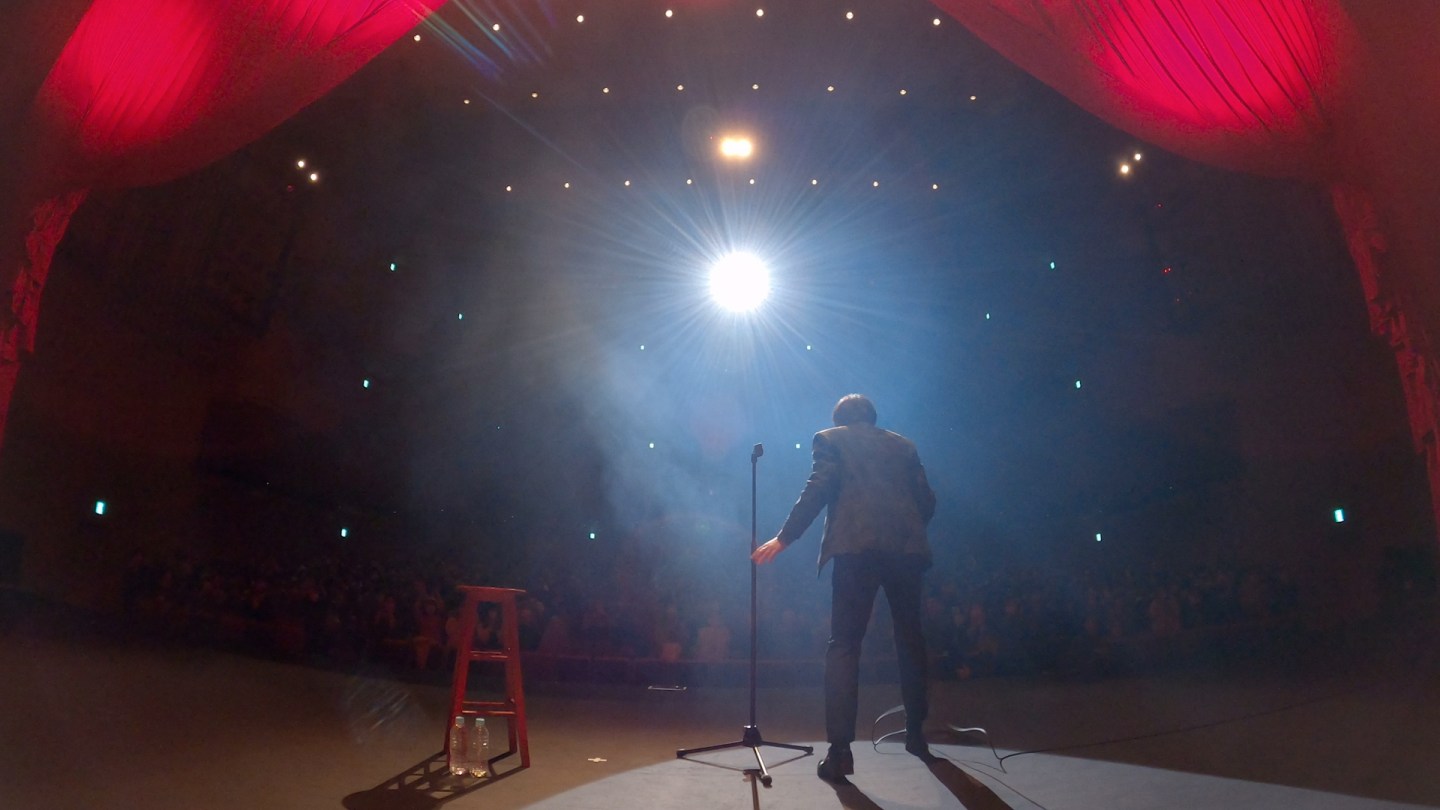
Can comedy change the world? Daisuke Muramoto was once one of the most popular comedians in Japan appearing regularly on television screens across the nation, but the moment he began to joke about serious subjects such as the Fukushima Nuclear Disaster, Comfort Women, discrimination against ethnic Koreans, and the US military bases on Okinawa, his bookings swiftly declined. Fumiari Hyuga’s documentary I am a Comedian (アイアムアコメディアン) in part explores the concept of freedom of speech in a nation in which taking about sensitive issues makes people uncomfortable and is also a portrait of a wounded idealist who in the end wants to make friends if only through “upsetting” people.
Even Daisuke’s mother says he “upsets” her every time they meet so it’s often easier to communicate with him through text message and email. He can certainly be blunt and at times unthinking but it does not appear that he has any intention of hurting people’s feelings only of speaking his mind and perhaps encouraging them to think about things they’d rather ignore. It seems odd to him that the TV stations aren’t interested in his “controversial” comedy and especially NHK which is funded by the licence payer so doesn’t have to worry about upsetting sponsors. What it does have to worry about, however, is dealing with viewer complaints and so you can see why they’d rather self-censor than deal with aggressive telephone calls and letters from people who don’t agree with Daisuke’s point of view and are offended.
Daisuke insists on his right to offend and plans to move to America where he thinks there is more freedom of speech and stand up comedy is necessarily “political”, but the inevitable paradox is that the issues he wants to comment on are all those of contemporary Japan. Talking to a Japanese comedian fluent in English who has been performing in New York for some years, he tries out a joke about Catholic priests but she just looks at him bemused not quite knowing what to say. Eventually she explains that though it’s not something people might be familiar with in Japan it’s been done to death in America and some comedians have based their entire careers on making jokes about the Catholic church so it’s not a good angle for his stateside debut. He may be able to speak his mind in America, but as an outsider as yet unfamiliar with the culture would he really have very much to say that isn’t simply recycled outrage aside from an actually quite funny Trump-related one liner?
Getting a mad idea and diving straight in seems to be very on brand for Daisuke whose mother and school friends recall a sudden determination he had as boy to go to Brazil and become a footballer despite never having played football before and not belonging to any club (he started taking monthly lessons but soon gave up). His grand plan is to change Japanese society through laughter, confronting people with difficult issues and making them think so maybe they’ll take their new ideas to the ballot box. But most people, including his own father, think he’s being naive and if he really wants to change society he should get into politics instead. For all the support he receives from those who appreciate his frankness, there are also those who resent his attempt to inject his views into their entertainment.
As for Daisuke himself, he admits to being a wounded soul occasionally insecure as a middle school dropout afraid that people look down on and laugh at him for unintended reasons. He recounts suicidal thoughts in his youth caused by his sense of futility and the fracturing relationship between his parents who later divorced. Several times, his routines turn dark and end on a worrying note of sadness as Daisuke abruptly retreats from the stage and thanks the audience for saving his life. After learning that his farewell tour will be cancelled because of the coronavirus, he cries backstage as if everything he has has suddenly been taken from him. In Japan he plays 1000-seater venues despite his controversial status, but finds himself once again playing tiny rooms in bars in an attempt to make it in America. Some of the things he says may upset people, but as he later suggests it’s less about liking or disliking than recognition and what he’s trying to do is see others equally, meeting them eye to eye with an unflinching gaze. Daisuke finds the humour in his tragedy and uses it as a reason to live like spotting a star in the darkness. Can comedy change the world? Maybe, or at least change the world within the man.
I Am a Comedian screened as part of this year’s Nippon Connection.
International trailer (English subtitles)
 Windows on Worlds