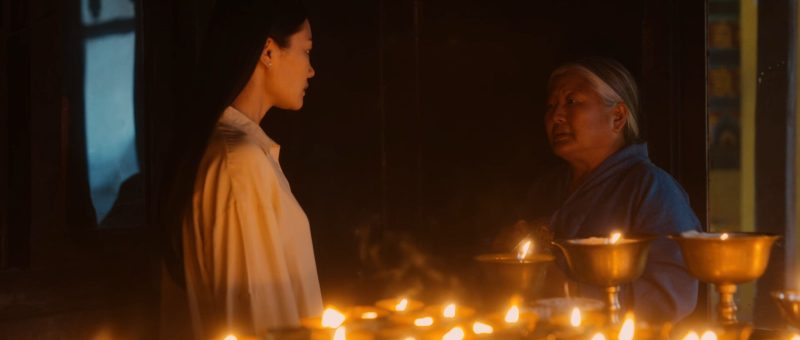
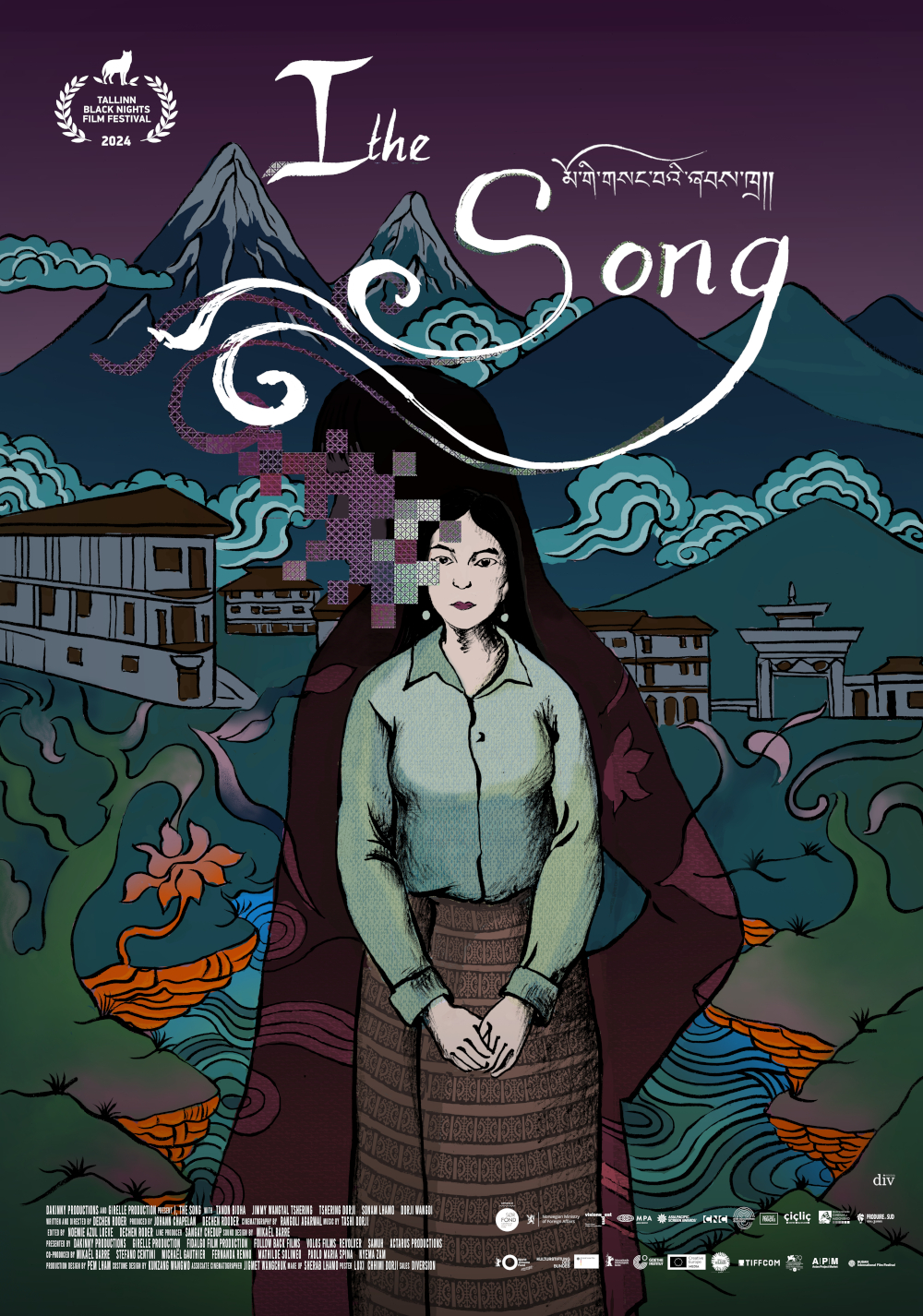
Nima’s (Tandin Bidha) boyfriend Penjor tells the tourists who come into his restaurant to experience the local culture that Bhutan is one big happy family where everyone knows everyone. This will turn out not to be the case, as Nima finds herself mistaken for someone else and struggling to affirm her own identity when everyone begins to tell she is someone she knows she is not. Dechen Roder’s I, the Song (མོ་གི་གསང་བའི་ཞབས་ཁྲ) paints a slightly less rosy vision of the so-called happiest nation of earth in which women like Nima are oppressed by patriarchal standards that are so deeply ingrained she had barely noticed them before.
Nima’s outrage runs slightly deeper than the frustration of being accused of something she hasn’t done partly because of the shame and embarrassment involved with being associated with an erotic video, but also because of its inevitable consequences. She’s let go from her job as a schoolteacher when parents complain after identifying her as the subject as a viral “blue video,” one clearly shot and uploaded to the internet without the woman’s consent. No matter how much Nima protests that it isn’t her, nobody believes her. Not only is she fired from her job, even her boyfriend distances himself from her. He scoffs a little resentfully that she’s always so proper, yet has apparently done something like this with another man. Nima is indeed quite “proper”, a little stiff and repressed. She lives her life in a conservative way, always demure and polite. It is difficult to believe that she would have had a one night stand with a man who filmed their encounter, but despite the incongruity, everyone assumes she must be lying to protect her reputation. Nima determines that the only thing to do is find the woman in question and get her to confess so she can prove to them that it really isn’t her.
But that proves a little more difficult than she first assumed it would, because every lead she turns up turns cold. Meto has disappeared into the ether like a ghost. Some say she went to America, as Nima herself apparently once did, though she doesn’t seem particularly worldly. In any case, many remark that people change after they go abroad, almost as if they were equating it as a kind of death or transition to another world. One of Meto’s old friends even suggests Nima actually is Meto having returned from America with a new identity and changed personality. The more she investigates Meto, the less certain Nima becomes of herself. What was so wonderful about your life, Meto’s former boyfriend Tandin (Jimmy Wangyal Tshering) asks her when she explains why she’s looking for Meto and Nima has to admit that maybe she doesn’t have an answer.
In looking for Meto, is she of course really looking for herself but Meto has been a lot of people too. Nima discovers that Meto came from a small village to reclaim a song that stolen by the city. Meto’s grandmother says that bad things will happen in the village if they don’t get it back, but how exactly can you return a song? In the end, Meto has become a song to Tandin who struggles to accept her sudden absence assuming she must have just left him and decided to move on without a word as she apparently had from other lives before this. In a way, Nima is returning the song of Meto in learning to sing it, bringing it home to her grandmother as if closing a loop.
What she eventually realises is that it shouldn’t matter if it was her in the video or not. The shame wasn’t Meto’s to bear, and investigating her fate she uncovers a dark history of sexual harassment and exploitation. Using her newfound identity, Nima tries to get justice for Meto by reporting the man who did this to her as a means of standing up for herself and the other women of Bhutan held to unfair double standards while men like Meto’s abuser are free to continue abusing their authority. She has in a way learned to become herself while sort of becoming someone else and reclaiming an identity that should have been hers all along in the discovery of a newfound freedom.
I, the Song screened as part of this year’s CinemAsia Film Festival.
Trailer (English subtitles)