
 Written by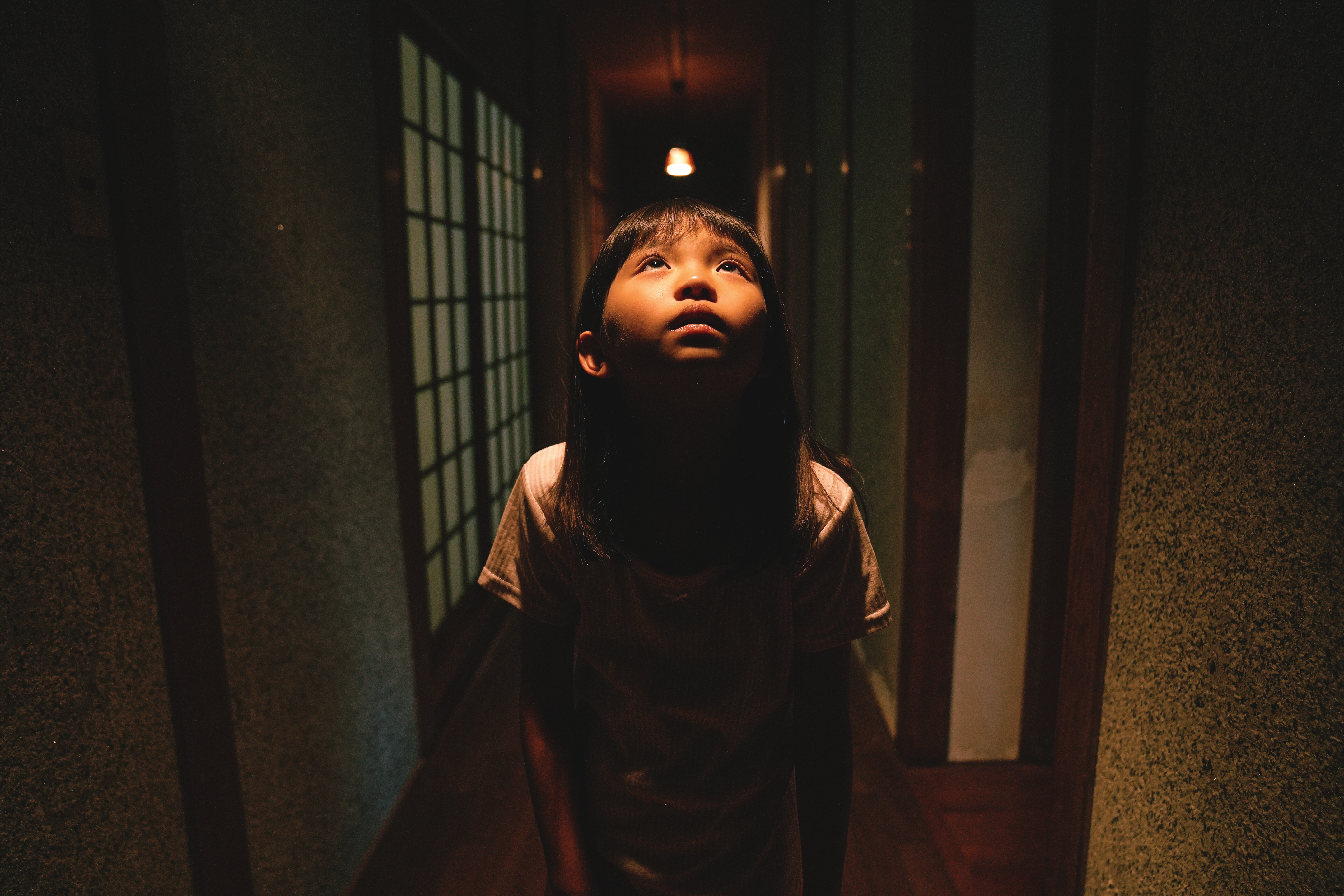
A young woman is confronted with an uncomfortable truth on return to her old hometown in Yuta Shimotsu’s eerie horror satire, Best Wishes to All (みなに幸あれ, Mina ni Sachi Are). Is there really a finite amount of happiness in the world or would there be plenty to go around if only we weren’t all so selfish? The unnamed heroine (Kotone Furukawa) claimed she wanted to become a nurse to “save people” but in the end starts to wonder if the only way to be happy in a cynical world is to meet it on its own terms.
Even so, there’s something decidedly strange about her reunion with her grandparents. She notices them behaving oddly but isn’t sure whether to chalk it up to their age and not having seen them for a long time, only there’s something a little creepy in their overt “happiness” as they cryptically look up at the ceiling as if gazing at a higher power or suddenly start making pig noises before remarking that they should be happy as they eat their bacon that the animal has achieved its purpose in life. Meanwhile, for unclear reasons they forbid her from hanging out with a childhood friend who stayed in town to take over his father’s farm despite showing promise as an artist.
He too cryptically adds that he thinks there’s enough happiness in the world for everyone to have some without needing to hoard it, adding to the heroine’s unease as she tries to investigate the strange noises coming from behind a locked door in her grandparents’ home. Soon, she begins to discover what it is that makes them “happy” and is confused and appalled, unsure whether she should believe her eyes or has actually gone out of her mind in this already quite weird place.
On leaving the city, she’d paused on a pedestrian crossing to help an old lady with her bags while a salaryman had knocked hers out of her hands by walking into her. She was the sort of person that thought it was important to help others or at least to be considerate, but is confronted with an uncomfortable truth in being asked if she can go on pretending that her happiness isn’t bought with the suffering of someone else somewhere in the world even if they aren’t exactly “visible” to her. She tries to revolt and reject the strange goings on at her grandparents’ but is told that it’s the way of the world, that it’s happening everywhere, and that really she knows but has chosen not to see because when it comes right down to it she’s as selfish as everyone else and isn’t willing to sacrifice her own happiness to “save” someone else from suffering.
Meanwhile, she realises that some families are being shunned in the village for resisting and these families largely are “unhappy”, though undoubtedly some of that at least must be down to their stigmatisation. She and her friend save a high school boy who was being bullied, but even he later relates to her that he’s decided to “live smart” by going along with the local practice even if it doesn’t seem right to him because it’s pointless to resist when everyone is doing it. Another rejectee also tells her that the village philosophy is a fallacy because even if someone “should” be miserable there’s no way to know how they really feel and if you’re only basing your idea of “happiness” on external validation then of course you’ll always be miserable.
Confronted with a bizarre series of events, she begins to wonder if she’s going out of her mind and none of this is really happening even while pressured to submit herself to the ways of the village. In effect, she’s being asked to choose her level of comfort with complicity, acknowledging directly that her “happiness” is based on a quite literal exploitation, drained out of those less fortunate than herself. Her friend remained convinced that there is plenty of happiness to go around without needing to extract it from others, but the lessons she learns are more cynical, no longer stopping to help old ladies with their shopping and suspicious of those who do while proudly declaring herself “happy” with her new “reality”. Shimotsu excels in finding the eeriness of the every day in which an ordinary jar of miso or a workman’s tool box can seem to radiate evil while the grandparents’ ordinary house has an incredibly ominous atmosphere that raises a note of uncanniness in their “happy home” suggesting that their quasi-beatific state is more akin to curse than blessing.
Best Wishes to All screens in New York July 27 as part of this year’s JAPAN CUTS.
Trailer (no subtitles)
 Windows on Worlds