 Written by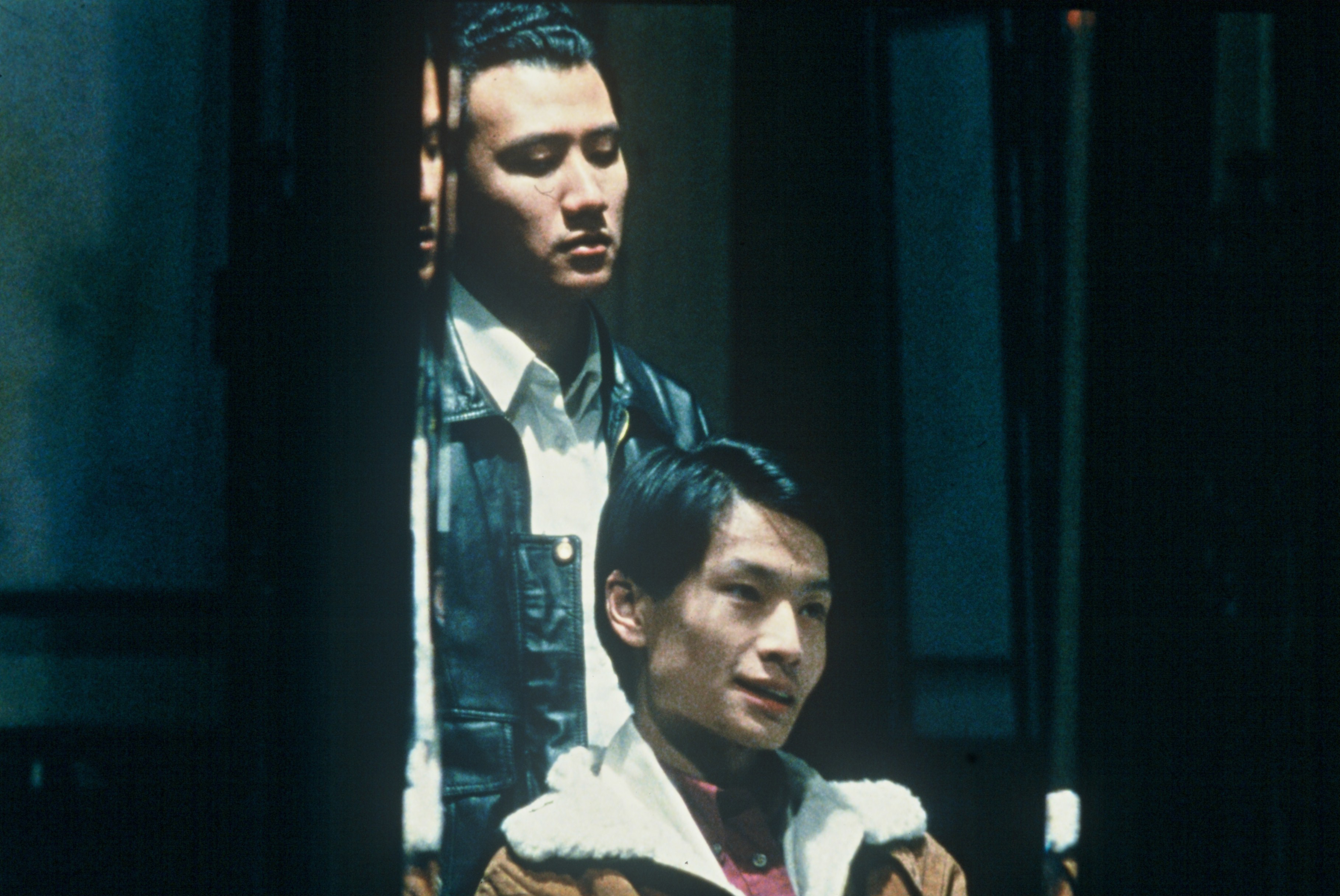
Text of an intro given at the Barbican Cinema, 29th June, 2023
East Palace, West Palace (东宫西宫, Dōng Gōng Xī Gōng) is often described as the first film to explicitly depict homosexuality in contemporary China though there had of course been films with strong queer subtext even as far back as Xie Jin’s Two Stage Sisters in 1964 which followed two female performers of Chinese opera who take very different paths leading up to the foundation of the People’s Republic in 1949. Chen Kaige’s 1993 landmark drama Farewell My Concubine was set partially in a similar time period and also takes advantage of the gender fluidity found in Peking Opera to depict the tragic love of a performer specialising in female roles for his male co-star.
Despite its success on the international festival circuit, Farewell My Concubine was heavily censored on its domestic release and in fact temporarily removed from cinemas. East Palace, West Palace was smuggled out of China for editing in France after filming concluded in 1996 and was submitted to the 1997 Cannes Film Festival without receiving government clearance. A similar fate would befall China’s first explicitly lesbian film, Fish and Elephant, a print of which was lost en route to the Venice film festival in 2001 though it managed to screen at a few international festivals on videotape.
Director Zhang Yuan was not able to travel to Cannes to support East Palace, West Palace because the authorities seized his passport on his return from a trip to Hong Kong while they had also pressured the producers of Zhang Yimou’s Keep Cool to boycott the festival if they insisted on screening the film. Cannes responded by empty chairing Zhang Yuan in order to make his absence highly present. Zhang had already been banned from filmmaking in a 1994 crackdown along with a series of other directors including Wang Xiaoshui (So Long, My Son) and Tian Zhuangzhuang (The Horse Thief, The Blue Kite) because of the transgressive nature of his work which often focused on marginalised communities and painted an unflattering portrait of contemporary China.
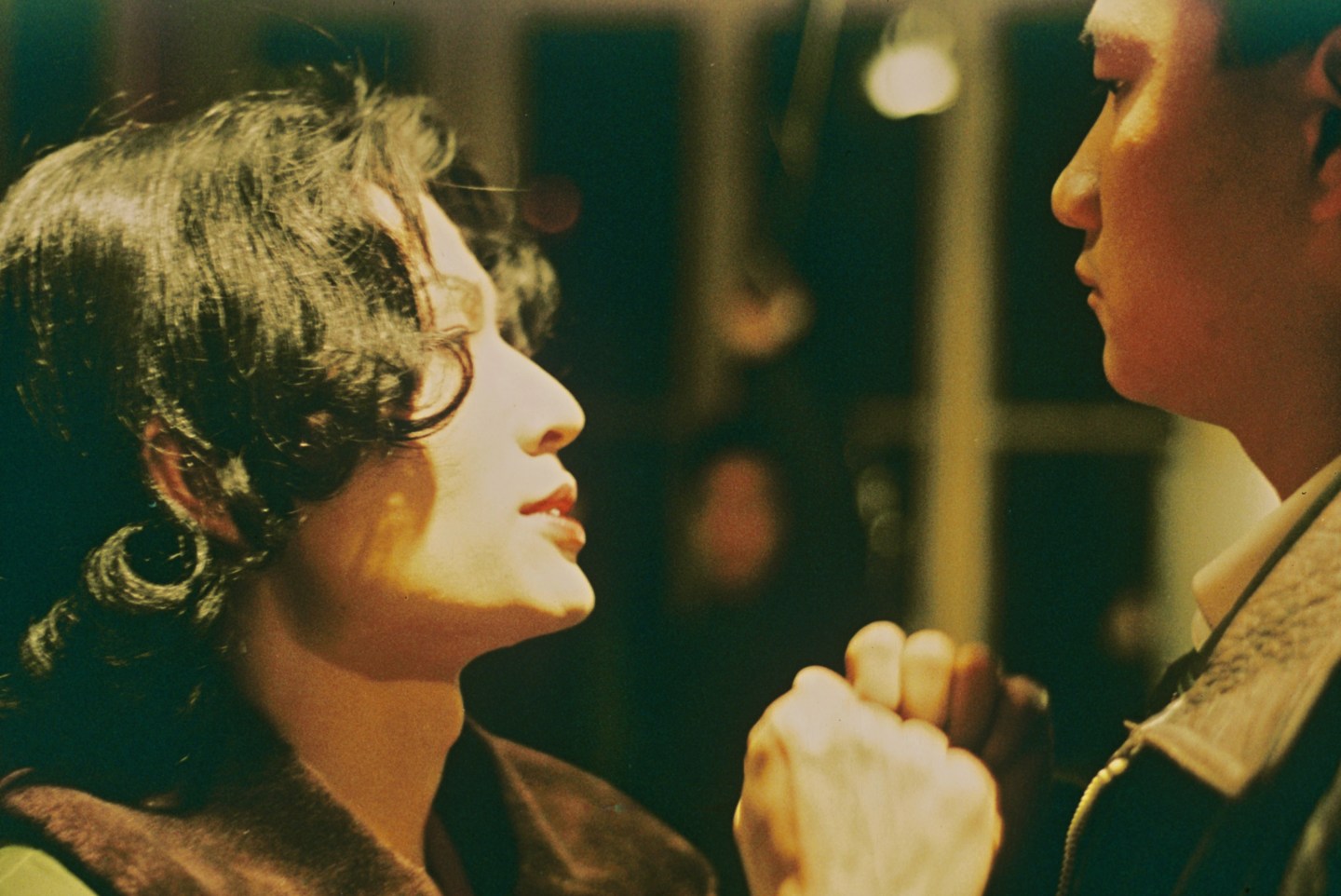
East Palace, West Palace which takes its title from a phrase referring to the mens’ public toilets in on either side of the Forbidden City widely known as gay cruising spots, is no different and depicts the lived reality of gay men in the conservative society of 90s China. Homosexuality was not against the law at the time but gay men were often harassed by the police and accused of the nebulous offence of “hooliganism” as you will see in the film when the park is raided and the men rounded up to be humiliated by the local police force who insult, threaten, and beat them though they have not done anything illegal. Led away by a policeman, Xiaohua, A-Lan, a young gay man, transgressively kisses him on the cheek and takes advantage of his shock and confusion to run away. Zhang’s implication is that A-Lan runs in order to be chased, and the relationship between himself and the guard is an allegory for that between the oppressed populace and the authoritarian regime in post-Tiananmen China which is essentially sadomasochistic in nature.
Zhang’s previous films had largely been shot in a hyper naturalistic, documentarian style but co-scripted by Wang Xiaobo, East Palace, West Palace represents a radical departure in its overtly theatrical overtones in which the balance of power is constantly shifting and prisoner and guard become in a sense interchangeable. Like Two Stage Sisters and Farewell My Concubine, it plays with the aesthetics of Peking Opera in the allegory A-Lan offers while asked to explain himself by Xiaohua in what is really a complex dance of seduction in some ways reminiscent of Kiss of the Spider Woman in which Xiaohua is also forced to confront his own possibly latent homosexuality.
It’s also worth noting that the actor who plays the policeman Xiaohua, Hu Jun, would go on to star in another Mainland queer classic as the closeted businessman at the centre of Stanley Kwan’s Lan Yu who falls in love with a young student amid the Tiananmen Square protests. Si Han, who plays A-Lan, was like the stars of Zhang’s earlier films a non-professional actor though he was not recruited from the Beijing gay scene but had been the makeup artist with Zhang’s film crew. Unfortunately given the high quality of his performance he has no further acting roles to date, though he does appear as himself in the film Looking for Tsai and resettled in Sweden after the film was completed where he is now an art curator. Those more familiar with Chinese cinema may also be surprised to spot a young Zhao Wei, also known as Vicky Zhao, as the middle school student in A-Lan’s flashbacks who went on to become for a time one of the highest paid actresses in China and made her own directorial debut with the film So Young in 2013.
After the film’s release, Zhang Yuan shifted increasingly towards more mainstream filmmaking and picked up the Best Director Award in Venice for Seventeen Years which was ironically the first film to be given approval to shoot inside a Chinese prison. Nevertheless, he continued to address queer subjects in a short documentary focussing on transgender dancer Jin Xing who was the first person to publicly undergo gender affirming surgery after beginning her career in the military performance troupe and subsequently became a popular TV personality with her own talk show, and in the 2014 narrative short Boss, I Love You which is completely wordless and explores same sex attraction within the power dynamics of the contemporary society as a chauffeur falls for his callous boss.
In the present day, the Mainland censorship regime still retains a strong bias against representations of queer people and relationships leaving LGBTQ+ cinema mainly in the underground and independent sectors where they are more likely to be picked up for international festivals as was the case with transgender drama The Rib from 2018 which focusses on a woman’s struggles to get her conservative father’s signature on a permission form she inexplicably needs for surgery despite being over 40 years old, or A Dog Barking at the Moon which won the Jury Prize Teddy Award in Berlin in 2019 and explores the destructive legacies of repression and marriages of convenience. In any case, East Palace, West Palace remains a defiant time capsule of queer life in post-Tiananmen China and a quietly beguiling romantic fable in the oscillating waltz between power and the powerless. I hope you will enjoy it.
 Windows on Worlds