 Written by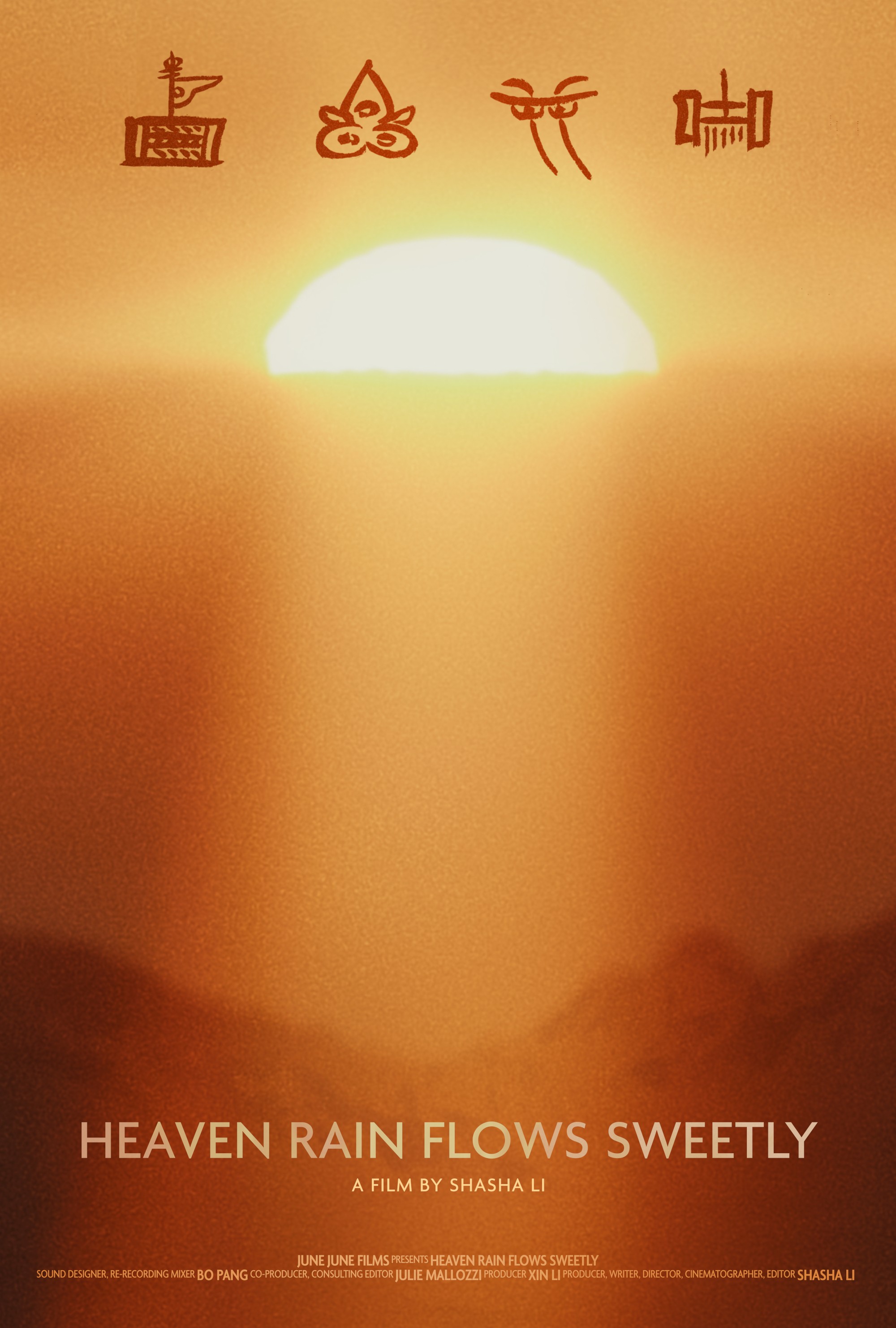
In her personal essay film Heaven Rain Flows Sweetly, Li Shasha finds herself meditating on her rootless life and traditional attitudes to the natural world when confronted firstly by ecological disaster and then by global pandemic. In the traditional culture of the Nakhi People among whom Li grew up in the remote landscape of the Himalayas, they say there was once a war between humanity and the spirits because humanity took too much from the Earth and gave nothing in return. As wildfires rip through Oregon where she handled settled and begun a garden, she wonders if we haven’t reneged on our bargain and are paying for our lack of regard for nature.
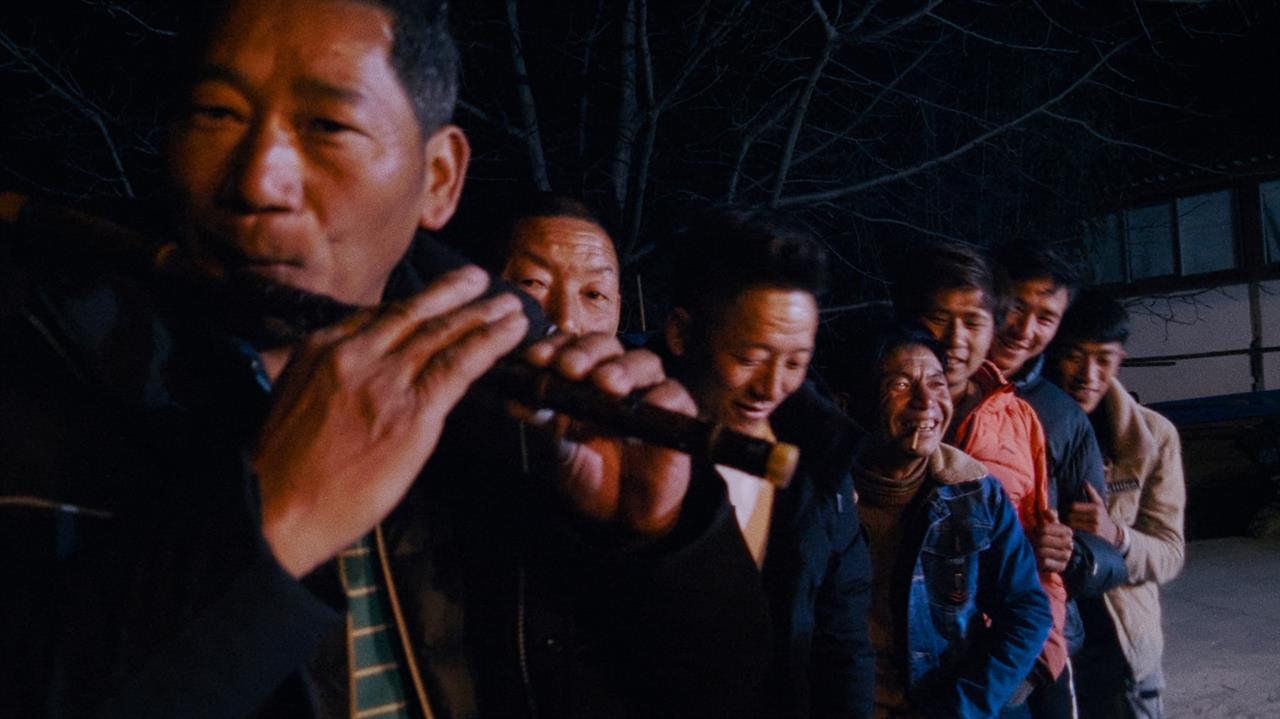
On a return to the US, it suddenly seems odd to her that grasshoppers and frogs appear only as motifs on shop window displays amid the grey concrete of the cities. As child, she had taken part in rituals honouring fire but now sees its terrifying potential as the world around her is reduced to ashes. In the wake of disaster, she pays a visit home to see the grandmother who raised her while her her own mother studied abroad but encounters a different kind of destruction as the village she once new has become a living museum. Now designated a UNESCO World Cultural Heritage Site, most of the original residents have moved away and rent their traditional-style homes out to the throngs of tourists which now descend on the region. Wandering around the town she sees a bustling night life scene in which the traditional dance of Nakhi People has been repurposed as entertainment for outsiders drinking in the many bars.
In order to rediscover Nakhi culture she must head further into the mountains, but also observes that this way of life has also been disrupted by encroaching modernity. She finds a little girl who, as she once was, is being cared for by grandparents while her brother and mother work in the city. Her cousin has returned from university for the summer and remarks how much more difficult it is to readjust to rural life than it is become used to urban living. It seems much hotter here than he remembered, he’d never have thought to bring a hat, and given the ongoing drought they now farm corn rather than rice. The young man asks if America is more ecologically friendly than China, which seems like an ironic question but prompts Li into a reconsideration of her own relationship with the natural world along with the uncomfortable reminder that as she walks through America she treads on the land of another displaced indigenous people.
Li celebrates Lunar New Year with the villagers and only hears of an imminent lockdown and a mysterious new disease that seems again like a kind of rebuke for the way mankind has treated the Earth. Presented with a choice, she can’t decide whether to stay or go and reflects that far from uniting us the pandemic has presented only more division. But then even on her return to the US she finds new ways of being and echoes of a more traditional culture in a local community garden that reminds of the way the villagers live tending to the earth with togetherness and replacing what one takes in a gentle symbiosis with nature.
Using mainly English when talking about her life in America and Mandarin for that in China, Li laments she knows no Nakhi and has lost touch with her culture which seems to be retreating even further in the face of encroaching modernity. Even so, she begins to reevaluate the balance of her life while asking if it’s already too late or if we, like her ancestors, can find new ways to repair our relationship with nature and learn to live in harmony with it once again. Li’s poetic voiceover lends a touch of melancholy to her exploration of all we’ve all lost in a bid for modernity but also perhaps a note of hope that scorched earth can still be replanted though it may take many hands to do so.
Heaven Rain Flows Sweetly screened as part of this year’s DOC NYC and is available to stream in the US until Nov. 26.
 Windows on Worlds