 Written by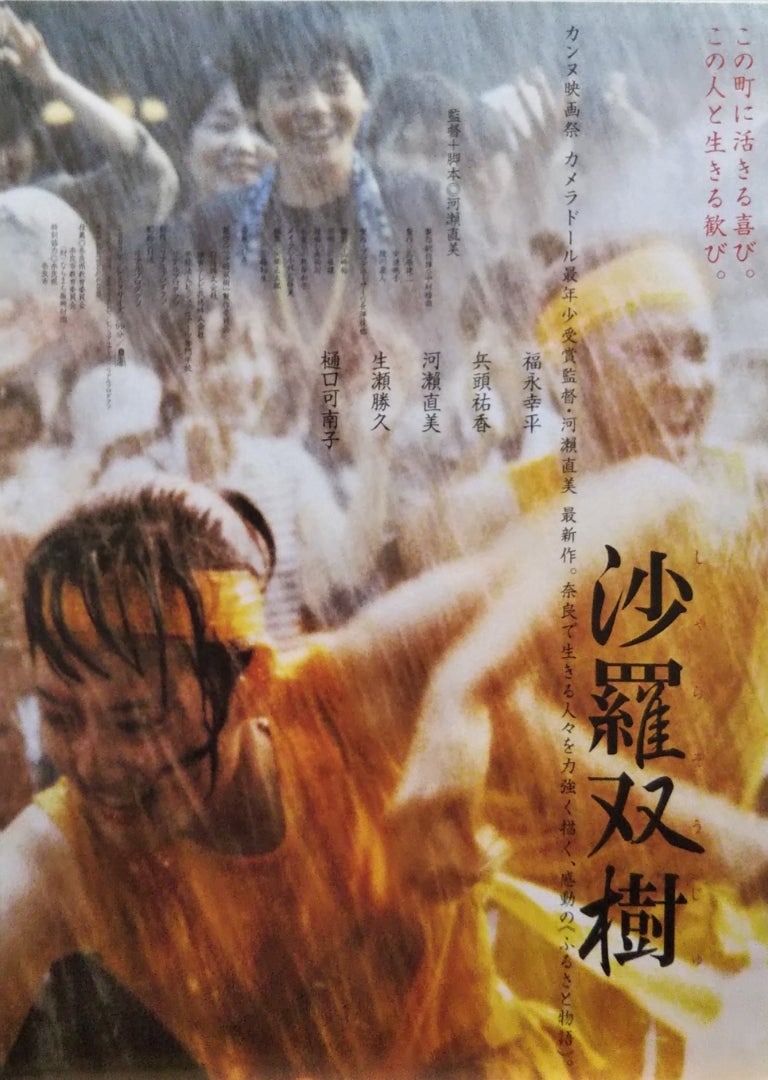
Familial absence and painful nostalgia once again take centre stage in Naomi Kawase’s third feature, Shara (沙羅双樹, Sharasoju), in which she also stars as an expectant mother still contending with tremendous loss. Set once again in the director’s hometown of Nara, Shara continues Kawase’s key themes in its gradual healing of a fractured family which finds itself at a point of departure, struggling to accept the path forward but finding strength in friendship and community spirit as they prepare to welcome a new life both figurative and literal.
Shooting in her usual documentary style, Kawase opens with an ethereal handheld sequence wandering through an antiquated atelier until finding twin brothers playing with charcoal ink in a pure white room. Suddenly one of the boys, Shun, runs off and is chased by his brother, Kei, as the chanting of monks and the sound of bells accompany them marking this as a festival day. At some point, the boys switch places. Shun pauses to bounce off a car and realises his brother has turned a corner and can no longer be seen. He looks for him in vain before returning to his mother, making preparations at the temple, and explains what’s happened but Kei is not found nor ever seen again.
An unannounced time jump moves us on some years into the future in which Shun (Kohei Fukungaga) is now a moody teenager obsessively painting a portrait of his absent brother, while his mother, Reiko (Naomi Kawase), is heavily pregnant and father, Taku (Katsuhisa Namase), is once again preparing for the festival. The family is, of course, defined by its absence, the unanswered question of Kei one they each actively avoid trying to address even as the impending birth of the new baby forces them into a reconsideration of their familial bonds. While Reiko tends to her flowers, which is to say to life, Taku busies himself to the street festival while only Shun remains definitively locked within his grief, isolating himself to finish the painting while tempted away from broody introspection by his pretty neighbour, Yu (Yuka Hyodo), who we learn is also contending with displacement and identity in learning that her mother is actually her aunt who had slightly problematic feelings for her older brother who like Kei simply disappeared one day and never returned.
As often in Kawase’s filmmaking, the literal truths may be less important than the emotional or the spiritual. Kei’s body is eventually found, an event greeted with stoic resignation by the parents who must perhaps have been expecting it, while only Shun is thrown into chaotic despair in once again being confronted not only by his loss but the guilt and the finality. Both Reiko and Taku declare that it’s time to “face” things, something they have perhaps been refusing to do even while Shun was literally facing his brother in painting his portrait. Taku explains to his son that there are things which can be forgotten, others which must not, and more that must be. Painting a calligraphy banner with the characters for shadow and light, he tries to show his son a new way forward.
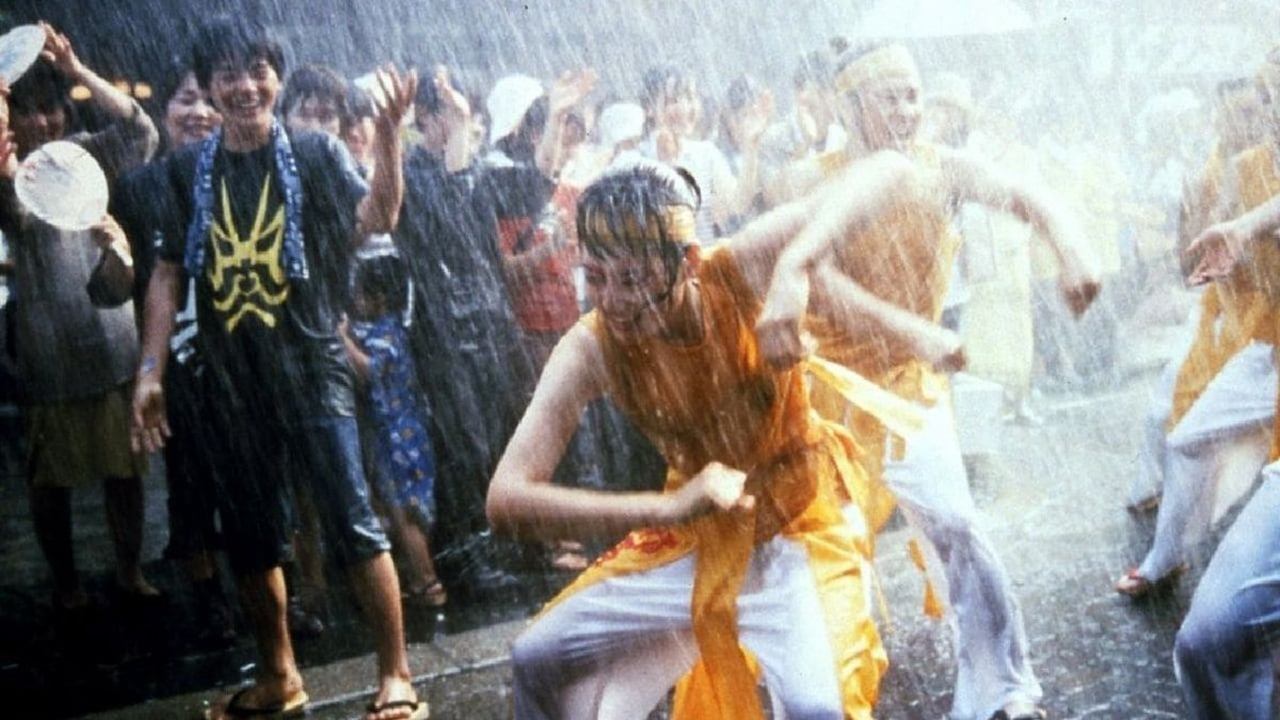
Yet it’s the local festival with its traditional Basara dance which finally allows Shun to find the path out of his grief. Kawase captures the local planning meeting with documentary rigour, Taku listening patiently while a local man explains the point of their festival is to make sure that the whole community is involved, something later made plain when Shun, hitherto a marshal, is invited to join the dance which continues even as the rain falls. Taku’s final speech in which he describes Basara dance as “a unique event in which each of us can shine our brightest” takes on new significance as the sun finally comes out. “When you’re offered the opportunity to shine you must grab it”, he concludes, hoping that the spirit of Basara dance will make its way into the rest of their lives.
Elliptically structured and shot with Kawase’s trademark handheld, the film finds its way back to where it started as the chiming of the temple bell recurs with its air of anxious alarm, but is finally quieted, giving way to the peaceful summer sounds of the cooling breeze and ubiquitous cicadas as the family is perhaps repaired with the advent of new life, not replacing the old, but beginning again even in the midst of such unanswerable grief.
Trailer (no subtitles)
 Windows on Worlds