 Written by
A actor whose promotional tour is interrupted by the coronavirus pandemic finds himself pulled into the toxic relationship between a hotelier/film festival organiser and a formerly homeless man he was trying to help in the first documentary feature from Junya Hayashi, Budget Hotel Family (ビジネスホテル・ファミリー). For one reason or another, the actor tries to help his friend evict the man who causes nothing but trouble, but discovers that there’s a weird bond between them and however much he tries to encourage their separation they somehow end up reuniting.
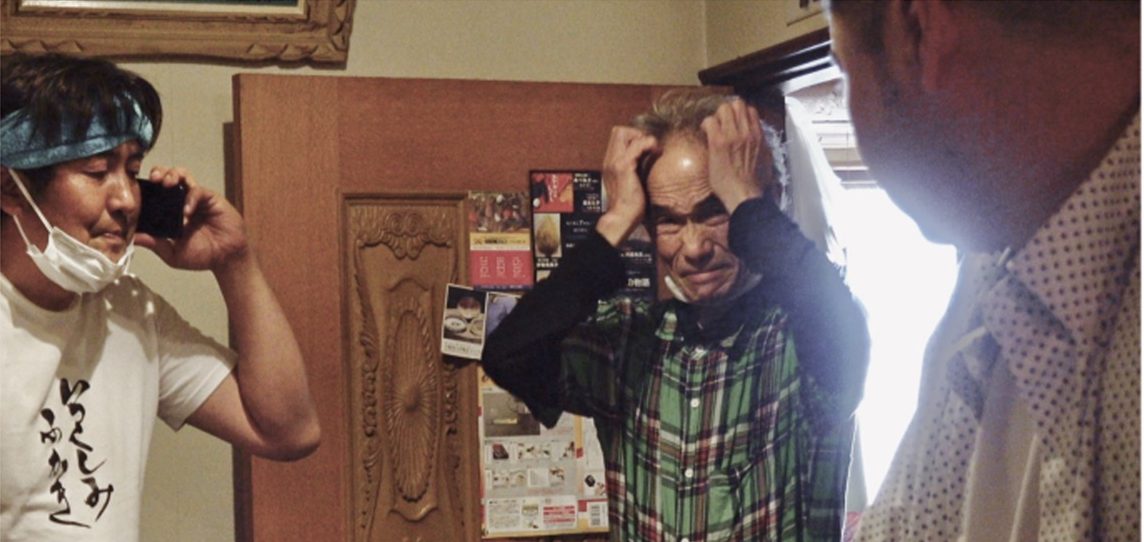
While on the road promoting His Bad Blood in which he had starred, actor Yu Toyama is stranded in Aomori in northern Japan unable to return to Tokyo because of the coronavirus State of Emergency. Remembering that an acquaintance from the Abashiri Film Festival, Katayama, owns a small hotel, he asks him if he can travel there directly with the director of this film, Junya Hayashi, with whom he is making a documentary. On their arrival, however, the pair are soon introduced to Itagaki, a 74-year-old man Katayama offered a place to stay after discovering him washing clothes at the river.
Toyama explains that Katayama is a friendly man who makes a point of taking care of filmmakers who visit the Abashiri Festival and has formed strong and enduring friendships with many of them. His family own a small, budget hotel named “Family” which Toyama is shocked to discover has become quite rundown and is currently suffering due to the coronavirus pandemic. In fact, Katayama is currently training to become a taxi driver to help make ends meet. From what he says, it seems Katayama had a history of taking in people in need and offering them a place to stay while they got back on their feet, but Itagaki has been continually taking advantage of his hospitality and Toyama attributes some of the hotel’s decline to Itagaki’s problematic presence.
During their first meeting, Toyama seems to find Itagaki amusing and even talks about offering him some work after admiring his drawings displayed on walls around the room. But on interviewing him alone, his view begins to change. Itagaki seems entitled and manipulative, calling Katayama all sorts of names while accusing him of having been violent towards him and suggesting he may go to the police to have Katayama arrested. There is something undeniably chilling in the direction his conversation takes as he makes wild accusations that Katayama is planning to kill him but if he tries anything he’ll give as good as he gets.
Any good will Toyama might have had towards Itagaki dissipates, but then Katayama doesn’t deny that there have been physical altercations between them in the past, while it also seems clear that Katayama has been drinking a lot and may not have a full comprehension of what has actually been going on. In any case, though he has repeatedly asked Itagaki to leave, he never does and for whatever reason Katayama seems incapable of cutting him off completely. It seems in some ways he may be lonely and identifies with Itagaki as he had with the protagonist of His Bad Blood as someone rejected by mainstream society, feeling unable to abandon him knowing no one else is going to help Itagaki and possibly for good reason in light of everything he’s put him through.
Not only has Itagaki outstayed his welcome he often goes drinking in local bars and starts tabs in Katayama’s name while he even manages to get kicked out of hospital for ignoring the curfew and starting a fight with a doctor, having the audacity to tell them and the hotel they sent him to that Katayama will pay his bills. When they eventually get him to move out, the exasperation on Toyama’s face is palpable on seeing him move into a really nice, spacious, modern two-bedroom apartment which whichever way you look at it seems well beyond his means given that he’s long been sponging off Katayama and maybe others claiming he couldn’t survive on his pension benefits.
The fact Katayama found him at the river lends Itagaki the air of a predatory Kappa who’s already “famous for doing bad things” and is content to bleed Katayama dry while he can’t seem to pull himself free from whatever spell Itagaki has cast over him. The real question might be why, aside from the film, Toyama continues to play the role of referee between these two people who aren’t related but seem to be bound by some inexplicable force despite his warnings that they are obviously not good for each other. The jury seems to be out on whether Katayama has finally escaped but there is a poignancy in his resulting loneliness in the absence of Itagaki’s evident toxicity.
Trailer (no subtitles)
 Windows on Worlds