Two Blue Stripes (Dua Garis Biru, Gina S. Noer, 2019)

In less enlightened times, unplanned teenage pregnancy was sometimes seen as a grand tragedy involving the potential ruin of at least three lives. Thankfully, in many places at least, it isn’t quite like that anymore though for the young couple at the centre of Gina S. Noer’s sensitive yet lighthearted drama Two Blue Stripes (Dua Garis Biru) their impending parenthood exposes a series of divisions in a changing society as their families, one poor and religious, the other wealthy and secular though obsessed with respectability, react in quite different ways to the news their child is about to have a child of their own. 

At 17, Bima (Angga Yunanda) and Dara (Adhisty Zara) are a bashful high school couple eagerly planning their futures. While Bima is not exactly a top student, Dara gets good grades and is obsessed with K-Pop, hoping to travel to Korea for university. One day however they get a little carried away and some time later Dara begins to suspect she may be expecting. Originally opting for an abortion, she later finds she can’t go through with it and the young couple decide that if only they can keep the pregnancy a secret until after graduation they’ll be able to figure something out. Unfortunately, however, the ruse is uncovered when Dara is taken ill during a PE session and accidentally reveals the pregnancy while worried about the baby. 

The surprising thing is that Bima’s parents who are devoted to their Islamic faith are the most sympathetic, quickly accepting that what’s happened has happened and needs to be dealt with as calmly and sensitively as possible if also somehow disappointed in Bima while quietly proud of his surefooted though naive pledge to take responsibility. Dara’s parents, however, and in particular her mother Rika (Lulu Tobing) are far less understanding, intensely questioning their daughter in the grim “hope” that Bima may have forced himself on her and she is therefore “blameless”. This rather old fashioned, sexist notion of female purity is further borne out by the school who confess that they aren’t allowed to expel Dara because of her pregnancy, but all the same are asking her to leave meaning she won’t be able to take her exams with the other pupils while nothing will happen to Bima who will be permitted to go to class as normal. 

For Rika shame and confusion seem to be the primary motivators. Attempting to sweep the whole thing under the carpet, she begins talking to a pair of relatives who are desperate for a baby and weren’t able to have any of their own in the hope they will adopt. Affluent and seemingly secular, her worry is perhaps only partly reputation and the fear her own parenting will be called in question with the remainder a sense of frustration that a single moment may have undone all her daughter’s hopes for the future along with all the ambitions she had for her. 

Dara, meanwhile, continues to dream of going to Korea hoping somehow she’ll be able to make it work as young mother. For his part, Bima makes it clear that she should be able to fulfil her dreams if that’s what she wants, never trying to tie her down and always keen to shoulder his sense of the burden. Young and in love they want to stay together and try to make a family of their own, but they are also naive little realising both the differences between them and difficulties of supporting themselves independently. Bima ends up working in his father-in-law David’s (Dwi Sasono) restaurant, proving a good employee and perhaps earning his respect but simultaneously losing Dara’s as he slacks off on his studies, she somewhat disappointed to think he might end up waiting tables for the rest of his life exposing her slightly snobbish attitude further borne out by her reaction on arriving at Bima’s comparatively humble family home. 

In an interesting role reversal, however, it is eventually Bima who takes on the stereotypically “maternal” role pledging to stay home and raise his son while affording Dara the opportunity to pursue her dreams. The parents meanwhile also reflect on their failure to properly prepare their children for adulthood, wishing that they had been less bashful and talked properly about sex so that they might have made better informed choices. “How are we supposed to love, to breathe, to be, when it hurts?” asks the plaintive song running over the closing scenes ironically titled “Growing Up”, each of the youngsters perhaps wondering just that as they try to come to terms with their respective choices while embarking on the next stage of their lives no longer children but perhaps no more certain. 


Two Blue Stripes streams in the US until March 31 as part of the 12th season of Asian Pop-Up Cinema.

Original trailer (English subtitles)
The Queen of Black Magic (Ratu Ilmu Hitam, Kimo Stamboel, 2019)

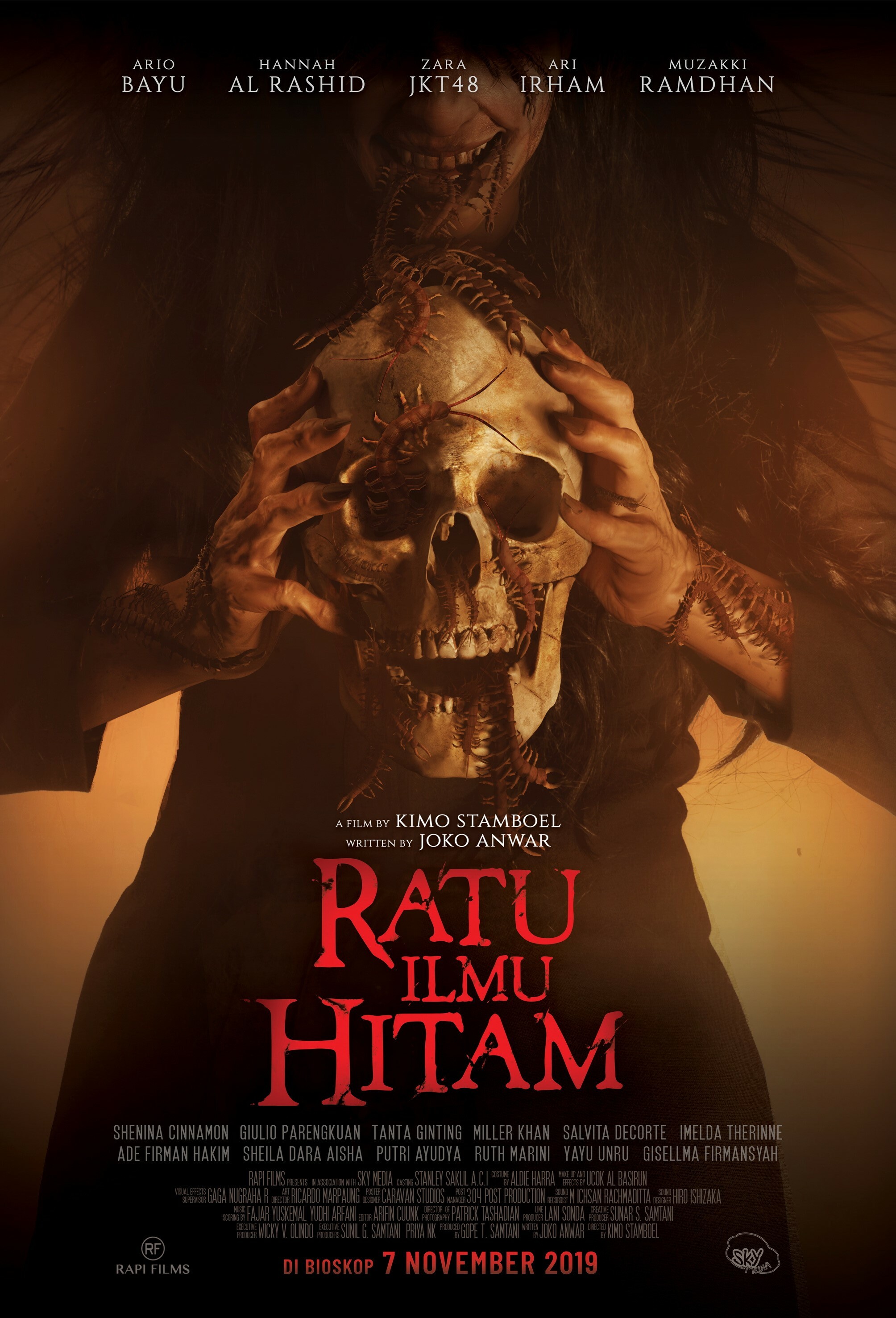
“I’m not here just to punish you, I’m here to create hell” the vengeful tormentor at the centre of Kimo Stamboel’s contemporary remake of the 1981 classic The Queen of Black Magic (Ratu Ilmu Hitam) cooly intones. Reminding her victims that not to know is also a sin, the shadowy villainess has come she says to create hell on Earth because she is uncertain that mortal transgressions will be suitably punished after death and means to ensure those who have sinned suffer accordingly. Quite literally trapped in the space of their trauma, the heroes attempt to find a way out of their guilt and shame but are perhaps confronted as much by themselves as by a witch hellbent on justice as they try to find escape from the traumatic past. 

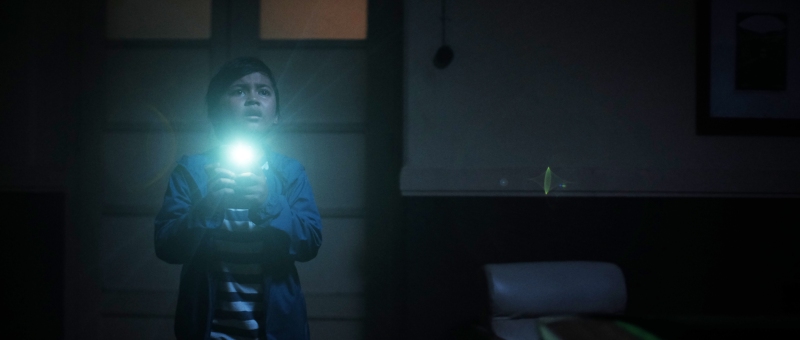
Hanif (Ario Bayu) and his wife Nadya (Hannah Al Rashid) have foregone their planned holiday to Bali to visit the man who ran the orphanage where Hanif spent much of his childhood who is now apparently close to death. This comes as a surprise to their three children who hadn’t realised their father was adopted or really ever thought about kids who don’t have parents, and though they are perhaps annoyed to have missed out on their holiday they are also a little excited to be going somewhere so unusual. Unfortunately however, the family’s cheerful mood is broken when they hit what they assume is a deer on their way to the orphanage casting an air of foreboding over their journey. 

Though it appears Hanif has been “open” with his wife about his past, the same is not necessarily true for his “brothers” Anton (Tanta Ginting) and Jefri (Miller Khan) who have also brought their partners to meet Mr. Bandi (Yayu A.W. Unru), Jefri’s wife Lina (Salvita Decorte) complaining that she knew nothing about any of this until they were already in the car on their way over. Far from a happy reunion, however, the brief sojourn at the orphanage begins to highlight the strain on each of the familial relationships, Lina apparently experiencing a kind of body dysmorphia and preoccupied with her weight while Anton’s wife Eva (Imelda Therinne) is constantly applying moisturiser to guard against a mysterious rash she was convinced was down to flesh eating bacteria but others feel is simply “dry skin”. These will however be the least of their worries as the men vaguely hint on voicing their anxiety that Mr. Bandi’s biological children may sell the estate to developers unsure of “what they’ll uncover”.

This perhaps implies that the now grown up men know more than they’re willing to admit about the dark secrets the orphanage hides, something which Hanif has in any case not shared with his wife who has only a rosy picture of his childhood with Mr. Bandi who eyes her with nervous suspicion even on his death bed. Nevertheless, the men have each been drawn back to the source of their trauma and now find themselves unable to escape without a reckoning, recalling a similar occasion that they tried to run only to find themselves mysteriously brought back as if by some supernatural force. There are indeed dark, other worldly forces in play but also a healthy dose of patriarchal violence, entrenched misogyny, abuse of power, and as the villainess had hinted a wilful tendency not to see especially when it comes protecting the most vulnerable members of society, children without parents who are easily manipulated in the knowledge that, as Hanif originally puts it, they would otherwise die abandoned. 

Justifying a particularly ironic part of her revenge plan, the witch reveals that the orphans may in fact be better off dead than raised by a man like Bandi, something which Hanif himself echoes if not quite with the same intent. Creating her hell, she forces her prey to harm themselves and each other with a variety of weapons ranging from kitchen knives, scythes, and comparatively more modern projectile weapons to insects literally choking the guilty from the inside. The orphanage itself is a place out of time, frozen as it was during Hanif’s childhood, one of the two orphans to have remained behind as mystified by Hanif’s inquisitive son Haqi’s (Muzakki Ramdhan) references to such things as “the internet”, “wi-fi” and “streaming” as he is by the “scary” VHS tape she shows him featuring actual footage of his father and a mysterious figure of legend. Yet even in realising they have allowed themselves to serve poor masters, deceived by a man they trusted, there is a sense the men at least, absent from the final frames, may never be able to free themselves from their guilt, forever haunted by the spectre of those they have unwittingly harmed. An eerie, gory, dread-propelled voyage through human cruelty to supernatural retribution, Queen of Black Magic positions the evil that men do ahead of that performed by vengeful witches looking for spiritual justice as its misused heroes attempt to find accommodation at least with the traumatic past.  


The Queen of Black Magic is available to stream via Shudder in the US, Canada, UK, Ireland, Australia, and New Zealand from 28th January.

Trailer (English subtitles)