Saga Saga (緑のざわめき-Saga Saga-, Aimi Natsuto, 2023)

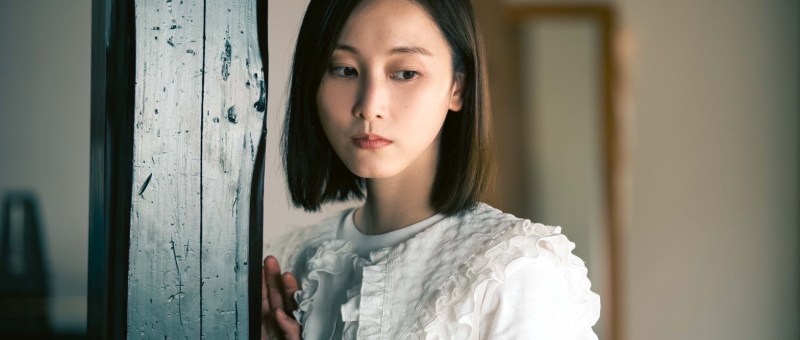
Three women contending with a legacy of patriarchal failure and male violence circle around each other in the picturesque hot springs resort of Ureshino in Aimi Natsuto’s etherial drama, Saga Saga (緑のざわめき, Midori no Zawameki – Saga Saga –). Less playful than Natsuto’s previous film Jeux de plage, the oscillating action takes on a poetic, mystical direction as the forces which bind the three women together eventually become clear while each in their own way tries to overcome a lingering sense of displacement and loneliness. 

The first of them, Kyoko (Rena Matsui), left Ureshino to become an actress in Tokyo but has given up performing and resettled in nearby Fukuoka where she runs into an old hometown boyfriend, Sotaro, who is currently sort of dating Eri, a woman he met on a dating app. Despite telling Kyoko he can’t stay long after reconnecting because he has a date with someone who is “not quite” his girlfriend, Sotaro ends up going to a love hotel with another woman, Naoko (Sae Okazaki), who frequents the bookstore where he works. Though it originally appears that Naoko is jealous of Kyoko and fears she’s missed her chance with Sotaro, we soon realise that she is in fact semi-stalking her for unclear reasons but actually wants to get in touch with someone else and eventually forms a telephone connection with Anna (Sara Kurashima), a high school girl currently living in Ureshino with her aunt, Fumiko (Asuka Kurosawa). 

In a way, they are all looking for something that seems to be missing in their lives. For Kyoko it seems to be something like the concept of home as she struggles with a series of sudden changes from the death of her mother two years previously to a brush with cancer in the form of an ovarian tumour she has recently had removed. Fumiko, who was a friend of her mother’s, tells her that she’s on a journey of self-reconciliation and there is indeed something in that as she works over the mysteries of her past while looking for new directions in her future. 

Meanwhile, she is plagued by strange dreams of being lost in a forest later telling a friend that she was once sexually assaulted in the woods when she was in high school and has the feeling the person who is chasing in her in her dream may be her father who left the family when she was a child. When she was receiving treatment for the tumour on her ovary, she began to ask herself why she had been born a woman forever subject to threat and patriarchal oppression. On her return to Fukuoka, she undergoes a very strange job interview in which she’s repeatedly assured that “being a woman” she won’t be asked to do anything “difficult” while it seems that being “attractive” is enough to get by in the beginning. Also they warn her that they don’t offer “great maternity leave or anything like that”. 

The lives of each of the women have been in one way or another overshadowed by male violence, but it’s Anna’s would-be-boyfriend Toru who is eventually victimised when he’s assaulted by a woman who wanted to bring back a problematic local festival cancelled because of a sexual assault. Toru had been in the forest to consult with some kind of mystic man trying to get him to conduct a ritual to get Anna to like him only to be told it doesn’t really work like that and you wouldn’t want it to anyway. After the assault it’s Toru’s life which spirals out of control when he’s blackmailed into acts of petty crime by the witch-like woman who forced herself on him, while Fumiko too is later forced to pay the price for having kept her secrets and for compassionate reasons attempted to hide the truth from those who most wanted to know.

Finally brought together on solving their individual mysteries, the three women settle on creating a home they can each return to, anchoring themselves as a family as a means of finding stability in a world which is so often in flux in defiance of the destructive forces which connect them. Even Eri admits that in reality she may have been looking for self-affirmation in her desire to find a dating app soulmate as her friends reflect on their terrible romantic experiences which, ironically, include being stalked. In the depths of its mysticism and eeriness, the film nevertheless ends on a note of serenity and the promise of moving forward if paradoxically by making a return. 


Saga Saga screened as part of this year’s JAPAN CUTS.

Original trailer (no subtitles)
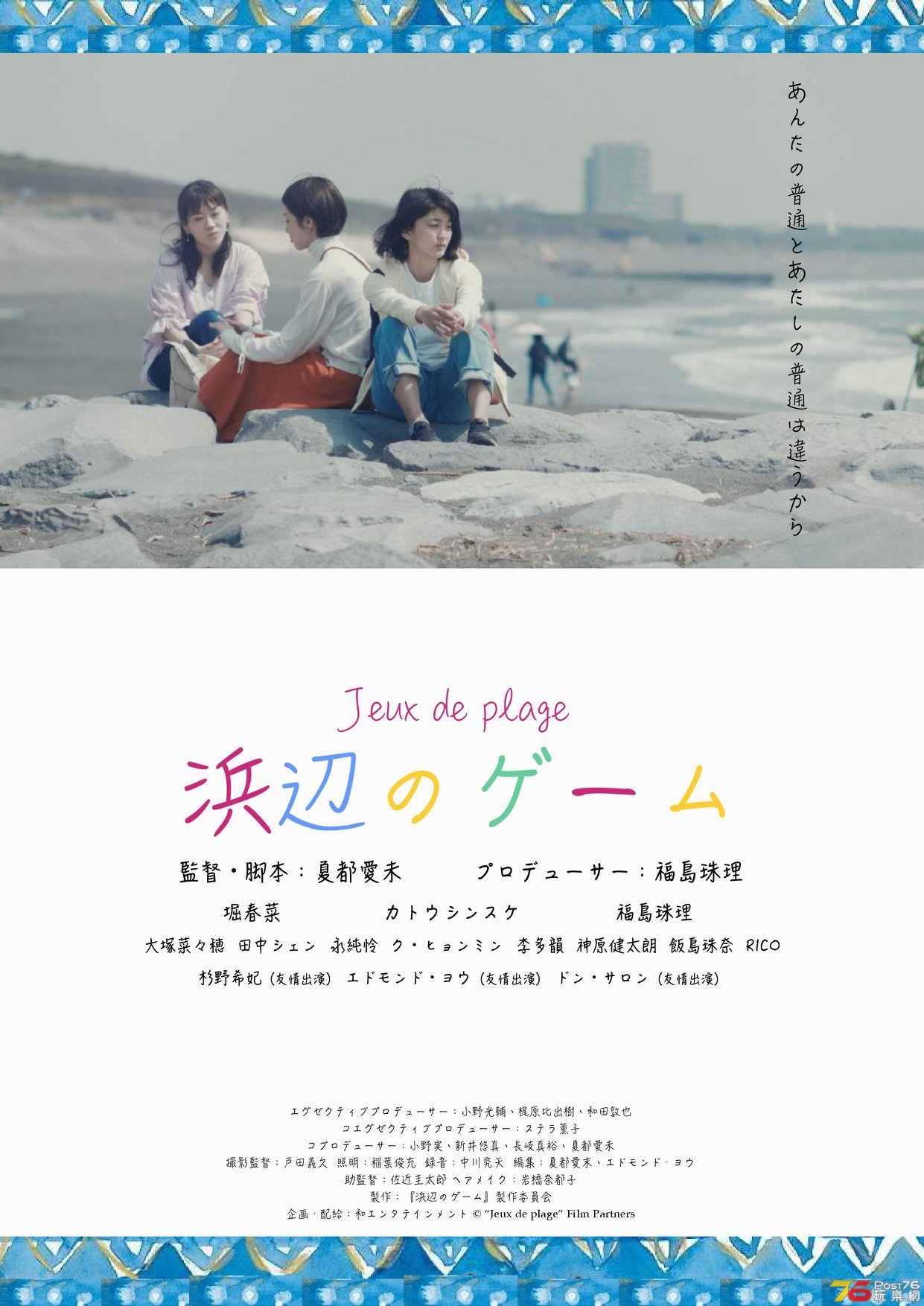
Jeux de plage (浜辺のゲーム, Aimi Natsuto, 2019)

105104a28dul1sw021sqjl“Listen, men are nice to all women, because sex is the only thing they think of” a young woman warns her friend as she recounts a casual encounter on the beach with a man they seem to have collectively decided to declare a bad idea. It’s not all fun and games by the sea for the romantically confused heroes of Jeux a plage (浜辺のゲーム, Hamabe no Game) which owes a fair bit to the French New Wave in its easy, breezy exploration of young love and an intensely sexist society. Produced by Kiki Sugino’s Wa Entertainment, Aimi Natsuto’s Rohmer-esque debut continues the internationalist vibe the studio is fast becoming known for in bringing together a disparate group of travellers each “invited” to a small seaside guest house by the mysterious Miwako.

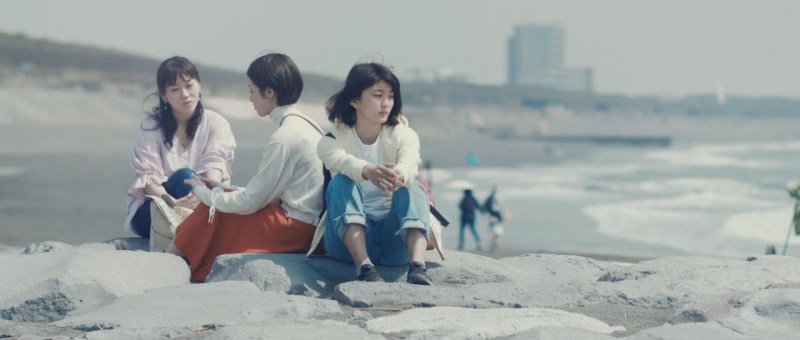
The central psychodrama plays out between three young women, not quite friends, who are apparently engaged in some sort of revolving love triangle. Yui (Juri Fukushima) has brought her uni friend Sayaka (Haruna Hori) on a trip to her hometown where they’ve hooked up with her high school friend Momoko (Nanaho Otsuka), but the atmosphere is beginning to sour. Sayaka increasingly feels like a third wheel while secretly pining for Yui who seems to have regressed into a more vacuous version of her teenage self while obsessing over Momoko who only talks about guys despite later claiming to be pansexual.

Meanwhile, the three women find themselves constantly bombarded by (largely) unwanted male attention – firstly from another guest at the hotel, Akihiro (Shinsuke Kato), who seems to have completely messed up his personal and professional lives with an ill-advised love affair. Akihiro’s eyes are out on stalks when he spots the three pretty women though they, while admitting that he’s “cool”, declare him a little sleazy, maybe even creepy seeing as he’s probably “as old as 35” and giving the eye to a bunch of college girls. Even so, Akihiro is not the only lothario on the prowl. Korean student Min-jun (Koo Hyunmin) has brought a Korean girl, Yona (Li Taun), who’s come to visit him, to stay in the hotel after getting a recommendation from Miwako. It seems Yona is just a friend who came to find out about studying film, but Min-jun keeps making awkward passes and intermittently reminding her about an introduction to his professor which occasionally seems like a creepy sort of pleading.

All that’s aside from the randy professor (Kentaro Kanbara) who might as well be a escapee from a Hong Sang-soo film, having started the picture without his trousers in the empty hotel swimming pool after apparently being seduced by the ever absent Miwako the night before. Despite being profoundly sorry, he turns up the next day to return the clothes he had to borrow and makes a worryingly aggressive play for the previously sympathetic manageress all while his suspicious wife (Kiki Sugino) watches from behind a nearby hedge, presumably following him after doubting whatever story he told her to explain not having arrived home the previous evening. Meanwhile, Sayaka, sick of feeling like a spare part, takes off for the beach where she’s quickly hit on by two different creepy guys, one of whom turns out to be a film director (A cameo from Edmund Yeo) who wanted to hire her for a movie though she wasn’t particularly interested.

Matters come to a head right there on the beach where the women collectively take out their frustrations with the male sex on the cocksure Akihiro, who is not really at fault in this instance save insensitively mocking other people’s romantic distress. Unfortunately, however, the incident does not seem to have relieved the pressure on the central trio who continue to dance around their romantic confusion without talking about anything “real”. While Sayaka looks for advice in asking random strangers if they’ve ever had a same sex crush, Yui becomes increasingly stressed and as irritated by Momoko’s gravitating towards the guys as Sayaka is by her intimacy with Momoko. Meanwhile, the only “nice guy” – a sympathetic Thai filmmaker (Donsaron Kovitvanitcha) observing from the sidelines, fails to add to the drama when attempting to make his own romantic confession (a sweet and innocent one with flowers and poetry) at an extremely inopportune moment. Bookended by time cards with chapter headings taken from classics of the French New Wave, Natsuto’s approach is one of detached playfulness tinged with farce as she observes this collection of flawed but very human protagonists fail to plainly express their desires, becoming ever more frustrated and confused as they struggle to orientate themselves around each other in a repressive and infinitely sexist environment. 


Jeux de plage was screened as part of Japan Cuts 2019.

Original trailer (English subtitles)