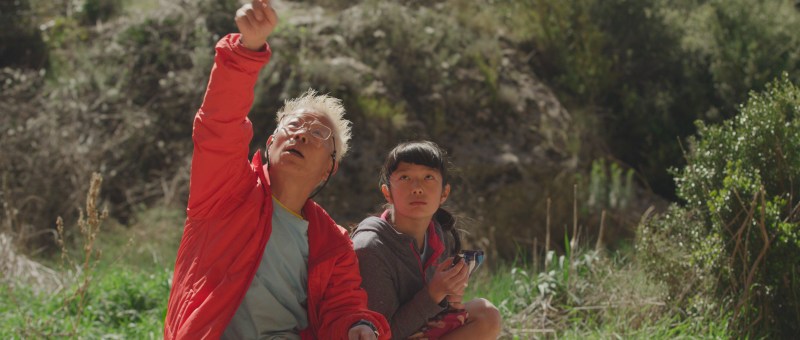
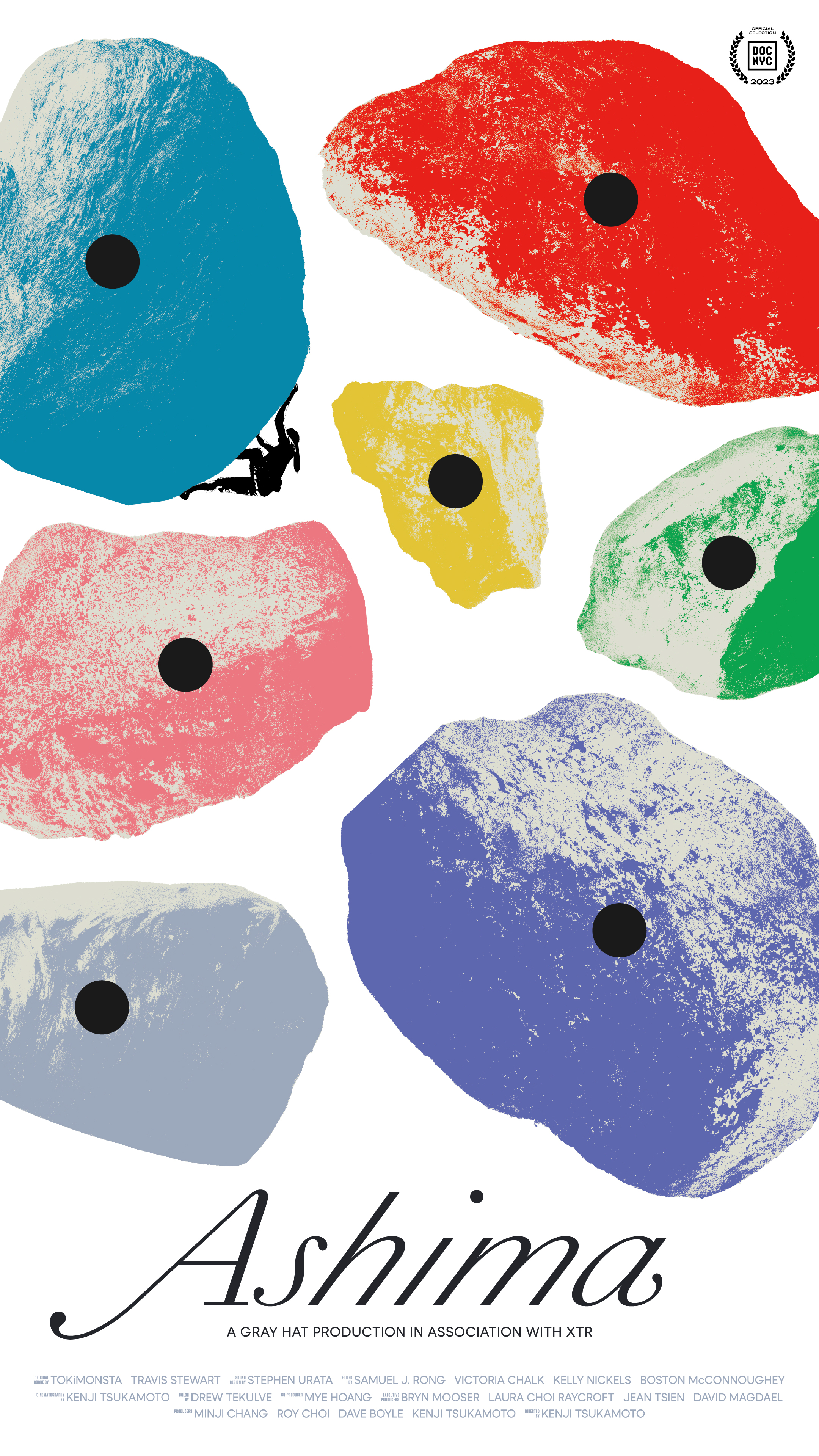
A teenage rock climber wrestles with the pressures of parental expectation and early fame in Kenji Tsukamoto’s probing documentary, Ashima. A champion of bouldering, the titular Ashima is climbing prodigy who has her eyes set on being the youngest person to complete a V14 climb, a feat only one woman has ever completed before and even veterans take years to conquer. But then she herself and the documentary seem to ask at what cost her victories may be coming when she’s so busy looking up she doesn’t have much time for what’s around her.
As Ashima sadly points out, at times it feels as if her father, Poppo, a retired butoh dancer now living in New York, is her only friend. Her love of climbing leaves her little time to interact with children her own age and she can’t really make friends with other climbers either given the competitiveness of the environment. It’s also an unavoidable fact that at her level most of the competitors are adult men with whom she obviously can’t have a lot of meaningful conversation. At one point, we see her paint her nails like any other teenage girl though they’ll be chipped soon enough when she needs them again for climbing and she seemingly has little social outlet outside of sports. Her parents reassure her that friends can be fickle and family is forever but however well-meaning there’s no denying that the phrase has uncomfortably possessive overtones.
That maybe something further echoed in her relationship with Poppo who acts as her climbing coach and mentor admitting that his teaching methods are rooted in his experiences as a butoh dancer and necessarily strict. Even Ashima later reflects that having her father as a coach can be frustrating as she feels as if he doesn’t listen to her or make an effort to see things from her point of view. He often gives her harsh advice about mental toughness and fortitude insisting that if she feels cold it’s only proof that she isn’t sufficiently focussed while allowing a sense of failure to mess with her head after repeatedly falling while trying to plan a difficult climb. Ashima reflects that sometimes it’s like he’s her best friend, but also a worst enemy who knows how to push her buttons and has no qualms about doing so.
Ashima seems to feel her responsibility to her parents keenly, not least as Poppo has encouraged to her meditate on the disappointment her mother and sponsors would feel if she did not complete her climb. Her mother meanwhile recalls that she wanted her to be a person who inspires the world which is quite a heavy burden for young girl to bear adding to the sense of pressure and isolation Ashima seems to feel even while adding that climbing is also her dream too. Ashima is an only child of older parents who underwent infertility treatment for several years before she was born and is obviously a deeply treasured daughter though one who also knows that and feels acutely guilty while reaching the age which she might wish to have more independence.
In any case, a journey to South Africa with her father develops into a spiritual confrontation both with herself and with him as she contemplates the V-14 climb and is forced to face her self-consciousness and insecurity in order to literally climb the mountain. Tsukamoto intercuts footage of her seemingly easy victories at indoor competitions with her lowest moments as her wounded confidence begins to eat away at her quite literally preventing her from getting a purchase on the rock. In an ironic touch, the chalk covering her hands echoes the white makeup worn by butoh dancers, the strange chanting and yelling rituals apparently aiding a breakthrough that allows Ashima to rediscover her self-confidence and complete the climb. Speaking at a Ted Talk, she reflects that climbing is mostly finding an accommodation with failure and falling is a normal part of the climb not something to be feared or ashamed of. As Poppo later concedes, it’s Ashima’s life to explore even if she rolls her eyes slightly to hear her parents cheerfully discussing the possibility of attempting a V15 having discovered at least a path that’s her own as much as it is anyone else’s.
 Windows on Worlds