J005311 (Hiroki Kono, 2022)

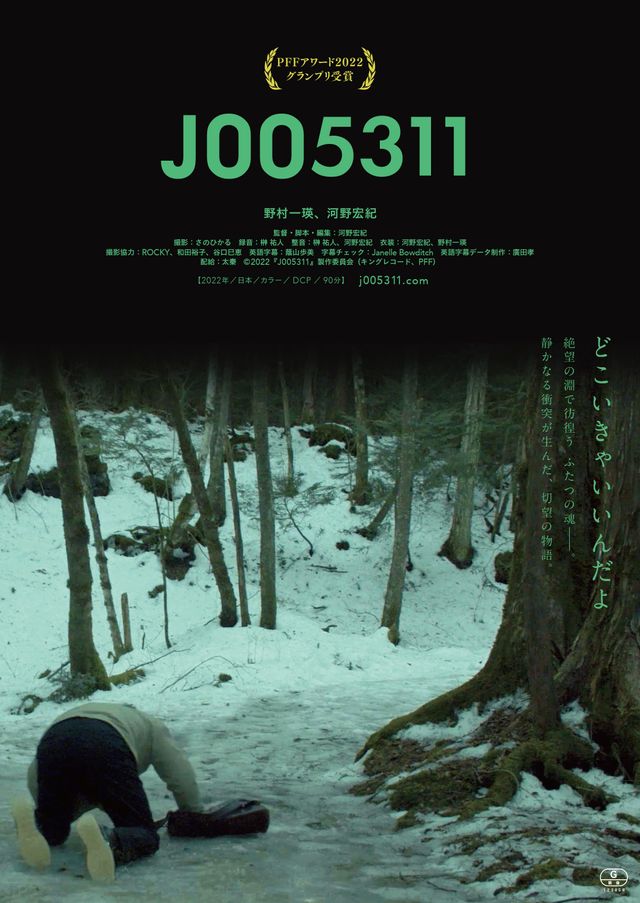
If a stranger offers you a large amount of money to drive to an undisclosed location, what would you say? Hiroki Kono’s J005311 is so named for a bright new star born when two stars already dead collided which goes some way to explaining the central relationship between the two men at the film’s centre. Though they rarely speak, a kind of connection arises between them that changes them both in unexpected and unexplained ways but perhaps gives each a new sense of hope and possibility. 

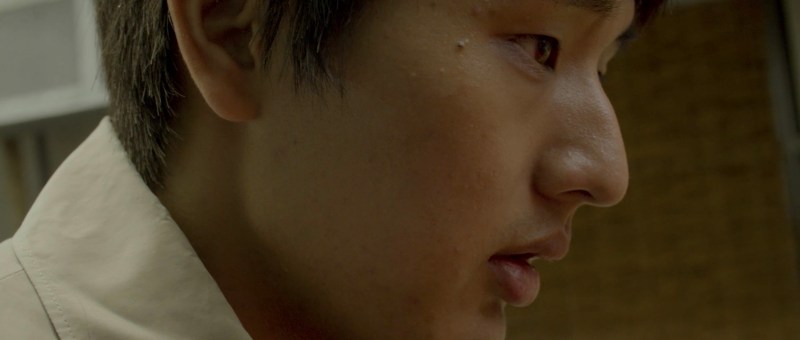
After some kind of alarming phone call, Kanzaki (Kazuaki Nomura) throws away various things in his apartment and leaves as if not expecting to return. He goes out and tries to hail a cab, but it seems as if the driver refuses to take him where he wants to go. Kanzaki slowly walks away and sits down wondering what to do next before catching sight of a young man running furiously across the road after snatching a woman’s handbag. Kanzaki wouldn’t usually be the sort to chase a thief, but tears off after the man and makes him a rather unexpected offer. He will pay him a million yen if only he’ll agree to drive him to a location near Mount Fuji around two hours away. The man is understandably suspicious and in fact tries to snatch the bag Kanzaki had the money in but is ultimately unsuccessful and agrees to the drive.

No real explanation is given for why Kanzaki is prepared to pay this large sum of money to get someone to drive him rather than taking public transport at least part of the way or booking a car through some kind of chauffeuring firm where long fares are more usual. It may be because he’s afraid whoever called him will find him on a train or bus, which would also explain why he leaves his phone behind at a service station, or perhaps he just wants company and companionship on what is looking increasingly like a final journey. Kanzaki tells the man, Yamamoto (Hiroki Kono), that he’s going to meet “a friend” which is a fairly unimaginative lie he doesn’t believe for a second though he for the moment he lets it go. Later Yamamoto notices he has a rope in his bag while we also see Kanzaki loop its strap around his neck and try to strangle himself all of which adds grim import to his final destination. 

For his part, Yamamoto is wary of the arrangement and also of Kanzaki who is awkward in the extreme. He tells Kanzaki that he can buy whatever he likes with the million yen yet when he asks what he’ll use it for he says he doesn’t know. He says he likes work that’s “easy” like construction or deliveries while evidently supplementing his income with the purse snatching which he remarks gets easier each time you do it. Several times it seems as if Yamamoto may run off with the money, or just run off leaving Kanzaki stranded, but eventually comes back if for unclear reasons that nevertheless suggest he’s begun to care Kanzaki and feels to an extent responsible for him while fearing what awaits him at his destination. 

Kanzaki too feels responsible for Yamamoto, eventually asking him to give up bag snatching as if implying that he’s better than that and ought to respect himself more. After tipping copious amounts of sugar onto his food at a rest stop, Kanzaki shoves a whole pastry into his mouth and seems as if he’s about to cry perhaps feeling rejected or that he overstepped the mark with Yamamoto before suggesting that he might want to walk the last part alone only for Yamamoto to once again return and follow him. In a sense they begin to save each other, bonding in a shared sense of despair if exchanging few words and emerging with a new sense of possibility forged by their unexpected sense of connection. Kono follows the two men with restless intensity, the camera swooping POV style or clinging tightly to them in the confines of the rented car while eventually seeming to vibrate in the poignant closing scenes. At times obscure, the film nevertheless has a wintery poetry and melancholic soul and ends on a note of silent serenity as the two men prepare to move on though who knows where to. 


J005311 screened as part of this year’s JAPAN CUTS.

Company Retreat (ある職場, Atsushi Funahashi, 2020)

“You can’t be suspicious of your team” an older woman insists, trying to defuse a rapidly devolving situation of mistrust among co-workers away on a “Company Retreat” ostensibly to cheer up a female employee who has recently become the centre of an online storm after her name and photos were leaked in relation to a report of sexual harassment at a prominent hotel chain. Inspired by true events, director Atsushi Funahashi originally planned to make a documentary exploring the fallout from an accusation of sexual harassment but discovered that few were willing to put themselves on camera opting instead to craft a docudrama in part improvised by his cast of actors. 

Shot documentary style and in black and white save one colour flashback, the action is split between two distinct company getaways four months apart taking place at a coastal town the first in the winter and the second in spring. Saki (Saki Hirai), a young female employee, made an accusation of sexual harassment against her male middle-aged boss, Kumanaka (Makoto Hada), and has been receiving constant online abuse after being outed by an unknown figure for unknown reasons. While her colleagues are largely supportive, they may also be harbouring an unspoken resentment that her decision to speak up has indirectly endangered their jobs as the company continues to suffer a loss of reputation with the public. When another of the employees reveals that he’s tracked the IP address of a persistent troll and discovered they’ve been posting from nearby it invites the suspicion that one of her friends is behind the online hate campaign possibly at the behest of the hotel chain keen to blacken her name and reputation in order to safeguard their own. 

The sexual harassment accusation exposes the gulf between what people say and what they really feel with some of the other employees eventually losing their cool and taking their frustrations out on Saki, partly for spoiling the holiday with her gloominess but also for her tendency to isolate herself from the group now viewing each of them as a potential enemy. She later accuses Noda (Yoshio Taguchi), a placid company man she feels may have chosen to sacrifice her in order to save the company’s reputation and with it his own job. Noda is upset to realise Saki sees him as a heartless corporate drone but later claims to have forgiven her. At the second retreat, however, he begins to voice quite a different opinion, exposing a deeply held set of patriarchal values in playing devil’s advocate wondering if it wasn’t all a misunderstanding and the boss, who has been demoted and transferred but not fired, has had his life “ruined” over something that wasn’t “that big of a deal”. He says this, in part, because his new girlfriend who also happens to be an employee has advised him that he is inappropriately touchy feely in the office and has little understanding of boundaries or personal space. Noda doesn’t see a distinction in the way he interacts with men and women and feels that’s just how he is, laying the blame on the other party if they ever felt uncomfortable while tacitly sympathising with another man who he believes may have had no “bad intentions” and is simply the victim of a “misunderstanding”. 

Perhaps paradoxically, he also blames Saki for her complicity that she may have smiled or laughed and said it was fine on previous occasions giving the boss the green light to think there was nothing inappropriate in his behaviour. In this she finds herself agreeing, that is perhaps the way it works in the workplace. Another older woman in a senior position advises her to transfer to another department, eventually explaining she thinks that might be easier seeing as the bosses are all men unlikely to be sympathetic. Ushihara (Mikoto Yoshikawa) is not unsympathetic herself, but is also willingly complicit, among the contingent of older career women who feel that sexual harassment is something you just have to put up with while simultaneously claiming that nothing will change until there are more women in a position of power. Attempting to take her side, Kinoshita (Megumi Ito), a divorced senior employee, tells Saki to do the “right thing” and refuse the transfer but is shot down by Noda who exposes even more misogyny when he tells her that her “emotional” and “righteous” tone is “unattractive”, insisting that she needs to “win the respect of men” in order for her arguments have weight. 

For some, however, and particularly the younger men this sort of hypocrisy becomes too much to bear. A company is supposed to be a family, but no one trusts anyone. Several employees from the original retreat resign after a decision is taken to try ringing the troll to prove they aren’t among the group unable to bear the sense of mistrust and suspicion from their close friends and teammates. Another employee, Taku (Taku Tsujii), brings his boyfriend to the first retreat though closeted at work losing confidence to come out to his colleagues in case they reject him and worst case scenario it costs him his job. Eventually he makes the decision to explain, realising he’s placed his boyfriend in a difficult position, and is relieved to discover he is immediately accepted by all, but continues to sympathise with Saki knowing how devastating it can be to be outed while also irritated by her tendency to reject them while they are only trying to help her. Meanwhile, another awkward young man struggles to confess his crush on the increasingly paranoid young woman, overly invested in a patriarchal ideal of masculinity that women are in need of male protectors mistakenly believing that Saki will be impressed by his attempt to safeguard her which ironically becomes a secondary act of harassment even as he, like Kinoshita, attempts to convince her to rebel against her complicity with a relentlessly rigged, conformist and conservative social order. 

The conclusion that she comes to, however, is that she has to “survive in this world” rather than striving for a better one. She has been unfairly demonised as if the real problem is her speaking up rather than her boss’ inappropriate behaviour and is understandably weary with fighting a battle she doesn’t understand, willing to accept a level of complicity in order to end the hate and suspicion. Kinoshita fears she will never see a “safe workplace” while others relentlessly “try to make society work for them” rather than for everyone. A bleak picture of contemporary society ruled by oppressive social pressure and aggressively patriarchal norms, Funahashi’s empathetic drama offers no real answers but advocates for the right to say no in a society where dissent is an untouchable taboo. 


Company Retreat (ある職場, Aru Shokuba) streamed as part of this year’s Nippon Connection.