As Japan emerged from post-war privation into bubble-era comfort, the family underwent something of a reassessment. Remoulding Teorema, Yoshimitsu Morita’s The Family Game had punched a hole through the concept of the family in sending in a mysterious teacher who slowly proved to them all they were merely involved in a prolonged act of performance unpinned by social convention rather than genuine feeling. Sogo Ishii’s The Crazy Family did something much the same but ultimately opted to save the family unit by allowing them to find peace literally “outside” of the contemporary rat race. And then there comes Takashi Miike who, ever the ironist, runs the whole thing in reverse as Visitor Q (ビジターQ) comes to put the family back together again by giving them permission to bond through satisfying their previously unanswered emotional needs.
As the film opens, however, patriarch Kiyoshi (Kenichi Endo) is in a hotel room interviewing a young woman as part of a documentary investigating the youth of today. She replies only that what the youth can tell him about the future of Japan is that it’s hopeless, before getting back to business and elaborating on her price list for a menu of sex acts. Though originally unwilling, Kiyoshi ends up having apparently very exciting sex with her, but comes to his senses after climaxing too early. The girl, we later learn, is his runaway daughter, Miki (Fujiko), who has been living a life of casual sex work in the city. Kiyoshi determines to pay her in full, but explains that that he’ll give the rest of the money to her mother and she must keep everything that happened between them in that room a secret (a minor problem being Kiyoshi left the camera on and ended up documenting the whole thing, something that he will repeat later but quite deliberately).
Stunned by his transgressive encounter, Kiyoshi looks on at a happy family with a degree of confusion while a strange young man leans through the window of the train station waiting room and whacks him on the head with a rock. Before he finally arrives home, the man hits him again just to be sure, but eventually follows him for dinner where he is introduced as an “acquaintance” who will be staying with him for an unspecified amount of time.
Kiyoshi’s household is already falling apart, and quite literally seeing as the shoji are full of holes, partly because of the attacks of the “big bullies” who torment his teenage son Takuya (Jun Muto) by launching fireworks into his bedroom, but also because the boy takes his humiliated frustration out on his mother Keiko (Shungiku Uchida) who is covered in scars from previous beatings and has taken to using heroin to escape the misery of her family and doing part-time sex work to pay for it.
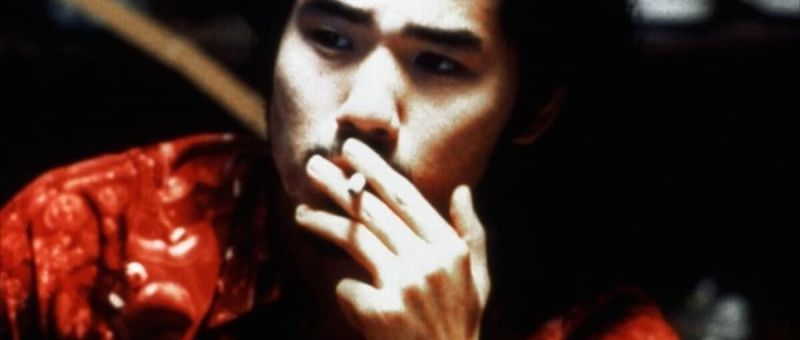
Like the intruder of The Family Game, Visitor Q gradually infiltrates the family by usurping a place within it but begins to reawaken and reinvigorate each of the members as he goes. The first thing he takes hold of is Kiyoshi’s camera, literally observing the family and helping to document the Japan of today through the eyes of this very strange yet “ordinary” family. A man of the post-bubble era, he’s another failed provider whose career continues to flounder while his home spirals out of control, shorn of paternal authority. He feels insecure in his manhood, humiliated by his tendency towards premature ejaculation, and is raped with his own microphone by the “youth of today” while trying to interview them, which leaves him, according to his boss and former lover, looking like a fool.
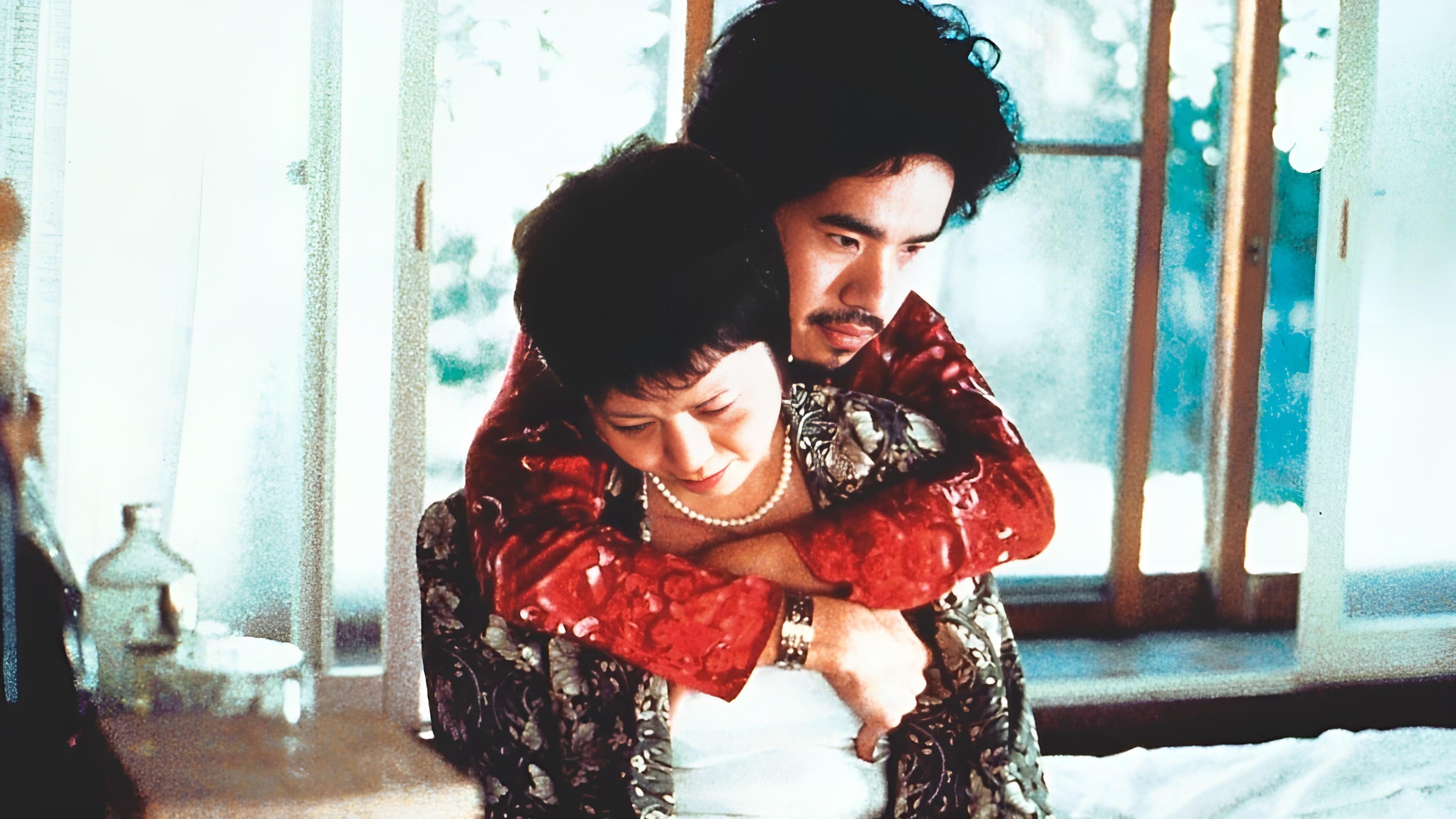
Kiyoshi is convinced he can get his mojo back through career success in making himself the subject of his own documentary, or more accurately his observation of his son’s bullying which he later reveals perversely turns him on. When his boss shuts his idea down, he rapes her, feeling humiliated again in complaining that she dumped him because of the premature ejaculation and vowing to prove himself but accidentally strangling her. Meanwhile, Visitor Q is back home getting busy with the under appreciated Keiko who describes herself as neither special nor pathetic but an ordinary woman, longing to be loved and wanted. Even one of her clients, exclaiming surprise to discover that a “nice woman” like her does stuff like this, appears to have a disability fetish remarking that is feels different with someone who has a limp. Visitor Q gets her juices running again, literally, reactivating her maternity and perhaps allowing her to reclaim her position within the household.
“I’ve never seen her so competent since we married,” Kiyoshi exclaims after she employs some top housewife logic to help him deal with his dead body problem, after which they take a rather more active stance against Takuya’s snotty bullies, pulling together to protect him in a way they never have before. Takuya may remain outside of the family hive, but he’s drenched in mother’s milk and perhaps the only one to truly recognise Visitor Q for who he is. Nevertheless, the Yamazakis are an “ordinary” family, just taken to extremes. Dad’s an emasculated salaryman broken in spirit by economic failure, mum’s an unhappy housewife lonely in repressed desire, son is an angry young man like his dad humiliated by the big boys, and daughter is a melancholy runaway who has tried to seize agency through using her body as a weapon but still feels that the future is hopeless and that her gesture may be one of self harm. Nevertheless, through the exposure of their myriad transgressions, they begin to bond in shared perversity. Thanks to Visitor Q, the family is “restored”, not “cured” but reaching its natural state of being as a collection of individuals assume their complete selves and in mutual acceptance rediscover a home.
Trailer (English subtitles)
 Windows on Worlds