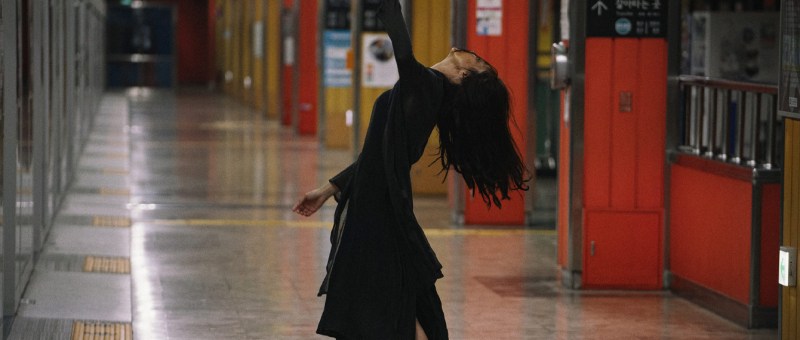
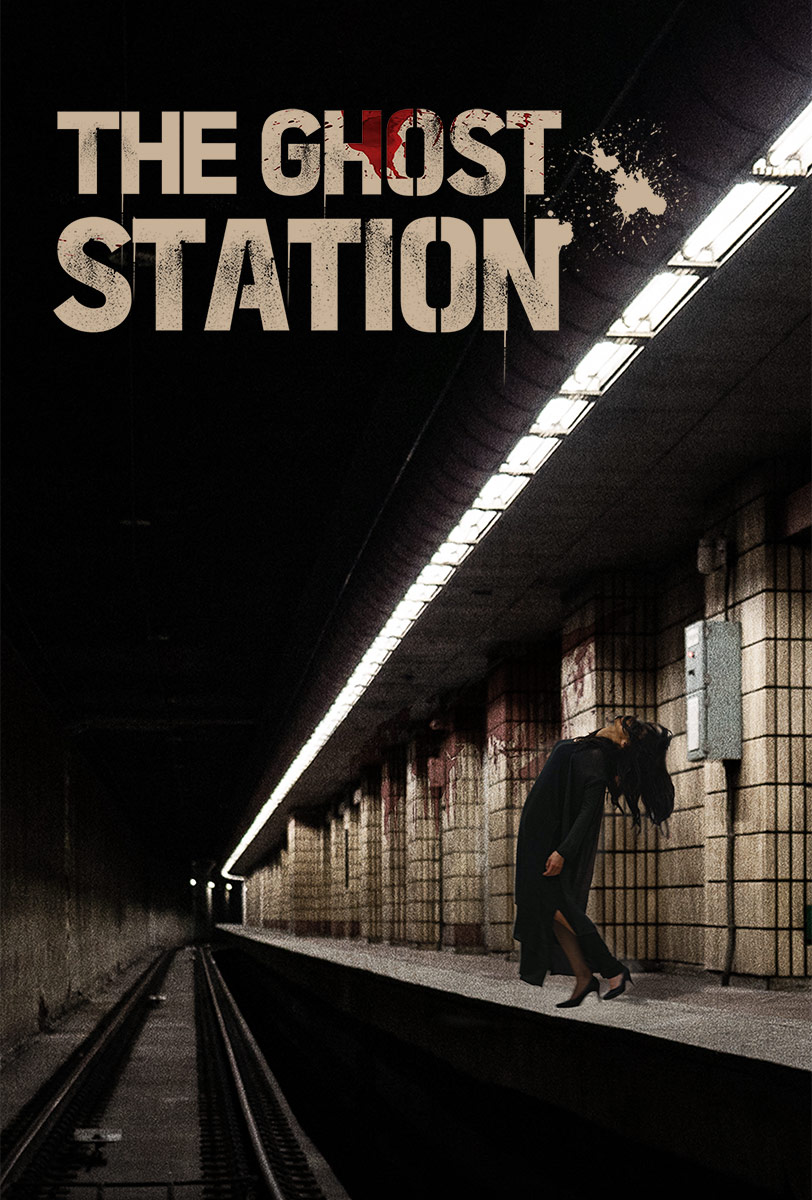
The biggest evil at the centre of Jeong Yong-ki’s homage to classic J-horror The Ghost Station (옥수역귀신, Ogsuyeog Gwisin) is perhaps capitalism or more simply modernity. At least, it stands to reason that those covering up a great evil for financial gain could be deemed even worse than the person who actually committed the crimes in turning a blind eye to injustice. It’s in the midst of this paradox that jaded rookie reporter Na-young (Kim Bo-ra) finds herself while beginning to uncover the dark secrets buried beneath a supposedly “haunted” station though mostly lured by the desire for easy clickbait to appease her hardline boss (Kim Su-jin).
The reason that Na-young is in trouble, is that she was at the station snapping photos for social media without bothering to get a written release from her subjects. The person she took photos of turned out to be transgender and was accidentally outed by Na-young’s story for which she feels little remorse, mostly feeling sorry for herself on realising her job’s on the line and she’ll have to bring in some powerful scoops if she wants to make sure the paper has her back and will cover the compensation money if the woman sues her.
It has to be said that, in the English subtitles at least, the film has a strongly transphobic vibe in which the photographed woman is constantly described as “a man” , using male pronouns and otherwise treated as a figure of fun, just another “weird” thing going on at the station. Even so, there’s clearly a mild rebuke intended against the contemporary trend of mocking strangers online with a young man falling victim to the station curse in the opening sequence after uploading a video of a woman he first assumes to be drunk or mentally distressed before noticing that in the video he can see a pair of bloody hands attacking her.
Na-young has been doing pretty much the same kinds of things with her clickbait even while resentful of herself and the loss of her journalistic integrity working at a low level tabloid only interested in viral articles that will generate ad income. But she’s also slightly proud on spotting people reading her pieces on the station ghost as they ride, feeling like she’s doing real investigative journalism even if no one in the office really cares about the dark secrets lurking in the station. Even she later realises that she lost sight of the victim in the case and hadn’t even thought about contacting his family or trying to find out who he was and why he died.
What she eventually discovers is that her paper may have been involved in a coverup operation which is why her boss becomes hostile as her reports become a little too “real”. It was in the interests of powerful people that the station be built, so anything that might delay its construction was quietly swept under the carpet. Na-young wants to drag it into the light, but finds herself frustrated and then at the centre of a supernatural curse while hoping to give voice to those who were denied any of their own.
The quietly oppressive, haunting nature of these unseen forces is brought home by the ominous tapping of the ice blue fingernails of Na-young’s ever impatient boss perhaps embittered by her own decision to abandon journalistic integrity for the lure of easy money peddling gossip and distraction to an already apathetic readership. Though adapted from a web toon, the film is co-scripted by Hiroshi Takahashi and bears many of the hallmarks of classic J-horror including the presence of a well implying the contamination of the groundwater that feeds the contemporary society which the station itself in someways represents, along with the uncanny movement of living ghosts in the contemporary environment.
Like J-horror it finds otherworldly spirits trying to communicate through modern technology, in this case saying what first seem to be fragments of a phone number but turn out to have a different meaning indicating a desire to be heard and recognised, reprieved from the hell in which they’ve been placed by a cruel and heartless tormentor. Na-young thinks she can give them that but is perhaps naive, if already corrupted, overestimating the power of the press to offer corrective justice and end a curse by throwing the truth into the light. In the end, she too decides to pass the buck escaping the curse by passing it on as an ironic act of vengeance and liberation thrown like a bomb at an infinitely corrupt social system but more out of spite than retribution. A little shallow and cynical, the film never quite lands its punches or achieves the eeriness it’s looking for but does nevertheless point the finger at the literal skeletons in the closet of the contemporary society.
The Ghost Station is out now in the US on Digital, DVD, and blu-ray courtesy of Well Go USA.
US trailer (English subtitles)
 Windows on Worlds