The King’s Warden (왕과 사는 남자, Chang Hang-jun, 2026)

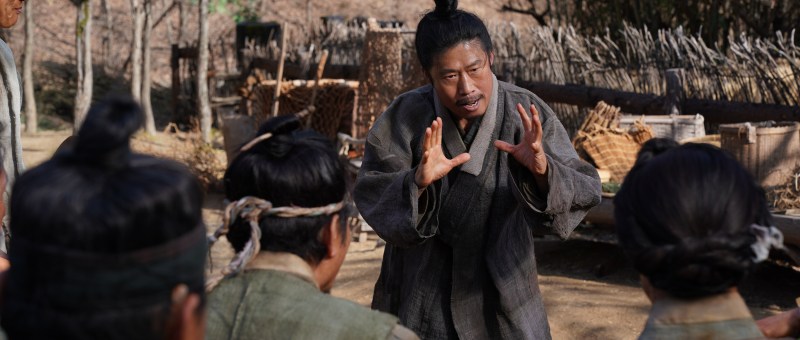
Can a king govern effectively if he does not know his people? Korean historical films are renowned for palace intrigue, but what’s often forgotten is the lives of ordinary subjects living in far off villages for whom the ruler is a distant authority whose efforts are more likely to hamper their lives than help them. At the beginning of Chang Hang-jun’s The King’s Warden (왕과 사는 남자, Wanggwa Saneun Namja), village chief Heung-do (Yoo Hae-jin) goes out to hunt deer which is the only access to meat the villagers seem to have while many of them have only vague memories of ever having even seen hot white rice.

Still, after he’s chased by a tiger, Heung-do is rescued by a nearby village which is in full festival mode celebrating the birthday of the young son of a regular villager. The boy’s father makes fun of Heung-do for eating deer which he says smells bad and offers him some of their lavish banquet. This village used to be poor like his, but at some point they agreed to host an exiled official, the former Minister of Justice. Though the minister was rude and entitled, he soon began to start teaching the local children for something to do resulting in one of them becoming a top scholar. And political realities being what they are, the minister’s supporters began sending lavish gifts to the village to hedge their bets on his eventual rehabilitation. Shortly put, that’s how they’ve all become rich beyond their wildest dreams and all they had to do was put up with someone being difficult and annoying for a short period of time.

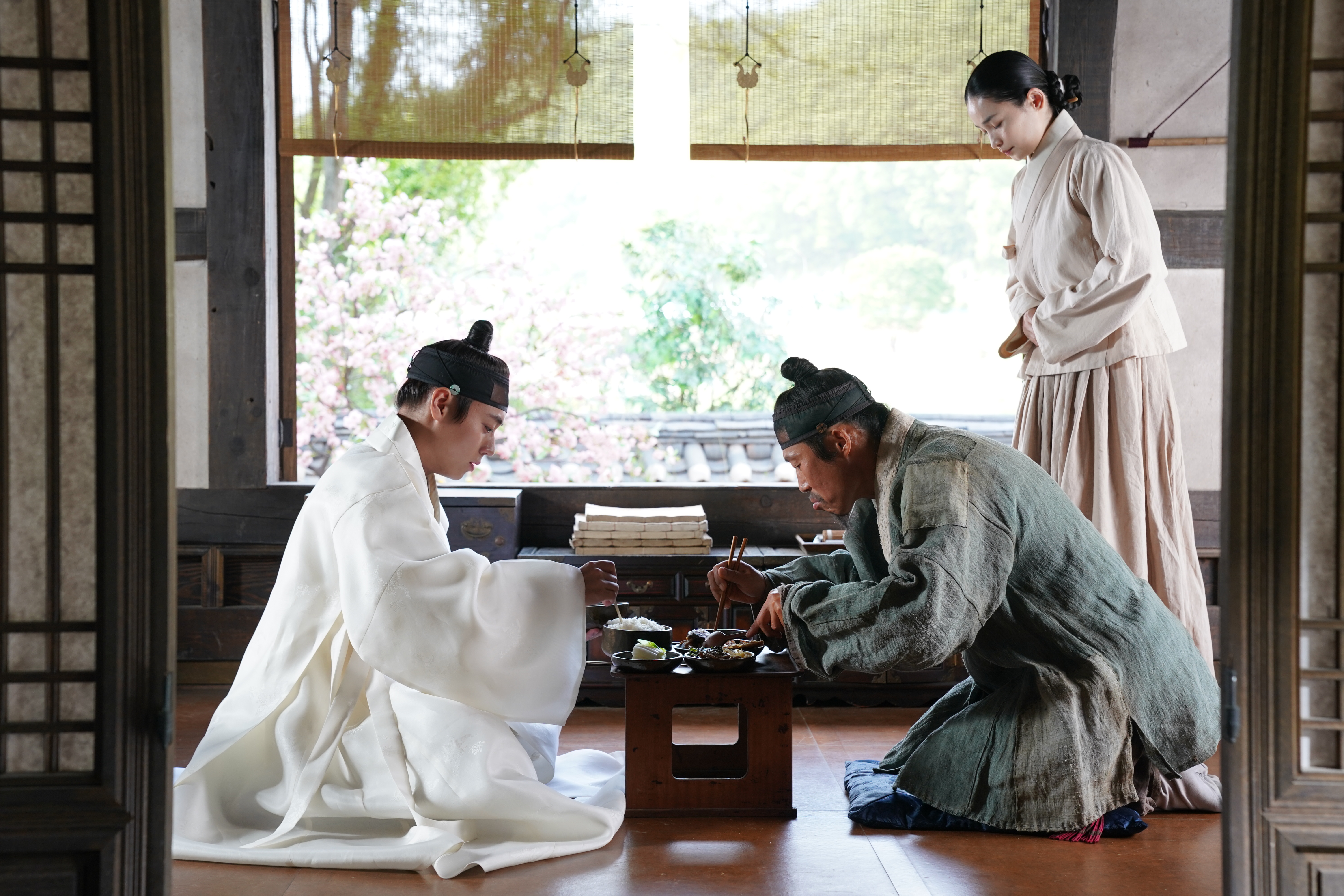
Obviously, Heung-do wants this for his village too, but unbeknownst to him they’re sent the deposed king Hong-wi (Park Ji-hoon) who ascended the throne as a child and has been usurped by his uncle. This obviously places them in a precarious position. Heung-do has to report to the Town Office on Hong-wi’s every move fearing that they’ll all be killed if anything happens to him, while the usurpers, led by treacherous courtier Myeong-hoe (Yoo Ji-tae), are actually banking on the fact that Hong-wi won’t be able to adjust to a life of exile having never lived outside of the palace and will likely either die or take his own life. For his own part, Hong-wi seems to have become depressed. He’s on a kind of hunger strike as a protest and later tries to end his life only to be saved Heung-do.

Hong-wi is indeed in a difficult position himself, still only a teenager and likely aware that there is only a small possibility of him surviving very much longer given that others make take up his cause and challenge his uncle’s claim to the throne which makes his mere existence an existential threat. Not having the power to do anything, refusing to eat is his only means of asserting control. Heung-do, meanwhile, is fairly ignorant of all this though tries his best to convey that Hong-wi refusing the food the villagers have prepared for him despite not having enough to eat themselves is both rude and causing them anxiety that perhaps it’s not to his taste and their commonness is killing him. 

It’s this more human kind of interaction that eventually brokers an easier friendship between the villagers the exiled king in which it seems as if Hong-wi would have “proved most royal” if he had not been usurped and continued to reign into adulthood. He has become better acquainted with the way his subjects live, while Myeong-hoe and his ilk are only concerned with power and courtly intrigue rather than the actual business of government. Nevertheless, in the end Heung-do must pick a master. To save the villagers he may need to sacrifice Hong-wi and demonstrate his loyalty to the new regime (who may or may not honour their promises), or else decide to risk being taken down with him if they continue to protect this man they’ve come to see as a friend and who is himself conflicted in the knowledge that his presence places them at risk.

Domestic viewers well acquainted with historical fact will know the direction that this story will eventually take, though the earlier parts of the film are largely concerned with village life in which the villagers great their hardship with good humour. As such, they never really question it but only look for ways to improve their circumstances and settle on making themselves even more subservient to authority, while even an exiled king finds himself entirely powerless within an inherently corrupt feudal system. The growing friendship between Heung-do, the villagers, and Hong-wi has then a poignant quality in their shared sense of futility and the glimpse of what might have been a better society for all if only Hong-wi had been allowed to follow his kingly destiny unfettered.


The King’s Warden opens in UK cinemas 6th March courtesy of Central City Media.

UK trailer (English subtitles)
Rebound (리바운드, Jang Hang-jun, 2023)

A collection of underdog teens learn a few valuable lessons in perseverance and determination while taking their moribund high school basketball team all the way to the national championships in Jang Hang-jun’s sporting drama, Rebound (리바운드). Inspired by the real life tale of Busan Jungang High School’s meteoric rise from obscurity to top rated team, the film quietly touches on inter-city rivalry and social inequality while otherwise spinning an inspirational tale of the power of solidarity and a never say die spirit. 

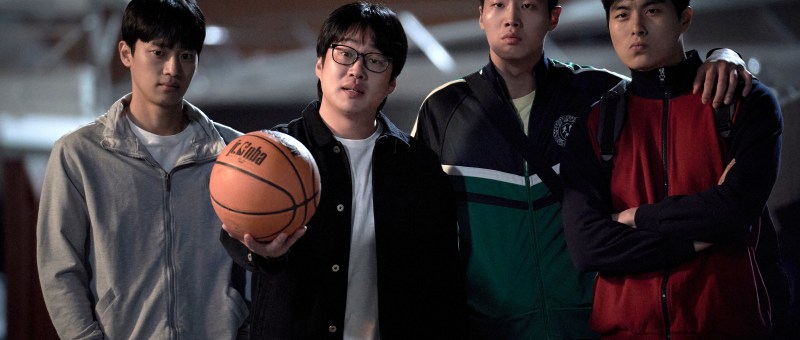
They are all in their way rebounding from something, and not least the team itself which is threatened with closure after being judged a bad investment by the penny pinching headmaster given its “embarrassing” series of total losses across a series of years. The team is given a brief reprieve but only as a token of its former reputation, the plan being to have one just for show but not actually enter any competitions while the school let it gradually fall into obscurity. Accordingly, they begins looking for “cheap” coaches who might be prepared to manage a phantom team and eventually land on 25-year-old social worker Kang Yang-hyun (Ahn Jae-hong) who is a former minor leaguer and alumnus of the school looking to reclaim his own failed hoop dreams vicariously through a new generation of new players. 

There are however only four left on the team, two of whom immediately quit leaving Kang scrambling around the city looking for tall boys who might be good with a ball and can be convinced to switch schools. The problem they have is that talented players are quickly snapped up by more prestigious institutions in Seoul which can after all offer more opportunities to ambitious youngsters aware that they probably won’t be playing basketball for the rest of their lives. No one really envisages a future for themselves in Busan which remains a kind of underdog in itself as it struggles against the the allure of Seoul as place of greater sophistication and possibility. Keen basketballer Ki-bum (Ahn Jae-hong) turns down Kang’s offer for just this reason insisting that his career is dead if he stays in Busban even while his parents seems to be turning down good offers on his behalf. He only agrees to join the team on learning that ace player Jun-yung (Lee Dae-hee) will be playing for them. 

Jun-yung is valued mainly for his height which sort of runs against the messages of the game in that it’s not something the players can control and no matter how hard they train they will always be at a disadvantage to those who are simply bigger. Kang’s first mistake is that he builds everything around the pillar of Jun-yung, barely letting the other players play while instructing them to pass every ball to him so he can shoot. In any case, Jun-yung too is eventually poached by a better team apparently forced to betray his teammates by his ambitious parents who are after all merely making what they see as a smart decision on his behalf. A disastrous fight between two players with unfinished business from middle school also results in a lengthy suspension ending the team’s hopes of competition success for the current season. 

But as Kang later says, it’s only really a “fake failure” in that it gave him a rebound he could use to realise his mistakes and start over prioritising their shared love of the game over his own insecurity now more willing to take a risk while concentrating on making the team as good as it can be rather than the external validation of championship wins. As he later tells them in an inspirational locker room speech, not all of your shots go in but that’s OK because they come back to you on the rebound and what matters is what you do with them then. Whatever happens, life goes on and fear of failure is not a reason to give up on something you love.

Jang does his best to avoid underdog sports movie cliches while subtly hinting at the pressures of social inequality as moody player Gang-ho (Jung Gun-joo) struggles with an old injury he couldn’t afford to have treated properly while trying to make extra cash betting on basketball games with other wayward neighbourhood kids. Capturing a real sense of energy in the various basketball games along with a wholesome sense of possibility as the team begin to bond and “improve” each other, Jang is careful not to be blinded by a false narrative of inspirational success but rather doubles down on the rebound mentality of seizing opportunities as they come and continuing to chase your dreams in your own way no matter how hopeless they may seem. 


Rebound screened as part of this year’s New York Asian Film Festival.

International trailer (English subtitles)

Images: ⓒ 2023 NEXON Korea Corporation, B.A. ENTERTAINMENT, WALKHOUSECOMPANY ALL RIGHTS RESERVED