King and the Clown (왕의 남자, Lee Joon-ik, 2005)

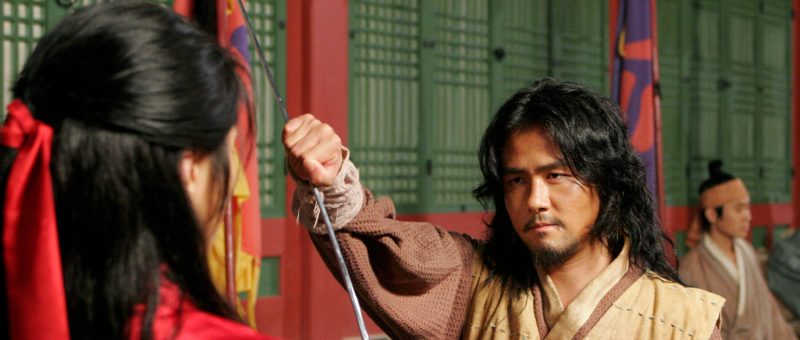
The feudal order conspires against everyone from minstrel to king in Lee Joon-ik’s Shakespearean historical epic, King and the Clown (왕의 남자, Wang-ui Namja). The Korean title might translate to the equally ambiguous “The King’s Man”, but in any case invites the question of who it is that is the “king” and who the “clown” though in practice it might not matter because their roles are to a degree interchangeable. Nevertheless, a minstrel’s attempt to transgress class boundaries eventually leads to tragedy but also perhaps defiance in his seizing of the little freedom that is given to him. 

The oppressiveness of the system is emphasised in the opening text which explains the historical background and reveals that the king of this story was considered a tyrant, though also thought to be sensitive and intelligent, while permanently damaged by the early death of his mother who was forced to take her own life because of machinations in the court. The King (Jung Jin-young) himself rails at the system complaining that he has no real power and is largely unable to overrule the advice of his courtiers who remain loyal to his late father and simultaneously force him to obey the rule of a man who is already dead. In this internecine feudal society, not even the king is free. 

This might in a sense explain his tyranny, borne both of an anxiety over the precarity of his rule (the text also reveals that he was deposed by his courtiers shortly after the film concludes) and is otherwise engaged in a kind of frustrated boundary pushing. At heart, he is a wounded and petulant child. His eventual decision to participate in the clown show put on by Jang-saeng (Kam Woo-sung) and his troupe of jesters hints at his mental instability and growing inability to discern reality from fantasy, or to a point perhaps there is no true “reality” for a king and so the distinction no longer matters as there is no real difference for him between a man “dying” in a play and dying for real. 

For Jang-saeng, however, there is a difference. He and his brother-in-arms Gong-gil (Lee Joon-gi) are technically on the run after Gong-gil ended up killing their manager to defend Jang-saeng who had tried to protect him from exploitation in being pimped out as a male sex worker to earn extra money for the company. It’s Jang-saeng who hits on the lucrative opportunities of satire after teaming up with three other minstrels in the capital and hearing tales of the King’s scandalous sex life. This obviously gets him into hot water with the authorities, though Jang-saeng talks himself out of trouble by convincing conflicted courtier Cheo-seon (Jang Hang-seon) to allow them to perform before the King who actively enjoys being mocked and brings the clowns into the palace to entertain him at his pleasure causing a further rift with his conservative courtiers who do not enjoy having their dirty dealings exposed through bawdy street theatre. 

The repeated visual motif of the tightrope emphasises the fine line Jang-saeng is walking as a commoner in the court. Cheo-seon had hoped their performance would show the King the extent of the corruption among his courtiers, but the results leave Jang-seong conflicted as he sees men die as a result of his comedy while failing in his primary goal of protecting Gong-gil from exploitation as he quickly becomes a favourite of the King again endangering their position as they become a target for the King’s mistress (Kang Sung-yeon), a former sex worker who had like them used her natural gifts to transgress the boundaries of class. Cheo-seon complains that it’s the King’s “lust for a boy” which has corrupted the court, while Jang-seong’s resentment may otherwise be unwarranted as Gong-gil appears to like and pity the King and may have come to his own decision about advancing his fortunes despite Jang-seong’s assertion that there are some things that should not be sold.  

But as Jang-seong comes to realise, all around the tightrope is an abyss. “Never knew a fool who knew his place” Jang-seong wrote in one of his plays and that is in someways his tragedy, that he dared to challenge the social order but in the end could not overcome it and neither could the King. Even so he may find a kind of freedom in seeking escape from a cruel and oppressive society in the only way that is available to him. “The world’s but a stage. Kingly is he who struts for a while, then exits in style” Jang-seong exclaims, a “sightless fool” who finally knows where he stands.


King and the Clown screened as part of this year’s Queer East .

Trailer (English subtitles)
Our Midnight (아워 미드나잇, Lim Jung-eun, 2020)

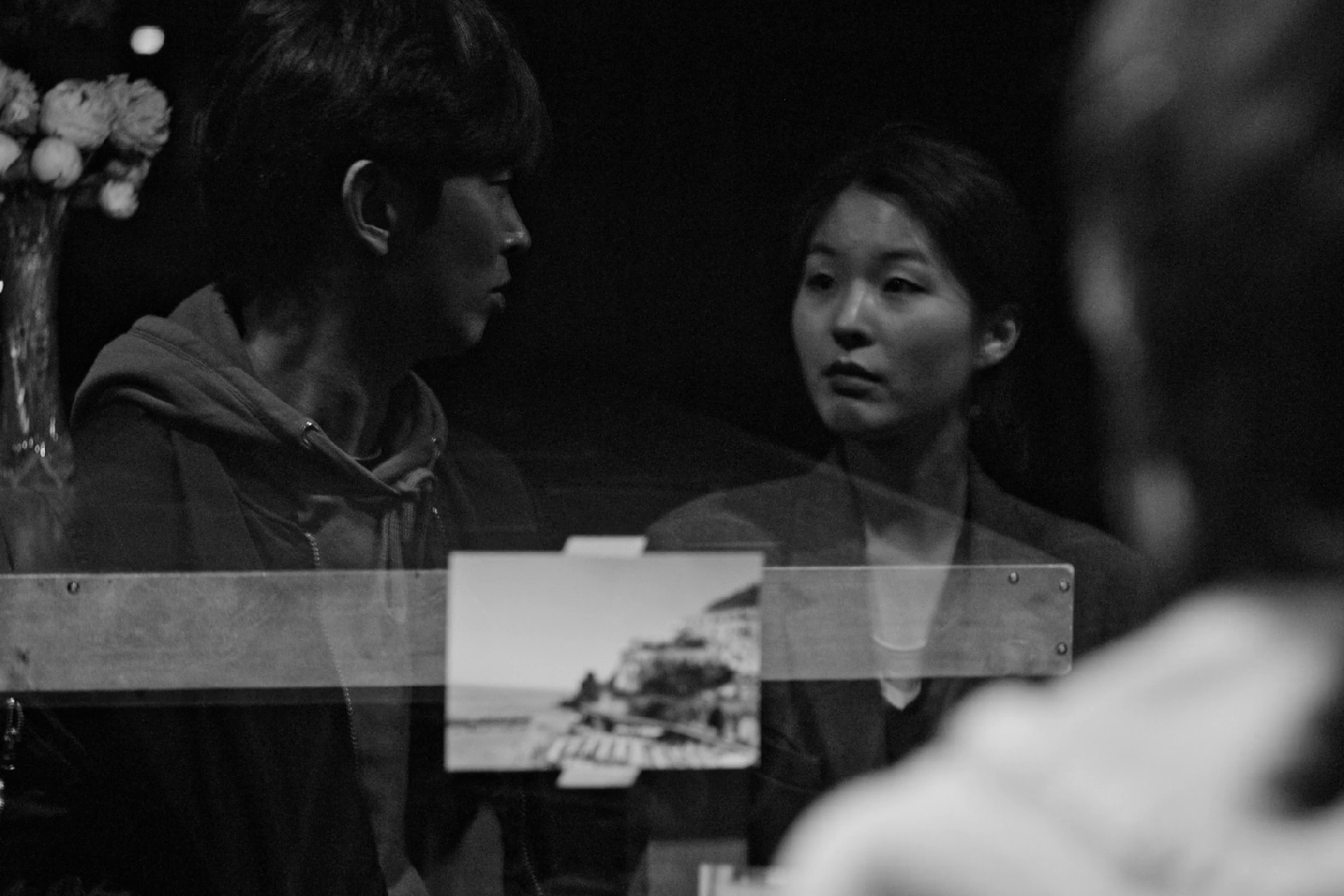
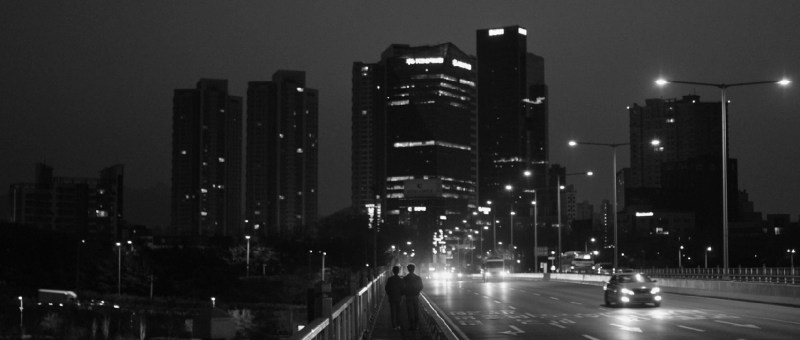
Should you continue following your dreams or accept defeat and “grow up” into a conventional adulthood with a steady job, marriage, and comfortable home? The hero of Lim Jung-eun’s Our Midnight (아워 미드나잇) is reluctant to give up on his acting dreams while his friends look down on him in bemusement, all secretly miserable in the regular corporate careers they’ve opted for partly for practical reasons but also because of intense social pressure. Meanwhile, across town a young woman finds herself dealing with the other side of the same problem struggling under the weight of patriarchal norms in which it becomes impossible to separate the personal and the professional. Approaching the same bridge from opposite directions, the pair of youngsters begin to find a sense of peace in shared anxiety emerging from the heavy gloom of a midnight city into a brighter light of day. 

Now in his 30s, Jihoon (Lee Seung-hun) is still an “aspiring” actor trapped in exploitative part-time work in which he has to actively fight to be paid the money he is rightfully owed. He finds himself hanging out in the old rehearsal room from his student days as if nothing had changed in the decade since he graduated. Meanwhile, his nine-year relationship with Areum (Han Hae-in) which began when they were both student actors is about to come to an abrupt end. She’s already “grown up” with a regular job earning real money and is sick of Jihoon’s fecklessness. Areum wants to get married and settle down, but not with Jihoon. Approaching another uni friend now apparently a civil servant (Lim Young-woo), Jihoon is offered a strange new job which ironically reflects the pressures of the world in which he lives. In order to combat Seoul’s notoriously high suicide rate, an experimental programme is being set up in which a squad of samaritans will patrol the local bridges overnight looking for people who seem to be in distress and may be thinking of taking their own lives. 

As one of the other employees points out, if you’re in a dark place perhaps the last thing you want is some guy turning up with a series of platitudes about how you’ll feel better in the morning but all Jihoon has to do is wander round at night so he might as well give it a try. His new role, however, may also feed into his hero complex while allowing him the opportunity to rehearse for real life in the streets. It’s on one nighttime voyage that he first encounters Eunyoung (Park Seo-eun) as she collapses on the bridge after mournfully peering out over the edge. As he later discovers, Eunyoung is a lower grade office worker who is facing workplace discrimination and career insecurity after experiencing domestic violence in her relationship with a co-worker. After reporting the matter to the police, she finds her own job in jeopardy, the older male bosses concluding she is the one at fault for causing embarrassment by dragging this taboo matter into the light while her abuser presumably gets a free pass to continue his career without further penalty. 

In any case, it seems that Jihoon’s friends aren’t faring much better in the world of work, one lamenting that Jihoon has it made because he’s living the way he chooses while another exclaims that his life is about to end because he’s getting married. In a coffee shop, he overhears a cynical businessman on the phone to his boss about scapegoating a middle-aged woman for a workplace mistake presumably to avoid keeping her on the books. Still in his hero mode, Jihoon eventually decides to say something and let the woman know she’s being manipulated, but his intervention is of little use. Like Eunyoung, the woman realises her lack of agency in the corporate hierarchy and accepts that she’s losing her job whatever happens so she might as well take the blame with the money. After all, she’s unlikely to find another position very easily in Korea’s famously difficult employment market. 

All in all, it isn’t difficult to understand why so many people are pushed towards ending their own lives, crushed by the various pressures of Hell Joseon. Yet through their midnight walk through the strangely empty streets the pair begin to generate a kind of solidarity, literally role playing their way out of mutual despair as they each stand up to those who try to keep them down be it an abusive partner and internalised shame or dismissive friends and family who disapprove of those who refuse to follow the accepted path to conventional success. A black and white odyssey through a depressed city, Our Midnight throws up its strangely colourful title card in a vibrant yellow and purple at the half hour mark, allowing its wandering heroes finally to board the train out of despair through mutual acceptance crossing the bridge together into a brighter, less oppressive existence. 


Our Midnight streamed as part of the Glasgow Film Festival.