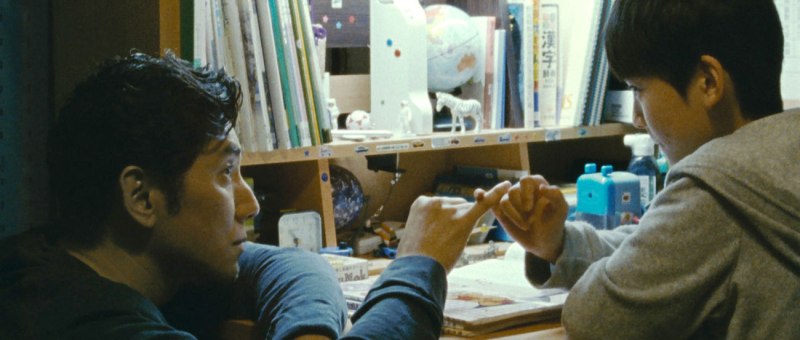
 Self disgust is self obsession as the old adage goes. It certainly seems to ring true for the “hero” of Miwa Nishikawa’s latest feature, The Long Excuse (永い言い訳, Nagai Iiwake) , in which she adapts her own Naoki Prize nominated novel. In part inspired by the devastating earthquake which struck Japan in March 2011, The Long Excuse is a tale of grief deferred but also one of redemption and self recognition as this same refusal to grieve forces a self-centred novelist to remember that other people also exist in the world and have their own lives, emotions, and broken futures to dwell on.
Sachio Kinugasa (Masahiro Motoki) is a formerly successful novelist turned TV pundit. As his hairstylist wife, Natsuko (Eri Fukatsu), gives his hair a trim he angrily turns off the television on which one of the programmes he appears on is playing and returns to petulantly needle his wife about perceived slights including “deliberately” using his real name in front of important publishers “to embarrass him”. Upset but bearing it, Natsuko takes all of this in her stride though her husband is in a particularly maudlin mood today, reminding her once again about his intense feelings of self loathing. Shortly after finishing Sachio’s haircut, Natsuko throws on a coat and grabs a suitcase – she’s late to meet a friend with whom she is going on a trip. Sachio barely waits for the door to close before picking up his phone and texting his mistress to let her know that his wife is away.
Later, Sachio figures out that at the moment his wife, her friend Yuki (Keiko Horiuchi), and a busload of other people plunged over a guard rail on a mountain road and into a frozen lake, he was rolling around in his marital bed with a much younger woman. Now playing the grieving husband, Sachio seems fairly indifferent to his recent tragedy but writes an improbably literary funeral speech which boils down to wondering who is going to cut his hair, which he also makes a point of checking in the rear view mirror of the funeral car, now that his wife is gone.
So self obsessed is Sachio that he can’t even answer most of the policeman’s simple questions regarding the identification of his wife – what was she wearing, what did she eat for dinner, is there anything at all he can tell them to confirm the identity of his wife’s body? The answer is always no – he doesn’t remember what she wore (he was busy thinking about texting his mistress), ate dinner separately, and didn’t even know the name of the friend Natsuko was going to meet. The policeman tries to comfort him with the rationale that it’s normal enough to have grown apart a little over 20 years, but the truth is that Sachio was never very interested in his wife. As a funeral guest points out, Natsuko had her own life filled with other people who loved her and would have appreciated the chance to pay their respects in the normal fashion rather than becoming mere guests at Sachio’s stage managed memorial service.
Sachio’s lack of sincere reaction to his wife’s passing stands in stark contrast to the husband of her friend, Yoichi (Pistol Takehara), who is a wailing, broken man and now a widowed single father to two young children. Yoichi is excited to finally meet Sachio about whom he heard so much from “Nacchan” his wife’s best friend and the children’s favourite auntie. Sachio knew nothing of this important relationship in his wife’s life, or much of anything about her activities outside of their home.
When Natsuko left that last time, she paused in the doorway somewhat finally to remind Sachio to take care of the house in her absence but neither of these two men know how to look after themselves from basic household chores like using the washing machine to cooking and cleaning, having gone from a mother to a wife and left all of the “domestic” tasks to their women. Eventually feeling low, Sachio decides to respond to Yoichi’s suggestion they try to ease their shared grief by taking the family out for dinner, only he invites them to a fancy, upscale place he goes to often which is neither child friendly nor particularly comfortable for them seeing as they aren’t used to such extravagant dining. Yoichi, otherwise a doting father but often absent due to his job as a long distance truck driver, neglects to think about his daughter’s dangerous crab allergy and necessity of carrying epinephrin just in case, never having had to worry about something as basic as feeding her.
Hearing that Yuki’s son Shinpei (Kenshin Fujita) is quitting studying for middle school exams because he needs to take care of his sister, Sachio makes the improbable suggestion that he come over and help out while Yoichi is away on the road. Becoming a second father to someone else’s children forces Sachio into a consideration of his new role but his publicist cautions him against it. Whipping out some photos of his own, he tells Sachio that kids are great because they make you forget what a terrible person you are but that it’s just the ultimate act of indulgence, basking in adoration you know you don’t deserve. Sachio frequently reminds people that he’s no good, almost making it their own fault that he’s hurt them through his constant need for external validation and thinly disguised insecurity. Sachio’s personal tragedy is that his attempts at self-deception largely fail, he knows exactly what he is but that only makes it worse.
The Long Excuse, such as it is, is the title of Sachio’s autobiographical story of grief and an attempt to explain all of this through a process of self discovery and acceptance. Though appearing indifferent to his wife’s death, Sachio’s reaction is one informed by his ongoing self delusions in which he tries to convince himself to ignore the issue and attempt to simply forget about it and move on. Yoichi, by contrast, feels differently – he can’t let his wife go and wants to keep her alive by talking about her all the time but his bighearted grief is too much for his sensitive son who has more than a little in common with Sachio and would rather hit the pause button to come back to this later. The best way out is always through, however difficult and painful it may turn out to be. Making The Long Excuse is Sachio’s way of explaining himself and learning to reconcile the person he is with the one he would like to be, and even if he’s still talking to himself he’s at least moving in the right direction.
The Long Excuse was screened at the 17th Nippon Connection Japanese Film Festival.
Original trailer (English subtitles)
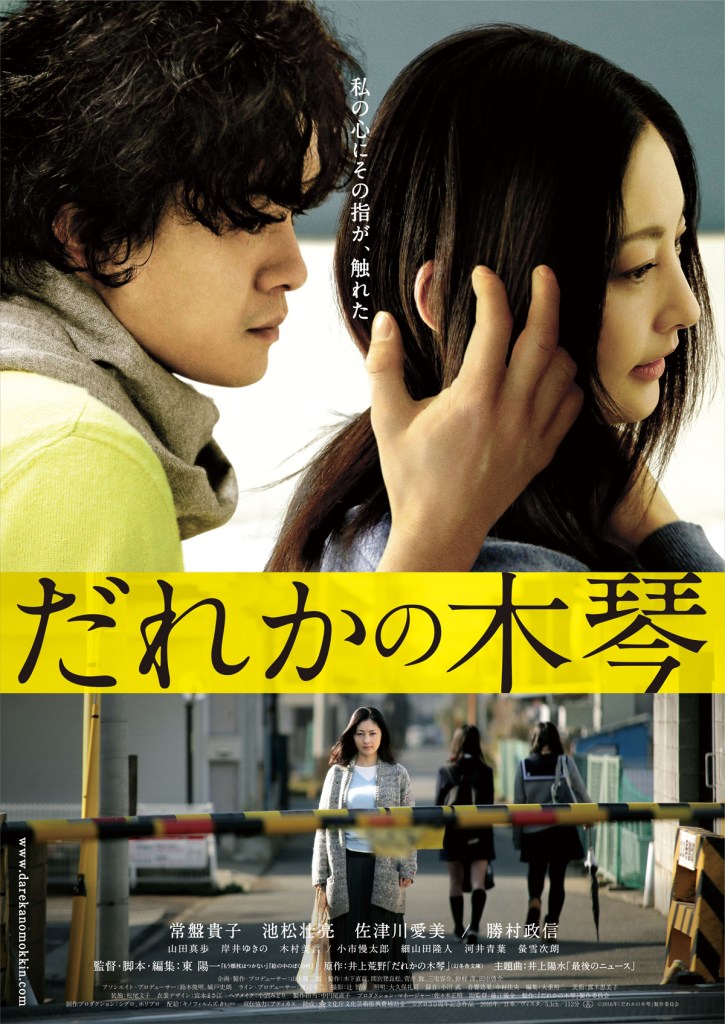 Yoichi Higashi has had a long and varied career, deliberately rejecting a particular style or home genre which is one reason he’s never become quite as well known internationally as some of his contemporaries. This slightly anonymous quality serves the veteran director well in his adaptation of Arane Inoue’s novel which takes a long hard look at those living lives of quiet desperation in modern Japan. Though sometimes filled with a strange sense of dread, the world of Someone’s Xylophone (だれかの木琴, Dareka no Mokkin) is a gentle and forgiving one in which people are basically good though driven to the brink by loneliness and disconnection.
 Windows on Worlds