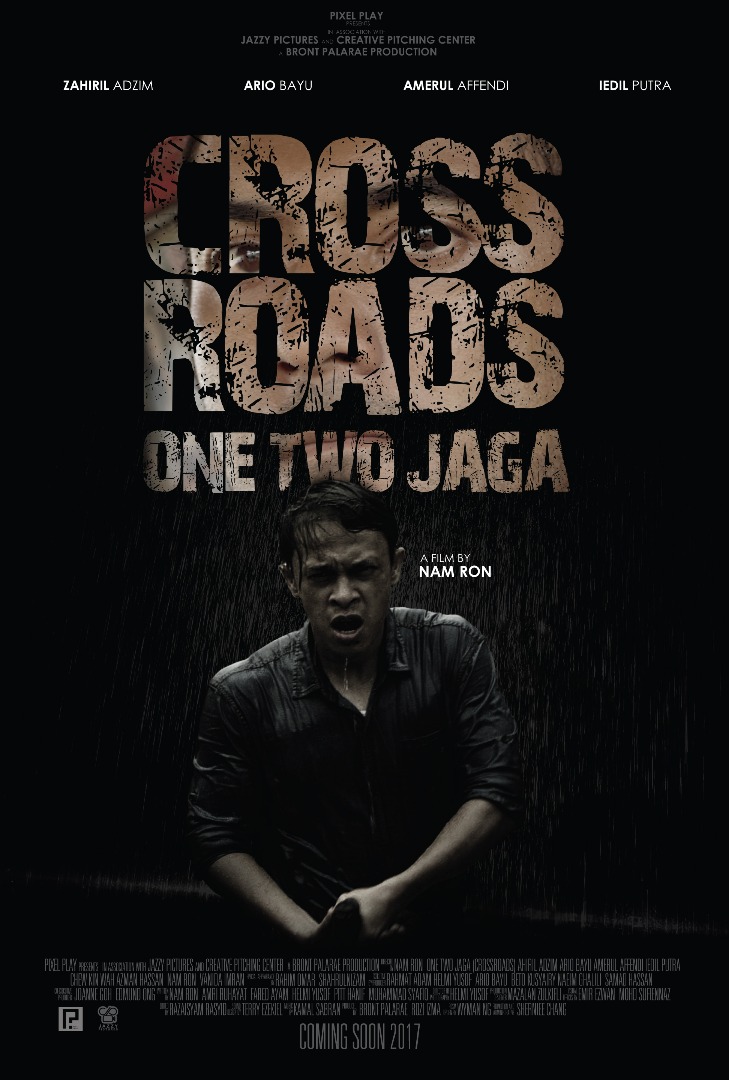

Come and Go (COME & GO カム・アンド・ゴー, Lim Kah-Wai, 2020)

Japanese cinema has not always been willing to contend with contentious social issues such as immigration. More recently, however, indie filmmakers in particular have been keen to critique the nation’s attitudes towards those who’ve come to make their home there. Like Akio Fujimoto’s Along the Sea, Lim Kah Wai’s Come and Go (カム・アンド・ゴー) explores the lives of those who’ve come to Japan, in this case Osaka, in search of a better life but have mostly encountered exploitation and prejudice while marginalised Japanese residents apparently fare little better. 

Lim weaves his disparate tale around the discovery of a skeleton in a rundown part of town which is later found to belong to an elderly woman apparently reported missing six months previously. The comings and goings that we witness are an interconnected series of movements between a quartet of South Korean sex workers apparently trying their luck in Osaka because of an economic downturn at home, a tour group of wealthy Chinese tourists mainly interested in shopping, their guide, a Malaysian businessman in town for a presentation about tourism, a lost Japanese woman failing to make it as a hostess, an Okinawan porn producer literally pulling women off the street and embarrassing them into taking part in his videos, a Taiwanese sex tourist, a Vietnamese man on a “Technical Trainee” scheme but trapped in exploitative factory work, a student from Burma sexually harassed at the second of her part-time jobs, a Nepali refugee dreaming of opening a restaurant of his own, the Japanese teacher he is having an affair with, her husband the policeman, a middle-aged Japanese man embarking on a career as a rent-an-uncle, and a man being exploited while working in a car park who also seems to be mixed up with gangsters.   

Osaka it seems is a busy place. Mr Lee, the man travelling with the Korean sex workers, harps on about the “Osaka dream” as if the city held some special allure but pretty much everyone is struggling, either exploiting or exploited by others. Like the three women of Along the Sea, Nam came to Osaka on the technical trainee programme but is treated badly by his unsympathetic boss who refuses to give him permission to return to Vietnam temporarily to visit his mother who has been taken ill. Nam too attempts to run away, contacting a Vietnamese friend who runs a restaurant for advice where he’s told to convert his technical trainee visa to a student one by enrolling in a language school so he can “come and go” as he pleases. This is the same language school where Yoshiko, the policeman’s wife currently having an affair with Nepali Refugee Musoun, works. We can see that her classes are barely attended, and when she asks her boss about apparently fake names on the roster, she’s told to make her attendance figures look better on paper. It’s clear that not everything is on the level at the school, the headmaster explaining to Nam he needs to pay a hefty fee to enrol but that’s OK because they can help him find a part-time job in return for a hefty part of his salary. Later picked up by the police, Nam runs into another Vietnamese guy who also left his technical trainee programme but now regrets it, claiming he was cheated by false promises and one of his friends even took his own life as a result. 

Working at the same factory but as a part-timer, Burmese student Mimi finds something similar as she’s sexually harassed by the skeevy middle-aged boss at her second part-time job at a supermarket. While the men are forced to deal with labour exploitation and physical violence, the women are also subject to ingrained patriarchal values as evidenced by the preoccupation with sex and pornography among many of the male visitors such as sex tourist Xiao Kang who idly plays with sex toys in a store while lining up for an autograph from an AV actress, or the collection of sleazy Chinese businessmen demanding to be set up with authentic Japanese porn stars. The problem there is that porn producer Ryuji is deep in debt to yakuza loan sharks and has no women on his books, eventually brokering an unconvincing deal with Chinese tour guide Cheung and the South Korean pimp Lee to pass off the Korean sex workers as Japanese porn stars assuming that the Chinese won’t notice the difference because one woman’s as good as another. Meanwhile, conservative Malaysian family man William finds himself extremely uncomfortable when forced to conduct business in a hostess bar which his contact keeps insisting is how business gets done in Japan while unwilling to change his behaviour to accommodate his guest which is in itself ironic as William is there to advise them on boosting tourism from Malaysia through cultural awareness. 

While well-meaning protestors take to the streets to hold an anti-discrimination rally, Kenji fairly points out that they preach acceptance for the international community but ignore mixed-ethnicity citizens like himself, something fully borne out by their rather defensive and somewhat prejudiced conversation when he leaves to use the bathroom. The police conference regarding the skeleton ends with the policeman lamenting that the modern society has become selfish and indifferent to the feelings of others placing wealth and convenience above community which is how an old woman’s body went undiscovered so long and apparently became mixed up in a complicated real estate scam. Even the Japanese rent-an-uncle is forging time-limited, compensated relationships with strangers while his own son ironically tries to convince him to retire to Malaysia so he can get his hands on the house. These people are all connected even if they don’t know it, all victims of the same oppressive system as the city moves all around them increasingly indifferent to their existence.


Trailer (English subtitles)
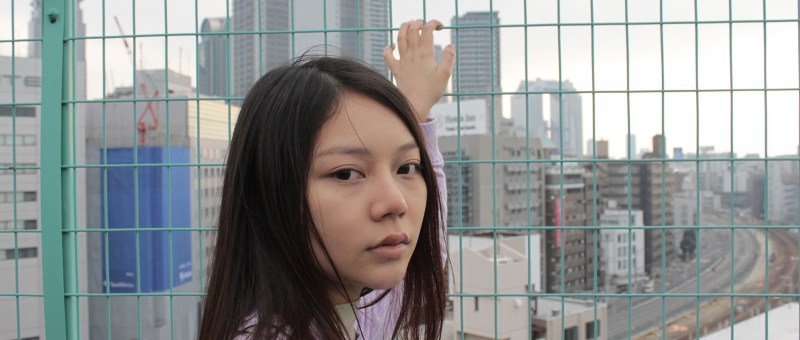
Victim(s) (加害者、被害人, Layla Zhuqing Ji, 2020)

“People don’t care about the truth, they just need someone to blame because that’s the easy thing to do” according to a secondary victim caught up in the complicated events which led to the killing at the centre of Layla Zhuqing Ji’s empathetic debut feature, Victim(s) (加害者、被害人, Jiāhàizhě, Bèihàirén). A tale of two mothers, Victim(s) does its best not to apportion blame to any one individual but points the finger at a rigid and austere conformist society in which conservative social codes and a culture of victim blaming conspire to restrict freedom and breed unhappiness. 

Cast in the roles of victim and killer are high school students Gangzi (Kahoe Hon), the son of a poor masseuse (Remon Lim) stabbed to death beside an ATM, and Chen (Fu Xianjun) son of a wealthy single-mother (Huang Lu) who some say made her money in questionable ways. Students at the school speak of discord between the two boys, describing Chen as strange, a bit of a loner with an unpleasant superiority complex that, coupled with his status as top of the class, led him to look down on those around him. They say he viewed Gangzi with disdain because of his working class background and was upset because they both liked the same girl, transfer student Qianmo (Wilson Hsu), but she turned him down in favour of Gangzi. After a few days on the run, Chen turns himself in and confesses to the crime but has a slightly different story, claiming that, in fact, he was bullied by the other kids including Gangzi partly because he was wealthy, they were roughing him up for money, and partly because he was an outsider at school widely disliked as a swot. 

Of course, both mothers are convinced their sons are perfect angels but are eventually led to discover that perhaps they didn’t know their children as well as they thought they did. The technological divide between the generations trumps that of social class with the kids largely living in an online world where the traditional prejudices are only magnified through teenage gossip. Rather than swapping notes like in the old days, they group chat during in lessons and reinforce social hierarchy through shame and bullying. Transfer student Qianmo quickly finds this out to her cost, becoming a target for the ruling group of popular girls after she declines to join their dance troupe, while the boys are determined to hit on her despite her obvious lack of interest. 

Qianmo was forced to give up dancing and leave her previous school which specialised in the arts because, it’s implied, her dance teacher was molesting her, yet she’s already been branded a “teenage slut” online for supposedly seducing him. The other girls are remarkably unsympathetic, engaging in sexualised bullying they proudly film and share amongst themselves. The boys are doing something similar, yet even though the point of these videos is that the kids share them widely to humiliate each other, they are never a part of the official investigation and the adults have no idea they exist. Qianmo is too afraid to report her bullying because she fears they’ll ask why it is she’s being bullied and then say it’s her own fault, while Chen who finds himself scapegoated after a homoerotic porn magazine is discovered in the dorm, simply fears reprisals. Questioned by the police the other kids all toe the line, afraid that they’ll become targets too for speaking the truth, all too happy to let Chen take the blame while allowing the awful status quo to continue but resentful that he will most likely wield his privilege to escape justice. 

Chen meanwhile blames himself, repeatedly asking if he’s the the cause of others’ suffering while Gangzi works out his frustrations with his abusive father and repressed sexuality through delinquency. Both mothers desperately try to save their sons, but find themselves struggling to comprehend the gap between the image they had of the young men their children were becoming and the unpleasant truths they are beginning to discover. Meanwhile, external bullying from a media mob further obfuscates the truth, baying for blood and creating only more victims in the process as it insists its brand of socially conservative, compassionless justice be served at all costs. Yet against the odds, the women eventually come to a kind of understanding, choosing to accept the reality while protecting other victims, refusing the “easy” option of a prepackaged “truth” that neatly fits the needs the needs of a bullying society. Ji’s hard-hitting debut too refuses easy answers, finding that in the cycle of violence and abuse perpetrators and victims are often one and the same but each subject to the same petty oppressions contributing to an atmosphere of rigid social conformity which breeds nothing but misery.


Victim(s) streamed as part of this year’s Udine Far East Film Festival.

Original trailer (English subtitles)

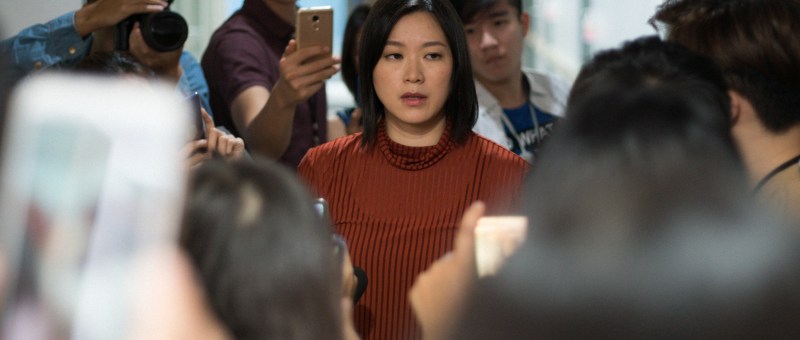
Crossroads: One Two Jaga (十字路口, Nam Ron, 2018)

crossroads one two jaga posterThe world is increasingly interconnected but far from greater freedom and increased possibilities, exploitation is often all that awaits those seeking opportunities overseas. Crossroads: One Two Jaga (十字路口) places the undocumented migrant worker at its centre and uncovers a deeply entrenched system of corruption and hypocrisy in which the line between the forces of order and chaos is so thin as to be barely discernible. The migrant worker is exploited twice over – once by the employers and again by the police who blackmail and extort, pulling in anyone who seems “suspicious” whenever they find themselves short of a few pennies. With no recourse to the “law” and no route “home”, there is little hope for a brighter future for any but those who seek to profit from other people’s misery.

Beginning at the end, we open on the bruised face of a young man who has prominent stitches on his cheek. Something tells us he is a police officer, but he is in questioning over the death of a young boy, killed by a bullet from his weapon. The officer looks stunned and claims to know nothing. As it turns out he may be telling the truth, but he alone is responsible for a child’s death, on the one hand, and exposing a corrupt police chief, on the other.

Flashing back, Joko (Izuan Fitri) – the son of Indonesian migrant worker Iman (Ario Bayu), wants to go for a ride with Adi (Amerul Affendi) – the adult son of Mr. Sarip (Azman Hassan) who runs a small construction firm (among other enterprises). Iman doesn’t really want his son to go, but he ignores him and goes anyway. Iman has another problem on his hands – his sister, Sumiyati (Asmara Abigail), who has left the family she was working for as a maid and wants to go home to Indonesia. Mr. Sarip says he can help with that (for a price) but Sumiyati is stopped by Hassan (Rosdeen Suboh) and his rookie partner Hussein (Zahiril Adzim). Hassan really just wants a bribe because his wife really needs money to avoid family embarrassment, but things goes south when Iman ropes in Adi to try and help him out only to escalate the situation into a declaration of war on the “rogue” policemen.

Undocumented workers exist in a kind of grey area which makes it possible for the unscrupulous to misuse them for their own ends. Sumiyati, like many young women, has gone abroad to work as a maid but found herself kept a virtual prisoner by her employer who holds her passport as a guarantee. With job parameters unclear, she finds herself not only maid but cook, babysitter, and office assistant and all for almost no pay. Fed up she upped and left, but lost her passport in the process leaving her with no legal way back to Indonesia which is where she’s decided she’d rather go. The only way “home” is through the back door channels operated by men like Mr. Sarip who have fingers in many pies and friends in all the right places.

Ordinarily speaking, a righteous rookie cop would be our hero, but we already know Hussein is our villain. Though he wants to enforce the letter of the law and resents the casual corruption of other officers, it’s his hotheadedness and refusal to play the long game which eventually cause so much trouble. Accidentally or otherwise, he does manage to unmask the kingpin responsible for holding together a system of corruption running from the top of the force down, collaborating with the criminals and turning a blind eye to real “crime”, but it comes at a heavy price and one to which Hussein seems worryingly indifferent.

Stylishly shot, Crossroads weaves a complex picture of interconnected exploitations in which the innocent are made to pay the price for the world in which they live. Realist in essence but expressionist in intent, gritty images of children disposing of bodies mingle with a father’s nightmare as blood colours the rain soaked ground and a young woman disappears in its miasmic haze. Malaysia maybe the crossroads of Asia, but it also finds itself at something of a junction unsure in which direction to turn, unwilling to confront the darkness that lies at the heart of the modern society.   


Screened at the 20th Udine Far East Film Festival.

Official trailer (English subtitles)