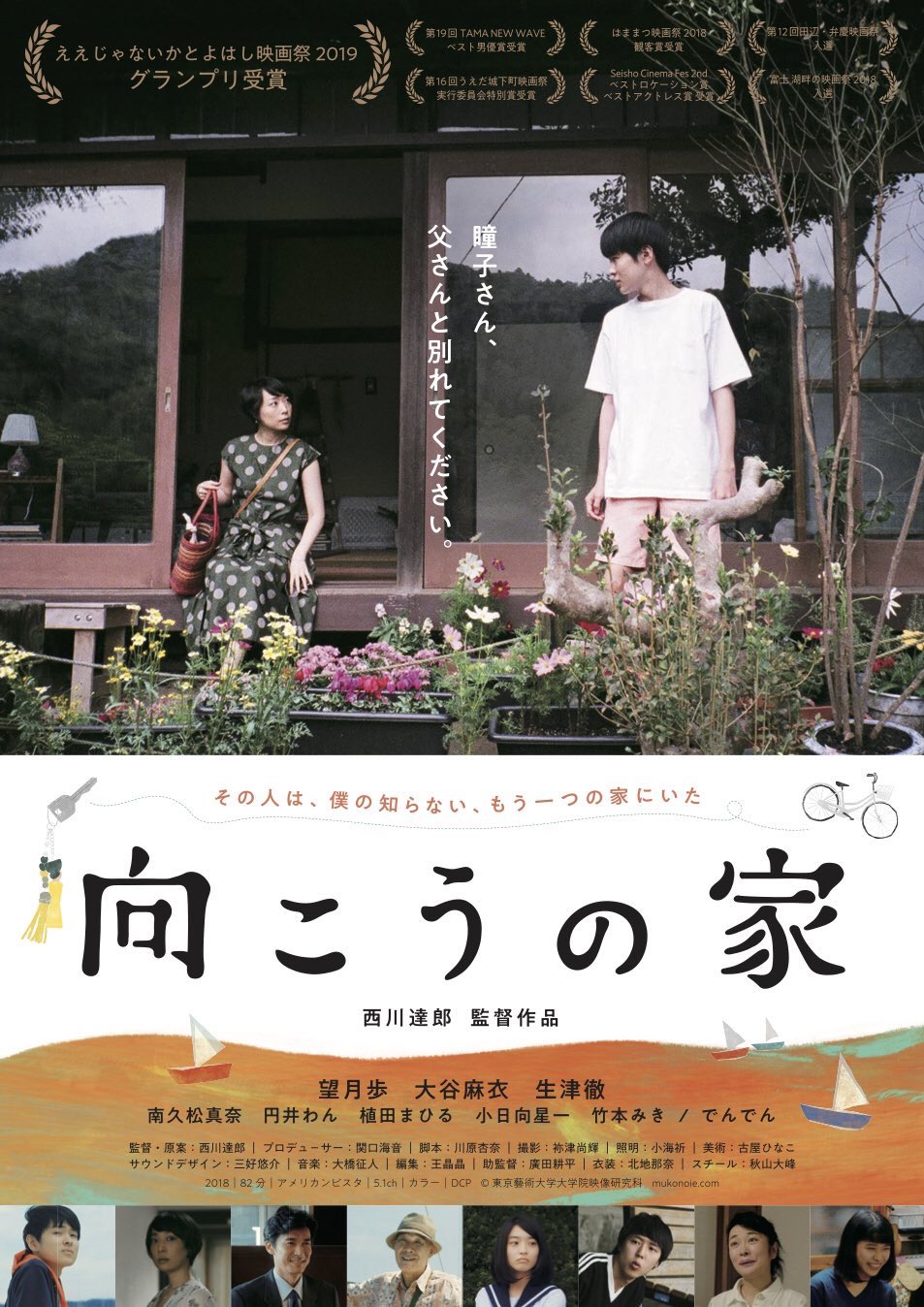
The Other Home (向こうの家, Tatsuro Nishikawa, 2018)

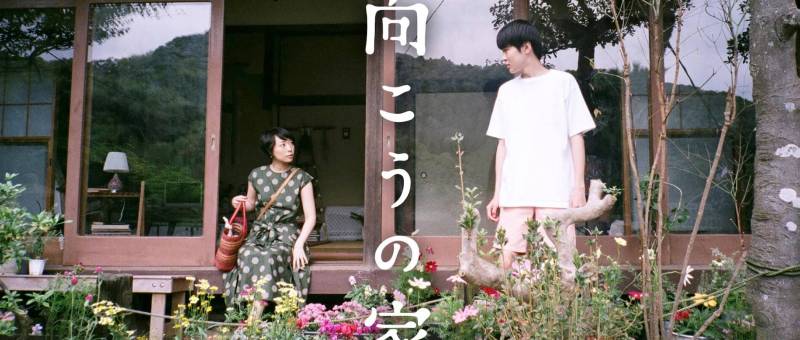
There comes a time in everyone’s life when they start to realise that things are not always as they appear and no matter how happy and settled your family life might seem, your parents aren’t perfect though they are probably doing their best. For Hagi (Ayumu Mochizuki), that moment comes at 16 when he gets fed up with school and takes some time off believing he might be able to learn more outside of the classroom than in. An unconventional coming-of-age tale, Tatsuro Nishikawa’s graduation project The Other Home (向こうの家, Mukou no Ie) is also a meditation on the modern family and the patriarchal order. 

Getting back to school after the summer break gets off to a rocky start when Hagi and his friend are told that the fishing club of which they are members is being shut down as the teacher who was in charge of it is scaling back her workload because she’s just got engaged and will eventually be leaving to get married. Hagi takes this in his stride, mostly at a loss over where to eat his lunch because his girlfriend, Naruse (Mahiru Ueta), for some reason thinks it’s embarrassing to eat alone in the classroom. In any case, Hagi reacts by deciding not to go to school at all. His parents don’t approve, but decide to give him some space to figure out what’s going on. Meanwhile, he’s beginning to wonder if it’s odd that his family never fight, his parents committed to talking things through peacefully rather than resentfully hiding their true feelings. 

Or, so he thought. There is something childishly naive in his conviction that because his parents never fight in front of him they never fight at all, though it’s true enough that he comes from a talking about things family in which his mother Naoko (Mana Minamihisamatsu), in particular, is keen that they share their thoughts and feelings honestly, looking forward to her husband Yoshiro (Toru Kizu) returning home each day after which they share a drink and make time to talk. It comes to something of a surprise to him then when his dad asks him to pick up a set of keys he’s forgotten and bring them to a cafe near where he works without letting his mother know. Hagi does as he’s told only to learn the keys are for a cheerful cottage by the sea which he’s been renting for his mistress, Toko (Mai Ohtani), with whom he now wants to break up preferably before the lease is due for renewal. Too cowardly to do it himself, Yoshiro enlists his teenage son’s help to break up with the woman he’s been cheating on his family with. 

Strangely, this revelation does not seem to sour him on his dad even if he realises the threat it poses to their happy family life. “Protecting the family peace. Men must uphold that promise” Yoshiro unironically tells his son, problematically implying that the way to do that is by covering up affairs rather than simply not having them. Dutifully Hagi heads over to “the other home”, only to be thrown out by Mr. Chiba (Denden), a friend of Toko’s who not unreasonably tells him that this is something his father should be dealing with himself rather than sending his teenage son to guilt his mistress into moving out of her house. Failing to engage with his father’s betrayal, Hagi nevertheless comes to sympathise with Toko who is about to be rendered homeless thanks to his father’s moral cowardice, staying with her in the cottage while lying to his mother that he’s doing an internship at his father’s company. 

Nevertheless, each of his parents is eventually found wanting as Toko teaches him the things they perhaps should have including how to ride a bike, an embarrassing oversight which had seen him deemed “uncool” by his exasperated girlfriend. The film has little time for Naoko’s talking about things philosophy, her husband merely lying to her while engaging in the same patriarchal double standards simultaneously insisting it’s a man’s duty to “protect family peace” while deliberately endangering it through an extramarital affair. Hagi too perhaps picks up these uncomfortably old fashioned ideas partly from his teacher who proudly shows off her engagement ring boasting that it cost her fiancé three months’ salary, the expense apparently proof that he intends to look after her well for the rest of her life as if she couldn’t do that herself. He begins to feel sorry for Toko as she outlines her life as a kept woman, a backroom full of unwanted presents from various men who too looked after her for a time, but in the end merely offers to look after her himself by quitting school to get a job so he can renew the lease to make up for his father’s moral cowardice.

The reason they were so happy, it seems, is that Yoshiro gave himself an escape valve. “Sometimes it’s hard for me to be dad” he admits, apologising for his inability to share his burdens honestly, his male failure neatly undercutting the tacit acceptance of the patriarchal authority which stands in contrast to Naoko’s ideal of a healthy relationship founded on emotional authenticity. Finally learning to ride a bike, Hagi finds himself entering a less innocent world as a young man now fully aware of the universe’s moral greyness if perhaps not quite so enlightened as he might feel himself to be.


The Other Home screened as part of Camera Japan 2020.

Original trailer (no subtitles)

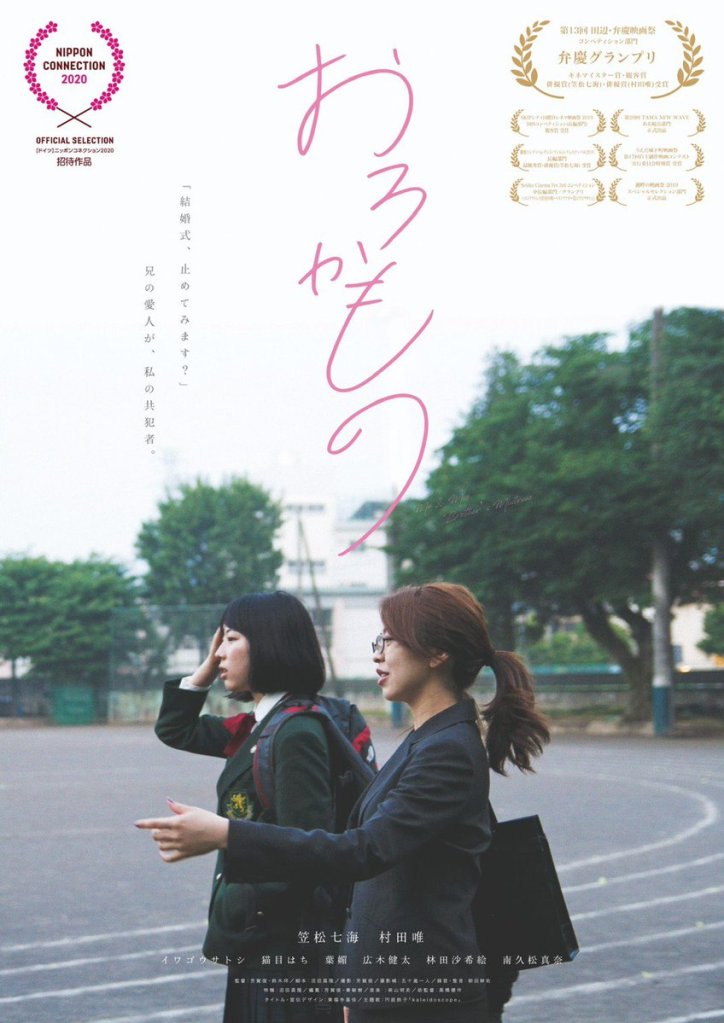
Me & My Brother’s Mistress (おろかもの, Sho Suzuki & Takashi Haga, 2019)

Why does everyone always blame “the other woman” and not the cheating boyfriend? That’s a question earnest high schooler Yoko begins to ask herself in Sho Suzuki & Takashi Haga’s Me & My Brother’s Mistress (おろかもの, Orokamono) after spotting a suspicious text on her brother’s phone and then spying on him as he leaves a love hotel with another woman a month before his wedding. But what is it that she finds so troubling, realising her only remaining family member is a two-bit louse, or the fact he’s going to get married and it won’t be just the two of them anymore?

In the last year of high school, Yoko (Nanami Kasamatsu) is filled with anxiety about the future. In fact, she’s the only one who hasn’t returned her careers survey and it seems she also turned the previous one in blank. Her parents passed away nine years previously, and ever since then it’s just been her and her older brother Kenji (Satoshi Iwago), now a permanently exhausted salaryman engaged to the homely Kaho (Hachi Nekome). Yoko doesn’t get on with Kaho, for the bizarre reason that she’s just too nice, but when she figures out that Kenji is having a torrid affair mostly conducted in love hotels on Sunday afternoons, she is quite rightly outraged that her brother could be so duplicitous. Rather than confront him, she decides to have a word with the “mistress”, following her around all day but conflicted on spotting her doing such unexpectedly decent things as giving up her seat on the train for a middle-aged woman laden with shopping. Tracking her to a restaurant, she planned to give her a dressing down but Misa (Yui Murata), as she discovers her name to be, is perfectly reasonable if also unrepentant.

Misa asks a number pertinent questions including why it is Yoko thinks this is any of her business in the first place and why she’s decided to have it out with her and not Kenji all of which Yoko has to concede is fair. Unlikely as it sounds, the two women end up becoming friends of a sort, Yoko beginning to sympathise in realising this is all her brother’s fault but still not really feeling all that sorry for Kaho which is one reason why she suddenly suggests they try to stop Kenji’s wedding. 

Tellingly, she later asks Kaho if she’s not afraid that another woman will steal Kenji away, but it’s a question she should perhaps have asked herself. She is quite obviously at difficult time. Everything is about to change for her. She’ll soon be leaving school and evidently doesn’t really want to think about what happens next, while her home life is also about to change when Kaho moves in with them permanently meaning it’ll no longer be just her and Kenji. Perhaps that’s what’s really bothering her, that Kaho is displacing her in her own home and stealing her big brother away to start a new family that might not include her in quite the same way. 

Indeed, her main objection to Kaho is in her genial domesticity, the various ways she and Kenji already operate as a couple, the perfectly cooked meals she prepares and the maternal care with which she overseas the house. Kaho isn’t really worried about another woman because she knows what Kenji is looking for is exactly what she gives him – a settled home. Misa, meanwhile, laments her status as a perpetual mistress, never really valued by the usually already attached men she ends up dating who think of her as a casual fling, a short-lived distraction from their domestic responsibilities. Still too young to fully understand, Yoko feels offended on Misa’s behalf that her brother could treat her or any woman this way. Yet their plan to stop the wedding ends up proving counterproductive in that it forces her to sympathise with Kaho and perhaps realise that Kaho herself was never the problem while also regretting having encouraged Misa’s self destructive descent towards an inevitable conclusion that is only going to cause her more pain. 

Yoko’s only future goals were apparently to become a decent and honest person, an ideal she perhaps is not quite serving in her “evil” plot to ruin her brother’s wedding. Misa brands her a “boring teen” already obsessed with dull stability, while it’s perhaps Misa’s boldness and unconventionality which attracts the otherwise straight-laced young woman. In any case, Yoko begins to discover a new equilibrium or at least a new accommodation with adulthood that lends her a little of Misa’s defiance as she makes an unexpectedly bold decision of her own in figuring out what it is she really wants and walking confidently towards the future even if with no real clue as to what comes next.


Me & My Brother’s Mistress streamed as part of this year’s online Nippon Connection Film Festival.

Original trailer (English subtitles)

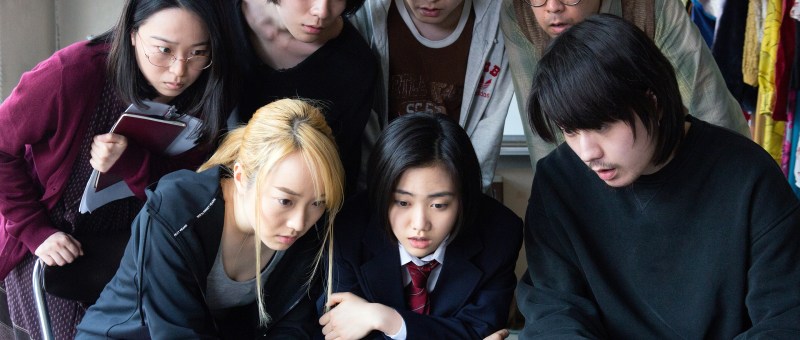
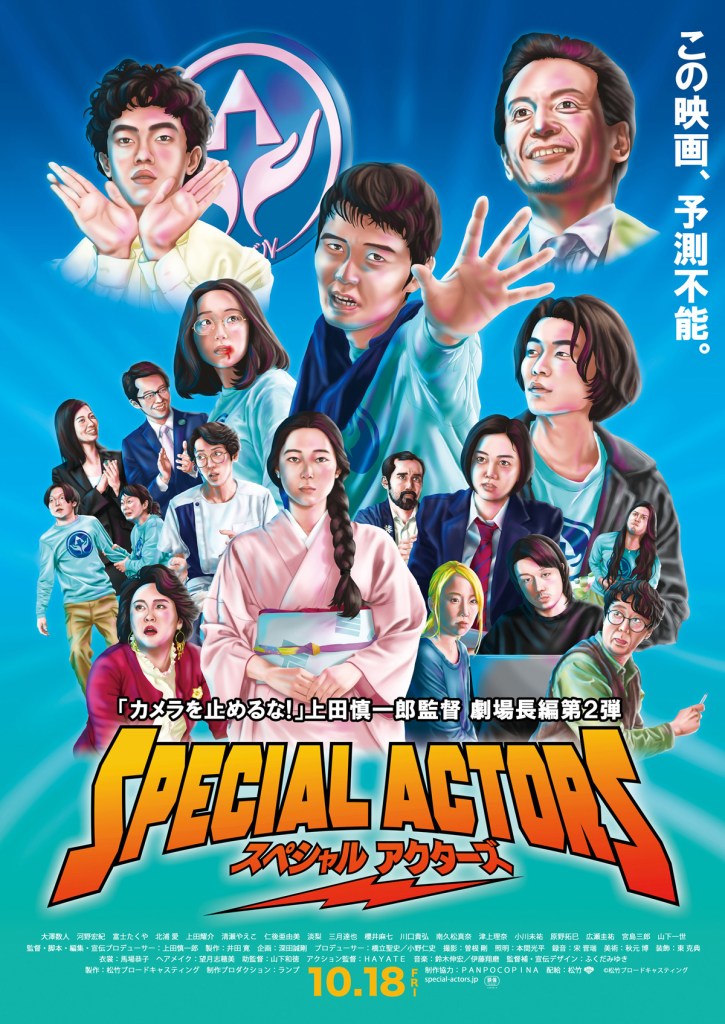
Special Actors (スペシャル アクターズ, Shinichiro Ueda, 2019)

When your made on a shoestring indie debut becomes an accidental international phenomenon, no one could really blame you for succumbing to imposter syndrome. Shinichiro Ueda’s One Cut of the Dead, a meta comedy with high concept conceit, delighted fans around the world but rather than slide into summer tentpole territory Ueda remains true to his roots with follow up feature Special Actors (スペシャル アクターズ) once again developed through actors’ workshops and owing a significant debt to contemporary stage comedy.

Our dejected hero, Kazuto (Kazuto Osawa), is an anxious young man burdened with PTSD from childhood trauma that causes him to faint when he becomes overly stressed or is confronted by an overbearing, if not actually violent, male authority figure. He dreams of becoming a hero who can protect people like Rescue Man, the star of an American tokusatsu-style show he’s obsessively watched dubbed into Japanese since childhood, and is determined to become an actor only his habit of fainting mid-audition constantly frustrates his ambitions. Already behind on his rent and about to be fired from his part-time job as a security guard on the grounds that he didn’t disclose his “illness” when he applied, Kazuto is reunited with his estranged younger brother Hiroki (Hiroki Kono), also an actor, who offers to introduce him to his agency, “Special Actors”. In addition to the usual TV and advertising work, Special Actors speciality is renting out talent for “real” as in providing professional mourners, bulking out theatre audiences with laughing stooges, and engineering long queues outside previously empty restaurants. 

Kazuto isn’t quite convinced, not only because it seems like anxiety central, but because it’s more than a little bit shady. The lead “scenario” writer was once a conman, and you can’t get away from the fact this is all quite manipulative and essentially unethical. Forced to take the job because of his financial predicament, he finds himself involved in various plots to change problematic behaviour at the request of well-meaning relatives such as a mother desperate to rescue her daughter from frittering all her money away at host bars. But are the Special Actors really any different than a host at a host bar who is after all only playing a role, as the young woman must know even if she has for some reason been taken in by it? Perhaps they’d be better to find out what is fuelling her obsession rather than coming up with some hokum involving a fake shaman to convince her that her behaviour is dangerous on a cosmic level. 

The moral ambiguity only deepens when the team take on their biggest challenge yet, taking down a shady cult at the request of an orphaned teenage girl whose sister seems primed to give away the family inn. Abruptly shifting into the realms of the espionage thriller reimagined as theatre, Ueda concocts an elaborate heist as the Special Actors infiltrate with the intention to expose. The central irony is of course that in practical terms there isn’t so much difference between them. They are both “lying”, manipulating vulnerable people and doing it for financial gain. “Acting is a big lie” the irate director had screamed in Kazuto’s face, “you have to mean it”. Is the shady cult merely “theatre” taken to an extreme, and if so who if anyone should be held responsible?

Ueda isn’t so much interested in these themes as the ironic potential of their latent comedy, stitching together a series of theatre skit set pieces working towards the epic finale in which the hero, Kazuto, learns to put on his cape and save the day by overcoming his internal “villain” in the shape of his abusive father. Like the cult, the Special Actors are also promising salvation or at least liberation from behaviours which others find problematic regardless of the target’s own wishes or desires even if in the case of some it may be for their own good, a more elaborate form of role play than that enacted in a therapy session. We are indeed all “acting” to one extent or another and you can never be sure that anyone is who they say they are because life itself is theatre. Shot with a perhaps thematically appropriate TV drama aesthetic, Kazuto’s zero to hero journey is pure wish fulfilment fantasy, but even if never reaching the perfectly constructed heights of One Cut of the Dead is undeniably entertaining. 


Special Actors is available to stream in the US until July 30 as part of this year’s Japan Cuts. Tune in for the live Q&A (available worldwide) after the movie on July 17 (also available afterwards on demand)!

Original trailer (English subtitles)