Ajin: Demi-Human (亜人, Katsuyuki Motohiro, 2017)

Katsuyuki Motohiro’s 2001social drama Transparent: Tribute to a Sad Genius had attempted to show the government acting with compassion having discovered humans with a potentially dangerous power, in that case the unfortunate ability to broadcast their every thought. Rather than locking them up in labs, the government had allowed the Transparents to live in the community under the caveat that they must never be told of their ability while continuing to monitor them secretly and in fact micromanaging their lives with less than ethical attention. 2017’s Ajin (亜人), adapted from the manga by Gamon Sakurai, is in many ways Transparent’s flip side in which the government has discovered the existence of a series of people known as Demi-Humans with super fast healing ability meaning that they cannot die from injury and has been conducting what is essentially vivisection on them justifying themselves that “the Ajin are the precious key to the evolution of mankind”. 

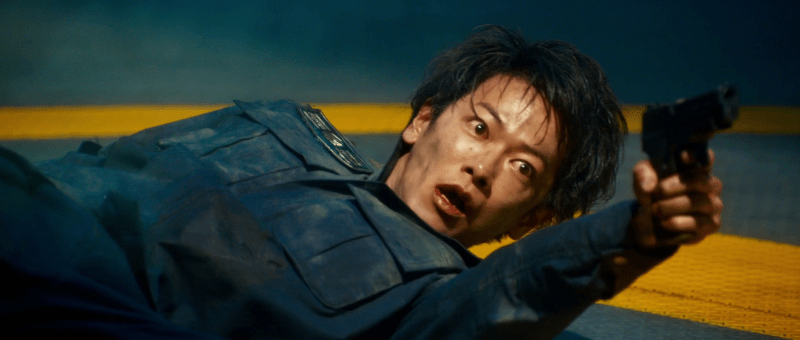
Nevertheless, they are mindful that the public would not accept it if they knew the government’s claims of “protecting” Ajins was a smokescreen to disguise the fact they’ve been experimenting on them, let alone selling the results to commercial companies for the production of chemical weapons among other things. Previously a regular medical student, Kei Nagano (Takeru Satoh) is the third Ajin to be unmasked in Japan after being hit by a bus only to heal rapidly and stumble away. After a brief period of torture, Kei is “rescued” by crazed terrorist revolutionary leader Sato (Go Ayano) and his underling Tanaka (Yu Shirota), escaped Ajins 1 and 2, but becomes their enemy after he refuses to turn against the scientists who had been torturing him pointing out that killing them would only make him feel worse and is therefore counterproductive. 

The implication is that 20 years of brutal torture at the hands of mad scientists has turned Sato into a crazed fascist hellbent on the extinction of the human race, seeking an “autonomous” space for Ajin along with full civil rights for Demi-Humans. Though we are told that only three Ajin have been unmasked so far in Japan, the implication is that there are many more living quietly some of whom Sato recruits after putting out a call for all disenfranchised Demi-Humans to join his revolution not for equality but domination. It’s this movement Kei can’t support, the classically “good” Ajin who disapproves of Sato’s actions and wants to leave peacefully alongside humanity. As such, there’s something a little uncomfortable in his inevitable decision to team up with the people who were just vivisecting him in order to stop Sato achieving his goal of guaranteed civil rights for people like him asking for nothing more than that his family be protected and he be left alone and given a new ID to live quietly in somewhere in Japan when all of this over. 

The unpalatable implication seems to be that minorities are only worthy of respect if they serve those in power, both Kei and another closeted Ajin benefiting directly and individually by siding with humanity though humanity may not honour the various promises it makes while they are partially complicit in the torture and exploitation of other Ajins. Sato’s basic request is only to given his full rights in the freedom from torture, but even this cannot be granted because of the threat he presents to humanity in that the inability to die means that he cannot be controlled through violence. Ironically enough Sato does seem to believe himself to be the next step in human evolution, after 20 years of brutal torture believing that humanity is a lesser being which those like him are intended to replace. 

Kei meanwhile encounters kind humans such as Mrs. Yamanaka (Kazuko Yoshiyuki) who kindly offers him a place to hideout because when you see someone is in trouble you just help them even if a baying mob later turn up at your door to ask why. There may be a minor allegory in the way the Ajins are treated, feared by and excluded from regular society, forced to keep their true natures secret in order to live a “quiet” life but than again Sato and his cohort of equally crazed young Demi-Humans who presumably have never been tortured are depicted as quasi-fascist radicals selling their own organs on the medical black market and eventually prepared to unleash a chemical weapon on Tokyo to make it unliveable for regular humans in order to claim their own space. Nevertheless, Motohiro’s drama is at its best during its high impact, well choreographed action sequences displaying some top quality visual effects as the Ajins produce their ghostly avatars or reassemble themselves after catastrophic injury even if the discomfort of the underlying messages cannot be entirely escaped. 


Original trailer (no subtitles)
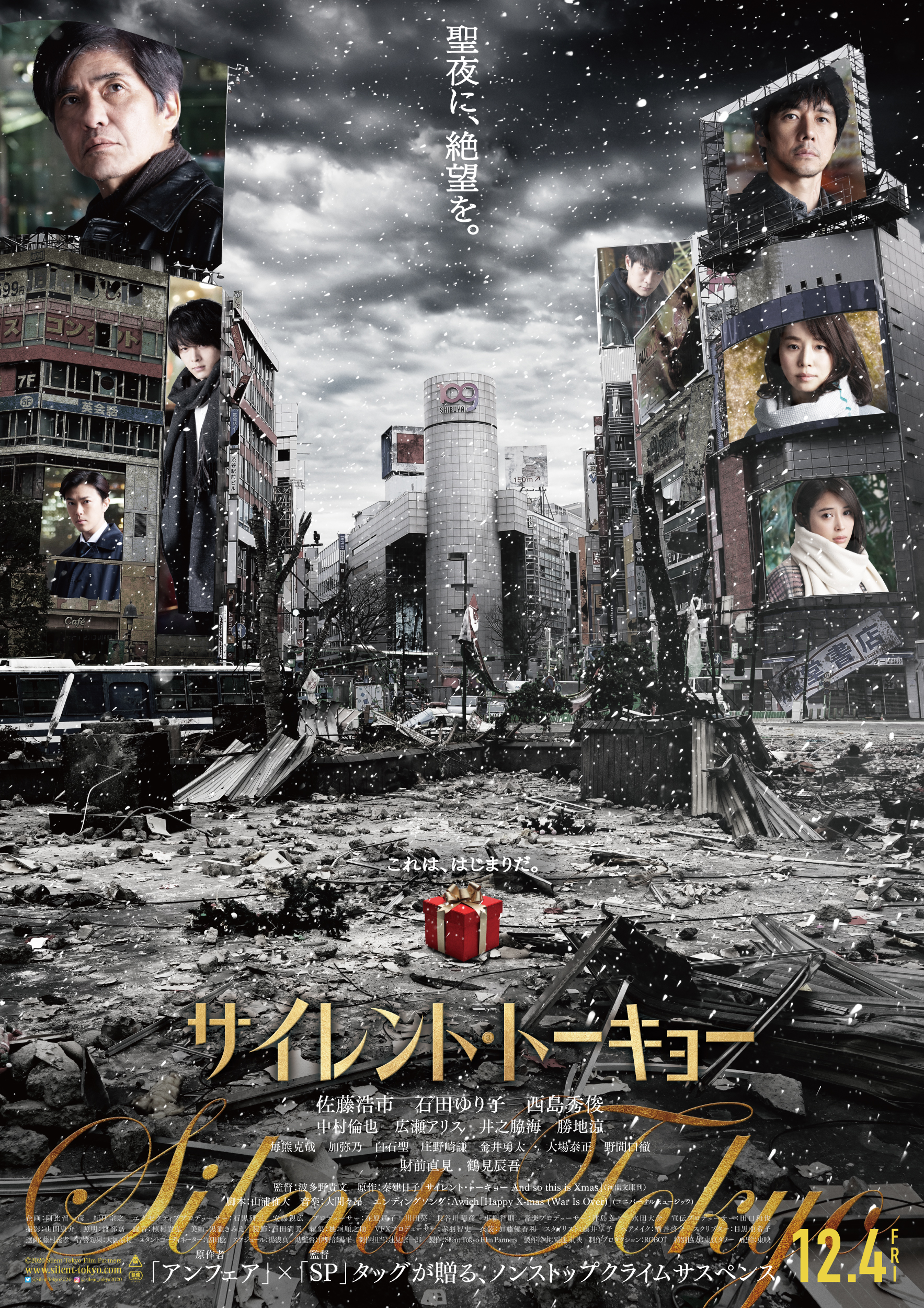
Silent Tokyo (サイレント・トーキョー, Takafumi Hatano, 2020)

Traditionally speaking, Christmas is a time of joy and hope, peace to all men. It is then a particular cruelty to plan a terrorist event at the very time people have been conditioned to feel safe, even if in Japan Christmas is less about familial love than the romantic. Christmas Eve will be far from a silent night in Takafumi Hatano’s holiday thriller Silent Tokyo (サイレント・トーキョー) adapted from the novel by Takehiko Hata, the sound of explosions disrupting the peaceful atmosphere as a mysterious bomber threatens to blow up Tokyo Tower if they are not granted a personal audience with the prime minister on live TV. 

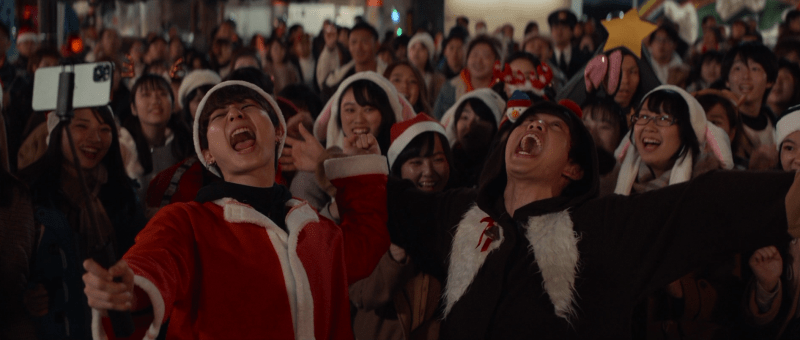
Thankfully Japan does not have an extensive history of terrorist action at least of this nature, that’s one reason why a when a pair of TV journalists report a tip off they’ve received about a bomb in a shopping centre the police take little notice. The shopping centre bomb is real but of low power leaving only a single person with light injuries after most shoppers are evacuated following a smaller warning explosion in a bin near the Christmas display. It’s enough for the police to take notice, especially as grizzled veteran Seta (Hidetoshi Nishijima) becomes convinced it’s likely a dry run for something more serious, but still no one really believes a bomb could go off in the middle of Tokyo even when a message from the bomber threatening to blow up the Christmas tree in Shibuya if they are not granted an audience with the prime minister is played on large screens around the city. For whatever reason, the police choose not to evacuate the area which is quickly filled by the morbidly curious along with holiday revellers in Santa suits live-streaming the event via social media as if it were the countdown on New Year’s Eve. When the bomb doesn’t go off, they content themselves with a rousing chorus of “congratulations” as if it were all some kind of Christmas prank only to be hit by the delayed explosion a few minutes later in an elaborately staged scene of urban carnage. 

Hatano shifts suspicion between a number of suspects before finally bringing it all together while continually hinting at the bomber’s, and the film’s, true message. Early on we see a mass protest against the prime minister who appears on a large screen insisting that Japan abandon its pacifist constitution and become militarised nation capable of going to war should the necessity arise. The irony is, of course, that the PM evidently chooses not to mount much of a defence against this immediate internal threat, never mind the external, while the bomber’s message turns out to be that war is morally wrong and not something a civilised nation should be pursuing. The bombs are intended as a wakeup call to the prime minister and the “apathetic” citizens of Japan who elected him, urging them that if they truly understood the nature of war they would want no part of it. That the message is delivered through violence which includes loss of life and serious injury is another irony and one likely to prove counterproductive especially considering the bullishness of the PM who repeatedly appears on TV screens insisting that the government does not negotiate with terrorists while simultaneously playing the strongman and not appearing to do very much else. 

In any case, the film briefly touches on other kinds of secondary violence such as the affects of post-traumatic stress in soldiers returning from peacekeeping missions overseas, police dealing with major incidents, victims of crime, and that of a young man having witnessed his father violently abusing his mother. But in keeping with the Christmas theme, the motive turns out to be romantic in addition to political delivered with a kind of misplaced love and desire for vengeance which goes someway to explaining the various target locations which are all obvious stop offs on a stereotypical Tokyo day trip culminating with the iconic Tokyo Tower. The irony of this anti-violence bombing campaign is fully brought home by the assertions of the police that they are technically at war with the bomber, who perhaps hopes that being directly subjected to the reality of military violence will help bolster support for the pacifist constitution while their hope of being able to change the prime minister’s nationalistic mindset through chatting with him on TV seems rather naive. In any case, the messages of peace to all men are perfectly suited to the festive season even if they come in slightly counterintuitive packaging. 


Original trailer (English subtitles available from CC button)

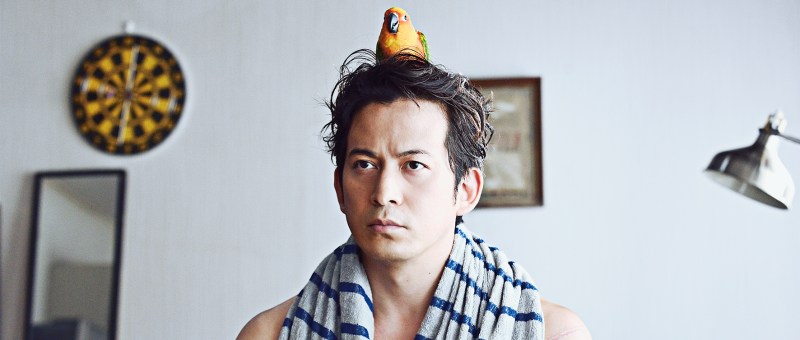
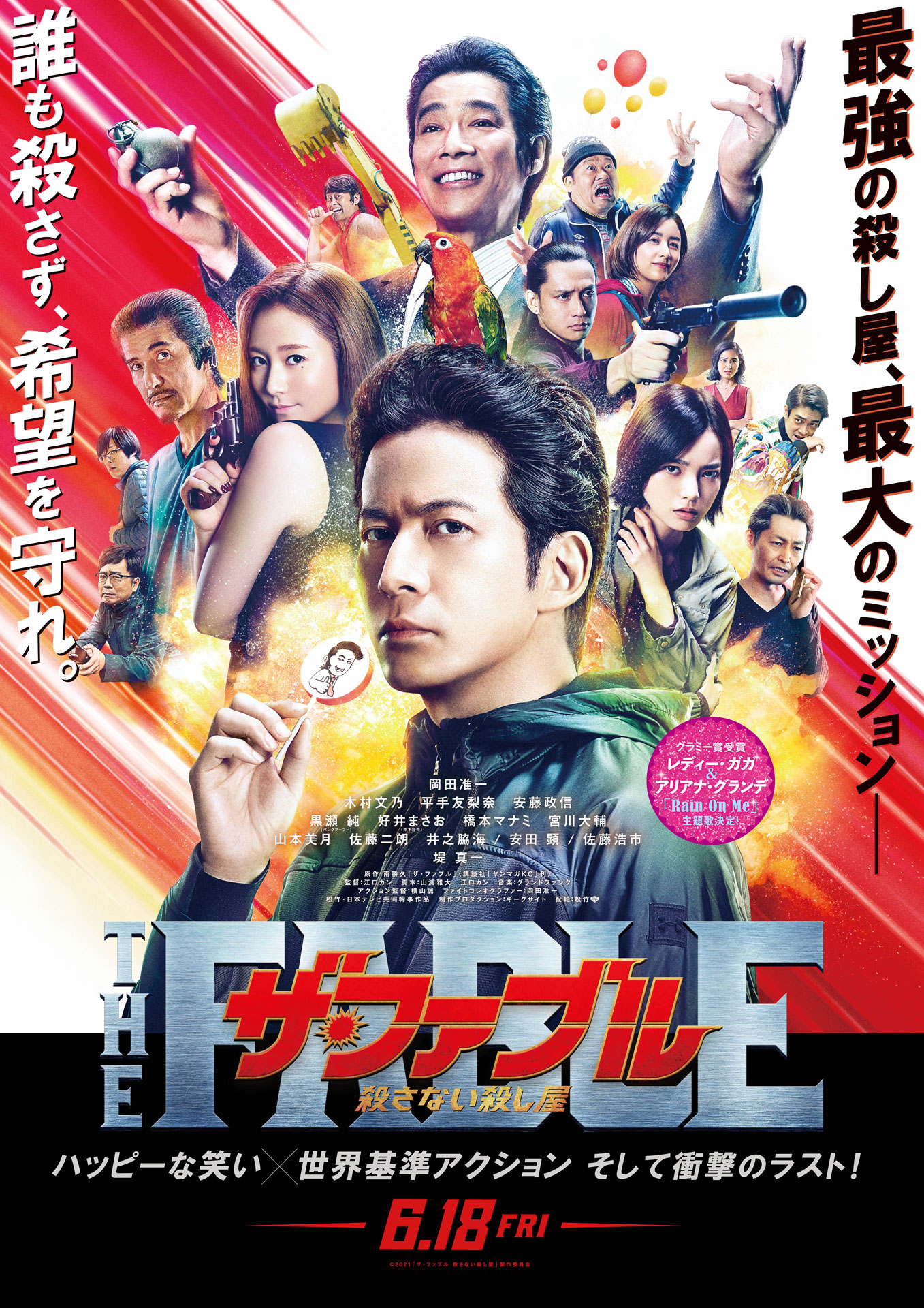
The Fable: A Contract Killer Who Doesn’t Kill (ザ・ファブル 殺さない殺し屋, Kan Eguchi, 2021)

Appearances can be deceptive. A case could be made that everyone is in a sense living undercover, pretending to be something they’re not in order to survive in a conformist society and most do indeed have their secrets even if they’re relatively benign. Others, meanwhile, are on a kind of sabbatical from a life of meticulous violence such as the hero of Kan Eguchi’s sequel to smash hit action comedy The Fable, The Fable: A Contract Killer Who Doesn’t Kill (ザ・ファブル 殺さない殺し屋, The Fable: Korosanai Koroshiya) or like his antagonist living a double life with his apparently genuine concern for the lives of disabled and disadvantaged children balanced by his business of targeting wayward youngsters for the purposes of extortion. 

Some months on from the previous action, “Sato” (Junichi Okada), formerly a top Tokyo assassin known as The Fable, is successfully maintaining his cover hiding out in Osaka as an “ordinary” person with a part-time job in a print and design shop. His cover is almost blown, however, when his colleague Etsuji (Masao Yoshii) is targeted by Utsubo (Shinichi Tsutsumi), ostensibly the leader of a local organisation advocating for the rights of children but also a shady gangster who finances his “philanthropy” by extorting the parents of young people who’ve in someway gone off the rails. Etsuji’s crime is, as was exposed in the previous film, his spy cam habit and in particular his planting of hidden cameras in the home of colleague Misaki (Mizuki Yamamoto) with whom he has an unhealthy obsession stemming from her time as an aspiring idol star. Blaming Misaki for his misfortune, Etsuji turns to violence but is shut down by Sato who risks blowing his cover in order to protect her. Realising he has a previous connection with Utsubo, Sato makes the gang an offer they can’t refuse in order to get Etsuji back but quickly finds himself drawn into another deadly battle with bad guys endangering his still in progress no kill mission. 

Focussed this time much more on action than the fish out of water comedy of Sato’s attempts learn the rules of polite society having been raised in the mountains as a super efficient killing machine, The Fable 2 nevertheless wastes no time in exposing the murkiness of the “normal” world Sato is intended to inhabit. Utsubo is a hit with the local mothers, taken with his smart suit and professionalism as he gives “inspirational” speeches about park safety while making time to converse in sign language with a deaf little girl explaining to another mother that it’s important to “listen to every voice”. As part of his patter he implies his assistant, Hinako (Yurina Hirate), who uses a wheelchair, was injured in a freak park-related accident as a child when in reality she sustained the injury while trapped in the back of a car which veered off a roof after The Fable took out its driver. Vaguely recognising her in the local park, Sato takes an interest out of guilt as the young woman attempts to rebuild her strength in the hope of walking again though that might in itself be contrary to Utsubo’s desires. 

As in the first film, Sato may be a ruthlessly efficient killing machine but at heart he’s still childishly innocent, hoping to help the young woman he unwittingly hurt but also keen not interfere with her ability to help herself. Misunderstanding the situation, Hinako asks Utsubo to lay off Sato, explaining that he gives her confidence as she begins to realise that she can stand alone, as the sometimes uncomfortably ablest metaphor would have it, and no longer needs to be complicit in Utsubo’s nefarious schemes nor need she continue to punish herself in guilt over her traumatic past. While Sato and his handler Yoko (Fumino Kimura) pose as a pair of siblings watched over by their benevolent if absent boss (Koichi Sato), Hinako and underling Suzuki (Masanobu Ando) similarly pose as brother and sister only with the comparatively dubious guidance of Utsubo who affects kindness and generosity while burying problematic youngsters alive in the forest in order to extort money from their “protective” parents. “It’s always the villain who tells the truth” Utsubo explains, insisting that it’s shame and humiliation which build self-esteem in direct contrast to the gently invisible support which seems to have re-activated Hinako’s desire for life.

Sato has at least discovered the benefits of a well functioning and supportive “family” network thanks to the, as we discover, equally handy Yoko, and his still largely oblivious workplace friends. Amping up the action value, Eguchi careers from set piece to set piece culminating in a high octane chase through an apartment block and its eventually unstable scaffolding while making space for slapstick comedy such as two guys trying to move a piano at a very inconvenient moment. A gently wholesome tale of a pure-hearted hitman kicking back against societal hypocrisy while figuring out how to be “normal” in a confusing society, The Fable 2 more than builds on the promise of its predecessor while allowing its hero the space to grow as he begins to adjust to his new and very “ordinary” life.


The Fable: A Contract Killer Who Doesn’t Kill screens on July 7 as part of this year’s Neuchâtel International Fantastic Film Festival (NIFFF)

Original trailer (English subtitles)