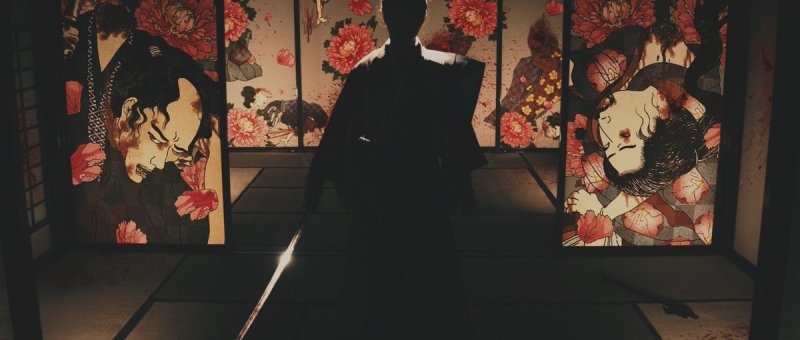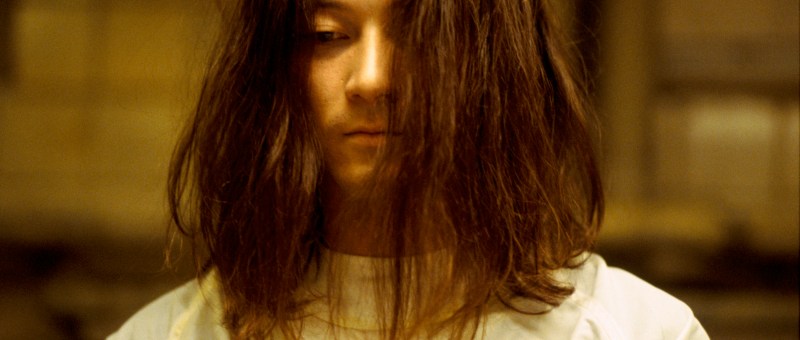
Vital (ヴィタール, Shinya Tsukamoto, 2004)

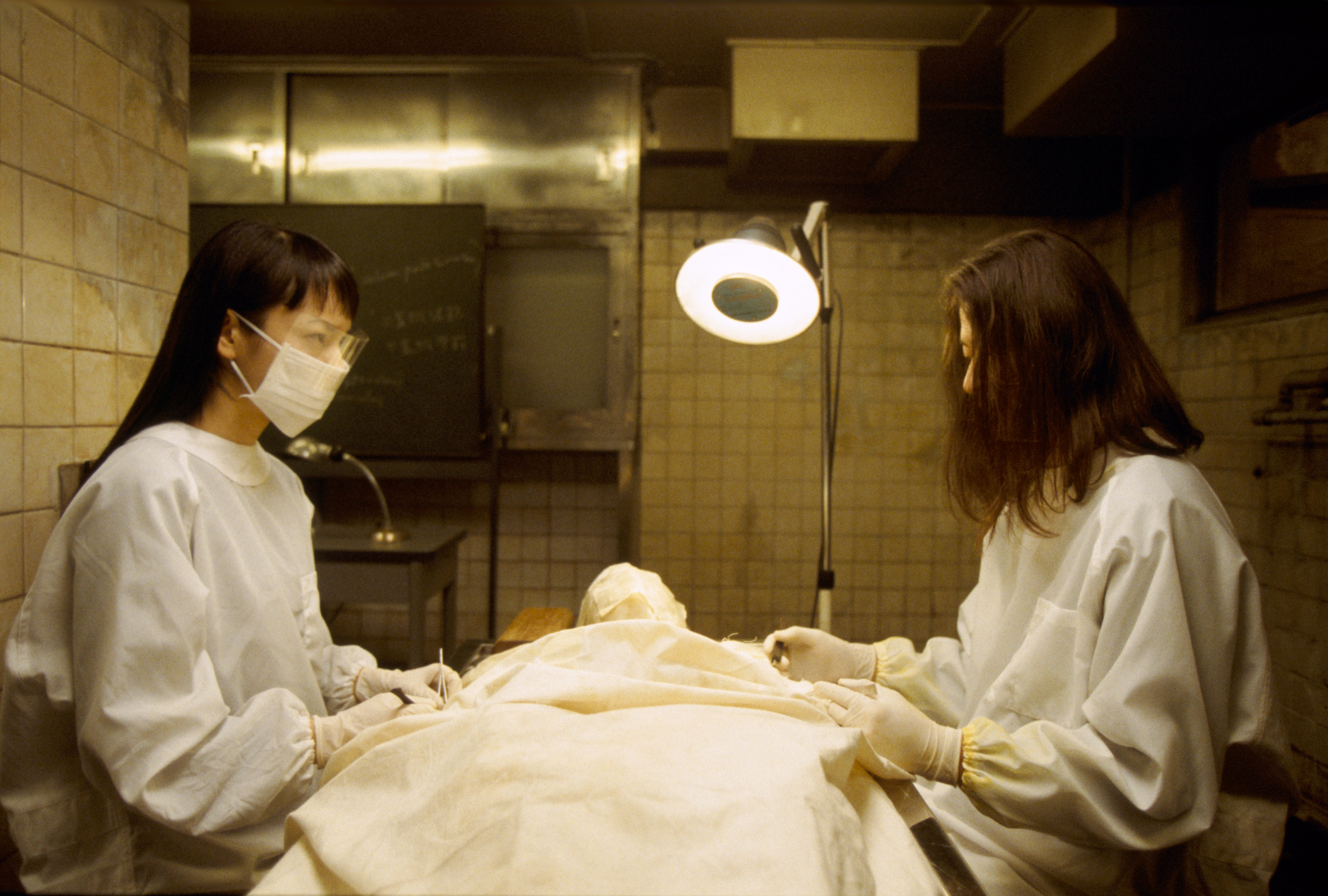
“There is the vast realm of the unconscious,” one of the professors explains to vacant medical student Hiroshi a soon-to-be physician attempting to heal himself from a trauma he doesn’t fully understand. Perhaps as the title implies, Vital (ヴィタール) sees Tsukamoto branch out from his vistas of urban alienation to find a new paradise in nature albeit one that it exists largely in the mind and that the hero can never fully return to because this place of life is also one of death which exists inside a kind of eternity.

This explains to some extent Hiroshi’s (Tadanobu Asano) temporal confusion. Having lost his memory following a car accident in which he later learns his girlfriend Ryoko (Nami Tsukamoto) was killed, he shifts between “reality” and what first seems to be flashbacks of his unremembered past but are actually taking place in a kind of alternate, perhaps idealised reality in the “vast realm of the unconscious” as Hiroshi attempts to reconstruct his image of Ryoko along with that of himself. Another of his professors more philosophically asks were lies the seat of the soul in the human body and is this something that Hiroshi maybe unconsciously looking for during his anatomy classes in which he is coincidentally assigned Ryoko’s body to work on only realising when he sees her tattoo in one of his visions. 

In some ways this grim task of dissection is a bid for greater intimacy, to take Ryoko apart and then put her back together as the students diligently do at the end their studies reassembling the bodies and placing them in coffins in keeping with culturally specific death rituals. The faces of the cadavers are covered with a bag until the students are instructed to remove them, but they are always reminded to treat the dead with dignity and that their role here is one of understanding as they attempt to work out not only how these people died but also how they may have lived. Hiroshi causes conflict with some of his fellow students on just this point, seeming rather creepy in his vacant intensity over the body while also wanting to take ownership over that of Ryoko rather than work as part of the group complaining that the others are too clumsy and it’s affecting his ability to learn. 

Ryoko’s father comes to say that though he once blamed Hiroshi, his daughter had been in a way dead for a long time before she died, the light apparently going out of her eyes when she was still in high school. Only in Hiroshi’s unconscious does she say that she didn’t want to die despite an apparent obsession with death in Hiroshi’s other resurfacing memories/visions of her as symbolised in her repeated requests for him to strange her during in sex. Another of the professors had said that the suppressed desires of the unconscious could create conflict and this alternate reality is also in some senses Hiroshi’s own latent desire for death, to be with Ryoko in this new paradise that is founded on an idyllic beach rich with nature and sunshine where they are free to be together liberated from the oppressions of civilisation. 

Indeed, it’s been raining all through the film as if in expression of Hiroshi’s gloomy mental state but we later learn that Ryoko’s most treasured memory was simply standing in the rain with him and breathing in its scent. Verdant nature is aligned with the vitality that is often absent from the soulless concrete of a city in which everyone seems to exist in tiny, separate worlds which only border on but never join each other. Ikumi (Kiki), a strange female student who develops a fascination with Hiroshi, has an illicit conversation with a professor she’s apparently been sleeping with each of them speaking into mobile phones while standing steps apart. Tsukamoto often isolates the protagonists, placing them in corners or blurring the periphery as if they alone existed in this moment. In Hiroshi’s idealised alternate reality, these barriers disappear as he and Ryoko share an entire world in love and freedom. 

The irony is that he resurrects himself through the process of dissecting Ryoko’s dead body. His Da Vinci-like sketches begin to shift as do the ink-like shadows on the wall amid the reflection of the rain as Hiroshi stares vacantly trying to reassemble his past. Through accepting Ryoko’s death, he rediscovers life and is in a sense reborn insisting he will continue medicine even though his professor and parents advise him not to given what he’s just been through though his parents had also said that before the accident they didn’t really think he had it in him to become a doctor. Their disapproval may explain some of the pressures he was experiencing as perhaps was Ryoko that may have urged them to long for death. In any case, what the film presents is the archaeology of grief, a prolonged period of introspection and loneliness and a seeking of intimacy no longer really possible but discovered only in the vast realms of the unconscious.


Vital is released on UK blu-ray 30th September courtesy of Third Window Films.

Original trailer (English subtitles)
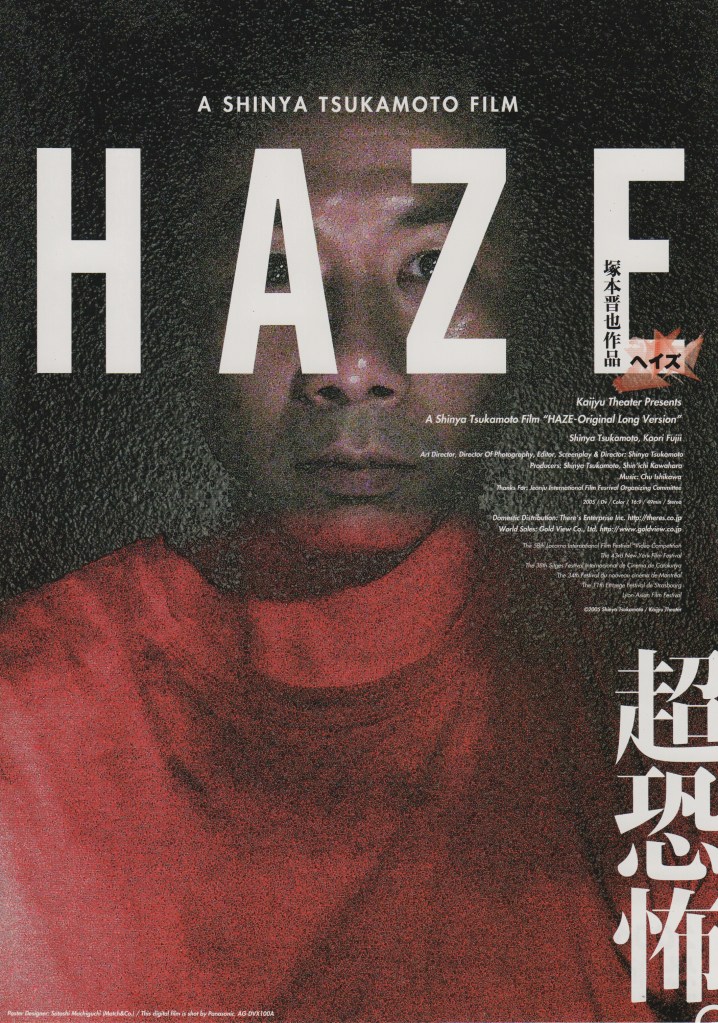
Haze (ヘイズ, Shinya Tsukamoto, 2005)

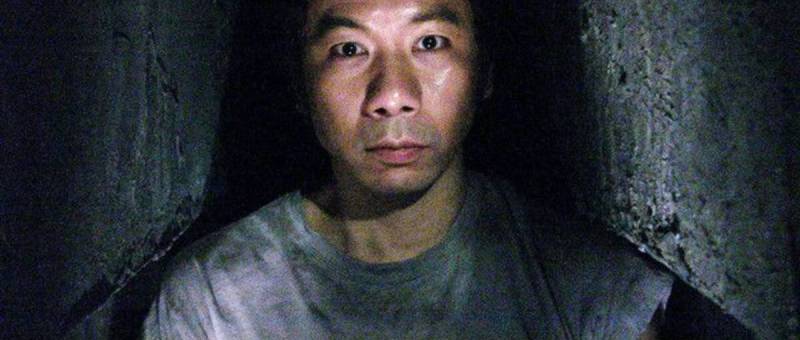
“Nothing spectacular is waiting for us even if we get out of here anyway” according to the imprisoned hero at the centre of Shinya Tsukamoto’s Haze (ヘイズ). Tsukamoto began his career with a series of tales of urban anxiety, a fear of increasing mechanisation which rendered a man mere slave to his physicality. Created as part of Jeonju International Film Festival’s digital project and later expanded to its current length, Haze skews in a slightly different direction, repurposing the director’s trademark body horror as a kind of depression metaphor as the unnamed hero, played by Tsukamoto himself, attempts to climb out of a pit of despair while experiencing momentary echoes of the traumatic event which has trapped him there. 

As the film opens, a man (Shinya Tsukamoto) wakes up in a confined space with no knowledge of how he got there or memories of his previous life. He convinces himself this must be a dream but believes if it were he would’t feel pain, which he later does not least from the gaping and unexplained wound near his hip. Left with no other choice, he crawls forward in search of an exit, gripping on literally by the skin of his teeth as he climbs through barbwire, beaten on the head by a strange contraption attacking him from what looks like an arrowslit in a castle. He glimpses other figures writhing in pain through a gap in the wall, some of whom are then torn apart while he later comes across great machines of human butchery and finds himself wading through severed limbs until he finally encounters another survivor, a woman (Kaori Fujii), who is minded to escape the way she believes she came in while the man is already beginning to give up on the idea of survival. 

The man meditates on what might have brought him here, as if it makes a difference or would help him to escape. He wonders if a war has broken out and he’s been taken prisoner, has been abducted by a weird cult, or is a plaything of a “rich pervert” enacting his own version of The Most Dangerous Game. He is perhaps crawling through hell, only one that may be of his making as a kind of metaphor for life’s battering as he pushes forward blindly, lacerating himself in pursuit of freedom while strangely indifferent to the suffering of others who appear not to have been so lucky. 

The woman is unable to provide any more explanation, lamenting that this may be their finally resting place but insisting that she is getting out. The man isn’t so sure, listening to her plan with scepticism, but once again wondering how he got here. Asked who is behind this the woman can only reply that it seems to be “a really big and dark thing, neither a human being nor a beast. You find yourself in total darkness being dismembered and floating in the water”. “If you see nothing ahead you eventually end up here” the man replies. After drifting off, the woman tells the man that she had a sensation of waking up alone somewhere dark and feeling lonely, “like falling into a place like this”. 

Later she remembers that she wanted to go somewhere, but was imprisoned here before she could run away. The man harps back on his theories again, wondering if it was a rich pervert after all, though this seems like a lot of bother to go to for sadistic kicks. He doesn’t stop to wonder what it was the woman wanted to escape, life itself or an intolerable situation and what the motives might be of the person who tried to stop her leaving. In fact, his own “sweet memory” is a bright and cheerful one of watching fireworks which he remembers liking a lot, though fireworks are perhaps also tiny sparks of life which blink out far too soon. Questioned about the motives of the hypothetical rich pervert, the woman suggests he might have done something like this to make her “go back” to wherever it was that she was desperate to leave. In any case, even if it’s back “there”, she is determined to escape and, perhaps paradoxically, gives the man the courage to follow though it’s he who eventually vows to “save” her. 

The path towards escape is itself a kind of rebirth, pushing through blood and viscera towards the light, the hazy dawn of the title. Something has perhaps been overcome if only in the brief moments of unconsciousness between life and death and perhaps because of that single “sweet memory”, unreliable and hazy as it might eventually prove.


Haze is available on blu-ray as part of Third Window Films’ Tsukamoto box set which also includes his latest film Killing and a new restoration of Adventures of Electric Rod Boy all of which are accompanied by audio commentaries by Tom Mes.

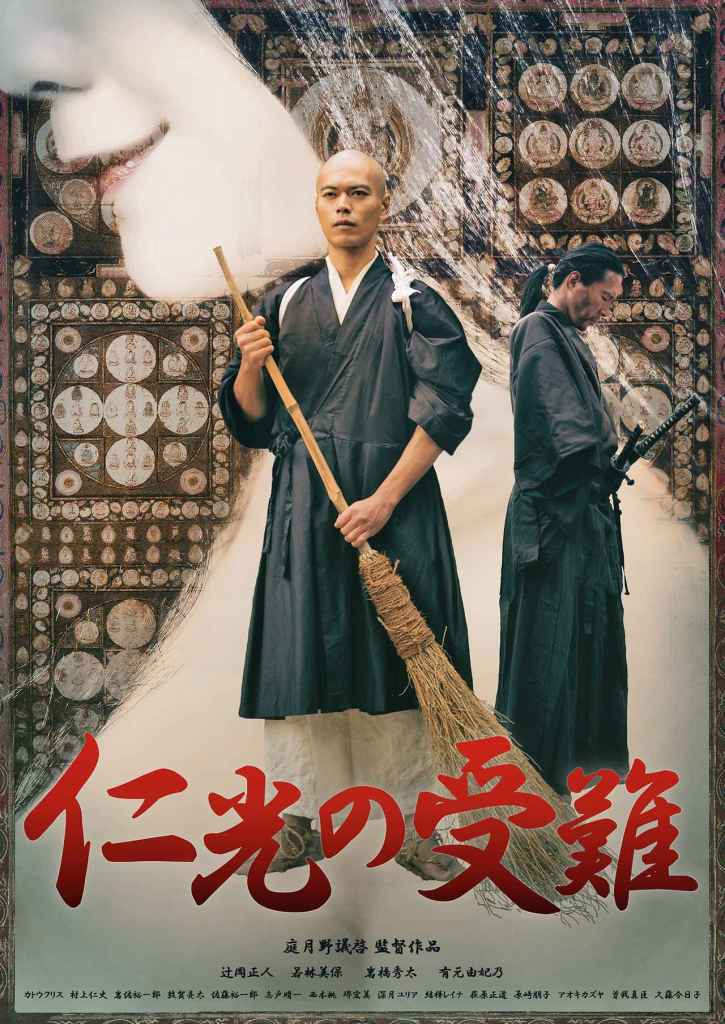
Suffering of Ninko (仁光の受難, Norihiro Niwatsukino, 2016)

suffering-of-ninkoAll life is suffering, and all suffering is caused by desire. Ninko, the titular monk at the centre of this entertaining oddity from Norihiro Niwatsukino, seems to have taken this to heart and is suffering more than most in his attempts to reach Nirvana. Suffering of Ninko (仁光の受難, Ninko no Junan) takes its cues from the Hyaku-monogatari classical Japanese tales of ghosts and the supernatural as its seemingly comic story of a pretty monk and his ironic talent for attracting the wrong kind of attention gradually darkens until its unexpectedly strange finale. Visually striking if a little rough around the edges, Suffering of Ninko has a pleasantly organic quality as if its narrator were really making it up as she goes along only to tire of it a little by the end and give us a suitably spooky conclusion to send us on our way.

Ninko (Masato Tsujioka) is the most assiduous monk at his temple. His desire for asceticism knows no bounds as he spends his days cleaning, polishing the artefacts, reciting sutras and meditating. The problem is, Ninko is just too damn pretty. Every time he ventures into town the womenfolk go crazy, even getting upset if they discover he isn’t among the monks despatched on the daily alms harvesting mission. In fact, Ninko has also attracted the attention of the two gay monks at the temple which he seems to find a little irritating but unlike some of the others this is a very real problem for him as he’s decided to keep his mind and body pure though total celibacy. This unfortunate and quite ironic talent of his which makes him some sort of magnet for the repressed sexual desires of just about everyone actually makes him feel quite bad, arousing all this lust but ultimately unable to satisfy it.

After a strange encounter in the woods provokes a kind of spiritual crisis in the earnest Ninko, filling his world with bared breasts and erotic visions, the chief monk sends him off on a pilgrimage, reminding him that a denial of his baser emotions is not the same the same as facing them and will only result in additional suffering. Whilst on the road, Ninko meets up with violent ronin Kanzo (Hideta Iwahashi), and gets pulled into the strange goings on in a mountain village where the men have been gradually going missing. The locals have laid these disappearances at the feet of Yama-onna (Miho Wakabayashi) – a ghostly forest bound presence who seduces wayward men only to feast on their vitality.

Beginning almost like a rakugo tale, the central joke of Ninko’s ongoing, largely self imposed, suffering is in his ironic talent for arousing sexual desire in places which he does not want it (which is to say everywhere). More than just good looks, Ninko seems to have some kind of magnetic power which sends almost everyone he meets wild with insatiable lust which is quite the problem seeing as he’s committed to remaining celibate. He may think that he does not feel desire but as Kanzo later tells him, this denial is a kind of self deception masking the fact that he feels it all too much. The strange and mystical encounter with a noh mask wearing woman (?) in the forest leads to a bizarre sequence of beautifully choreographed visions of erotic ecstasy accompanied by Ravel’s Bolero after which Ninko has some kind of breakdown resulting from sexual frustration.

This first encounter with the supernatural leaves him with a burnt hand and a burning mind but also with the lingering suspicion that his curse may not be of entirely mortal origins. Thus he originally declines to accompany Kanzo on his quest to end Yama-onna’s days of wild abandon in the woods to enter a period of introspective questioning in wondering if he and Yama-onna are of a piece in their mirrored need for and denial of sexual pleasure. When he finally meets her he gets a kind of answer to his question which relegates the monkish Ninko to the realms of the forgotten as the newly born legend of Ninko-bo assumes his form.

Inspired by the classical nature of the tale, Niwatsukino makes striking use of animation inspired by scroll paintings, ukiyo-e prints, and shunga all accompanied by the gentle voice of the narrator to add to the mythic atmosphere. In keeping with its inspiration, the narrative has a suitably throw away quality as if it were all being made up on the spot which of course means that it drags here and there and ends somewhat abruptly but then that is the nature of the tale. A psychedelic oddity which revels in a sense of playfulness undercut by dark spirituality and existential dread, Suffering of Ninko is a story for a stormy night, strange and a little bit scary but with its tongue tucked firmly in its cheek.


Available to stream online from Festival Scope until 20th February 2017 in conjunction with International Film Festival Rotterdam.

Original trailer (English subtitles)