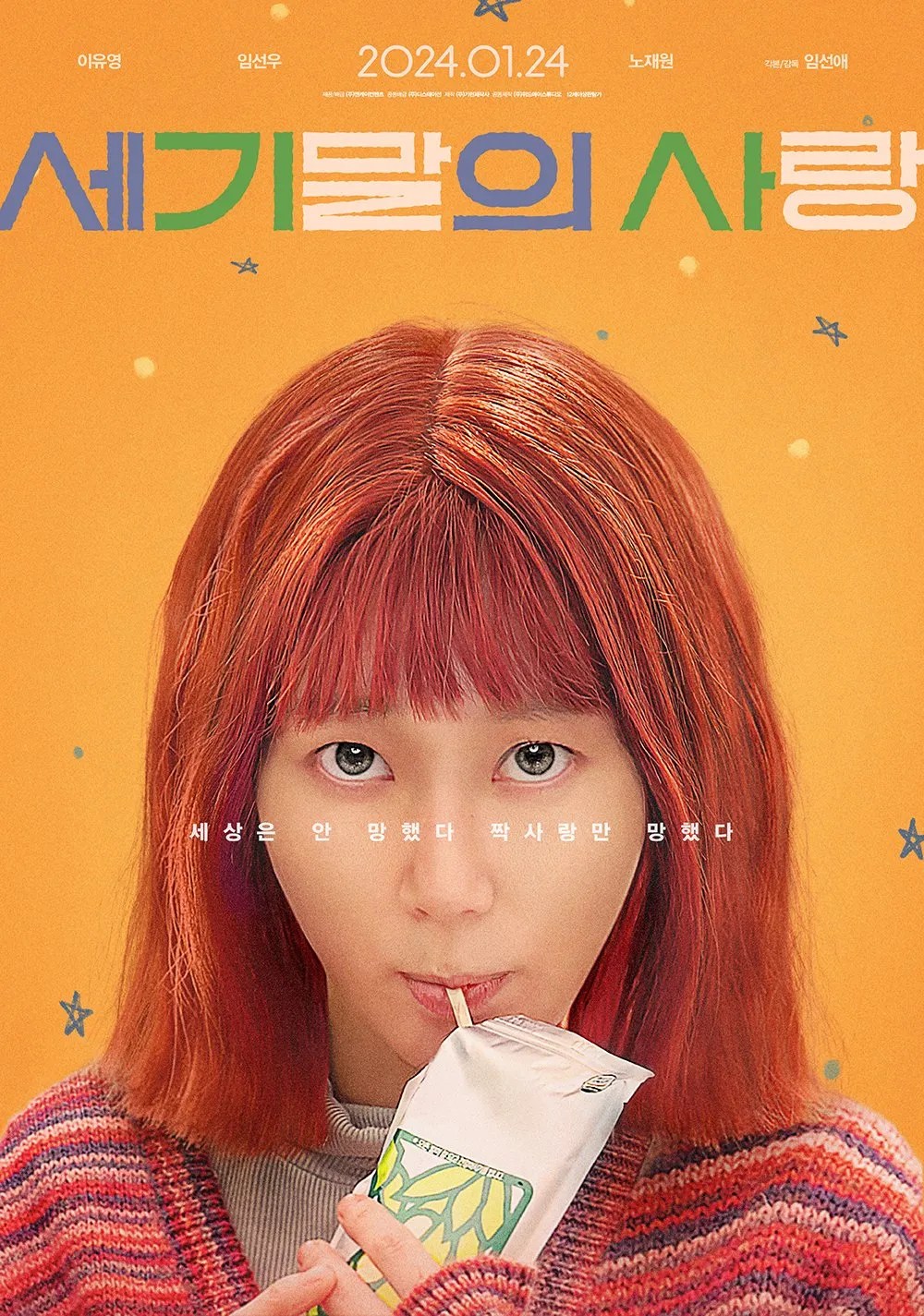
It’s funny to look back now at how worried we were about the millennium bug and the birth of a new century, but it’s true enough that the anxiety and desperation were enough to make people act in strange and incomprehensible ways. The first part of Ms Apocalypse (세기말의 사랑, Sekimalui Sarang) is filmed in black and white hinting at the dull incompleteness of the heroine’s life even as she finds herself overcome with dread and begging the man on whom she’s developed a crush to run away with her so she won’t die here, at her aunt’s funeral, where her obnoxious cousin wants her to pour drinks for his boorish friends.
Young-mi (Lee Yoo-Young) is a mousy, shy woman who keeps herself to herself. At the factory where she works as a bookkeeper, they’ve nicknamed her “Ms Apocalypse”, because her face is “chaotic”, while the men make fun of how unattractive they find her behind her back. The only one of them that’s nice to her is Do-young (Roh Jae-Won), a driver who started five months ago. Young-mi has developed a crush on him, but is too shy to do anything about it and ends up rebuffing most of his overtures such as the precious gift of extra sausages from the canteen. But Young-mi has also discovered that Do-young has been embezzling the cash he’s supposed to be collecting for deliveries. She obviously doesn’t want him to get in any trouble, so she’s been making up the shortfall out of her own pocket by taking on sewing on the side. Unfortunately, when a remorseful Do-young turns himself in, Young-mi ends up going to prison too for failing to report his crimes.
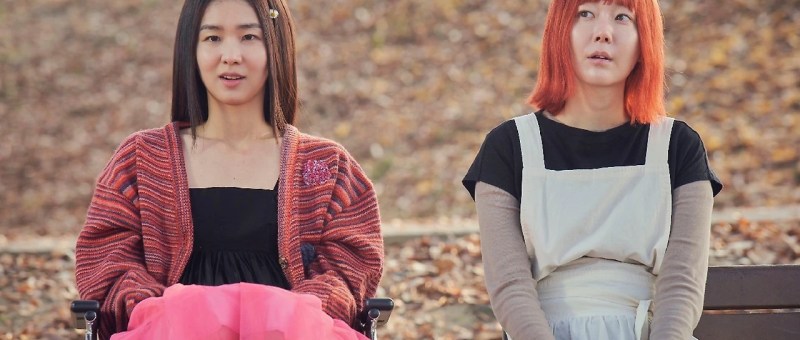
It’s on her release that colour returns to the film, as if Young-mi as had been spiritually and emotionally set free to start a new life in the new century. Yet the only person who comes to meet her is Do-young’s spiky wife Yu-jin (Lim Sun-Woo). Yuj-in is living with a degenerative illness that has left her paralysed from the neck down though she maintains sensation in the rest of her body. Though they are opposites, the two women share a strange affinity and have more in common than they might care to admit. While Young-mi’s life had largely been in service of her aunt to set her cousin Kyu-tae (Heo Joon-Seok) free, Yu-jin has a complicated relationship with her niece, Mi-ri (Jang Sung-Yoon), who has currently run away from home and is imprisoned by her condition in the same way Young-mi is trapped by shyness. While Young-mi is all too aware of the way that others see her as “weird” and unattractive, Yu-jin is a beauty who radiates elegance and imperiousness. She has what her friend Jun (Moon Dong-Hyeok) describes as a nasty personality but is basically a reasonable person who knows full well how dependent she is on the kindness of strangers.
Young-mi is a kind person, but there’s a question mark over whether she stays with Yu-jin because she wants her money back and has nowhere else to go after discovering Kyu-tae has sold her aunt’s house, or has come to genuinely care about her. It seems at first that they’ve both been betrayed by Do-young, though it’s not as simple as it seems and it may be a misguided gesture of kindness that’s landed them all in this very messy situation. They are nevertheless united in their outsider status as women at the mercy of a patriarchal society. Just as Young-mi is mocked for her appearance, the carers hired to look after Yu-jin make crass and inappropriate comments about her body while even her closest friend, Jun, has exploited her disability to get a discount on his car as well as swapping some of her favourite designer shoes for fakes, though Yu-jin knows she can’t say anything or risk Jun abandoning her. Though Young-mi was the one looking after her aunt who had dementia and a drinking problem, she was always at the mercy of Kyu-tae as her closest male relative and unfortunately he chose to betray her.
Kyu-tae’s not quite ex-wife blames the Asian Financial Crisis, but it seems Kyu-tae was always a selfish and unpleasant person emboldened his position in the patriarchal society and the meekness of Young-mi who he knew would not be able to stand up for herself. But it’s a new century now, and Young-mi’s world is certainly more colourful, if perhaps no easier. She’s learned to fight her corner, but also to make space in it for others in warming to the complicated Yu-jin whose loneliness and vulnerability all come out as meanness though she is a kind soul too and like Young-mi looking for ways to begin moving forward. Now they’ve got over their millennium bug, they’re ready to join the new century and embrace whatever it is that it has to offer them.
Trailer (no subtitles)

 Windows on Worlds