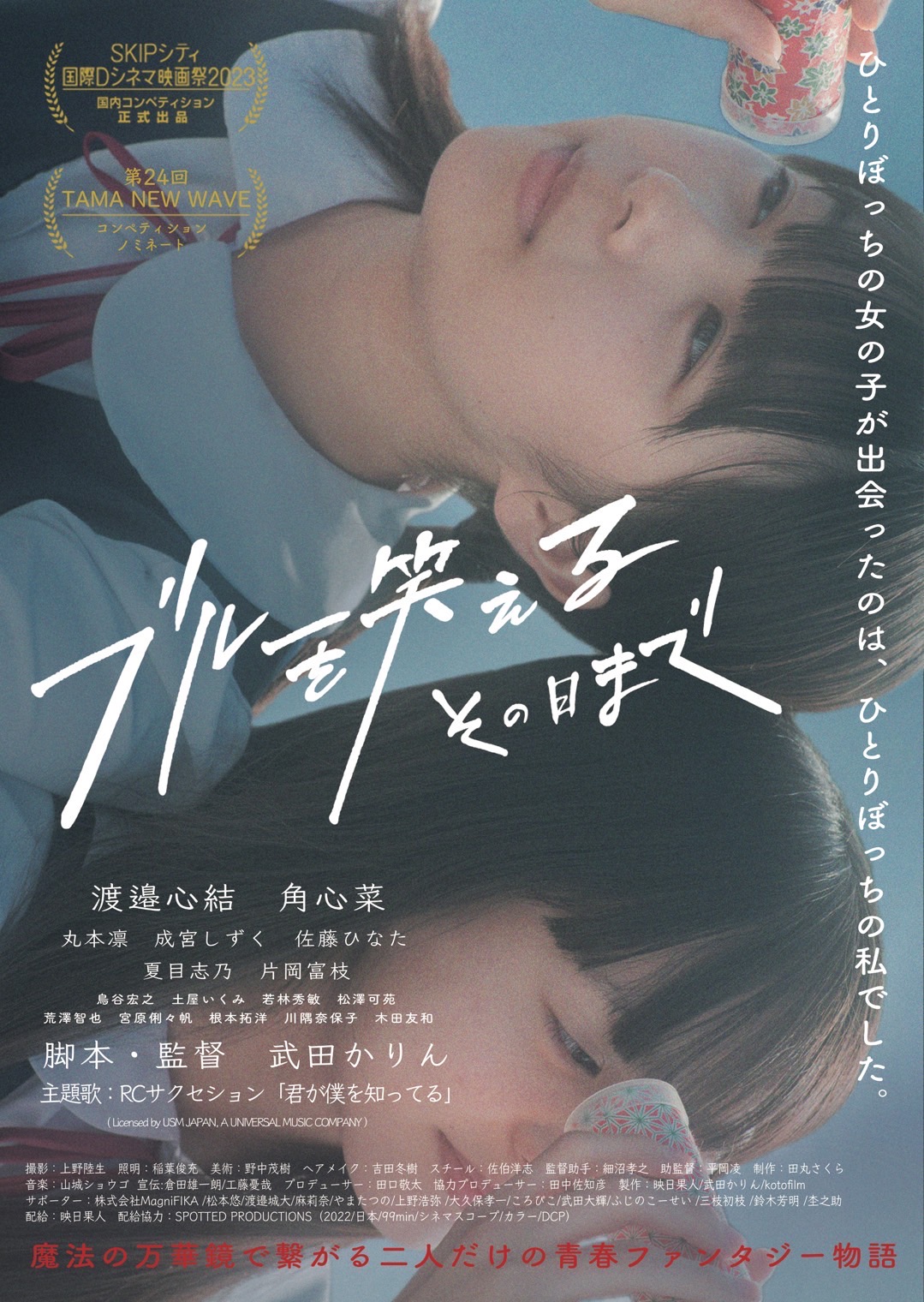
Till the Day I Can Laugh about My Blues (ブルーを笑えるその日まで, Karin Takeda, 2023)

A lonely, isolated young woman finds refuge in a new friendship only to worry it won’t survive summer’s end in Karin Takeda’s gentle adolescent drama, Till the Day I can Laugh About My Blues (ブルーを笑えるその日まで, Blue Wo Waraeru Sono Hi Made). Opening with a title card reading “to you and me back in the days,” the film has an autobiographical sensibility and boundless empathy for the kids who feel they don’t fit in, that no one notices them, and their lives will never we worth living.

You can tell that Ayako (Miyu Watanabe) is depressed by her opening dialogue, “I don’t like this weather,” said to perfectly blue skies. She says everything in her life is blue, and is so shy that she literally can’t speak. Her class are reading Night on the Galactic Railroad, and though she spends the entire time reading the line that she’s figured out is hers is put off when another student heckles her because of her quiet voice and just stands there gripping the paper while her teacher prompts her with the previous line. He then just moves on to the next student, but more out exasperation than empathy, doing nothing much else to help her. 

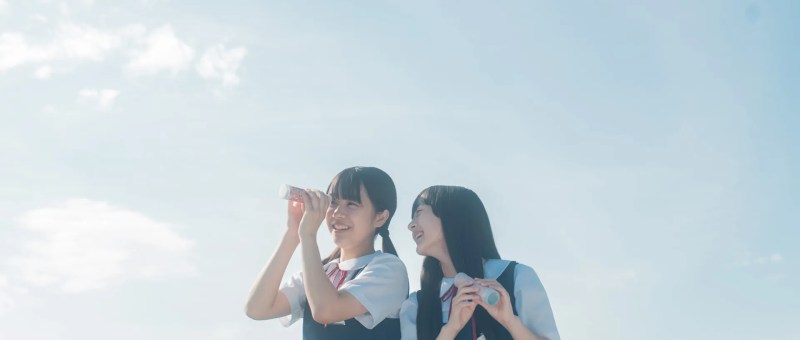
It’s not clear if Ayako was always this way or if something led to her becoming withdrawn but the other kids evidently regard her as weird while her former best friend Yuri (Rin Marumoto) has joined up with two popular girls who appear to be bullying her. Ayoko’s parents aren’t much help either, unfairly comparing her to her sister who wants to be a doctor all of which only makes Ayako feel even more useless and inadequate. It’s only when a mysterious old lady gifts her a kaleidoscope that Ayako’s outlook starts to improve and she befriends a another young girl she meets on the rooftop of the school who has a kaleidoscope too.

In discussing the passage of Night on the Galactic Railroad, which is about a friendship between two boys which ends abruptly in tragedy, a teacher asks what the milky way is made of before explaining that if you look at it through a microscope it’s full of tiny stars. Ayako too begins to see tiny stars while looking through the kaleidoscope, refracting her world and beginning to see the beauty of the light between the trees even if she’s cautioned that the patterns are pretty because you never see the same one twice. In any case, Ayako finds a kindred spirit in Aina (Sumi Kokona) but also suspects she may actually be the ghost of a girl who took her own life by jumping off the roof of the school, so their friendship can’t last past the start of the new term.

Like Giovanni in the story, Ayako has to figure out how to go on alone not just without Aina but in her complicated relationship with Yuri too who tells her she doesn’t like and hanging out with mean girls Natsumi and Nao but still joins in when they make fun of her. Some gentle words from a librarian who knows what’s she going through all too well remind her of the point of the story, that the boys still go on travelling together as Campanella still exists in Giovanni’s heart. But before all that she still ponders blowing it all to hell, saving the school goldfish but otherwise letting the place burn while wondering if she’ll ever be able to grow up. 

Shot with an etherial whimsicality, Takeda shoots Ayako’s world in shades of loneliness in which her literal inability to speak is almost a reaction to the fact no one listens. Pondering the fate of a goldfish that died because of another student’s neglect she laments that no one’s kind to you until die, a comment that later seems ironic but echoes her sense of alienation. She thinks her friendship with Aina is like a dream, but like she says not necessarily one they need to wake up from because whichever way you look at it their friendship is “real”, saving each of them and giving them strength to survive until the day they can laugh about their blues smiling at a memory rather than feeling sad and alone while looking for the tiny stars hidden in the fabric of the universe.


Till the Day I Can Laugh about My Blues screened as part of this year’s Camera Japan.

Original trailer (no subtitles)
yes, yes, yes (Akihiko Yano, 2021)

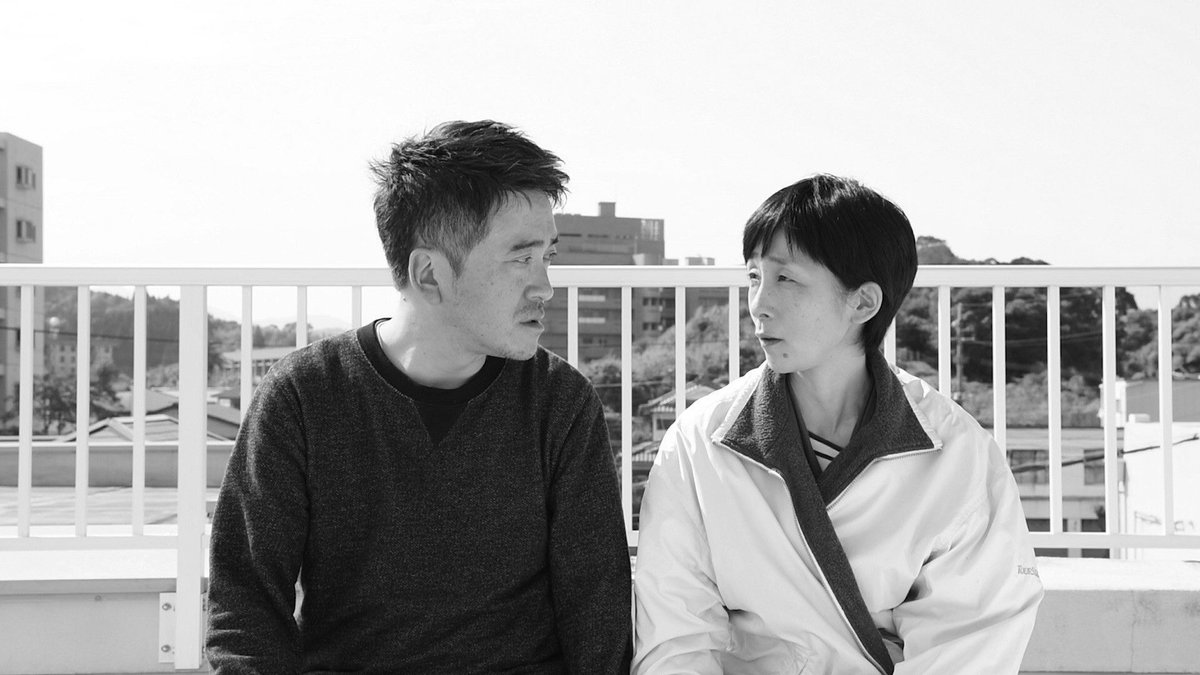
“If everything goes, then why are we even alive?” the young hero of Akihiko Yano’s yes, yes, yes asks himself as his family finds itself struggling under the weight of intense grief. Yet it’s in family that he finally finds his solace and the will to continue living even if life is meaningless or hard or sad. Hard and sad is an accurate description of their life at the present time as each of the family members tries to process the imminent loss of their mother who has recently entered a hospital she seems to fear she may not leave.

To begin with, the family are trying to remain cheerful as they move mother Sayuri (Nahoko Kawasumi) into her new hospital room, but youngest son Takeaki (Kazuma Uesugi) finds he cannot stomach the false jollity especially after his mother attempts to say a prayer for him. Walking off in a huff, he returns home only to take out his frustrations on a patch of flowers before dramatically taking a pair of scissors to his hair which he then dyes blond much to his father’s consternation. Meanwhile, oldest daughter Juri (Minami Inoue), ironically a hairdresser and pregnant with her first child which she plans to raise alone, does the family shopping, her father Masaaki trying to keep it together waiting in the car. 

There are perhaps already cracks in the family structure, patriarch Masaaki (Kazunari Uryu) seemingly a violent authoritarian who physically attacks his son after spotting his improvised new hairstyle, sending him running up the stairs to barricade himself in his room by jamming the door with his bed in a manoeuvre which seems somewhat practiced. Masaaki also doesn’t like it that his daughter plans to have a child out of wedlock, angrily reexplaining that he won’t stand for it though this is clearly not the the time. Juri reiterates that she’s made her decision, but takes offence at his apparent reasoning that he somehow blames her and the baby for his wife’s death as if only so many places are available in their family and they’re awarded on a first in first out basis. For him it’s as if the baby is here to replace Sayuri, kicking her out in a peculiar slice of cosmic irony. 

Yet as she tells Takeaki who asks her a similar question, he should be happy that their family is expanding. She resents the way the men seem to have monopolised their grief, feeling that it’s hardest of all for their mother and for her part she’s made up her mind not to cry. Sayuri meanwhile is struggling to accept her terminal diagnosis on her own, brought to a sudden realisation during an emotional phone call with Takeaki in which she tries to reassure him that she won’t die while he insists that if it’s come to this immense grief he’d rather that they’d never met at all. He can’t bear that his mother’s existence will be reduced to mere objects, the old voicemails and photos, the gifts and heirlooms. If all that’s left of us is stuff, he asks, what was the point of any of it?

Nevertheless, it’s in transitory human warmth that he eventually finds his reason. Chastened by his wife who tearfully apologises for having married him and subjected him to this grief, Masaaki begins to reassume his role as the father, taking responsibility for his family in finally deciding to welcome Juri’s child as one of his own while embracing his wounded son even as the ghost of the still living Sayuri inhabits their living room looking on at their fierce battle of grief. Shooting in a crisp black and white, somehow detached from the intense emotions at the film’s centre, Yano contrasts the family’s disparate sense of existential loneliness with brief pillow shots of cherry blossom in bloom, the rolling seas on the beach where the family took their last happy photo, and blinking fireworks as if to signal the brevity but also the force, joy, and colour of an ordinary existence. As Sayuri comes to accept death, her son comes to accept life, determined to live to the full so that he can be grateful he was born. A moving tale of learning to live with grief, yes, yes, yes, eventually makes makes the case for life even if it’s hard or sad but also for the saving power of human warmth however transitory it may be.


yes, yes, yes screened as part of the 2021 Osaka Asian Film Festival.

Original trailer (English subtitles)

A Girl Missing (よこがお, Koji Fukada, 2019)

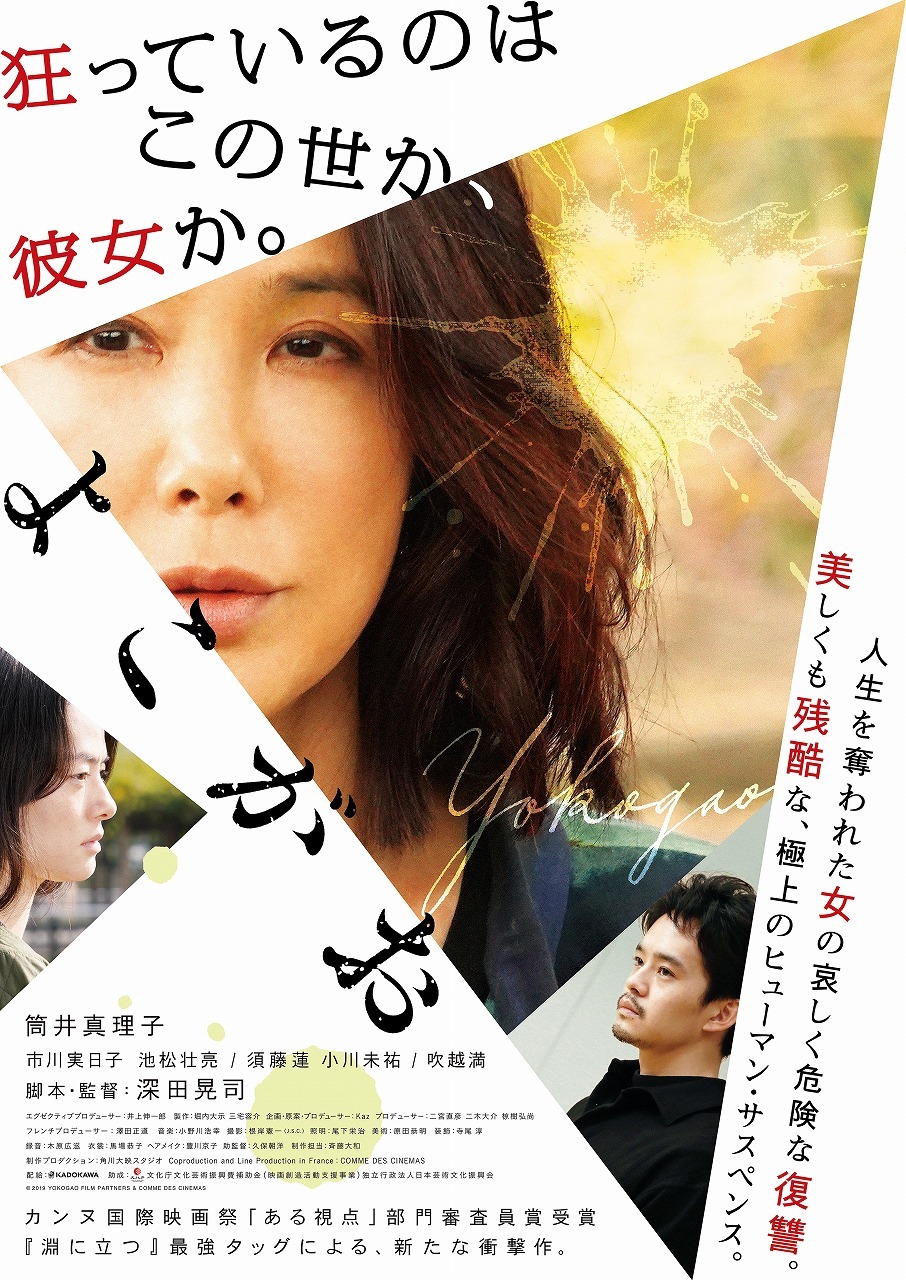
A Girl Missing poster 1In Harmonium, Koji Fukada explored the death of the family unit as a harried father found the foundations of his home eroded by a mysterious “stranger” with whom he shared an unspoken connection. A Girl Missing (よこがお Yokogao) pushes a little deeper in demonstrating how profoundly the foundations of a life can be shaken by frustrated connections, misunderstandings, and unspeakable desire. Probing deeper still, it wants to ask us on what foundations we’ve chosen to build our selfhoods, why it is that we don’t know ourselves without those tiny markers that tell us where we stand, and if it is really possible to rediscover a sense of self if we somehow go missing from our own lives.

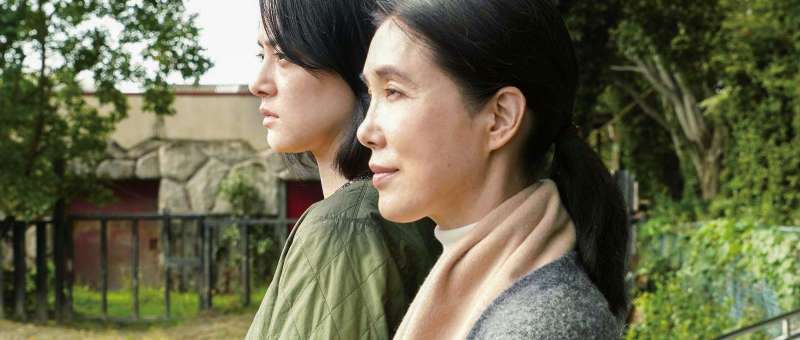
Beginning in the mysterious second timeline, Fukada opens with the heroine changing her identity through the time-honoured fashion of a haircut. Calling herself Risa, she brushes off the hairdresser’s suggestion that they’ve met before, but she hasn’t chosen this salon because of its reputation or proximity to her home. Flashing back some months, we see the same woman looking a little softer and apparently working as a homecare nurse known as Ichiko (Mariko Tsutsui) to an elderly woman dying of stomach cancer. Ichiko’s colleagues worry that she’s becoming too emotionally involved with the Oishi household, helping the two daughters – uni student Motoko (Mikako Ichikawa) and high schooler Saki (Miyu Ogawa), study in cafes in her off hours, but she enjoys playing mother and does after all like to help. Meanwhile, she’s also happily engaged to a doctor (Mitsuru Fukikoshi) with a young son and looking forward to starting a brand-new family life of her own.

All that is derailed, however, when Saki goes missing in a suspected abduction on her way home from cram school. Thankfully, she’s found alive, unhurt, and apparently relatively well adjusted a few days later and anyone would assume the drama to be over, only it turns out that the suspect is Ichiko’s own nephew whom she briefly introduced to Saki at a cafe on the night in question. Feeling tremendously guilty and confused though she herself had nothing to do with the incident, Ichiko feels she must confess and make a formal apology to the Oishis but Motoko stops her fearing that the family will fire Ichiko and she’ll never see her again. Ichiko decides to trust Motoko and keep quiet, but it will prove to be a bad decision not least because it is in such sharp contrast to her otherwise straightforward and honest character.

The film’s Japanese title, “Yokogao” or “profile” reminds us that it is not possible to see the entirety of any one thing, only a single facet and more often that not the facet that it particularly wants you to see. Ichiko is guileless, innocent, and naive in her innate kindness. She doesn’t see how her relationship with the Oishi girls could eventually become problematic because, as a nurse, she’s used to doing what needs to be done when it needs doing. What we see of her is a woman about to marry “late” by the standards of her society into a readymade family, an intensely maternal figure looking for people who need mothering. Meanwhile, Saki’s disappearance exposes cracks in the Oishi household, Motoko’s grumpy response of “would you rather it was me?’ to her mother’s wails of “why her?” beginning to explain some of her seeming disaffection with her family.

Yet as much as there may be a maternal component in her desperation to keep Ichiko in her life, we can infer from all her plaintive looks that there is another kind of desire in play, one which she seems to regard as unspeakable. Ichiko, oblivious, does not quite realise the depth to which her accidental rejections wound the troubled young woman but equally could not anticipate the casual cruelty of her petty revenge. Upset that Ichiko is not catching her drift, Motoko leaks her connection to the case to the papers, and then tells them a secret shared in confidence to pour salt on the wound. Instantly regretful and caught in the white heat of passion, Motoko fails to realise the extent to which her desire to return the hurt done to her will only wound her more in ensuring Ichiko disappears from her life for good.

Ichiko then does something much the same, reinventing herself as “Risa” she lives in an empty apartment overlooking Motoko’s with the sole aim of taking revenge against the woman who pretended to be her friend and then betrayed her. But Ichiko does not understand why Motoko did what she did, and so her own revenge is also a misplaced act of self harm which causes her to absent herself from herself, assuming another identity better disposed to cruelty but finding it an awkward fit.

Fukada places emotional repression at the heart of all. Ichiko, despite her kindness, keeps others at a distance without entering into true intimacy with anyone, while Motoko apparently struggles to articulate perhaps even to herself the truth of her own feelings, childishly hitting back when slighted and unable to bear the possibility that she is in love with someone who cannot return her feelings. Forever at odds, they see each other only in profile. The desire for revenge destroys them both, but despite the pain and inescapability of regret, they have to find new ways of going on, making little nicks on their identities to help them remember who they really are. A melancholy tale of frustrated desires, A Girl Missing flirts with constructed identities polluted by social toxicity but leaves its heroines on (slightly) firmer ground in having at least taken what control they can over the forces which destabilise them.


A Girl Missing was screened as part of the 2019 London East Asia Film Festival.

Original trailer (no subtitles)