Chigasaki Story (3泊4日、5時の鐘, Takuya Misawa, 2014)

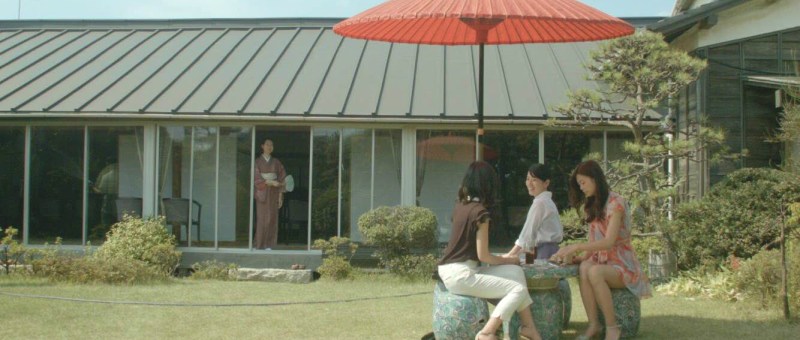
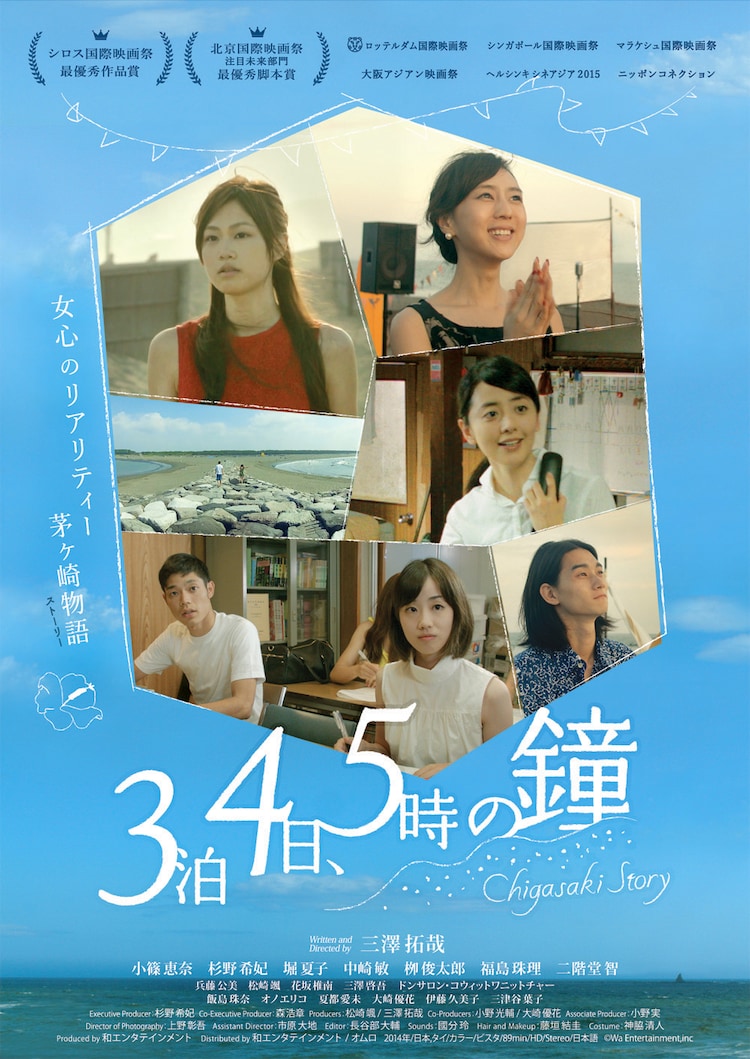
Desire and desperation bubble to the surface at a small hotel making preparations for a wedding in Takuya Misawa’s Chigasaki Story (3泊4日、5時の鐘, 3-paku 4-ka, 5-ji no kane). Though the English-language title may recall Ozu who wrote several of his most highly regarded films while staying at the inn, Misawa pays him only cheerful homage with a series of pillow shots apparently added only as an afterthought while his true inspiration seems to lie in the breezy Rohmerism that has come to dominate a certain strain of Japanese indie cinema over the last decade or so. 

Accordingly the tale is set in the small seaside town of Chigasaki and most particularly at the 115-year-old Chigasaki Inn to which former airline ground crew Risa has recently returned following her marriage to a filmmaker named George whom she met in the course of her work. The couple have already held the ceremony and enjoyed a honeymoon in Hawaii but are now holding a celebratory party for their friends and family in Japan. Meanwhile the inn is also host to a contingent of university students from the same department in which local boy and part-time worker Tomoharu is studying archeology. 

Somewhat meek and mild-mannered, Tomoharu takes his job incredibly seriously and is generally found running around on errands for guests or else cleaning up but his presence becomes a disruptive factor caught between the two groups of visitors instantly captivated as he is on the arrival of Karin, a young and pretty former co-worker of Risa’s who has arrived with the comparatively uptight Miki who has missed nothing in this exchange and is already frustrated by her friend’s wanton behaviour. Miki undeniably has a point when she criticises Karin for putting Tomoharu in an awkward position by inappropriately flirting with him at his job especially as he seems shy and easily embarrassed, but in turn is perhaps also jealous on a personal level intensely irritated when she blows off a plan to visit an aquarium to hang out on the beach with Tomoharu at stupid o’clock in the morning. 

The row only highlights the differences between the mismatched friends though the tables are turned when Miki realises that the students are from her old university and in fact led by her former professor with whom she begins to grow close much to Karin’s consternation. Reverting to her student persona, “workaholic” Miki becomes carefree and uninhibited at once doling out pieces of sisterly advice to the younger women and imposing her company on the students by joining in on their field trip. Her behaviour may in a sense reflect her dissatisfaction with her life as she contends with overbearing bosses having taken over Risa’s role while complaining about Karin’s fecklessness at work and otherwise seemingly jealous of their ill-defined friendship. Risa meanwhile may also be harbouring a degree of doubt in her decision to quit her job, get married, and return to run the family inn especially as her new husband is off working until the day of the party and like everyone else there isn’t really anyone with whom she can share those feelings honestly leading to an unwise if possibility long-term act of rebellion against a potentially stultifying existence that places her at further odds with the already on edge Miki. 

Caught between the women Tomoharu also has a more age-appropriate suitor in an earnest young woman from his class, Ayako, who likes him because of his tendency to care for others while getting on quietly with his work. Attempts to communicate culminate in a lengthy game of ping pong as the angry little balls of truth are batted back and fore across the table until a third player enters the scene and disrupts the flow. Tomoharu had said that his work of piecing ancient bowls back together was different from a jigsaw puzzle because you don’t know what shape it’s supposed to be until it’s finished, which might in a way explain these intersecting relationships as they run through and across each other but ultimately ending up in the place that they’re supposed to be culminating in a wedding party which is either the calm after the storm, an intense act of hypocrisy, or something between the two. 


Trailer (no subtitles)
The Murders of Oiso (ある殺人、落葉のころに, Takuya Misawa, 2019)

(C) Wong Fei Pang & Takuya Misawa

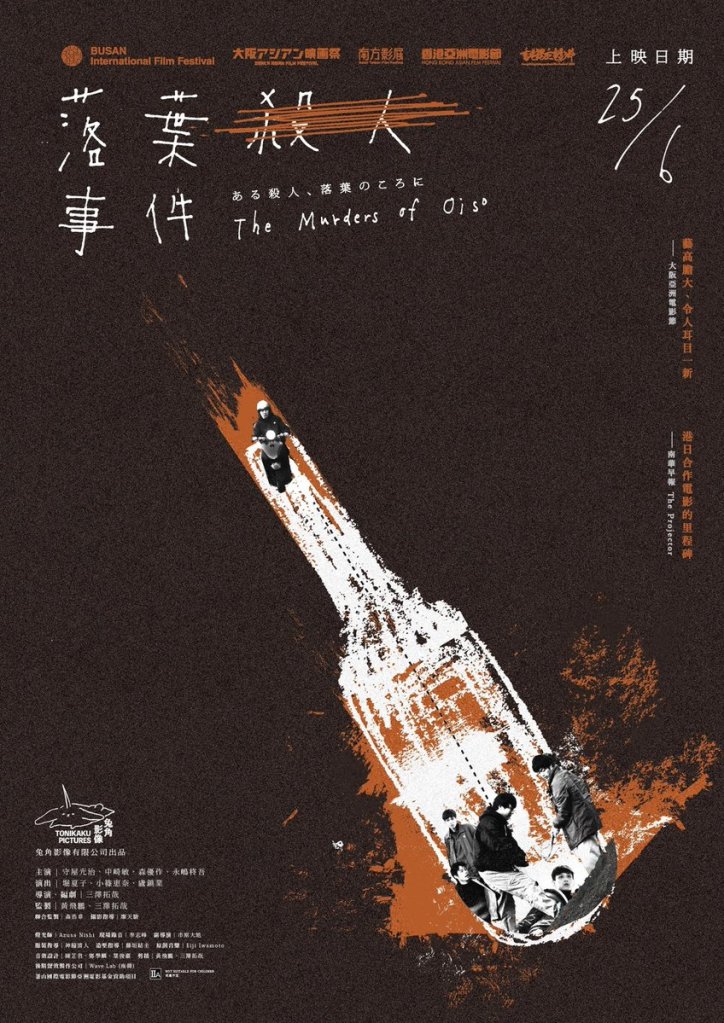
The dark heart of wholesome small-town Japan is fully illuminated in Takuya Misawa’s second feature, The Murders of Oiso (ある殺人、落葉のころに, Aru Satsujin, Rakuyo no Koro ni). Then again, depending on your point of view, there might not be any “murders” in this murder story only a series of admittedly strange deaths, but even if you choose to exclude the idea that these unfortunate victims were done in by their society, there would be several possible explanations and a variety of suspects on offer. Employing a bold non-linear structure across several levels of thematic complexity, Misawa plays with the unreliability not only of memory but of narrative in leaving us to contemplate the subjective truths of our own perception as we search for connection to make sense of the fragmentary evidence presented to us. 

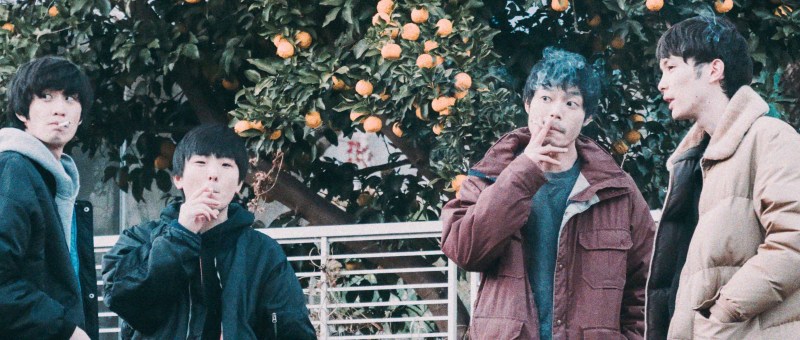
As far as certainties go, Misawa sets his tale in the small coastal town of Oiso, its faded grandeur perfectly matching the defeated hopes of our four protagonists: former high school buddies Kazuya (Yusaku Mori), Tomoki (Haya Nakazaki), Eita (Shugo Nagashima), and Shun (Koji Moriya). Now in their early 20s, the boys are all working construction jobs at the company owned by Kazuya’s family thanks in part to his uncle, Hiroki, who was their basketball coach at school. When Hiroki is found dead in a freak gardening accident, their lives are turned upside down not only in the sudden loss of their primary figure of authority but in a series of unexpected reversals which directly threaten their way of life. 

Even before that, however, we get the impression that these “friends” don’t actually like each other very much and are only together out of a combination of fear, habit, and lack of other options. Kazuya, the thuggish leader, never misses an opportunity to remind the guys they have (and keep) their jobs only because of his largesse while quietly resentful of Eita’s relationship with his girlfriend Saki (Ena Koshino) who is, in actuality, the narrator of this complicated tale of small-town pettiness. Like Kazuya, Tomoki (a classic underling) fears the fracturing of the group, alarmed by news from Shun that he’s thinking of quitting his job and moving away, and goes to great lengths to protect it. 

Hiroki’s death, however, presents a series of problems besides its suspicious quality in that he had apparently remarried in secret, keeping the existence of his much younger wife Chisato (Natsuko Hori) even from his closest family which of course includes Kazuya something which causes him a degree of embarrassment on top of his anxiety. As the only son, Kazuya is perhaps overburdened by filial responsibilities in needing to take over the family firm whether he wants to or not. His thuggishness is in essence a rebellion against his lack of agency, but he’s also unaware that his father seems to be in debt and mixed up with loanshark gangsters who frequently need stuff dumped on the sly. If they were hoping that Hiroki’s death would result in a windfall, the existence of a wife is a major inconvenience as is her quite reasonable eying up of the funerary donations and hope that the inheritance will come through as quickly as possible. 

According to the narrator, the town is much more scandalised by Chisato’s existence than they are by Hiroki’s death. Small-town life is still fiercely patriarchal and socially conservative. Immature, Kazuya has outlawed women in the “workplace” (a den where the boys hang out playing cards, smoking, and drinking) and resents Eita’s girlfriend for weakening his ties to the group. With Hiroki, the authority figure, gone, an emboldened Kazuya makes a pass at his friend’s girlfriend which she manages to dodge while Eita does nothing more than watch from outside. He confronts Kazuya on realising that Saki is upset enough to mention the police, but Kazuya brushes it off, claiming that she was drunk and is mistaken before instructing Eita to fix his girlfriend’s “funny” dress sense. Tomoki chimes in too, laughing that he doesn’t see why Saki is outraged because it’s not as if Kazuya succeeded in raping her and in his view it’s disproportionate to be so upset about “touching”. He also points out that Saki’s attitude is a threat to their group and to Eita’s employment prospects (eventually going so far as threatening Saki at her place of work), leaving him with a clear choice and, it seems, he chooses Kazuya making no attempt whatsoever to defend his future wife or dare to criticise his friend’s bad behaviour. 

Kazuya may be resentful at his lack of agency, but the other guys seems to have internalised a sense of futility and hitched their carts to his wagon no matter how much they hate him or themselves. Only Shun seems to be conflicted, turning away while Kazuya mugs an old high school friend in a local subway tunnel, later joking about his weakness for handing over the money right away. Misawa adds to the sense of Lynchian dread through noirish composition, all empty streets and canted angles, along with a moody jazz score to find the menace lurking round every corner in this strangely violent town apparently ruled by corruption and nepotism while breaking off into Ozu-esque pillow shots of vacant hallways and urban decay alternating with nature at the turn of autumn. Frequent shots of the director himself apparently writing the female narration we are hearing further add to the sense of unreality as we meditate on the single phase “I remember” while hearing the narrator mislead and contradict herself. Were there murders in Oiso, or is this all a dream from the mind of a frustrated young man realising he’s hit a dead end and teenage friendship can’t last forever? That’s one mystery (among many others) you’ll have to solve for yourself. 


The Murders of Oiso is available to stream in the US until July 30 as part of this year’s Japan Cuts.

Original trailer (English / Traditional Chinese subtitles)