“The flowers of the Steppe can’t bloom forever,” an old woman explains somewhat cheerfully though not really knowing to whom she is speaking in Qiao Sixue’s deeply moving Mongolian drama, The Cord of Life (脐带). A young man struggles to find the balance between embracing his traditional culture and the desire for modernity, but begins to discover new direction after taking his elderly mother who is suffering with dementia back to the grasslands in search of the place she calls “home”.
Naranzug has several “homes” throughout the film though none of them are perhaps exactly what she means which maybe more a feeling than a physical location. In any case the first of them is the home of her eldest son, a flat in the city where they’ve installed a door with bars on it on her room to stop her wandering off. Apparently the neighbours have been complaining and it’s already led to a physical altercation which has serious financial implications for the family. Younger brother Alus (Yidar) has long been living in Beijing where he makes a living as a musician combining electronica with the Morin Khuur fiddle he learned to play as a child. When he’s called back to help, he’s shocked both by the progression of his mother’s condition, she no longer recognises him, and the way his brother and his wife treat her though as Naranzug later says herself they are quite clearly exhausted and are doing the best they can with the resources available to them.
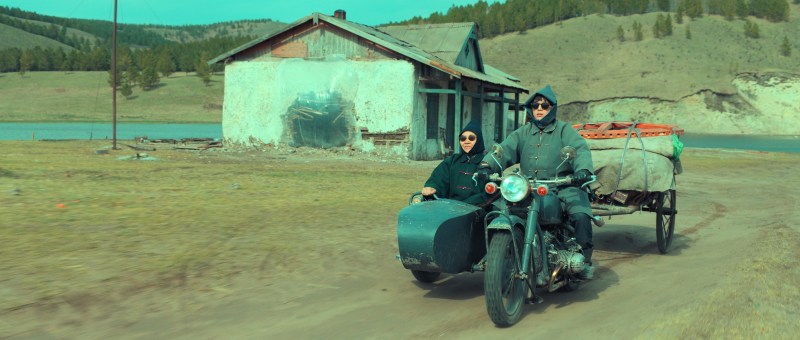
Alus particularly objected to the prison cell-style door and the practice of locking his mother up which seemed so undignified, though he later resorts to something similar himself in the titular cord, a literal rope that he uses to tie her to him so that she won’t get lost or injure herself. At one point he loops the rope around her waist and pulls her as if she were a stubborn cow unwilling to leave the paddock, coaxing her back inside the house with his music. Several times Naranzug is liked to a wandering animal who should be free upon the Steppe, firstly the lost cow but also a mother sheep to a lost lamb she later delivers to a paddock where she sings a folk song to encourage a ewe to feed it in a metaphorical allusion to her inability to recognise her own lost son who is also a lost lamb searching for his mother.
She repeatedly asks Alus to take her “home” but he struggles to understand what she means because to him he already has, reminding her that their house on the Steppe is also “home” before realising that she pines for her childhood and long dead parents who lived by a long forgotten tree. The rope between them becomes a surrogate umbilical cord that allows them to an extent to reconnect as Alus becomes more familiar with life on the Steppe as its atmosphere pours into him in much the same way the sheep drank from the ewe or the farmer transferred fuel from one bike to another. “It shouldn’t all be Morin Khuur and throat singing” the comparatively traditionalist Tana encourages him, “we’re not living in the past”, giving him freedom and permission to embrace both the new in electronica and the traditional in the sounds of the plains. It’s not for no reason that Naranzug is always telling him to “listen”, for music is everywhere.
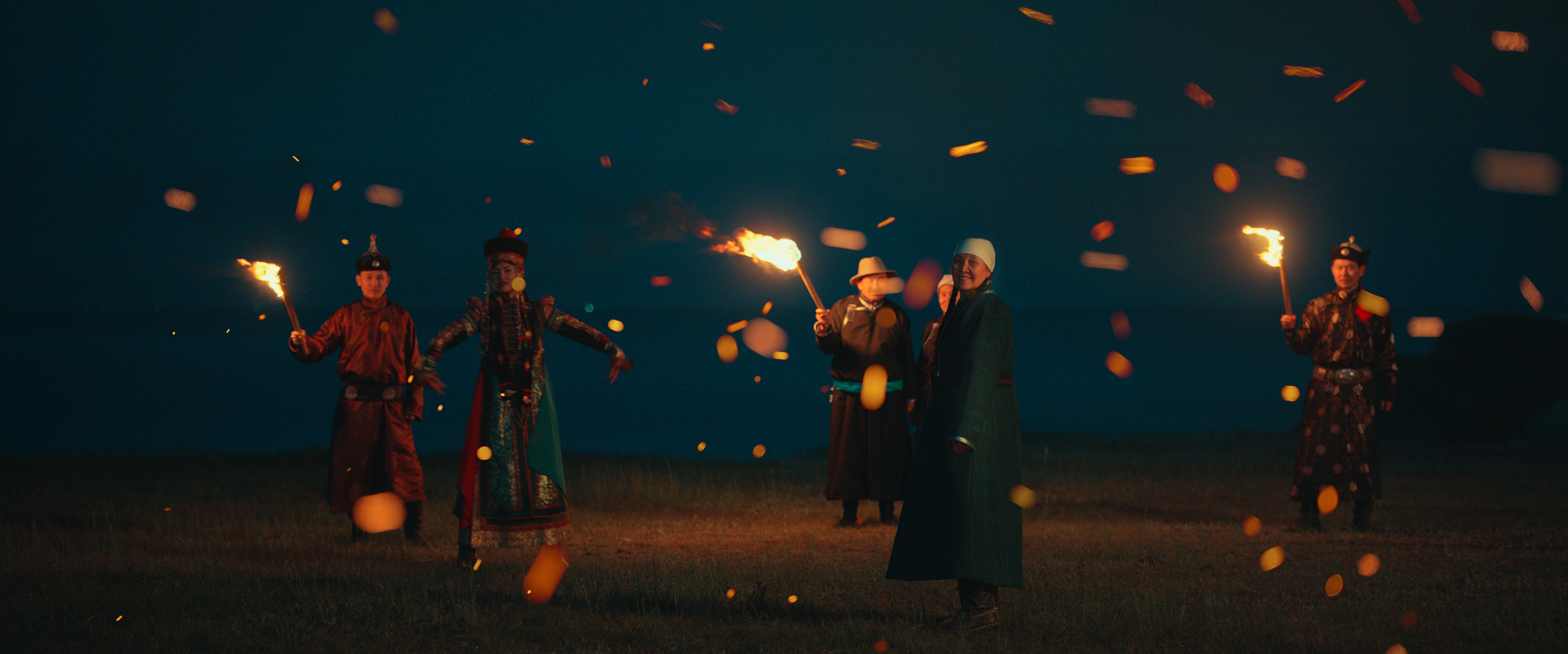
Qiao Sixue’s roving camera captures a real sense of poignancy along with mysticism in the moving final scenes in which Alus must say farewell to his mother, letting her go or perhaps return to the embrace of others in the “home” that she was always seeking. She thanks him for returning her to this “happy place” of music, fire, and dance that seems like something from another time or perhaps out of time. As she reminds him, the river never stops flowing though the flowers on Steppe cannot bloom forever. Through a series of surreal adventures, mother and son begin to reconnect while Alus quite literally rediscovers his roots and then like the river keeps going moving forward under the Mongolian skies taking the past with him into a new future on a journey towards a new home.
The Cord of Life screened as part of this year’s New York Asian Film Festival.
Original trailer (Simplfied Chinese subtitles only)
 Windows on Worlds