As Long As We Both Shall Live (わたしの幸せな結婚, Ayuko Tsukahara, 2023) [Fantasia 2023]

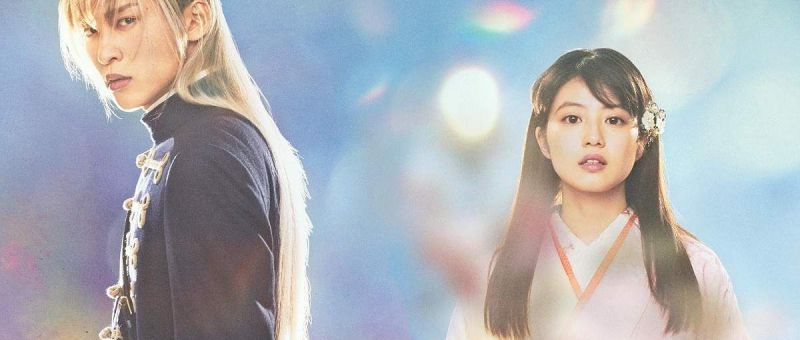
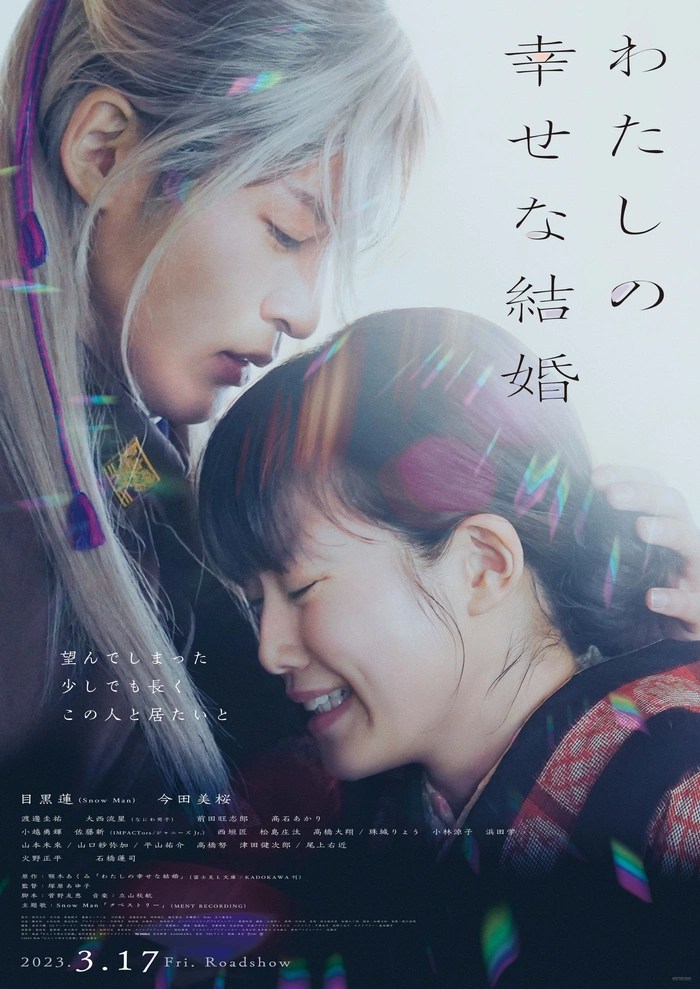
A young woman with chronically low self-esteem learns to love herself after bonding with a taciturn nobleman in Ayuko Tsukahara’s adaptation of the fantasy romance light novel series by Akumi Agitogi, As Long As We Both Shall Live (わたしの幸せな結婚, Watashi no Shiawasena Kekkon). Set in an alternate version of the late 19th/early 20th century in which the nation is ruled by an emperor who has the ability to foresee the future and leads a series of prominent clans of superpowered soldiers against “aberrations” who wreak havoc in the lives ordinary people, the film is effectively a kind of Cinderella story only the fairy godmothers are a kindly housekeeper a shady underground sect with the power to manipulate people’s minds. 

In any case, Miyo (Mio Imada) was born into a noble house the members of which have the ability to manipulate the wind though sadly she appears to have been born “powerless” and is bullied by her step-mother and step-sister who treat her as a servant. At 19, she learns she’s to be married off and is excited about finally escaping her abusive family home but also wary that it might not make much difference because her potential husband, Kiyoka Kudo (Ren Meguro), is said to be cruel and violent. All three of his matches have fled the house in under three days though being so used to mistreatment Miyo is sure that it will just be a matter of adjusting to her new circumstances. 

What she discovers is that Kiyoka doesn’t seem all that bad just a bit aloof and direct in his manner of speech. Nevertheless, she continues to believe that she isn’t good enough to marry him because she doesn’t have any magical powers and is convinced he will call off the engagement when he finds out. Meanwhile, she bonds with housekeeper Yurie (Mirai Yamamoto) after breaking protocol by helping out around the house for something to do though it is perhaps a bit odd that someone from such an apparently wealthy family has only one servant and seems to lead an incredibly simple life devoted to his role as a soldier helping to keep the aberrations in check especially now that the emperor is dying and someone has apparently released the pent up souls of fellow aberration fighters who died horribly and are filled with dangerous resentment.

Many of Miyo’s self-esteem issues are down to the way she was treated by her family and having lost her mother at two years old though there is obviously parallel in her literal “powerlessness” and the lack of agency that is afforded to her in having been kept a prisoner in the family estate only to be traded off in marriage by a father apparently out for whatever he can get for such a “mistake” of a daughter. It’s perhaps a slight failing in the narrative that she turns out to have powers after all rather than simply beginning to accept herself in the comparatively warmer environment of Kiyoka’s home even if it might also be a little awkward that her self-love is born of feeling loved by Kiyoka and to a lesser extent Yurie and immediately has her pledging to give her life for him if only he should ask it. 

For his part, Kiyoka is also undergoing something of a transformation in that it turns out he also felt estranged from his mother and is actually kind at heart just incredibly awkward and taciturn. The reason he didn’t bond with any of his previous suitors seems to be that he objected to their insincerity and the nonsense that goes along with being a member of the aristocracy like the concept of arranged marriage in itself, later taking Miyo’s family to task for their treatment of her claiming that he doesn’t really care about her social status or whether or not she has any powers. In any case, it’s love that helps her overcome her “powerlessness” even if she uses her newfound inner strength for someone else rather than herself, taking control over and her life regaining self-confidence as someone worthy of love, respect, and basic human decency not to mention happiness. A post-credits trail hints at a potential sequel or even series expanding on the franchise’s rich world building but for now at least it seems as if Miyo has found her happy ending, finally able to embrace life on her own terms rather than feeling as if she needs to make a mends for her existence.


As Long As We Both Shall Live screened as part of this year’s Fantasia International Film Festival.

Original trailer (no subtitles)

My Father’s Tracks (僕と彼女とラリーと, Renpei Tsukamoto, 2021)

A struggling Tokyo actor begins to re-appreciate small-town wholesomeness after returning home for the first time in many years on learning of his semi-estranged father’s death in Renpei Tsukamoto’s heartwarming drama My Father’s Tracks (僕と彼女とラリーと, Boku to Kanojo to Rally to). As much a celebration of the idyllic countryside villages around the city of Toyota in Aichi, obviously closely associated with the automobile industry, Tsukamoto’s gentle coming-of-age tale sees its hero find his purpose in returning to his roots while gaining a new perspective on his parents’ relationship and the father he’d always resented who became a local hero but was never around when his family needed him. 

At 29 Taiga (Win Morisaki) is still trying to make his mark as an actor in Tokyo, his dejected manager complaining his trouble is that though he’s quick and clever he’s essentially soulless which is why he’s failing to captivate the audition panel. He repeatedly ignores calls from his semi-estranged father Toshio (Masahiko Nishimura) and then answers one on the urging of a friend only to utter some very unkind words before unceremoniously hanging up. The next time he answers his phone, however, the call is from an old friend and neighbour, Miho (Mai Fukagawa), letting him know that his father has passed away suddenly of a heart attack. Though they had not been on good terms, Taiga cannot help feeling guilty that his final words to his father were so harsh especially as he’d called to invite him to visit the following November. 

Though everyone in the town seems to have held Toshio in high regard, he was a frequent fixture on the local TV channel for which Miho works, both Taiga and his older brother Hiroyuki (Ryuta Sato) who has become a cynical and heartless businessman feel only contempt for him for having selfishly neglected his family while travelling all around the world as a mechanic with a champion rally team not even making it home in time to see their mother before she passed away of a longterm illness. Taiga can’t forgive him for leaving his mother lonely, but later comes to reflect that perhaps he wasn’t best placed to fully understand the relationship between his parents and may have misinterpreted something which as he later puts it only a husband and wife can know. Meanwhile, it seems his father had also been a supportive force in the community having given jobs to those who might not ordinarily find them in a mechanic with a criminal record, an old man past retirement age, and a young woman so shy she is largely unable to speak. Taiga can see how important his father was to these people and worries what will happen to them now whereas his coldhearted brother is deaf to their pleas planning to close the business and have it and the family home bulldozed as soon as possible to settle the estate without undue delay. 

Hurt even more deeply that Taiga, Hiroyuki has become cruel and cynical often running his brother down rolling his eyes that no one makes a living from a “hobby” while insisting this isn’t one of his “namby-pamby” plays. He claims that he needs the money to protect his family, something that he feels his father failed to do in spending all his time on a “hobby” of his own even shutting down his own small son’s curiosity and desire to join in with the other kids’ fun. Even so after repeatedly telling him to “man up” and get a real job, Hiroyuki is less than impressed by Taiga’s desire to take over the family business which he admittedly knows nothing about having acquired a driving license solely for a role, only relenting when threatened by a flamboyant human rights lawyer with the name of a legendary samurai (Riki Takeuchi).  

Nevertheless, marshalling the skills he picked up in Tokyo and working alongside the locals Taiga begins to rediscover the sense of purpose he’d been missing while gaining a new understanding of his father and greater sense of future possibility. Despite complaining that there is “nothing here” in comparison to Tokyo only for Miho to remind him of all the things Tokyo doesn’t have or that are freely given in Toyota but need to be paid for in the city, he quickly settles back in to small town rhythms and begins to accept his father’s legacy finally finding his sense of direction and taking his place in the driving seat of his own life. A heartwarming tale of familial reconnection and the power of community, not to mention a celebration of rural small-town Toyota, My Father’s Tracks insists life is a rally, all about the going there and coming back, walking on blazing a trail and never giving up no matter the sharp corners and unexpected turns a life may take. 


My Father’s Tracks streams in the US until March 27 as part of the 14th season of Asian Pop-up Cinema

Original trailer (English subtitles)