
Saga Saga (緑のざわめき-Saga Saga-, Aimi Natsuto, 2023)

Three women contending with a legacy of patriarchal failure and male violence circle around each other in the picturesque hot springs resort of Ureshino in Aimi Natsuto’s etherial drama, Saga Saga (緑のざわめき, Midori no Zawameki – Saga Saga –). Less playful than Natsuto’s previous film Jeux de plage, the oscillating action takes on a poetic, mystical direction as the forces which bind the three women together eventually become clear while each in their own way tries to overcome a lingering sense of displacement and loneliness. 

The first of them, Kyoko (Rena Matsui), left Ureshino to become an actress in Tokyo but has given up performing and resettled in nearby Fukuoka where she runs into an old hometown boyfriend, Sotaro, who is currently sort of dating Eri, a woman he met on a dating app. Despite telling Kyoko he can’t stay long after reconnecting because he has a date with someone who is “not quite” his girlfriend, Sotaro ends up going to a love hotel with another woman, Naoko (Sae Okazaki), who frequents the bookstore where he works. Though it originally appears that Naoko is jealous of Kyoko and fears she’s missed her chance with Sotaro, we soon realise that she is in fact semi-stalking her for unclear reasons but actually wants to get in touch with someone else and eventually forms a telephone connection with Anna (Sara Kurashima), a high school girl currently living in Ureshino with her aunt, Fumiko (Asuka Kurosawa). 

In a way, they are all looking for something that seems to be missing in their lives. For Kyoko it seems to be something like the concept of home as she struggles with a series of sudden changes from the death of her mother two years previously to a brush with cancer in the form of an ovarian tumour she has recently had removed. Fumiko, who was a friend of her mother’s, tells her that she’s on a journey of self-reconciliation and there is indeed something in that as she works over the mysteries of her past while looking for new directions in her future. 

Meanwhile, she is plagued by strange dreams of being lost in a forest later telling a friend that she was once sexually assaulted in the woods when she was in high school and has the feeling the person who is chasing in her in her dream may be her father who left the family when she was a child. When she was receiving treatment for the tumour on her ovary, she began to ask herself why she had been born a woman forever subject to threat and patriarchal oppression. On her return to Fukuoka, she undergoes a very strange job interview in which she’s repeatedly assured that “being a woman” she won’t be asked to do anything “difficult” while it seems that being “attractive” is enough to get by in the beginning. Also they warn her that they don’t offer “great maternity leave or anything like that”. 

The lives of each of the women have been in one way or another overshadowed by male violence, but it’s Anna’s would-be-boyfriend Toru who is eventually victimised when he’s assaulted by a woman who wanted to bring back a problematic local festival cancelled because of a sexual assault. Toru had been in the forest to consult with some kind of mystic man trying to get him to conduct a ritual to get Anna to like him only to be told it doesn’t really work like that and you wouldn’t want it to anyway. After the assault it’s Toru’s life which spirals out of control when he’s blackmailed into acts of petty crime by the witch-like woman who forced herself on him, while Fumiko too is later forced to pay the price for having kept her secrets and for compassionate reasons attempted to hide the truth from those who most wanted to know.

Finally brought together on solving their individual mysteries, the three women settle on creating a home they can each return to, anchoring themselves as a family as a means of finding stability in a world which is so often in flux in defiance of the destructive forces which connect them. Even Eri admits that in reality she may have been looking for self-affirmation in her desire to find a dating app soulmate as her friends reflect on their terrible romantic experiences which, ironically, include being stalked. In the depths of its mysticism and eeriness, the film nevertheless ends on a note of serenity and the promise of moving forward if paradoxically by making a return. 


Saga Saga screened as part of this year’s JAPAN CUTS.

Original trailer (no subtitles)
ReLIFE (ReLIFE リライフ, Takeshi Furusawa, 2017)

Is there such a thing as toxic conventionality? The hero of Takeshi Furusawa’s manga adaptation ReLife (ReLIFE リライフ) has driven himself into despair in his failure to achieve conventional success in contemporary Japan, fearing that in having fallen from one of the earliest rungs of the ladder he’ll never be able to climb back up and therefore has no real future. Even so, his dissatisfaction is turned entirely inward rather than channelled into a desire to change society for the better, his eventual epiphany amounting to the determination to help others persevere amid constant disappointment rather than encouraging them to reject the mainstream and search for bespoke happiness. 

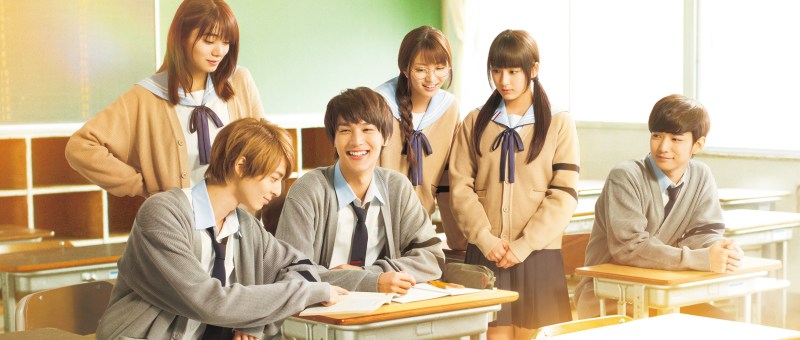
At 27, Arata (Taishi Nakagawa) isn’t sure why his life turned out this way. He thought he’d follow the conventional path, graduate uni, get a steady salaryman job, marry around 25 and settle down into a comfortable middle class life, but now he’s trapped in a perpetual cycle of job seeking and part-time work with his savings running out and final demands pouring in. Invited to a gathering with old friends one of whom is getting married, he shaves and puts on a suit playing the role of the conventional salaryman they all assume him to be too ashamed to let them know he’s struggling. So when he’s accosted in the street by a strangely elfin young man, Yoake (Yudai Chiba), who tries to recruit him into an experimental programme in which they’ll pay his living expenses while he spends a year as a high school senior he finds himself agreeing. 

This is no time travel story, however, the magic pills merely turn Arata back into a 17 year old to enrol in a contemporary high school with kids 10 years younger than himself. He can’t literally change his past but is supposed to use the time to grow as a person, rediscovering a sense of possibility that comes with youth and dwindles with age. His initial intention is just to ride it out seeing as he’ll have no immediate worries for food or shelter and has been guaranteed help with the job hunt when the year is up and he returns to being 28, but inevitably finds himself drawn into teenage intrigue helping each of his new friends reach their own epiphanies in gaining the courage to declare their feelings or overcome their shyness in trying to decide the further course of their lives. 

Part of his own epiphany lies in his renewed desire to be part of a community, no longer isolated in his personal shame but actively participating while embracing his innate kindness and desire to help others. As we later learn, he quit his company job on uncovering workplace sexism and petty harassment, unable tolerate it that a talented colleague (Mikako Ichikawa) found her career sabotaged by men who didn’t like it that she was good at her job and therefore presented a threat to their success. Arata naively brought the matter to the attention of his boss but his boss sided with the guys and had her transferred out. Given this information, it makes little sense that Akira quit his job in protest but then continued to apply for new ones with other companies presumably assuming they would be different rather than accepting workplace bullying is a systemic issue. 

This is the fundamental problem with his experiences in ReLife in that the path he eventually discovers lies in helping other people endure this already corrupt system which isn’t working for anyone, let alone himself. His emphasis on the spirit of never giving up and being there for those in need is noble, but ultimately only enables the system which caused so many to fall into despair in insisting that it is they who need to live up to these culturally defined ideals of conventional success rather than challenging the deeply ingrained social codes which prevent them from pursuing personal happiness. Part high school nostalgia drama complete with a potentially inappropriate romance, ReLIFE is replete with typical genre motifs such as the cultural festival and summer fireworks display along with the continual sense of something coming to an end as Arata finally convinces himself to “treasure the moment” rather than remain trapped between past regret and fear of an uncertain future, but perhaps sends the uncomfortable message that adult life is something you just have bear rather than actively enjoy. 


ReLIFE streams until 27th February in several territories as part of Japanese Film Festival Online 2022.

Original trailer (English subtitles)