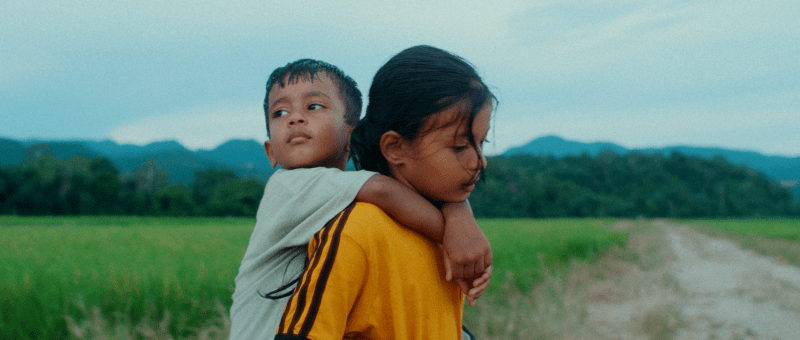
The world’s largest group of stateless people, the Rohingya have been persecuted under several authoritarian regimes in Myanmar and forced continually on the move throughout the region. Having previously explored the lives of Burmese migrants in Japan, and those of Vietnamese workers caught in exploitative training contracts, in Lost Land (Harà Watan), Fujimoto follows a community of Rohingya refugees as they embark on a perilous journey across South East Asia to reach Malaysia.
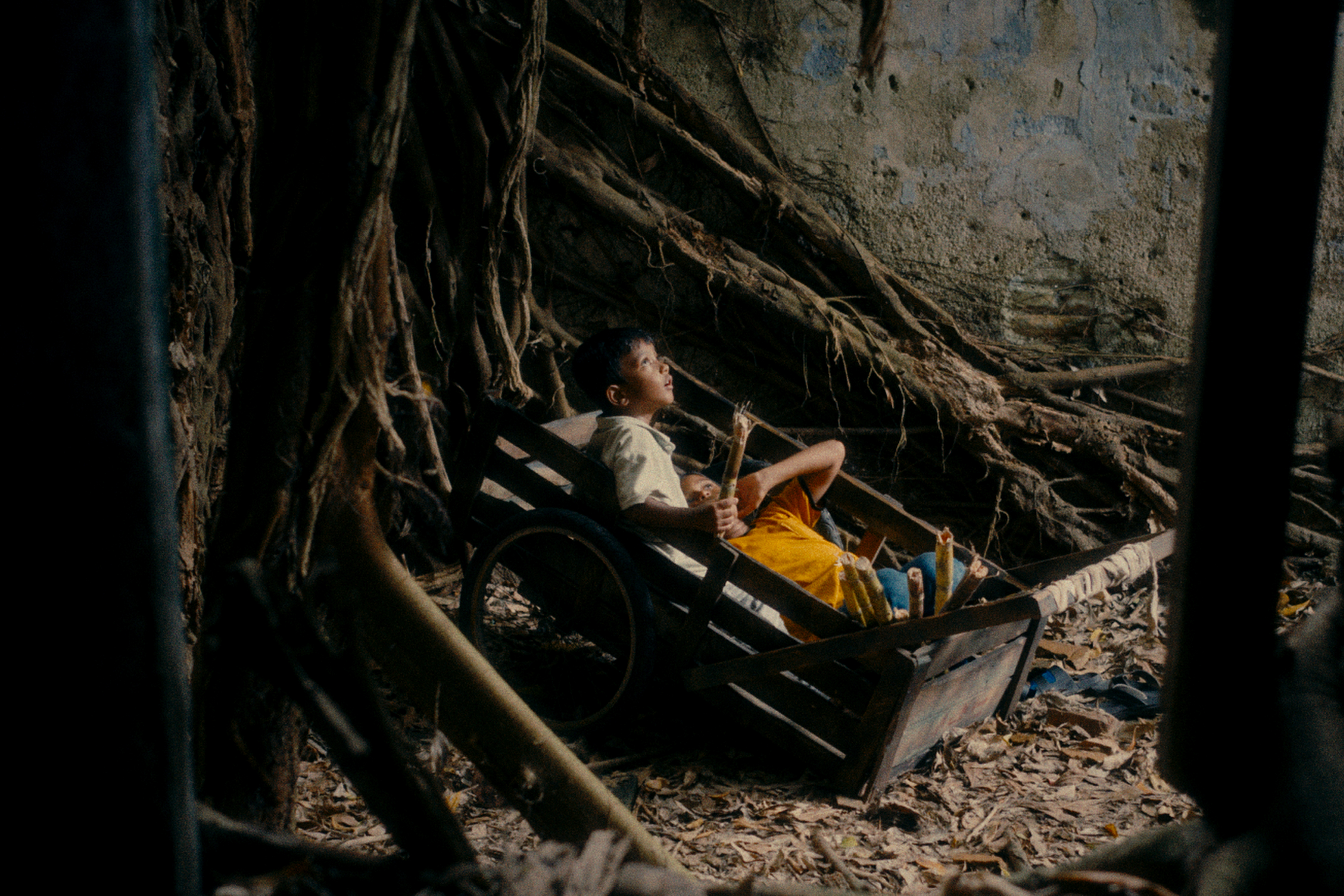
Somira and her brother Shafi don’t know much about this. They’ve been told that they have an uncle living there, but they don’t know his name or his phone number. Shafi keeps asking when they’re going “home”, but in reality they don’t quite have one. Their mother tells them stories about her childhood in Myanmar and a large mango tree that to her seems to embody the idea, but it’s an abstract concept that occupies a space of fairytale or mythical origin story. Later, Shafi will tell a kind young man looking after him that his uncle lives near a big mango tree, mixing up the stories he’s been told in his internal search for a home. He wanders off and finds a tall tree for himself in the middle of the city, looking up at it plaintively and playing hide and seek on his own knowing that no one’s coming to look for him.
The siblings continue to play like children, but their games take on a darker quality when they become separated from their community and must try to look after themselves. They steal sugarcane to suck on, and beg local women for water, while planning to walk to Malaysia on their own despite not knowing the way. Eventually, they’re taken in by another fleeing Rohingya community who find themselves conflicted about what they should do with them. Though they may want to help these lone children for humanitarian reasons, they also know that they make their own passage more difficult and that the brokers will demand extra money they don’t have when they get to the next check point.
By this time, it’s already been a couple of weeks since the children left their previous “home”. Their journey began by walking through the night to a dinghy that took them to a small ship where they encountered a storm, blew off course, and began to run out of food. One of their community died in the liminal space of the boat and was buried at sea. They frequently have to leave people behind because they couldn’t keep up or the authorities got them. This community too walk in the through the night clipping metal fences and then are forced to run for their lives. A horrifying moment finality demonstrates what it costs to look back or to try to help others while bullets fly indiscriminately in the darkness.
Then again, there are moments of joy as a mother is reunited with her son after ten years even if he tells her that his workplace was raided and many of his friends were arrested. He was spared because he wasn’t working that day but ended up losing his job and will now struggle to find a new one while making sure to not blow his cover or be caught by the authorities. His mother’s faith remains strong as she insists that God wouldn’t let him suffer and is sure to find him a new job, despite all the fear and horror she’s been through on her journey towards him. She and her son are good people who look after Shafi even though they don’t have to because it’s the right thing to do. Though the siblings encounter good people like the Thai man who wanted to help them because he saw once Rohingya being taken away but couldn’t do anything about it, the world is otherwise heartless traffickers who’ll kill those who talk back to them or aren’t able to pay the extra money they’re sure to ask for. Wherever they go, the children aren’t welcome but are pushed on somewhere else, forced on more perilous journeys towards a distant homeland in an endless game of hide-and-seek. The first film ever produced in the Rohingya language, Fujimoto’s hard-hitting drama is a quiet plea for a little more compassion for those who are only in search of a home.
Los Land had its World Premiere at the 2025 Venice International Film Festival in the Orrizonti Section.
 Windows on Worlds