Kakame – Vampire Clay Derivation (血を吸う粘土~派生, Soichi Umezawa, 2019)

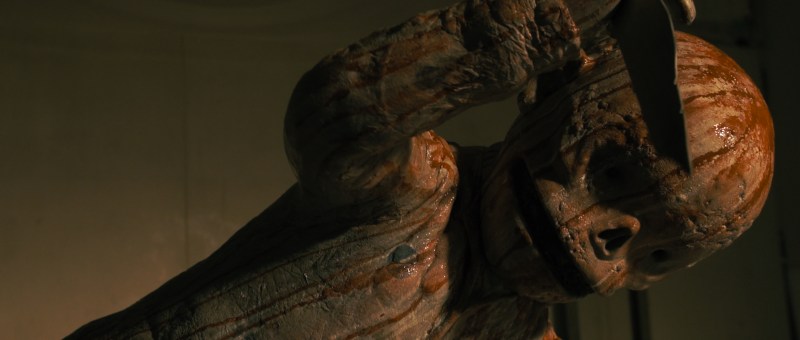
Kakame returns! Having been encased in concrete at the end of the previous film, it was perhaps inevitable that he would eventually break free to feed on the frustrated dreams of insecure artists everywhere. Kakame – Vampire Clay Derivation (血を吸う粘土~派生, Chi wo Su Nendo: Hasei) picks up shortly after the first film left off, but this time around the insecurities are less artistic than they are familial and social as those affected by the curse of Kakame find themselves wrestling with a sense of responsibility they must face alone to ensure that his bloody vengeance is contained lest he wreak more havoc on the wider world. 

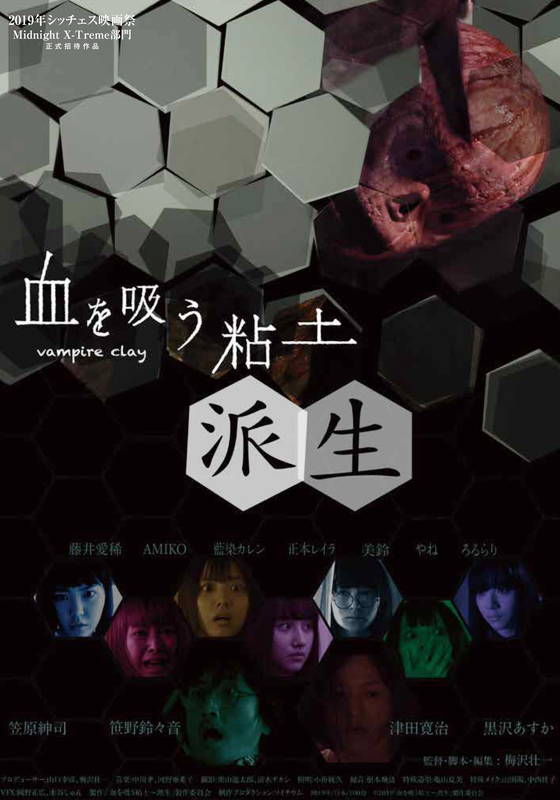
After a short flashback, Aina (Asuka Kurosawa) sends the surviving student home and insists on going to the police alone but is involved in a car accident. Meanwhile, we’re introduced to the new heroine, Karin (Itsuki Fujii), the daughter of Fushimi (Kanji Tsuda) who fell victim to Kakame at the end of the previous film. His body has now been found in the art school and so the police contact Karin, who is his only living relative seeing as Karin’s mother committed suicide shortly after the marriage broke down, to identity him despite the fact they had been estranged for the last 12 years. The problem is that Karin didn’t want anything to do with her dad and so she is a bit lax dealing with his bones which still contain traces of Kakame. Meanwhile, as an aspiring artist herself, she enrols in a dodgy art project run by sleazy artist Kida (Shinji Kasahara) who makes a point of recruiting six young women in their 20s because he apparently wants to know what the women of Japan today are thinking, instructing them to unbalance the unbalanceable by disrupting the harmony of the hexagonal form. 

The strange apianism of the hexagonal theme is never developed further save a rerun of the events from the first film with the minor difference that is already “unbalanced” in the additional presence of Kida’s troubled assistant and the fact that he is the only male. Nevertheless, difficulties quickly arise among the girls and not least between Karin and her adoptive sister, also an artist though insecure in her abilities. Once again these tiny cracks between people are enough to let the murderous clay in, targeting first the melancholy assistant demeaned by her dismissive boss who refuses to let her participate in the project because the other girls are all students where as she is an aspiring ceramicist. Meanwhile, another suspect is provided in a young woman strangely fascinated with the bones of dead animals while Karin realises she is still in possession of one of her father’s lost in a tussle with her sister. It’s bone then, rather than blood, which condemns her but still she finds herself paying for her father’s sin in receiving a visit from Kakame as he makes swift work of the innocent artists. 

The sculptor’s curse refuses to die, the other Kakame apparently fusing with a worm and creating ructions underground which threaten to destabilise the world at large. As Aina had in the first film, venal artist Kida ponders using the clay for his own ends, ironically desiring to turn it into art, perhaps making good on the sculptor’s unfulfilled desires but also exposing his own less worthy goals of becoming rich and famous which is perhaps one reason why he’s busily exploiting six pretty young women rather than getting on with his work. Aina eventually reconsidered, but then finds herself facing a similar dilemma, targeted by the police who obviously don’t buy her story about demonically possessed clay turning murderous, while wondering if it might not be better to just dump the remaining powder in the river and be done with it. Maintaining his focus on practical effects, Umezawa shifts focus slightly heading into a different register of body horror as the strange clay worms work their way into the bones of our heroes before Kakame makes himself whole, but otherwise pulls back from large scale effects often switching to blackout and soundscape as in the opening car crash. Nevertheless, what we’re left with is a tale of shared responsibility as two women of different generations refuse to let the other carry the burden alone though neither of them is in any way responsible for the curse of Kakame save for the darker emotions which helped to birth him of which we all are guilty. 


Kakame – Vampire Clay Derivation screened as part of Camera Japan 2020.

Original trailer (no subtitles)
Vampire Clay (血を吸う粘土, Soichi Umezawa, 2017)

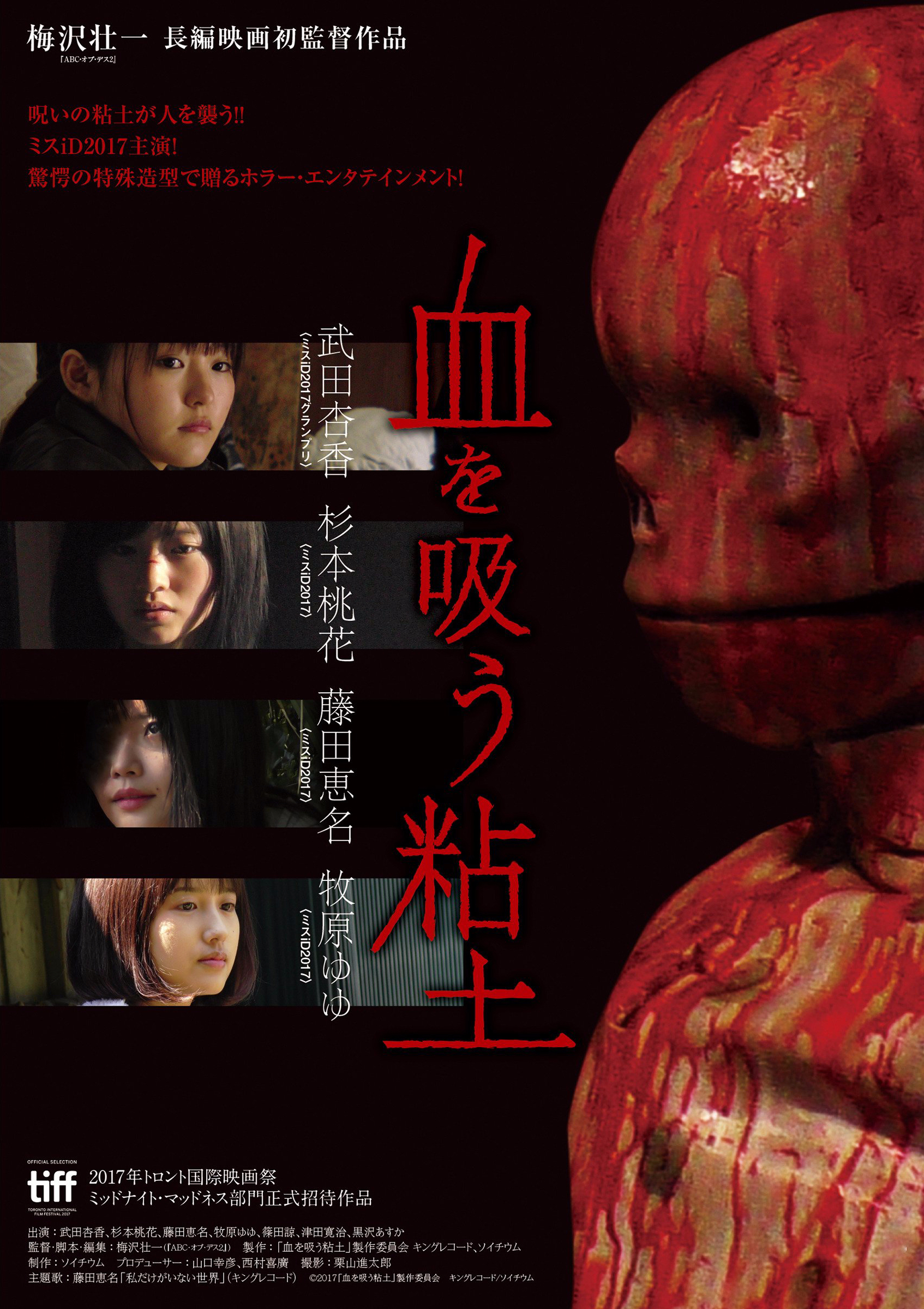
The artist consumed by their art is a potent motif, creation and destruction two sides of the same coin, but there’s rarely been a painter attacked by the canvas quite as literally as the sculptors of Vampire Clay (血を吸う粘土, Chi wo Su Nendo) are depleted by their material. The first feature from practical effects specialist Soichi Umezawa is refreshingly unpretentious, unabashed schlock designed to showcase Umezawa’s obvious skill in stop motion and prosthetics but it does perhaps have a point to make in the legacy of embittered artistry and frustrated dreams of those whose art is never recognised. 

Middle-aged sculptress Aina (Asuka Kurosawa) flees the duplicitous Tokyo art scene after being betrayed in love by her no good husband who also runs a studio specialising in training students to gain admission into one of Japan’s many exclusive art schools. In fact, Umezawa somewhat strangely opens with a title card revealing the comparatively small percentage of pupils each school accepts in contrast to the large number of applications, neatly setting up the desperation and sense of inadequacy that plagues most of our heroes, Aina included. Retreating to the country she sets up shop in a small shed which is later ravaged by an earthquake, leading to her discovery of a buried tin filled with mysterious clay and other artistic accoutrements left behind, she assumes, by the previous occupant. The trouble starts when errant student Kaori (Kyoka Takeda), who had been studying at a workshop in Tokyo, returns earlier than expected much to the chagrin of rival Reina (Ena Fujita) and discovers a new pupil has borrowed her clay. Predictably, she decides to use some from the mysterious bag, reviving the evil with water and discovering that somehow this magic substance seems to have upped her game. 

Umezama continues to flag the urban rural divide, the students beginning turn against Aina believing that it’s her time in Tokyo which has given Kaori a leg up, something that further wounds Aina in her sense of professional pride as she channels her rage and frustration into moulding her pupils into top candidates as a means of besting her ex. The sculptors knead their frustrated desires into the clay, it feeds on their misery and disappointment. This particular clay, however, is more cursed than most in that it is apparently infected by some kind of toxic disease which plagued the previous owner, symptomatic of the degree to which his art, or more pointedly the refusal of others to recognise it, destroys him. 

Aside from that there are a host of interpersonal problems between the students and their teacher. As the only male sculptor points out, they are both classmates and enemies as they are forced to compete against each other for the prize of recognition in the form of admission to an art school. Meanwhile, he is also the subject of a love triangle, refusing a homemade bento from an admirer in favour of one from another, this essential act of emotional betrayal later providing an in route for the murderous clay. 

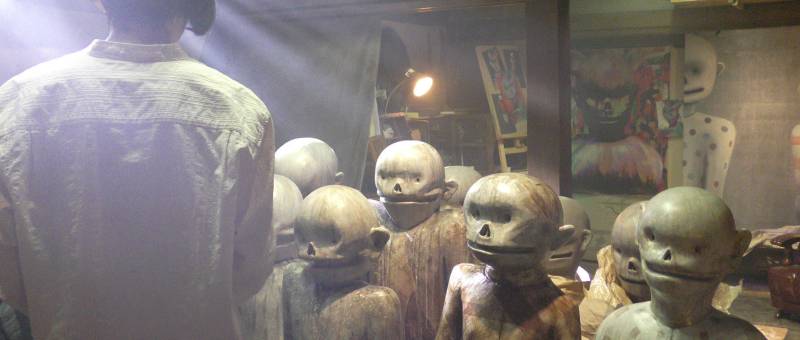
Nevertheless, Umezawa is not so interested in the implications of the interpersonal drama as its potential for bloody action. The clay works its way into the bones of the sculptor, consuming and possessing them in a series of pleasingly retro, Cronenbergian practical effects. “I don’t want to lose my individuality to convention” Reina had snapped back in insisting that this small rural school suits her fine despite having just been given a dressing down for the “conventionality” of her final assignment. The clay, perhaps, attempts to rob them of their individuality, turning them into a mindless plastic mass fuelled only by negative emotions, thirsty for blood and hellbent on destruction. Somewhat incomprehensibly, a failed sculptor turned restaurateur convinces the original owner of the clay that his creepy creations will sell like hot cakes to hospitality establishments in the city, allowing his final humanoid legacy to become a kind of Frankenstein’s child carrying all his rage and resentment into the future but attacking, it seems, other marginalised artists rather than the hated Tokyo arts scene which is the real target of his ire. Aina, having for the moment neutralised the clay, considers unleashing it against her ex, bringing the grudge full circle in its own, ironic, way but also consumed by resentment and jealousy. The “toxic waste” of artistic disappointment refuses to die, burrowing its way underground even as the responsible attempt to bury it, lying in wait for the next tortured artist willing to sell their soul for illusory success.


US release trailer (English subtitles)