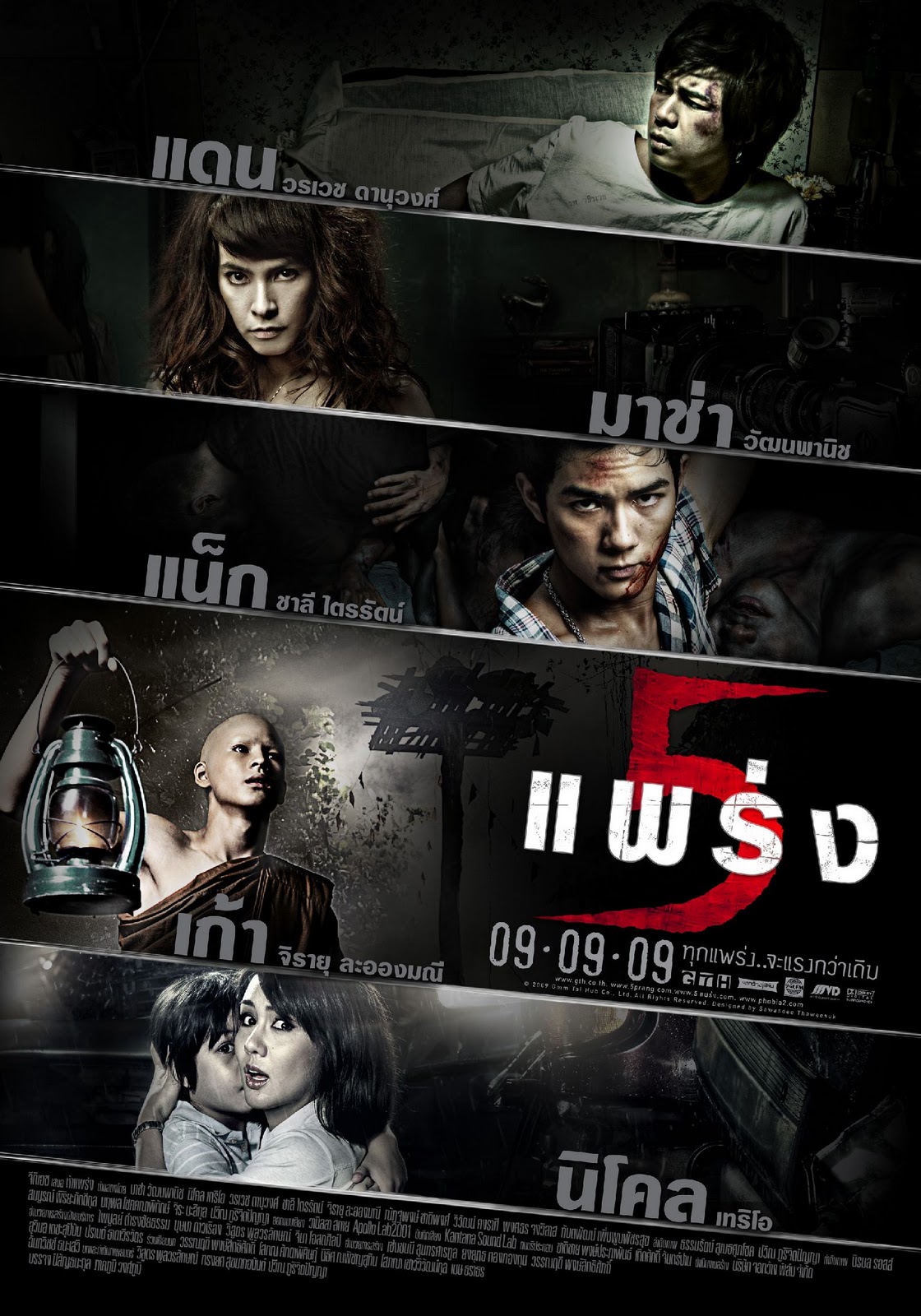
Phobia 2 (5 แพร่ง, Paween Purijitpanya, Visute Poolvoralaks, Songyos Sugmakanan, Parkpoom Wongpoom, Banjong Pisanthanakun, 2009)

Aptly termed “5bia” but retitled in English as Phobia 2, this sequel to the original four-part anthology adds an additional director for five tales of Thai horror. Unlike the first film, there aren’t any particular linking details though they each someway turn on an anxiety towards cars and other forms of transportation along with exploring the effects of unresolved guilt and natural justice in the form of karma.

Thus in the first sequence, Novice, a young man, Pey (Jirayu Laongmanee), is sent to a temple to hide out after being involved with a crime. He evidently did not want to become a monk and is resentful towards his mother and stepfather for bringing him here. But what he soon becomes involved with is a haunting, a hangover from the hungry ghosts festival that confronts him with his unresolved feelings towards his mother and lingering guilt over the crime he committed. Elegantly lensed, the film has a creeping sense of dread and eerieness as Pey begins to accept responsibility for his actions even if as it seems he must also pay for his lack of respect towards traditional custom.

Continuing the theme, in the second part, Ward, a young man, Arthit (Worrawech Danuwong), with casts on both of his legs is intrigued by the patient in the next bed, a former priest who it seems is not quite ready to move on. Rendered vulnerable by his incapacitation, Arthit can only watch as a weird ritual seems to unfold while the hospital staff do not seem to take his distress seriously. Despite its grim strangeness, there is a dark humour underpinning the action along with a kind of absurdity in the oddness of this weird black magic.

There’s nothing quite so supernatural in the third instalment, however, as a pair of Japanese hitchhikers are unwittingly picked uo by a people trafficker whose entire cargo turns out to be dead because his son tried to use them as drug mules. The film might have something small to say about exploration and the devaluing of the human life, but soon slips into zombie drama as the truckers try to outrun the consequences of their actions while the tourists pay a heavy price for their naivety. 

Just as in the earlier sequences, Salvage too finds a source of fear in the car but this time its largely because it’s haunted, both literally and by the spectre of amoral capitalism embodied by the boss’ attempts at corning cutting. Nuch (Nicole Theriault) has largely been making her money by buying wrecks and selling them as second-hand without telling the new owner they were involved in a fatal accident. After being taken to task by a mother who complains her son was nearly killed, she can’t find her son Toey anywhere and while looking at him is confronted by the ghosts of the various people who’ve been killed by her cars. It’s a neat indictment of the various ways capitalism is killing us even if ending on a note of improbable cruelty.

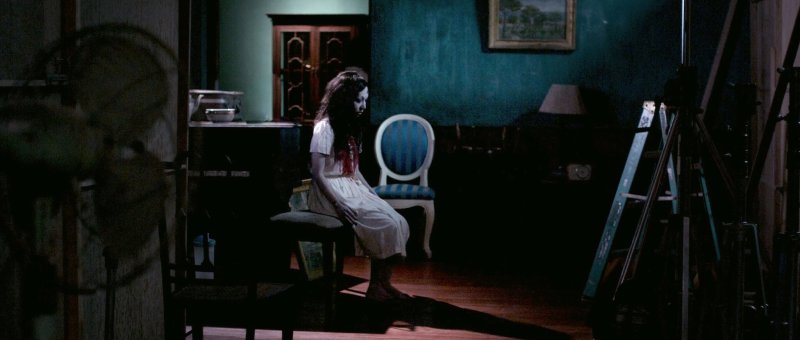
The fifth, final, and best instalment meanwhile takes on a meta quality. Directed by Shutter’s Banjong Pisanthanakun, it follows the action on the set of a sequel to his film Alone and stars the same actors as his segment in 4bia which Banjong Pisanthanakun humorously references while inverting its structure. After the supporting actress is taken ill, a rumour begins that she has in fact died only for her to turn up on the set provoking terror from the boys who become convinced she’s s vengeful ghost.In any case, it turns out it wasn’t the supernatural they really needed to look out for but a sleepy, overworked driver. Like Man in the Middle, the gentle camaraderie between the guys and zany humour help carry the witty tale alone as the gang start suspecting each other and acting irrationally in an attempt to escape “the ghost.” All in all, it’s a fitting way to end the series, concluding on a note of cosmic irony as the real threat turns out to be all too human and an exmplifcation of an exploitative employment culture rather than a vengeful spirit seeking revenge from beyond the grave.


Trailer (English subtitles)
Dorm (เด็กหอ, Songyos Sugmakanan, 2006)

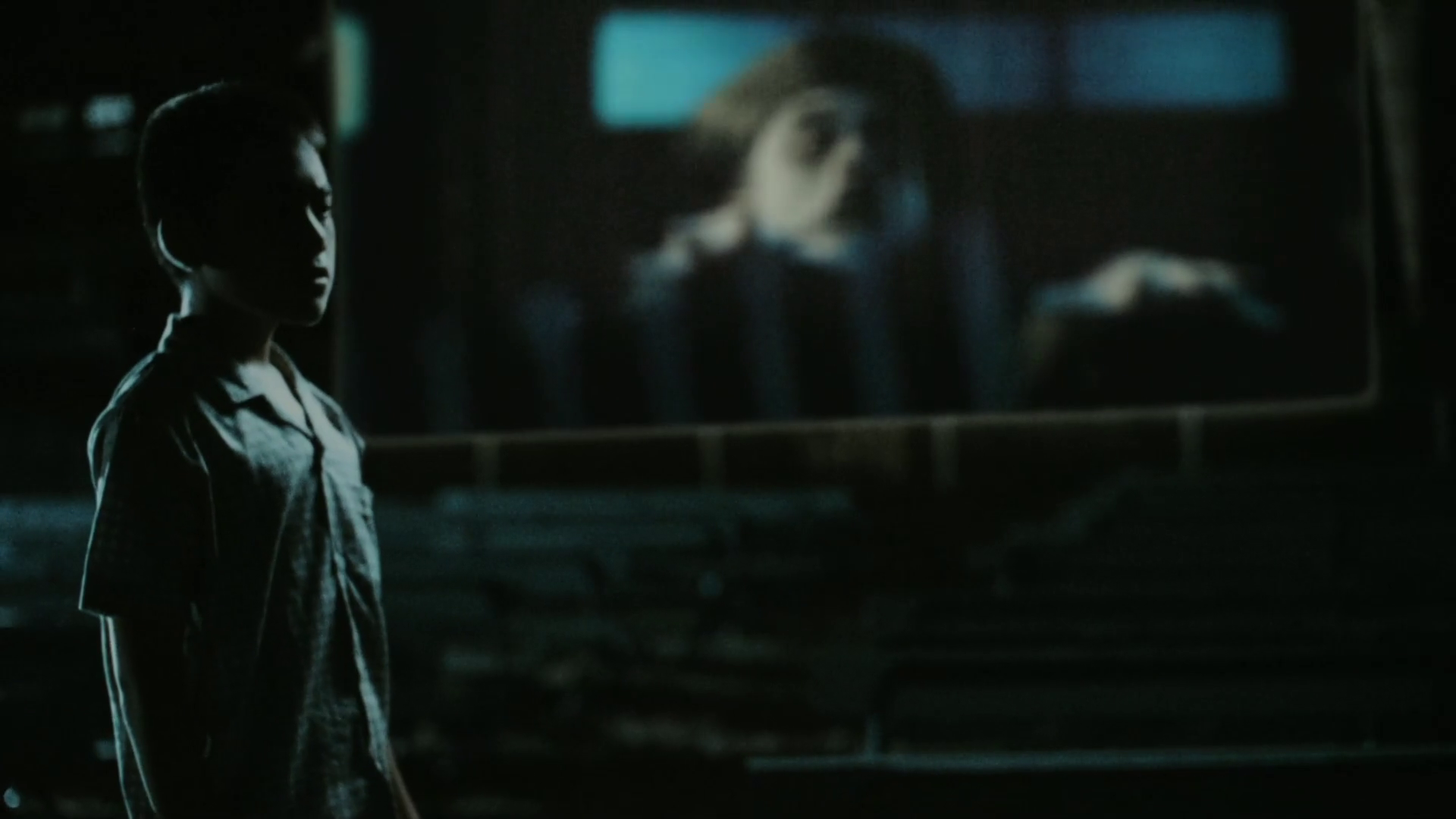
“Are you scared of ghosts?” one child asks another. Perhaps it’s an odd question. Ghosts are generally assumed to be frightening, but they can also in a way comfort though their presence may be painful. Songyos Sugmakanan’s poignant ghost story Dorm (เด็กหอ) casts the school at its centre as an infinitely haunted place, not just because of the associations it later takes on in the mind of the protagonist, but a prison-like space of emotional repression that nevertheless later becomes one of friendship and liberation.

It isn’t surprising that it feels like a prison to Chatree (Charlie Trairat) who has been abruptly sent there by his father (Suttipong Tudpitakkul) he feels as a kind of banishment for a very particular transgression. According to his father, however, it’s all because his school isn’t strict enough and Chatree spends too much time playing games and watching television. Intensely authoritarian, Chatree’s father soon alienates his son who bears intense resentment towards him not only for his severity and unwillingness to recognise his autonomy, but because of his failures as a father and eventually exiling of him because of the challenge he presents within this household. 

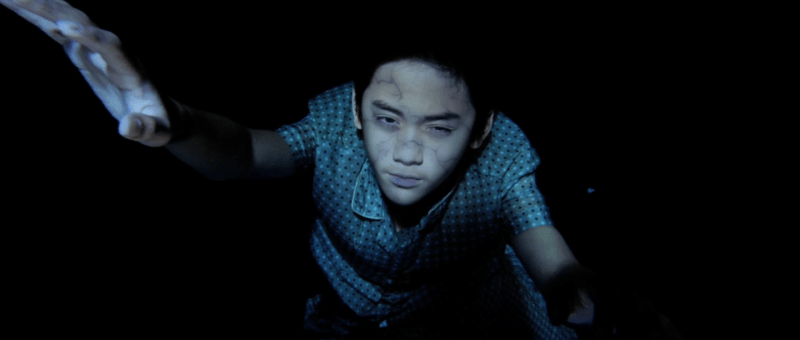
Further challenging notions of masculinity, Chatree’s father had told him that “a man must be able to live anywhere.” Though he had said the school had everything, the environment is grey and austere. Chatree is met by a rather cold woman, Pranee (Chintara Sukapatana), who takes him to the dorm where he will be sleeping which is in a large room with high ceilings and several rows of camp beds. Parnee cooly tells him that he’s expected to fend for himself, while his immediate neighbours proceed to haze him by telling him several ghost stories said to take place the school. Chatree’s school days continue in utter misery until he befriends Vichien (Sirachuch Chienthaworn), another lonely boy seemingly shunned by the others but as Chatree gradually realises actually a ghost unable to move on from the scene of his trauma just as Chatree is unable to move from his abandonment by his family. 

To that extent, the school is a kind of liminal place and it becomes clear that Pranee is also haunted by her own sense of guilt for something that turns out not to have been her fault after all but has, as the other boys say, turned her “weird”. The guilt that she feels has made her turn in on herself, become cold and repressed denying the boys the kind of maternal love and affection she appears to give them in flashbacks to her younger days. Chatree’s attempts to help Vichien are also attempts to liberate Pranee and himself from the limbo of the school and exorcise their traumas so that they may live again.

In Chatree’s case, his quest to help Vivhein is what allows him to make friends with the other boys, lifting the perpetual gloom of the school building and returning to him a sense of familial warmth that he felt that he had been denied in being exiled from his family. Though his resentment towards his father may in a sense ease, he does not seem to have forgiven him for his failures or transgressions but rather let his traditional family go in favour of friendship acknowledging that even the hardest times in life will soon pass if you have one close friend at your side. There are of course hints of queerness in the relationship between the two boys each of whom are in some way different and alike in their feelings of otherness and lack of belonging, while it may also in other ways explain Chatree’s father’s harshness towards him along with his preoccupation with traditional masculinity and obsession with academic success.

In that way unlike similarly themed nostalgia dramas, the school does not remain a purgatorial space and Chatree’s decision to remain within it is not an acceptance of limbo but of moving on in accepting himself and his identity and actively choosing a place to belong which is with his new friends rather than the repressive atmosphere of the traditional family as represented by his father. With shades of The Devil’s Backbone and Les Diaboliques, Songyos Sugmakanan conjures a gothic atmosphere of lingering dread but tempers it with humour and warmth in the genuine friendship between two lonely boys who in the end save each other and make what was once a prison a space of liberation.


Dorm is available as part of Umbrella Entertainment’s Thai Horror Boxset.

Trailer (no subtitles)