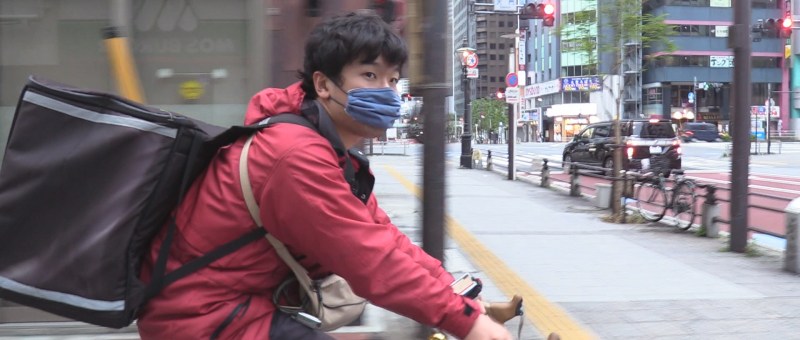
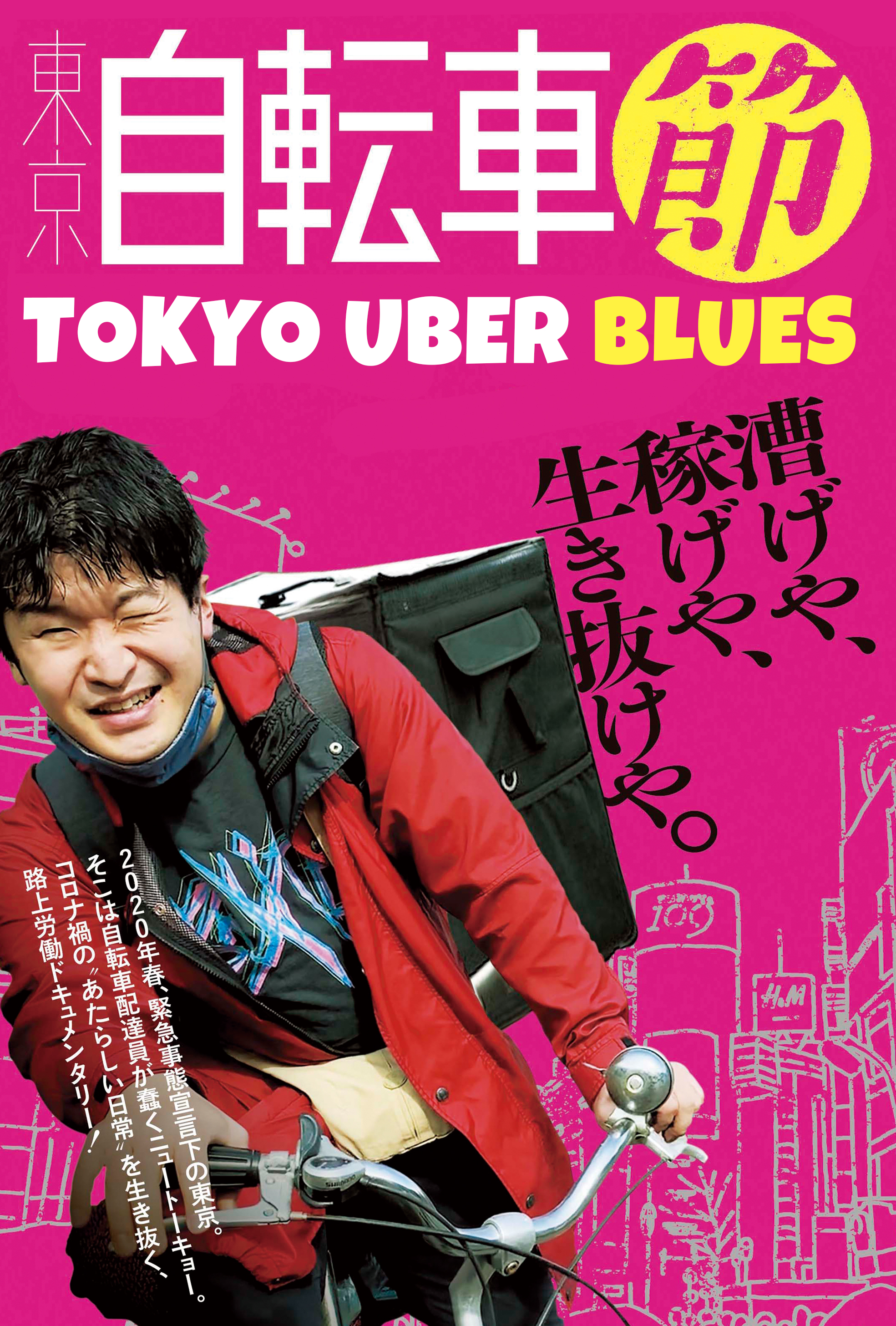
Aspiring filmmaker Taku Aoyagi had been working as a substitute driver, driving people home in their own cars after they’ve had a drink, for a company owned by his uncle in rural Yamanashi when the pandemic hit in early 2020. With bars closed and fewer people going out in general, he soon lost his job while saddled with significant student debts. In Tokyo Uber Blues (東京自転車節, Tokyo Jitensha Bushi), he documents his decision to move to Tokyo and become an Uber Eats delivery agent having heard of big opportunities to earn easy money amid the delivery boom of the pandemic.
Aoyagi’s capture of himself is not always sympathetic and he often appears relatively naive even while trying to contend with the vagaries of the Covid-era economy. He’s fortunate enough to be invited to stay with a friend but soon finds that the work is much more difficult than he’d been led to believe and a nine-hour shift earns him only around 60 US dollars. Most of the orders he’s carrying seem inordinately small, biking half way across the city just to deliver one burger or a pair of bubble teas meaning of course that he’s only picking up a minimal amount in tips. The work is also physically taxing though obviously becomes less so as he gets used to it and is then able to upgrade to an electric bike.
The film is much more about Taku’s direct experience as an Uber Eats deliveryman than it is about the gig economy, the precarious working environment, pandemic or life on the margins of a prosperous society at a moment of crisis but nevertheless makes small asides hinting at a disparity between the people who order the deliveries and those who deliver them. Taku reflects that people in high rise condos seem to order an awful lot of stuff and is left with mixed emotions on the one hand recognising that they provide the work for him but also mildly resentful that they seem to spend their money so frivolously when he can barely get by. He swings between considering the implications of Uber’s business model for its workers and fully believing that he is “connecting people” through his work. As time goes on it’s almost as if he’s beginning to lose to mind, rambling about his “quest” to master the system and become the ultimate Uber rider maximising his profits while describing himself and his colleagues as “hyenas” prowling the city ready to pounce on the next opportunity.
Aoyagi does not go into the reasons he chooses to move out after staying with friends though it may perhaps just have been that he felt bad about imposing on them for so long or simply wanted his own space. An attempt to stay in a cheap hotel does not go as well as hoped and hints at his difficulties managing his money on an unpredictable income. For a while he becomes technically homeless, sleeping on the streets before finding refuge in overnight manga cafes when they eventually reopen. A jobbing actor he meets on the street gives him advice about where to find cheap food while an old classmate helps him out with Uber-related advice such as where to wait to find the prime gigs hinting at the various ways people will still help each other even while similarly desperate or in direct competition.
Even so, he’s still receiving calls about his overdue loan payments and reflecting on the way the government chooses to spend its money. They tell people to stay at home, but what are you supposed to do if you don’t have one? Taku asks the actor where the homeless people go but he tells him they’ve all been bussed out of the city in preparation for the Olympics. When an air display takes place to celebrate the efforts of frontline workers, Taku briefly explains that he also felt as if they were celebrating his successful mastery over the Uber system only to later reflect that it cost about 30,000 US dollars which might not have been the best use of such a large amount of money. Still wearing grandma’s home made mask, he rides all over the city observing all sorts of people and ways of life but doesn’t seem to have found much of a way forward for himself or decided whether this system represents “freedom” or is inescapably exploitative as he realises that Uber doesn’t cover maintenance or repairs on the equipment he has to supply himself. “What a world this is,” he chuckles to himself riding into a “new normal” none of us quite understand.
Tokyo Uber Blues screened as part of this year’s Nippon Connection.
Original trailer (English subtitles)
 Windows on Worlds