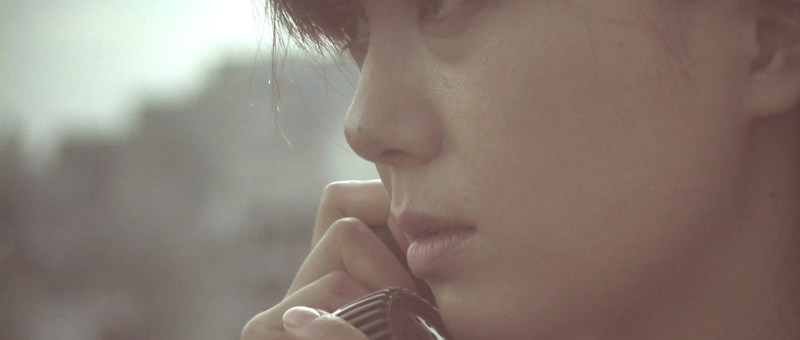
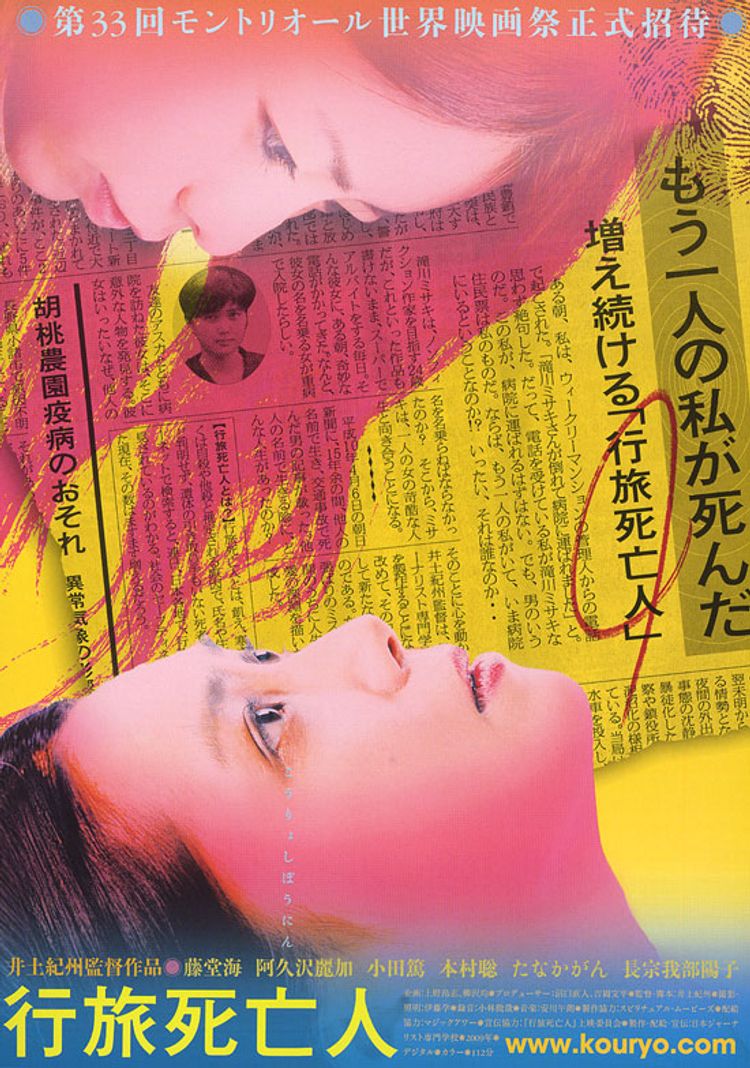
If you suddenly got a phone call one day to tell you that someone with your name living at your address had been taken ill, how would you feel? Sponsored by the Japan Journalist College, Kishu Izuchi’s mystery drama The Faceless Dead (行旅死亡人, Koryo Shibonin) sends its aspiring investigative reporter through a murky world of crime and identity theft to discover why someone would need to discard their name and live a life of constant inconvenience in an ever modernising society.
As she explains in her opening voiceover, Misaki’s dream is to become an investigative reporter working on important social issues exposing scandals such as contaminated blood supplies, mislabelled food, and people trafficking but has found little interest from publishers when pitching her ideas. Currently she regards herself as a “job-hopper” working part-time at a local supermarket which has recently been taken over by a larger conglomerate intent on introducing a new creepily cult-like corporate mentality. With her lease about to expire, Misaki is feeling desperate only to receive a weird phone call from another apartment building informing her that “Misaki Takigawa” has been taken ill and is currently in hospital. Obviously this comes as quite a surprise to Misaki as she tries to explain she is Misaki Takigawa and she feels fine to the dumbfounded man on the phone. On venturing to the hospital to find out what’s going on she discovers that the person using her identity to rent a flat is a woman she worked with at a publishing company some years ago, Yasuko.
Misaki can’t figure out why or how Yasuko would be using her name and documentation but is both curious and feeling a sense of obligation to find out not least because Yasuko also had a bank book with a substantial amount of money in it that’s in her name. Her quest leads her on a meandering path discovering that it obviously wasn’t the first time the woman she knew as Yasuko who had always seemed kind and honest had been living under an assumed name even though it’s something quite difficult and inconvenient to do in contemporary Japan because it makes it all but impossible to access medical care, rent an apartment, or even get a mobile phone all of which require verified documentation. Having access to Misaki’s employment record presumably enabled her to get what she needed to sign a lease and open a bank account in her name and perhaps explains one reason why she elected not to get treatment when a routine workplace checkup highlighted possible medical concerns, the other reason being a sense of guilt which also explains why she chose to live in austerity saving all her money and later instructing Misaki to send it to an older couple living in a remote country village.
More and more, Misaki is forced to admit that she really didn’t know Yasuko at all even if she felt indebted towards her for having taken her under her wing at her first job, or perhaps that she did in a sense know “Yasuko”, the persona she had adopted at the time, but not the woman underneath it. Apparently based on a real case, Misaki’s quest for the truth takes a rather dark turn that eventually intersects with the weird company that has taken over her supermarket intent on turning all its workers into soulless drones who live only to serve, the boss ominously instructing his subordinate to inject their new philosophy directly into the arms of the unenthusiastic shop staff after failing to achieve their desired sales goals.
Maybe you could say it was all done for love and Yasuko is simply a hopeless romantic willing to sacrifice her identity but not her life in order reclaim past happiness but even if every life has a price as she reflects in a moment of desperation you can’t simply buy someone else’s no matter how much you’ve lost or suffered in the one you’ve been given. Through her quest to ascertain Yasuko’s true identity along with the original one, Misaki is forced to reflect on and reconsider her relationships with others as well as her own identity while hoping to prove her journalistic skills investigating this very strange and ultimately sad case as borne out by the post-credits sequence which finds her, perhaps strangely, still working at the supermarket trying to organise her life goals around her financial responsibilities in an intransigent society.
Original trailer (no subtitles)
 Windows on Worlds