Soup and Ideology (수프와 이데올로기, Yang Yonghi, 2021)

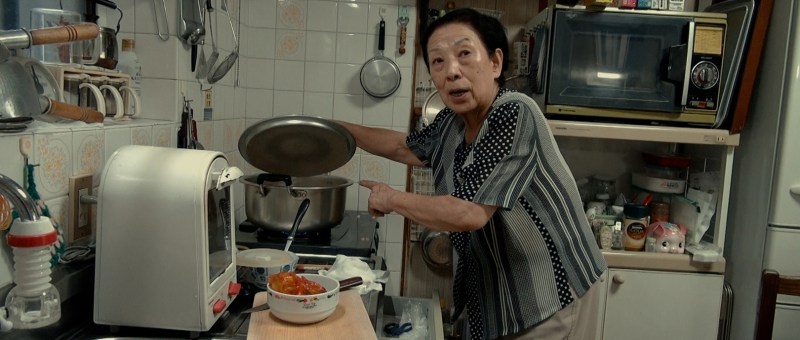
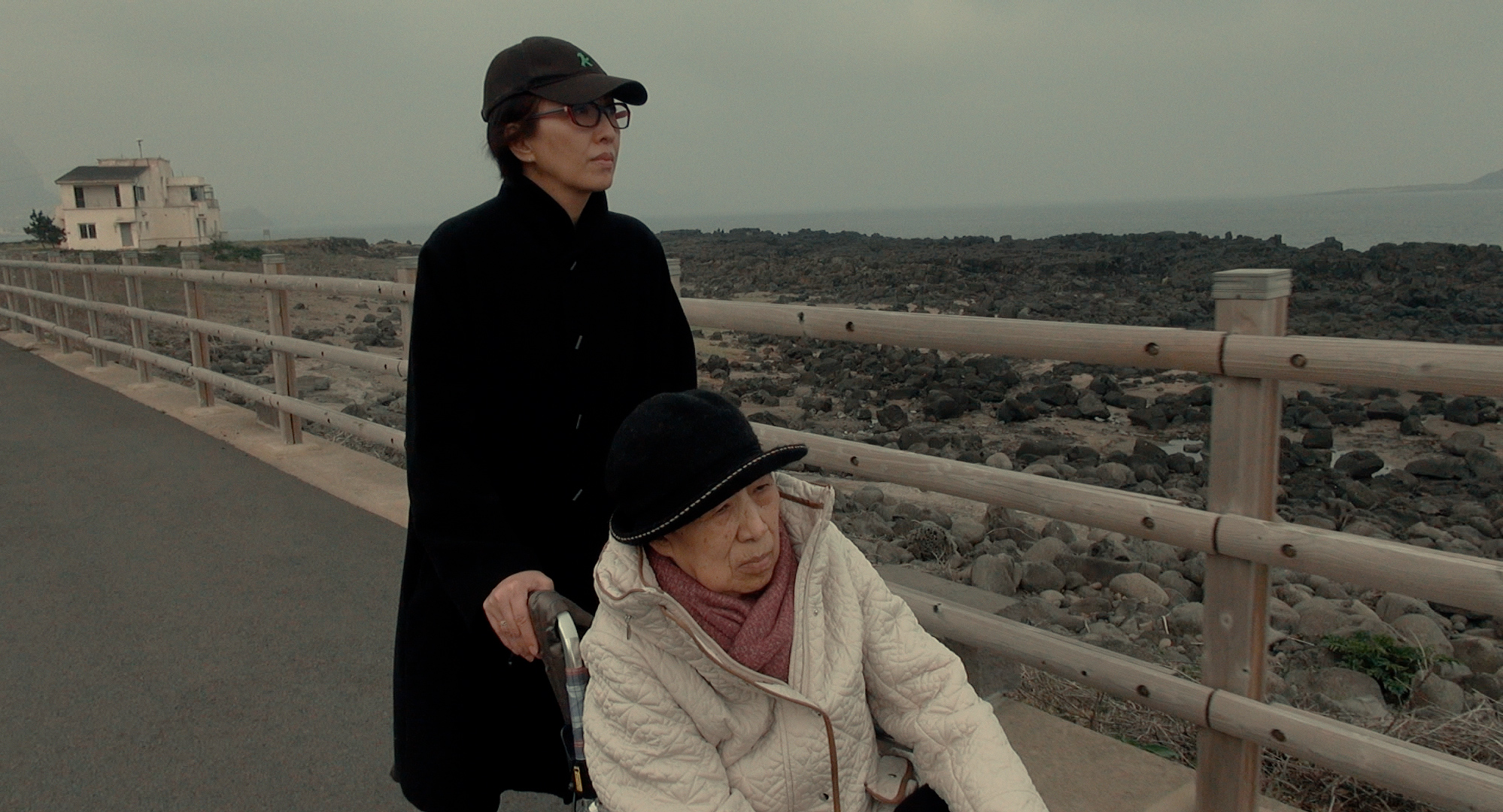
In her 2006 documentary Dear Pyongyang, documentarian Yang Yonghi explored her sometimes strained relationship with her parents whose devotion to the North Korean state she struggled to understand. Her father having passed away in 2009, Yang returns to the subject of her family with Soup and Ideology (수프와 이데올로기) which is as much about division and how to overcome it as it is about her complicated relationship with her mother along with the buried traumas of mother’s youth as a teenage girl fleeing massacre and political oppression for a life in Japan marked by poverty and discrimination. 

In animated sequence towards the film’s conclusion, Yang outlines the political history which led to the Jeju Uprising of 1948. Her mother Kang Junghi was born and raised in Osaka but when the city was all but destroyed in the aerial bombing of 1945, her parents decided to return to their hometown in Jeju. After the war, Korea was occupied by America and Russia and in 1948 an election was due to be held to ratify the upcoming divide. Ironically enough, the Jeju Uprising was a protest against division but brutally crushed by South Korean government forces resulting in a massacre in which over 14,000 people were killed. Then 18, Junghi lost her fiancé, a local doctor who went to fight in the mountains, and barely escaped herself walking 35km with her younger siblings in tow towards a boat which brought her back to Japan. 

There are a series of ironic parallels in the lives of Yonghi and her mother, Yonghi forced to undergo a North Korean education with which she became increasingly disillusioned while her mother was educated in Japanese and obliged to take a Japanese name while living in a Zainichi community in Osaka. Near the film’s conclusion after Junghi has begun to succumb to dementia, she struggles to write her name in hangul on a visa needed to travel to South Korea but is able to recall it in Chinese characters, which also hang outside her home, perfectly. Meanwhile, Junghi was also parted from her family in tragic circumstances and left with a continual sense of absence and displacement. There is something incredibly poignant in seeing her at the end of her life surrounded by the ghosts family members who had long been absent, continually looking for her brother who moved to North Korea where he passed away, and asking for her late husband and eldest son who took his own life unable to adjust to the isolated Communist state where he was denied access to the classical music he loved. 

Resolutely honest, Yonghi admits that she had little patience with her mother and saw her as a burden she cared for more out of obligation than love consumed with frustration and resentment towards Junghi’s devotion to North Korea and decision to send her three sons away leaving Yonghi a lonely child at home. An early scene sees her trying to confront her mother over her financial recklessness, pointing out that she is now retired and living on a pension. She can no longer afford to send the expansive care packages she prepared in Dear Pyeongyang which supported not only her sons and their families but whole communities in North Korea, while as Yonghi points out no one is going to be sending them after she passes away. Denied contact and company, these care packages were perhaps the best and only demonstration of maternal love available to her and the inability to send them is in its own way crushing. 

Sending her brothers away, as she emphasises against their will, was the source of Yonghi’s resentment towards her mother yet on discovering the depth of her traumatic history as a survivor of the Uprising, Yonghi begins to understand, even if she does not condone, the various decisions her mother made throughout her life. Distrustful of the South Korean government having witnessed their treatment of ordinary citizens in Jeju while experiencing a hostile environment in Japan and forced to pick a side in the politicised environment of the Zainichi community, she sent her sons to North Korea ironically believing they would be safe from the kinds of horrors she encountered as a young woman. It is the literal, geographical and psychological division of Korea that lies at the heart of the divisions in Yonghi’s family dividing her ideologically from her parents and physically from her brothers while leaving Junghi orphaned in Japan

Banned from travelling to North Korea because of her previous films, Yonghi wonders how she will one day manage to deliver her mother’s ashes to their resting place next to her father in Pyongyang, but otherwise suggests that bridging the divide is possible not least in her marriage to a Japanese man, Kaoru, who adopts her mother almost as his own patiently taking care of her and learning the recipe for the traditional chicken soup she often makes stuffed with garlic from Aomori and generous quantities of ginseng. Touched by the sight of Junghi surrounded by photos of relatives she is unable to see, Kaoru tells Yonghi that even if they disagree politically they should make time to eat together peacefully as a family. A touching portrait of a difficult mother daughter relationship, Yang’s poignant documentary suggests there’s room for both soup and ideology and that divisions can be healed but only through a process of compassion and mutual understanding. 


Soup and Ideology screens at the Korean Cultural Centre, London on 11th August as part of Korean Film Nights 2022: Living Memories.

Original trailer (English subtitles)
Dear Pyongyang (Yang Yong-hi, 2006)

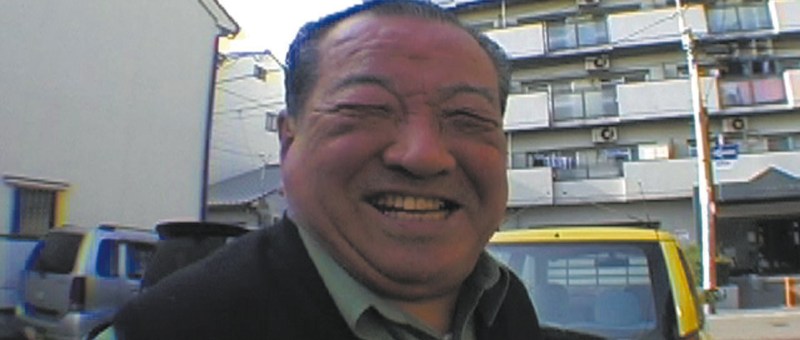
“Whether she accepts my ideas or not, I’m glad because she’s all grown up” the father of documentarian Yang Yong-hi insists implying perhaps that he has more respect for his daughter’s questioning nature than she had assumed he might. Deeply personal, Dear Pyongyang is Yang attempting to parse the disconnect between her loving parents’ lifelong faith in the Great Leader and her own upbringing in a much more open society which has encouraged her that she should be free to live her own life and make her own decisions rather than as her father would have it devote herself to a “fatherland” which remains unfamiliar to her. 

As the opening titles explain, Korea was annexed by Japan in 1910 and fell under colonial rule until its independence was returned with the collapse of the Japanese empire at the end of the war only to be partitioned in 1948. During the colonial era, many Koreans had settled in Japan, divisions also emerging between them as those who supported the North chose to take North Korean nationality even if in reality from the south. Yang’s father was one such person, having grown up around ardent Marxists on Jeju Island. A member of pro-North organisation Chongryon, he devoted his life to activism campaigning for the rights of other Zainichi Koreans while proselytising for Kim Il-Sung thought. He even sent his three sons “back” to North Korea as part of a repatriation program in 1971 incorrectly believing that the North’s economy was improving, the nation would soon be reunified, and relations with Japan would become normalised. Had he known it would mean an almost permanent separation, he may have made a different choice. 

Six years old at the time and kept behind as the only daughter, Yang attended North Korean schools and was in a sense indoctrinated with North Korean propaganda yet she was also coming of age in Japan where she was free to listen to the Beatles and watch movies while it gradually became obvious to her that the place her brothers had been sent to was far from the paradise they’d been promised. She herself was able to meet with them in 1983 as part of a school trip but even then she was only permitted to see them for short periods of time agreed with North Korean authorities. Permitted to travel back and forth with some regularity she finds herself noting more each time how the images in her mind don’t line up, fixing her gaze on a incomplete tower construction long since abandoned as an ironic symbol of the North’s false prosperity. 

In actuality Yang cannot show much of this in her film for obvious reasons and in the time she spends with her brothers and their families, their lives seem comfortable enough save the odd power cut. Her young nephew has even benefitted from the CDs she used to send his father and is an accomplished piano player. Nevertheless, her mother Yon has been sending heat packs en masse to each of the brothers as well as other friends and relatives after receiving a letter telling her that one of the grandchildren had been suffering frostbite because of the extreme cold. Yon had always sent care packages to her children, so shocked on receiving the first photo of them from the North and noticing how much weight they’d lost that she tore it up rather than let their father see it, but boxes have increased significantly in size as the families grew and she became more aware of the reality of the situation in Pyongyang. Still she and her husband remain loyal to the Great Leader, unable to discern the level of cognitive dissonance in the evidence of their eyes and their faith in North Korean communism. 

It’s the disconnect that Yang can’t understand or forgive, finding it particularly galling that her parents have been supporting whole communities with their care packages but everyone attributes the largesse to the goodness of the Great Leader even though the packages wouldn’t be necessary if the system itself had not failed. Her ideological opposition to her father manifests itself in her desire to change her nationality though opting not for a Japanese passport but a South Korean one that would allow her to travel more easily if also ironically preventing her from visiting her brothers and extended family in the North. Finally he seems to relent, admitting that the “circumstances have changed” and he wants her to have more opportunities in her working life. In any case, even if she lived in the South she would be free to visit him in Japan in a way his sons are not, his exclusion of her from his instructions that his sons and grandchildren should devote their lives to the “fatherland” perhaps a tacit acknowledgement that she need not follow his path but should seek her own. Then again perhaps it’s also an acceptance that his life’s work has not turned out as he’d hoped and has in fact robbed him of the company of his children through literal and ideological divide. Even so this moment of compromise allows Yang to begin to bridge a division she thought unbreachable, able for the first time to see her father as just that, longing to hear his thoughts and have him listen to hers only to be immediately robbed of the opportunity. At times raw and filled with a sense of melancholy regret, Yang’s incredibly personal documentary is partly a treatise on the destructive effects of cognitive dissonance and blind faith, but also on the freedom to be found in mutual acceptance. 


Dear Pyongyang streams worldwide (excl. Japan) via DAFilms until Feb. 6 as part of Made in Japan, Yamagata 1989 – 2021 (films stream free until Jan. 24)

US Trailer (Japanese & Korean with English subtitles)