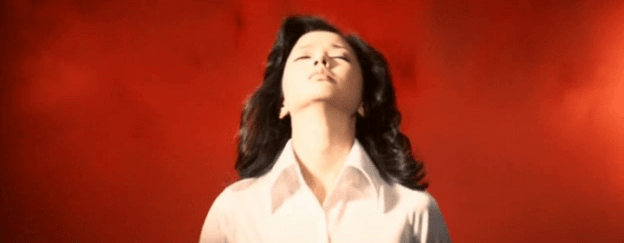

After the fourth film in the Female Prisoner Scorpion series, star Meiko Kaji decided to move on but Toei had other ideas and opted for a reboot as signalled by the addition “shin” or “new” to the otherwise identical title to the very first film. New Female Prisoner Scorpion #701 (新・女囚さそり 701号, Shin Joshu Sasori: 701-go) moves in a slightly different direction spinning a tale of a less straightforward revenge coloured by conspiracy cinema and a series of real life high-profile corruption cases including the Lockheed Scandal, itself name checked in the film. Just a few months earlier, Roman Porno actor and fervent nationalist Mitsuyasu Maeno had lost his life in a suicide attack on the home of underworld figure and right-wing fixer Yoshio Kodama who had been instrumental in “convincing” Japanese airlines to buy Lockheed planes over McDonnell Douglas.
In any case, this Nami Matsushima (Yumi Takigawa) is an ordinary young woman who becomes concerned about her sister Taeko (Bunjaku Han) when she uncharacteristically drops out of contact after behaving strangely. Taeko is a political secretary to assemblyman Miura (Ichiro Nakatani) who is currently the vice-minister for justice and at the centre of a burgeoning corruption scandal. After Nami and her fiancée Toshihiko (Yusuke Natsu) manage to meet up with Taeko, she is suddenly kidnapped from the hotel car park while the man who was with her, Sugino (Nenji Kobayashi), is gunned down. Sugino is found to be carrying his passport and two airline tickets to Paris which, along with Taeko’s strange behaviour, imply they were planning to flee the country together. Looking more closely at the wedding presents her sister had given her, Nami realises she’s left her a cassette tape with the instruction to leak its contents to the press should anything untoward happen to her.
Nami uses the tape as leverage with Miura to try and rescue her sister but ends up learning some unpleasant truths before being framed for Taeko’s murder and sentenced to 15 years in prison. Toshihiko, who had originally been supportive, betrays her, testifying at her trial that she may have been resentful that Taeko was against their marriage only to later marry Miura’s daughter and go into politics apparently siding with the bad guys. Toshihiko may have seemed like a nice guy, but it’s also true that he tried to pressure her into premarital sex that she didn’t want by insisting that he couldn’t wait for marriage, suggesting they blow off her sister and go to a hot springs in Hakone instead. Most of the men in the film are equally spineless and duplicitous not least the guards who with the exception of one are all corrupt and/or abusing the inmates.
Not content with sending her to prison, Miura tries to have Nami offed with the assistance of the warden who puts her in a cell with the prison’s most notorious offender. Fusae (Mitsuyo Asaka) orders her minions to beat and torture Nami, at one point gang raping her while the only way she can think of to save her life is by claiming there’s another tape so if they kill her they’ll never know where it is and run the risk of the contents leaking.
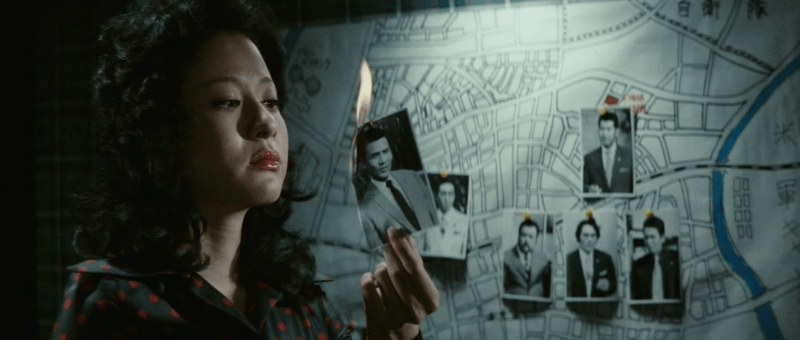
Meanwhile, she’s approached by a group of anarchists who tell her they need a leader which seems a little contradictory but nevertheless enables a jailbreak even as Nami develops a rivalry with the feisty prisoner number 804. Though she obviously didn’t commit the murder for which she was imprisoned, Nami is no pushover and in fact burns one of her tormentors alive not to mention stabbing another in the eye with a pencil and cunningly splitting a pair of scissors to gain twin knives. Rather than the classic scorpion look, she appears almost batlike, spreading her arms in her cape as she prepares to make her final act of revenge right outside the Diet building itself as if she were making a point about cleaning up politics aside from avenging her sister’s death and her own mistreatment. Director Kohira lends her a supernatural quality in her eerie silhouette as if she’s already become something else, a force of nature transformed by her righteous anger towards a corrupt society largely ruled by venal men willing to kill and use women for their own benefit or pleasure. Even Nami is forced to admit her complicity having learned her sister may have paid for her education through allowing herself to be traded by Miura as a political bargaining chip. She is not, however, willing to let it stand, resisting a controlling a patriarchal society with all of the resources available to her.

 Windows on Worlds