Techno Brothers (テクノブラザーズ, Hirobumi Watanabe, 2023)

Hirobumi Watanabe has sometimes cast himself in his films as a misunderstood, struggling filmmaker at the mercy of his own thwarted ambitions and the vagaries of the Japanese indie movie scene. With Techno Brothers (テクノブラザーズ) he shifts his perspective a little in delivering an absurdist satire on the relationship between an artist and the oppressive managerial forces by which they are exploited but are otherwise largely unable to escape.

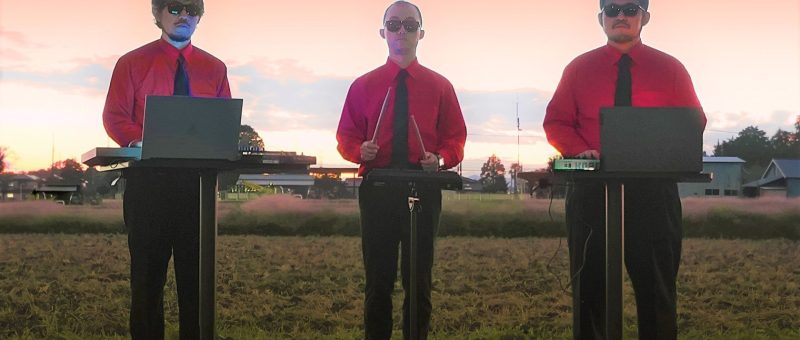
In his previous films, the characters that Watanabe plays have often stood out for their motormouth quality often going on lengthy rants to a largely silent straight man but the total powerlessness of the titular Techno Brothers is signalled by the fact that they are never permitted to speak except through their music. The film contains several scenes of them standing in identical red shirts with black ties and sun glasses, each with an identical impassive expression as they play their 80s style synth techno music inspired alternately by that of Yellow Magic Orchestra and Kraftwerk. They’ve been picked by manager Hiromu who also dresses in a red shirt and sunshades but wears a leopard-print jacket over the top as if to make clear that she is the one in control. 

Hiromu repeatedly makes clear that she believes Techno Brothers are musical geniuses destined to echo through time like Bach and Mozart but in the end she is only really interested in exploiting them financially rather than supporting the art she claims to have so much faith in. In a running gag, she takes them to several restaurants and orders enough food for four people but seemingly doesn’t let them eat any of it and tells the wait staff just to bring them tap water. Why the Techno Brothers allow themselves to be treated this way is a mystery with only the implication that they must really believe that Hiromu can get them career success and are too afraid of ruining their chances to stand up to her. 

Hiromu tries to get them a gig with a local fixer who for some reason is a little girl (played once again by Watanabe’s niece Riko Hisatsugu) who only speaks through her assistant, played by Watanabe in one of several sides roles he assumed throughout the film. She tells Hiromu that Techno Brothers stink and they aren’t marketable locally because their music is out of touch with the times and people won’t understand it (echoing a description of his filmmaking Watanabe has given in his previous films). Boss Riko advises them to seek their fortunes in Tokyo, but though they may briefly leave Otawara they never get out of Tochigi and stuck playing a series of low rent gigs like busking in parks or entering what turns out to be a competition mainly for local children and other unsuccessful adult musicians as in the wonderful folksinger parody once again performed by Watanabe. On one occasion they’re hired by an eccentric orchid grower who wants to see if the kind of music he plays has an effect on the way his flowers grow.

For all its absurdity the film skews surprisingly dark in Hiromu’s indifference the safety of the band, wilfully starving them which apart from anything else would seem to be counterproductive in preventing them from being able to perform not that their performances require much in the way of animation anyway. She books herself fancy hotel rooms and sends them out on the street, keeping the money for herself, while denying them any form of individuality or autonomy. Even if at one point they begin to rebel or make a run for it, they are unable to escape her grasp entirely and are once again rendered mute tools of her own success. 

Then again, it seems Hiromu has bosses of her own to placate and is also on the search for a missing sister though if she treated her like she treated the Techno Brothers maybe she requires no rescue. A brief post-credits coda hints at a wider world of dark corporate finagling the Techno Brothers may have no clue they’re a part of though a title screen assures us that they will return even if currently they seem to have landed right back where they started with little to show for their pains. In this perhaps Watanabe signals his position as an independent filmmaker locked onto a circular path of frustration and appeasement but also a determination to continue making art that people might not understand no matter what the cost.

Party ‘Round the Globe (地球はお祭り騒ぎ, Hirobumi Watanabe, 2017)

Party 'Round the Globe

Ever since their startlingly surreal debut And the Mud Ship Sails Away, the Watanabe brothers have been quietly making waves, determined to put their native Tochigi on the big screen. Last year’s award winning Poolsideman took them to a darker place than they’d hitherto ventured as its silent protagonist lived out his days with rage fuelled anxiety, ready to explode at any given second. Party ‘Round the Globe (地球はお祭り騒ぎ, Chikyu wa Omatsurisawagi) neatly mirrors Poolsideman’s despair and counters it with everyday joys. Once again starring Gaku Imamura as a silent loner, and the director himself, Hirobumi Watanabe, as the non-stop chatterbox intent on making friends with him, the latest effort from the Watanabe brothers finds that despite the myriad awful things reported in the news, life is still basically good, at least in Tochigi when the sun is shining.

In a mild departure from the now familiar pattern, Watanabe opens with a beautifully animated picture book sequence in which a little robot child dreams of travelling to the moon but is unable to catch it even when speeding full steam ahead with his friend, Mr. Car. The robot children love the moon so much that they build a factory to produce fake moons which soon fill the sky, leaving the adults confused and worried, unable to tell the real moon from the fake. All too soon the boy is alone again as his friends float away looking for the “real” moon.

Seemingly divorced from the main narrative, the images from the picture book recur throughout as part of the decor in the strangely warm family home inhabited by the silent and melancholy Mr. Honda (Gaku Imamura) and his lovely little dog, Ringo. Mr. Honda’s routine is set – he listens to the radio as he prepares breakfast, takes Ringo for a walk, and works at a small family run electronics factory where he keeps his head down and concentrates on the repetitive exactitude of soldering circuitboards all day long. The day is interrupted by the cheerful sound of the musical bells which signal a pause in his work, but unlike his colleagues who cluster around the table in the staff room, Mr. Honda stands alone outside, smoking sadly in silence.

Mr. Honda’s life changes when the radio announces some good news for a change – Paul McCartney is coming back to Japan. Unexpectedly invited to accompany a colleague, Hirayama (Hirobumi Watanabe), Mr. Honda finds himself driving all the way to Tokyo with a man who won’t stop talking. Hirayama monologues on and on, never waiting for the answer to his questions and often filling them in himself so he can carry on ranting about standing room only concert venues, entitled Bob Dylan fans, and once again the mystifying fascination young people seem to hold for One Piece. Yet where Poolsideman’s anti-social loner merely tolerated his colleague’s loquacity, Mr. Honda seems almost relieved his new friend is doing most of the talking and is grateful to have been included on this trip, not least because he is also a big McCartney fan who failed to get tickets for his landmark concert.

Mr. Honda’s radio announces terrible things happening everywhere – mistrust in government as the scandal surrounding polluted land at the site of the controversial relocation of the Tsukiji fish market intensifies while the rightwing ruling party is intent on passing an equally controversial anti-conspiracy law which many fear will infringe on civil liberties. Abroad there are religious hate crimes, buildings burning down with people trapped inside, and North Korea sabre rattling in the background. Mr. Honda reacts to them all with stoical indifference, watering his plants, watching baseball games and enjoying the peace and quiet of a pleasant spring day. Yet there’s a sadness in his serenity, as if he’s trying to block out a personal tragedy through silence and repetition as he takes care of his dog alone in a house filled with picture books and children’s drawings but seemingly no children.

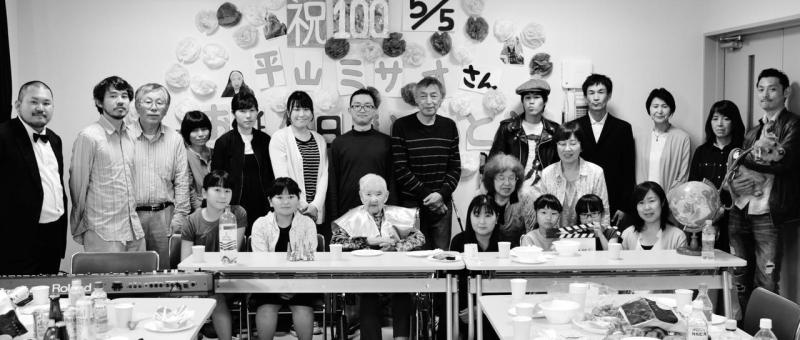
Nevertheless, life goes on and the globe keeps turning. Mr. Hirayama’s grandmother celebrates her 100th birthday surrounded by her large extended family who gladly make room for friends old and new. Mr. Honda and Ringo are no longer quite so silent and alone, coaxed out of their self-imposed isolation by the extroverted Hirayama who is also glad to have unexpectedly made a new friend in bonding over a shared love of retro pop. No matter how bad things seem to be, there is still warmth and friendship to be found everywhere but most especially in Tochigi.


Screened at Nippon Connection 2018.

Original trailer (English subtitles)