
The Nighthawk’s First Love (よだかの片想い, Yuka Yasukawa, 2021)

A young woman begins to regain a sense of self-confidence in the face of social prejudice when invited to consult on a film in Yuka Yasukawa’s adaptation of the Rio Shimamoto novel, The Nighthawk’s First Love (よだかの片想い, Yodaka no Kataomoi). Drawing inspiration from a Kenji Miyazawa story about an ostracised nighthawk bullied by a hawk who cannot accept that they are the same because he finds the nighthawk’s difference offensive, Yasukawa’s gentle drama is less about the transformational quality of love than it is about learning to accept oneself as distinct from the self that others see. 

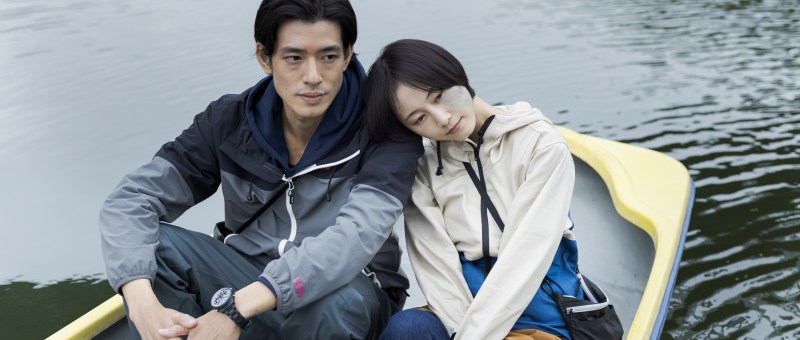
A shy young woman, Aiko (Rena Matsui) keeps a distance with others because of a longterm sense of rejection owing to a prominent birthmark on her face. After agreeing to be interviewed for a book about people living with facial difference and disfigurement, Aiko is approached by filmmaker Tobisaka (Ayumu Nakajima) who just happened to chance on their photoshoot and was struck by what he describes as a quiet sense of strength in her reserve. Though Aiko is not originally keen on the idea of having someone turn her life into a film, she soon begins to bond with Tobisaka who does not appear to react to her birthmark and eventually embarks on a romance only to find herself insecure in his continuing attachment to a former muse and dedication to his craft. 

While visiting her publisher, Marie (Lisa Oda), Aiko encounters a curious little girl who touches her own face and bluntly asks Aiko if the bruise-like mark on her cheek hurts. Aiko answers patiently that it doesn’t and isn’t offended by the little girl’s question, but perhaps is by the mother’s reaction as she stares and wonders what to say before apologising for her daughter’s rudeness but not for her own. Aiko recounts something similar in recalling her childhood bullying in which the kids in her class nicknamed her “Lake Biwa” because the mark on her face resembled the famous landmark which they were learning about in school. Though they were being cruel to her, Aiko remembers that a part of her enjoyed the attention while the teacher’s attempt to shut her classmates down was in a way more painful as if it were the birthmark itself which was “horrible” rather than the kids’ comments. After that the other children began to avoid her, unsure what to say and perhaps blaming her for having gotten into trouble with the teacher. She explains that she worries people often drift away from her in part because of the birthmark itself and in part because of the way it influences her behaviour generating a vicious cycle of doubt, rejection, and loneliness. Tobisaka’s muse, Miwa (Miyuu Teshima), looks very much like her only without the birthmark and Aiko worries if she can keep him while fearing in her insecurity that their relationship is nothing but a long con designed to get her to agree to participating in the film. 

Yasukawa often frames Aiko looking into mirrors, at one point a reflection of her face appearing next to that of Miwa in her makeup on a poster for the film. Tobisaka gives her a compact mirror as a gift that he possibly intends to help her see herself though perhaps as he sees her, while she remains internally conflicted insistent that there’s nothing wrong with having a birthmark but carrying a degree of internalised shame and wondering if her life would be different without it. It’s another compact given to her by a similarly troubled friend that later grants her agency in realising that she does have a choice in displaying her birthmark or not even if deciding that she might not want to have it removed after discovering that it may be medically possible. Her supervisor advises her that attempting to become a different person in the pursuit of growth is nothing but a fantasy while she gradually comes to the realisation that change is not quite not quite what she’s looking for, quite literally freeing herself from her self-imposed imprisonment to embrace her authentic self. Her growth lies not simply in being loved by a man who may in a way be exploiting her, but in truly seeing herself and others for the first time. An elegantly lensed tale of self-acceptance, Yaskukawa’s gentle drama allows its diffident heroine the space to grow while becoming more rather than less of herself in defiance of a social prejudice that is all to often routed in the same insecurity she has now escaped.


The Nighthawk’s First Love screens at Japan Society New York on Nov. 13 as part of The Female Gaze: Women Filmmakers from JAPAN CUTS and Beyond.

Original trailer (no subtitles)
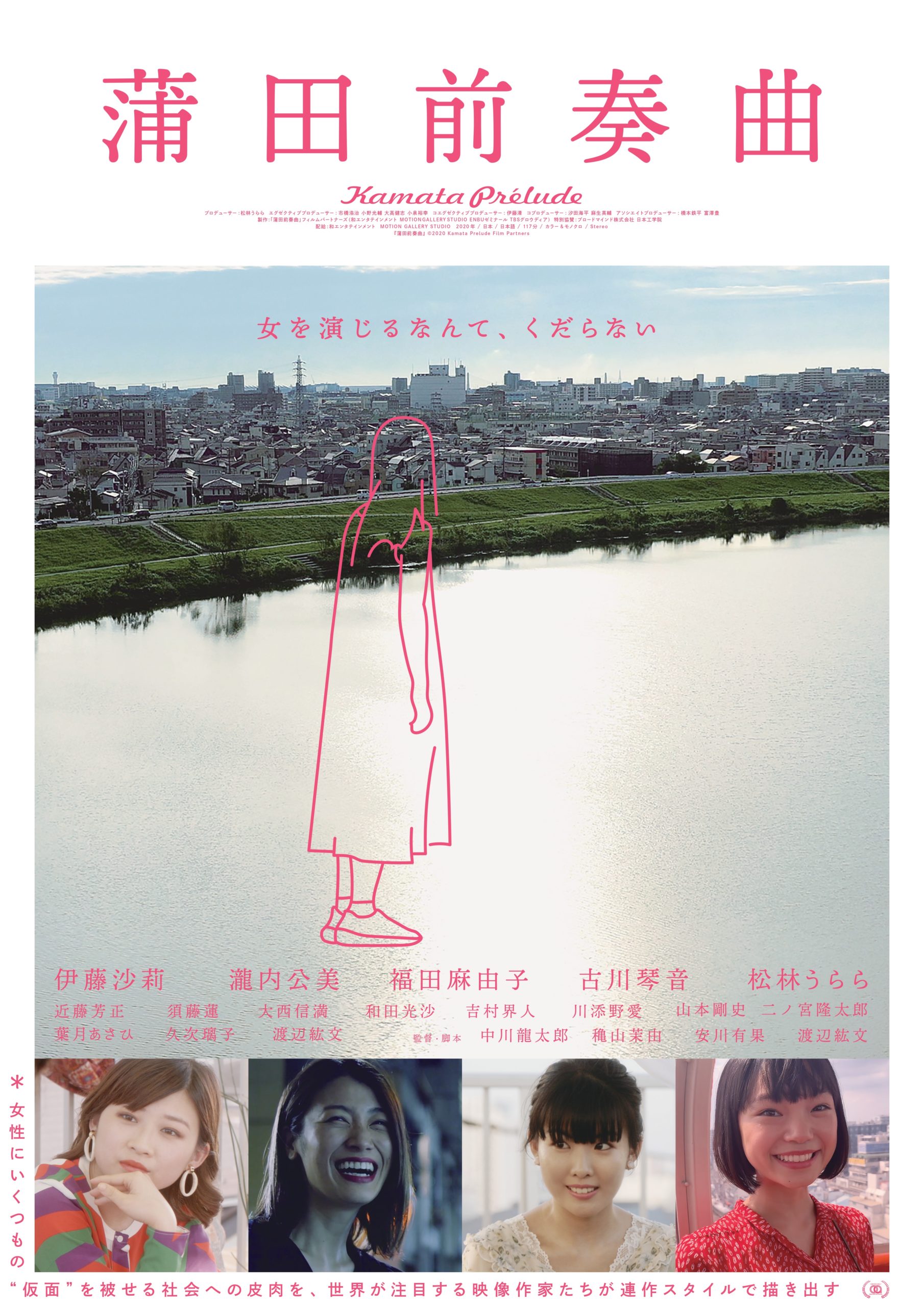
Kamata Prelude (蒲田前奏曲, Ryutaro Nakagawa, Mayu Akiyama, Yuka Yasukawa, Hirobumi Watanabe, 2020)

A quiet suburb of Tokyo, Kamata is in someways the birthplace of modern Japanese cinema home to Shochiku’s prewar studio where the “Kamata Style” which aimed to introduce a note of cheerful naturalism to an artform defined by shinpa gloominess was forged. Produced by actress Urara Matsubayashi who hails from the area and stars in three of the four segments, omnibus movie Kamata Prelude (蒲田前奏曲, Kamata Zensokyoku) asks some tough questions about what it means to be a woman and an actress today in the contemporary capital as the heroine, “Machiko Kamata”, contends with various demands from the economic to the emotional. 

Directed by Ryutaro Nakagawa, the first segment finds Machiko (Urara Matsubayashi) introducing herself as she takes part in a strange audition dressed in an inappropriately short cosplay-style nurse’s outfit. After the audition is over, her agent tells her to say “hi” to the director, a theme which will recur in the third chapter as Machiko finds herself feeling uncomfortable, forced to ingratiate herself in order to get ahead. Annoyed after the eccentric director asks her out for dinner, she can’t help asking him why she has to wear the suspiciously skimpy nurse’s outfit provoking him into a worryingly violent outburst. At home, meanwhile, her world is rocked by her younger brother’s revelation that he’s got a girlfriend who is, ironically, a nurse at local hospital. Jealous and resentful, Machiko can’t warm to Setsuko (Kotone Furukawa) who seems improbably sweet and innocent, almost as if she came from another time (the mid-August dating and ornaments for the Bon festival might clue us in as to why). Spending a day bonding with her, however, the two women generate a kind of sisterhood which pushes Machiko into a realisation of the emptiness she feels in her life of constant struggle as an aspiring actress supporting herself mainly with her part-time job at a ramen bar. 

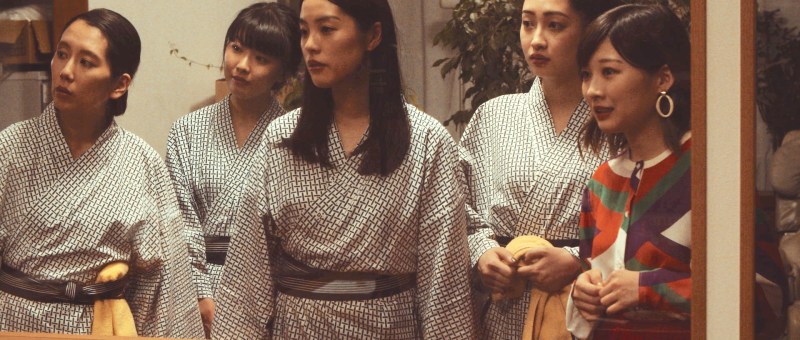
The themes of alienation and insecurity are only depend in the second segment, directed by Mayu Akiyama, in which Machiko reunites with a group of high school friends who are each less than honest about the state of their lives and their unfulfilled desires. Machiko gives the impression that she’s just been in a major movie with a big star, but it turns out she only played a corpse while the rest of the group are scandalised by the bombshell that their friend Marippe (Mayuko Fukuda) has got engaged to a guy from work she’s been seeing secretly for only six months. Besides being somewhat hurt not to have known she was seeing someone, the gang have different reactions to the news with hard-nosed career woman Hana (Sairi Ito) put out by Marippe’s traditional view of conventional gender roles in which she intends to let her career slide to concentrate on being a wife. A trip to a hot spring (the same hot spring seen advertised on Machiko’s T-shirt in part one) brings things to a head with a possibly cheating boyfriend eventually offering the excuse that he is merely a hot spring enthusiast sharing his hobby with a friend of the opposite sex rather than a two-bit louse indulging in the patriarchal double standard. 

Patriarchal double standards are out in force in part three, directed by Yuka Yasukawa, in which Machiko attends another odd audition where she and the other auditionees are asked to outline an episode of sexual harassment they have personally experienced. In fact, we have already seen her be inappropriately propositioned by a middle-aged producer who ran out on her in a coffee shop after she turned him down leaving her with the bill, but the episode she recounts is darker still. As she feared they might, the men in the room quickly figure out who she might have been talking about but proceed to put the blame on her implying that she sleeps around to get ahead and was only offended by the producer’s actions because he wasn’t powerful enough to be useful. It’s another woman however, Kurokawa (Kumi Takiuchi), who kicks things into gear by relating that she was assaulted by a man in a club whom she later reveals to have been the director himself only he doesn’t remember her. The director brings both women back and makes them re-enact Machiko’s tale of being inappropriately propositioned in a producer’s office, increasingly exasperated that the situation seems “too scary” as if he’s entirely missed the point of his own exercise or is actively getting off on the actress’ discomfort. The male cameraman (Ryutaro Ninomiya) is the one who eventually points out that the audition itself has descended into a protracted act of sexual harassment, seemingly conducted solely for the entertainment of the director and his assistant. 

Largely disconnected from the other three chapters, the fourth does not feature Urara Matsubayashi and is in fact set not in Kamata but in director Hirobumi Watanabe’s familiar Tochigi. The opening of his segment, characteristically filmed with static camera and in black and white, finds him once again playing a version of himself ranting about not knowing what to do with this unusual project he has taken on for the money even though he doesn’t generally make shorts, has never done an omnibus movie before, and remains suspicious of the concept. He relates all of this to his 10-year-old niece Riko (star of I’m Really Good), who says absolutely nothing while he continues to treat her as if she were the most famous actress in Japan. Somewhat poignantly, a photograph of Watanabe’s late grandmother sits on a stool off to the side, implying perhaps that little Riko has in some senses taken over her role as silent observer. The main thrust of the action follows Watanabe as he attempts to film a sci-fi movie about an alien invasion with local non-actors, but is finally linked back to the omnibus by Riko’s cheerful letter to Machiko in which she states that she wants to become an actress just like her. Ending on such an upbeat moment seems to imbue a sense of hope for the future that was perhaps previously absent, implying that the hopes and dreams of a little girl at least are worth fighting for if only to live up to her sense of expectation for the magic of the movies. 


Kamata Prelude streamed as part of this year’s Nippon Connection.

Original trailer (English subtitles)