 Written by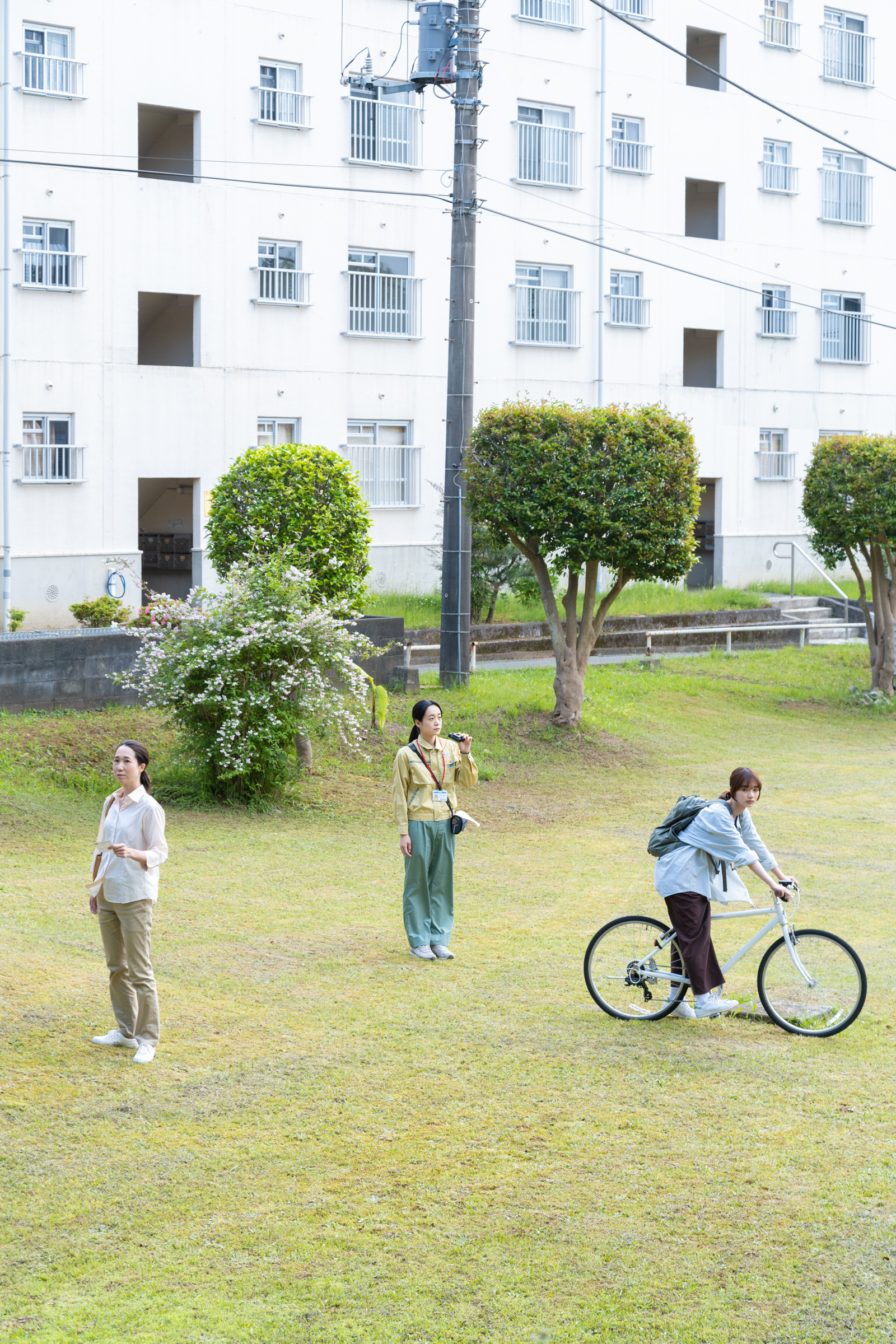
“It all looks the same here, it’s easy to get lost” a young man remarks on giving directions to a middle-aged woman who explains that she’s lived in this town for a long time but never been to this area before. Yui Kiyohara’s wistful drama Remembering Every Night (すべての夜を思いだす, Subete no Yoru wo Omoidasu) takes place in Tama New Town, which is as its name suggests a planned development on the outskirts of Tokyo and home to a large number of danchi housing estates which once symbolised a bright post-war future but now seem increasingly old-fashioned and in their own way lonely.
Loneliness is an underlying theme in the lives of three women whose paths intersect over the course of a day one of whom, gas inspector Sonae, runs into an old lady who talks her ear off about how it’s not like it was when she and the other residents of the danchi were all young together and minded each other’s children to juggle work and domesticity. Now there are only old people, like herself, left. The man next-door, Mr Takada, has gone missing and is later found returning to a different home perhaps one he lived in many years ago in search of a wife who it seems may no longer be living.
They are all in a way looking for something. Chizu, whose name is ironically a homonym for “map”, is looking for several things and not least among them a job after being laid off from a kimono shop which is apparently short staffed without her. As she explains, today is her birthday and she feels like doing something “different” which is perhaps why she travels to another part of town clutching a change of address card for an old friend she’s otherwise lost touch with. She does indeed do several “different” things such as climbing a tree to retrieve a shuttlecock for a pair of mystified children who eventually walk off in embarrassment, and copying the dance moves of a young woman practicing in the park.
The young woman, Natsu, whose name means “summer”, like the children describes Chizu as “creepy” but like her is searching for something from the past in trying to come to terms with her grief over a friend who died the summer before. She visits his mother and tries to return the receipt for photos she had developed that Dai had taken before he died only for her to refuse to take them, explaining that she has plenty of photos that he took but ironically few of him. Natsu later tries to pick the photos up only for the sullen man at the store to suggest she’s waited too long and he might not have them anymore later looking through them himself in the back room where he converts analogue videos to digital.
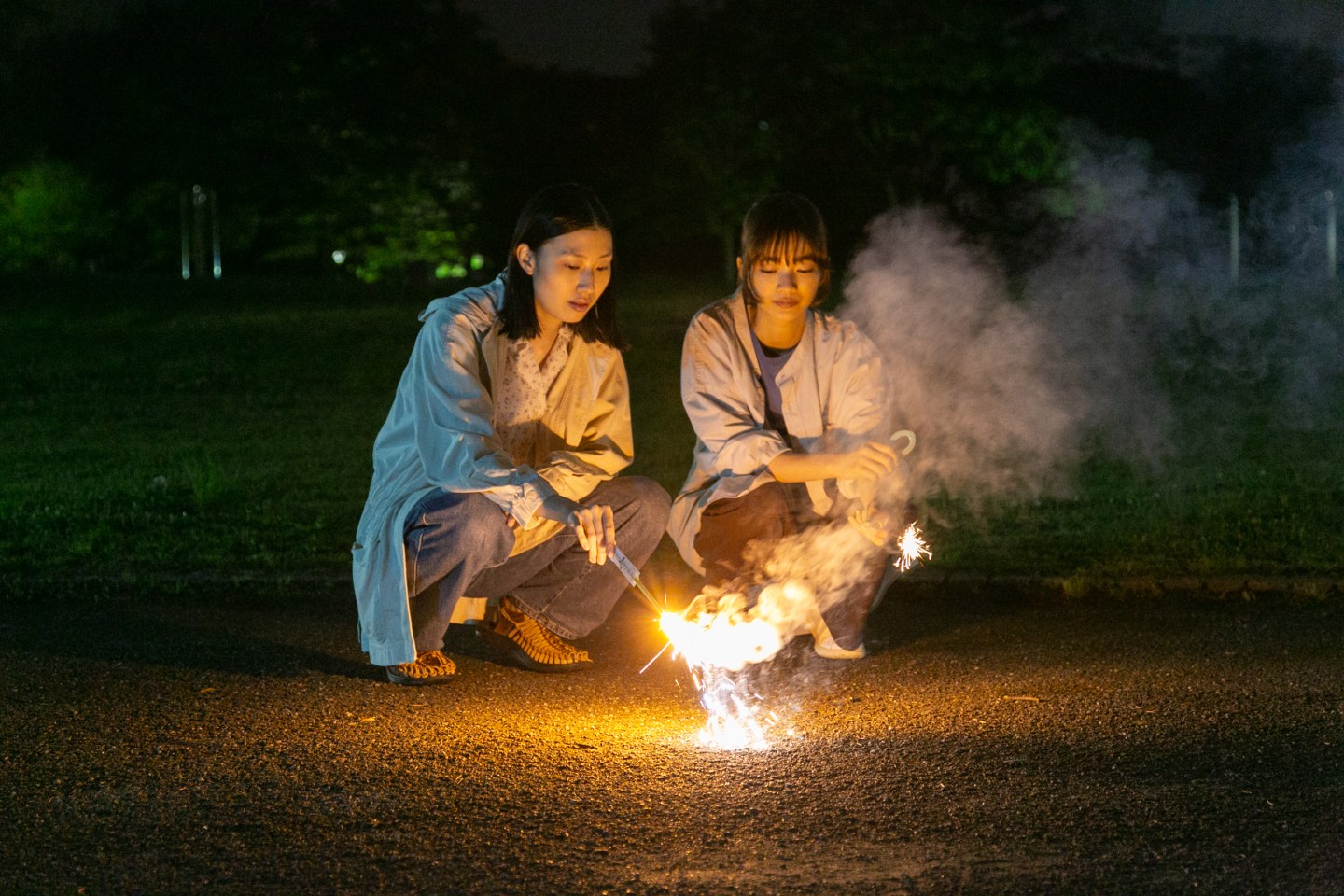
There is something poignant in the old home videos from 80s and 90s each featuring birthdays of small children doubtless now old enough to have children of their own appearing like ghosts from another era to remind us that time is always passing. After visiting an exhibition of Joumon pottery with her friend, Natsu wonders whether anyone will remember Dai in thousands of years’ time engaging in an act of remembrance lighting fireworks in the park as if reclaiming the memory from the photos she couldn’t bear to collect. The other women each end up alone, pondering past regrets in the darkness of a summer night on the edges of a city trapped in a labyrinth of memory in an almost imaginary landscape.
The deliberate sameness of the Tama New City environment lends it an uncanny quality of otherworldliness, as if it had no real borders and the life here went on forever. It seems to us that Mr Takada has got the wrong house, but perhaps it’s us who’ve got the wrong world. Sonae soon discovers that the gas metre’s still running even though there’s no contract for that address while its seeming emptiness is undermined by the pot of fresh flowers growing happily on its doorstep. Perhaps the resident is, like these women, simply living their life largely invisible to us and just another presence that may one day cross ours whether we notice or not. Told with breezy serenity, Kiyohara’s playful summer drama circles the unreality of the everyday but finds in it a kind of comfort if perhaps tempered by melancholy.
Remembering Every Night screened as part of this year’s Nippon Connection.
International trailer (English subtitles)
 Windows on Worlds