 Written by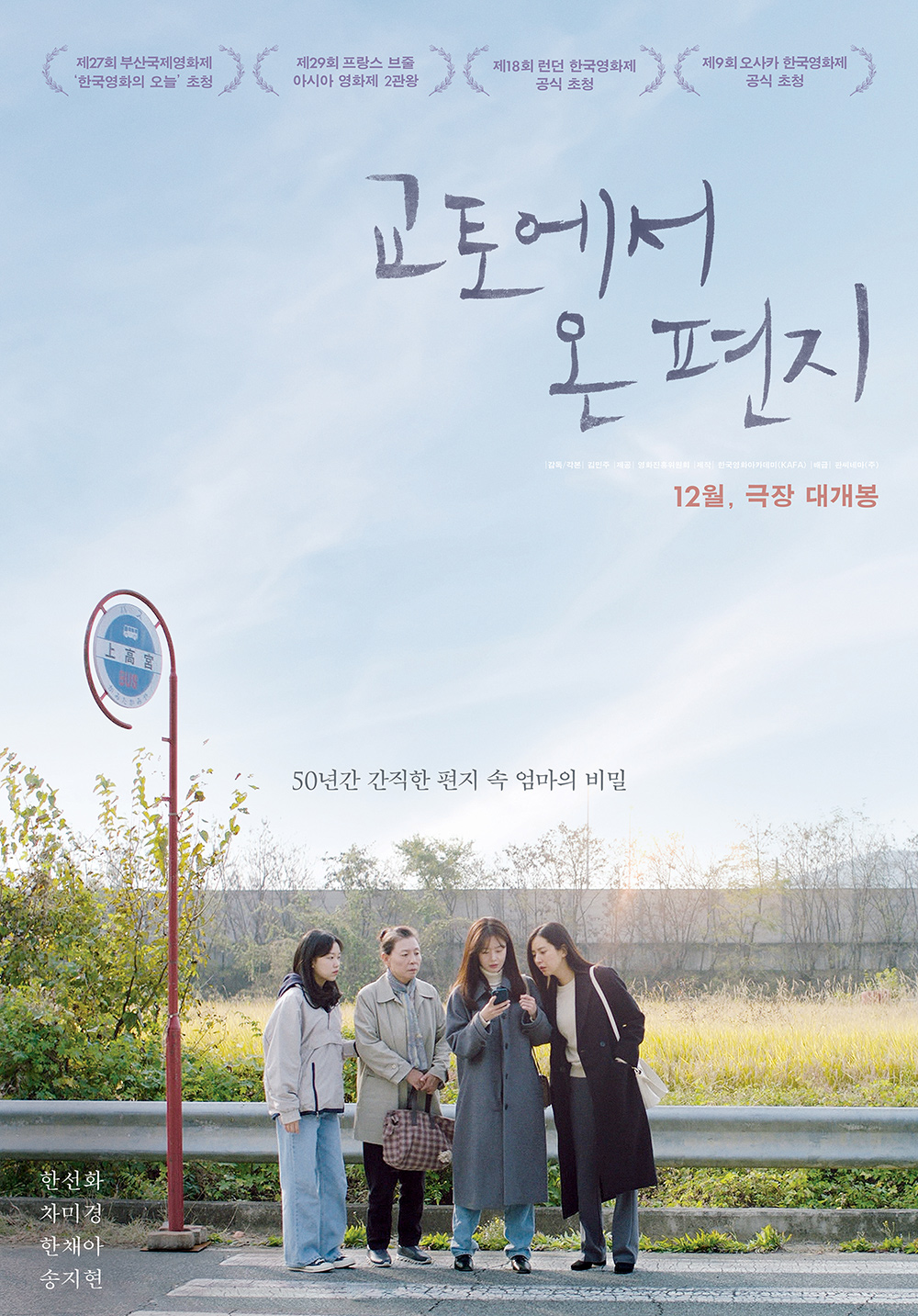
A disillusioned young woman returns to her hometown in search of healing but finds it in a state of disrepair in the fracturing relationship between her two sisters, one approaching middle age and the other yet to graduate high school, and her ageing mother entering the first stages of dementia in Kim Min-ju’s poignant debut feature A Letter From Kyoto (교토에서 온 편지, Gyoto-eseo on Pyeonji). As the title implies partly a story of dislocation, seeking both an escape from and return to the safety and comfort of a hometown, the film explores the destructive effects of secrecy and miscommunication between those who ought to share a greater intimacy.
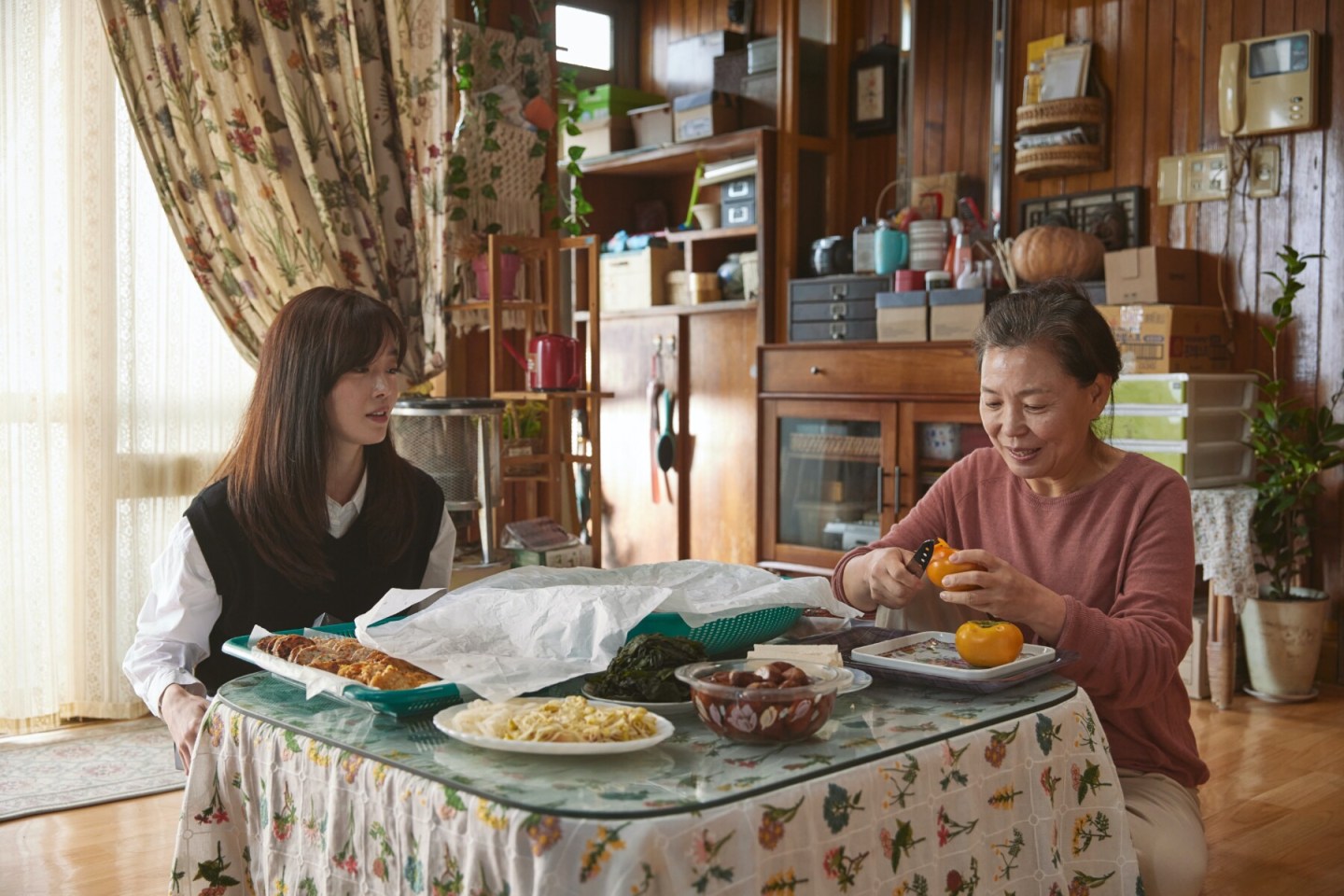
Hye-young (Han Sun-hwa) couldn’t wait to get out of Yeongdo and has been living in Seoul for the past several years with the aspiration of becoming a writer but has been earning her living working for a TV station making educational programmes. It’s clear that something has gone wrong for her in her sudden and unannounced visit home, though she only explains that she’s taking break. Meanwhile, she begins to notice that her mother, Hwa-ja (Cha Mi-kyung), has become forgetful and easily confused. Not only is she overstocking her fridge with multiple purchases of persimmons but habitually picking up the leftover kimchi from the kitchen where she works despite reminders from her otherwise sympathetic boss not to.
The ages of the three sisters, like those of the Chekhov play marooned in the provinces, seem to be representative of the passage of a life. The youngest, Hye-joo (Song Ji-hyun), is boisterous and full of dreams keeping her hopes of becoming a hip hop dancer a secret on remembering all the fuss surrounding Hye-young’s announcement that she wanted to become a writer. Oldest sister Hye-jin (Han Chae-ah) by contrast is cynical and worldweary. She supports the family with her job in a mid-range handbag shop where she once dated the manager only he decided to break up with her because she didn’t want to leave Busan and had no interest in money.
Hye-jin later tells unexpected love interest Polish sailor Piotr that she has never been abroad perhaps because she’s in a sense afraid to leave while constrained by her sense of duty owing to being the older sister, mildly resentful of Hye-young for abandoning them and shifting all of the burden onto her. A sense of displacement floats around the family home in part because of Hwa-ja’s childhood past, born in Japan and then brought to Korea by her Korean father without her Japanese mother’s knowledge. The film’s title comes from a series of letters the daughters find that are written in Japanese, a language that Hwa-ja claims to have forgotten though is perhaps slowly returned to her as they begin to translate in an attempt to retrace and reclaim the past that been hidden from them.
Though she recounts a fear of discrimination because of her Japanese ancestry, Hwa-ja had never particularly hidden her past answering Hye-young’s questions as to why she never mentioned it with the reasonable reply that she never asked. A sense of secrecy and miscommunication continues to divide the sisters with Hye-young reluctant to discuss the reasons behind her desire to return home, Hye-joo keeping her dancing dreams a secret, and Hye-jin not saying much at all in her disappointment and resentment. It frustrated Hye-young that her mother never throws anything away, but to her it would be like throwing away a part of her past self and another act of forgetting aside from that she no longer has any control over.
Yet the film seems to suggest that Hwa-ja need not remember everything when her daughters can remember it for her, adopting her orphaned memories into their own stories while she too is able to make a kind of peace with the past on reclaiming the memories of her own mother that were otherwise lost to her through linguistic and geographical displacement. Exposing the secrets and repairing the fracturing past frees each of the sisters to follow a path that more suits them, accepting that there’s a time to leave your hometown, and a time to return, whether or not or one eventually decides to stay. Poignant and somewhat elegiac, the film eventually celebrates maternal and sisterly connections extending beyond the immediate family in the presence of Hwa-ja’s staunchly loyal childhood friend along with a sense of serenity in rootedness to a particular place that represents a home.
A Letter from Kyoto screened as part of this year’s London Korean Film Festival.
Trailer (no subtitles)
 Windows on Worlds