Knife in the Clear Water (清水里的刀子, Wang Xuebo, 2016)

knife-in-the-clear-waterTharlo producer Wang Xuebo looks north in this rare cinematic showcase for China’s Hui people, a largely Muslim ethnic group concentrated in the rural North West. Using a cast of non-professional actors, Knife in the Clear Water (清水里的刀子, Qingshui Li De Daozi) marries a neorealist aesthetic with a Tarkovskian poetry as a widowed man faces the coming end of his own life largely through his self identification with his faithful bull, about to be sacrificed in the name of dead for the pleasure of the living. Setting religion to one side, this tale of rural poverty and people eclipsed by a landscape that’s as unforgiving as it is beautiful has an infinitely timeless quality even if this traditional way of life is just as moribund as the bull which drives it.

The family matriarch has died. Mild mannered paterfamilias Ma Zishan (Yang Shengcang) is now alone, bereft of both family and purpose. His wife may not long be dead, but there is the 40 day anniversary memorial to think of. Even if old Ma is not in the mood, Ma’s son, Yakub (Yang Shengcang – different actor, same name), is eager to make sure his mother has a fitting send off to mark her long years of sacrifice and toil. They could kill a chicken or perhaps a lamb, but with all the extended family coming in it might not be enough. Why not, he suggests, slaughter the family bull? They can’t afford to buy a new one, but the bull is already old and slow and no longer makes a good return on the resources needed to maintain it. Ma does not want this, but is powerless to refuse given all the financial and cultural concerns bound up in his son’s request.

All things considered, Ma had few pressing concerns in his life. He was not wealthy but he did not starve and does not seem to be unhappy in his lot other than his growing existential worries. Poverty is the normal way of things, but given the extreme need all around him, can Ma really conscience his son’s intention to spend lavish sums on a funeral feast which is intended to celebrate the dead – his own wife whom he would like honour, when his younger brother approaches him for rice in desperation at the thought of not being able to feed his pregnant wife? Touchingly, Ma visits a relative who relates a story of having met his wife in the marketplace not so long ago and lent her some money to buy a pair of shoes she’d been admiring. The woman meant to tease her by suggesting she ought to be able to buy anything she liked with her son’s fancy job in the city but could see Ma’s wife was upset as she sadly confessed that her son had his own family to think of and so she couldn’t bring herself to ask him for money.

Ma would have liked his son to return and farm the land as he, and generations before him, had done but Yakub tells him the life is so much better in the city – work is plentiful and much easier than tilling the soil in this inhospitable terrain. A scene of the family quickly whipping out the buckets and basins to harvest water during a sudden storm may reinforce the reasons he wouldn’t want to return but there is something serene about Ma’s simple life of prayer and farming which neatly contrasts with his son’s comparatively frenetic and nervous approach to life, caring more about the spectacle and less about the meaning.

This is perhaps why he acts so insensitively regarding the bull despite his father’s unusually sentimental attachment to it. Aside from being a long standing companion, as silent and pliant as Ma himself as they plough the fields and walk the mountain roads together, the bull serves to remind Ma of his own impending fate – an unwilling sacrifice to an unforgiving landscape. Ma, about to be put out to pasture himself, can see a kindred spirit in this weary beast, chained and cajoled, cruelly discarded now he’s outlived his usefulness. The bull, like Ma seems to be aware of his fate leading its master to wonder if, like the old story, it has seen the reflection of a knife in clear water warning of what is to come. No longer eating or drinking, the bull may not last until the fateful ceremony but whether its abstinence is a kind of self purification or a symptom of total despair, Ma is unable to say.

When the time comes, Ma turns away, wandering through the snowy, grave filled landscape alone until he finally becomes lost to us. The land swallows him, his chain may have been severed but he’s anything but free. Wang’s 4:3 framing is apparently inspired by Tarkovsky, as well as the painters Andrew Wyeth and Jean-Francois Millet, and his images do often have a classically inspired beauty reliant on static camera and noticeably contrived composition which may be at odds with the otherwise naturalistic approach. A sad tale of an old man and a bull contemplating the end of their world, Knife in the Clear Water is a familiar journey into the dying of the light but one no less well expressed for all of its subtlety and emotional weight.


Available to stream online from Festival Scope until 20th February 2017 in conjunction with International Film Festival Rotterdam.

Short clip from near the beginning of the film (English subtitles)
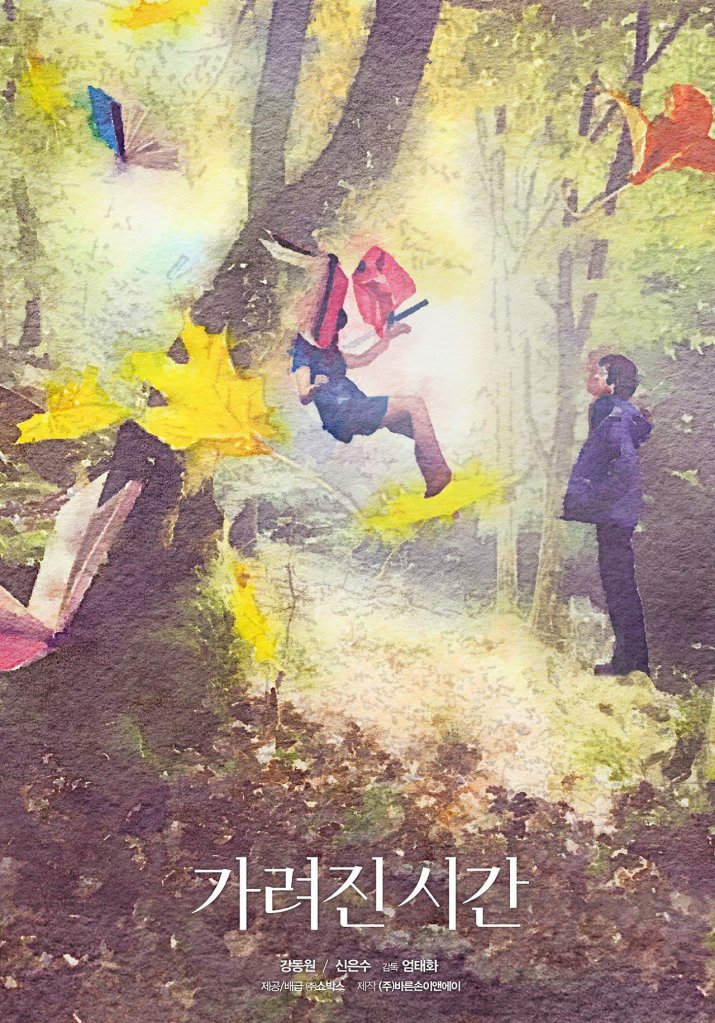
Vanishing Time: A Boy Who Returned (가려진 시간, Um Tae-hwa, 2016)

vanishing-timeWhen no time passes, does anything change? Yes, and then again, no, if Um Tae-hwa’s Vanishing Time: A Boy Who Returned (가려진 시간, Garyeojin Shigan) is to be believed. Dealing with the nature of time, connection, and faith Um’s film is a supernaturally tinged fairytale which never seriously entertains the more rational explanation offered by the naysayers, but is filled with the innocence of childhood and the essential naivety of adolescence. Melancholy, though somehow uplifting, Vanishing Time neatly avoids the pitfalls of romantic melodrama for a genuinely affecting coming of age story as its heroine is forced to make peace with her traumatic past through accepting the loss and sacrifice of her present.
Thirteen year old Su-rin (Shin Eun-soo) is an orphan, living with her step-father who has just moved to a small island where he is engaged in the construction work on a new tunnel. Sullen and lonely, Su-rin does not get on with her step-father whom she holds responsible for the death of her mother in a car accident. All Su-rin wants is to disappear into another world. In fact, she even has her own blog dedicated to exploring possible portals to alternate dimensions and the best methods for provoking an out of body experience. Needless to say, Su-rin does not fit in at school and has immense trouble making friends, especially when they stumble across her online activity and brand her a weirdo.

Su-rin does, however, bond with another boy, Sung-min (Lee Hyo-je), who (though not actually an orphan) lives at the orphanage. Sung-min seems to have some success with the methods Su-rin suggests for out of body experiences and the pair gradually build a up friendship complete with a secret written code and strange rituals. Though Sung-min’s friends Tae-sik (Kim Dan-yool) and Jae-wook (Jeong Woo-jin) don’t want any girls around, Sung-min convinces them to let her come when they sneak into the cordoned off construction area to witness the tunnel blasting. Whilst there, they discover a secret cavern in which there is a strange glowing egg at the bottom of a pool. The boys steal the egg and ponder over what it is until Tae-sik remembers a story his grandfather told about a time stealing goblin that turns children into adults and adults into old people by means of an egg found in a mysterious cave which only exists at a time of a full moon.

When Su-rin emerges from the cavern after nearly being buried by an explosion, the boys have vanished. The community begins to fear the worst – everything from child abduction to an industry conspiracy to cover up a blast related accident, but some time later Su-rin is approached by an older man who claims to be Sung-min.

Um begins the film with the lens cap of a camera as a woman gives a perfunctory voice over explaining that this is the record of her three month psychiatric evaluation of the teenager Su-rin which she hereby offers to us in the hope that we will understand her. When the lens cap comes off, a black and white montage sequence follows detailing the police investigation into the disappearance of the three boys before flashing back to Su-rin seated in front of the camera. It’s clear that Su-rin is sticking to her story, but also that she hasn’t been believed, has not managed to save any of her friends, and is, in some way, suspected of collusion in the events which have engulfed her.

Filmed with earthy browns and greens, the overall atmosphere is one of fairy tale with its supernatural rituals and stories of goblins which feast on time and misery. Obviously very affected by the death of her mother and by her resultant loneliness in having only the step-father she refuses to bond with, Su-rin has already retreated into a fantasy world despite being unable to actively cross over through any of the possible methods she explores in her blog. Bonding with Sung-min through their shared experimentation, the pair attempt a summoning ritual in which they each leave messages for a possible visitor – hers a question about her mother, his a wish that he grow tall and make enough money to retire by thirty. Su-rin’s question goes unanswered, but in the best fairy tale tradition Sung-min is going to get what he asked for, only in the most terrible of ways.

When the boys stop time it first seems like a paradise. They can do whatever they like, running round town stealing slices of pizza and peeking up ladies’ skirts but the novelty quickly wears off when they realise they’re stuck in this ever unchanging world with no means of escape. Thinking ahead, the boys study hard soaking up all the available knowledge in this completely silent universe whilst also stockpiling cash so they’ll be prepared if the hands on the clock ever start turning again. Trapped inside this bubble for more than a decade, the boys have grown into men but in body only. The lack of ongoing experience has also trapped them inside their fourteen year old minds rendering them adrift in either place. Some of them find escape in other ways yet tellingly, time comes only when despair reaches its critical mass.

Um’s painterly vision of the time stopped universe is a beautifully constructed one in which the suspended forward momentum of objects is depicted as a kind of anti-gravity where manga and crisp packets hover in the air while even the heaviest furniture can be trailed on a string like a balloon. Repeated motifs of Su-rin looking at her shadow and the occasionally strange angles give the picture an off kilter atmosphere which further brings out the creepy fairy tale quality of the abandoned Western-style cottage in the woods and its European gothic aesthetics.

Only Su-rin is prepared to believe Sung-min, convinced both by her gut instinct driven by the recognition of their original connection and the hard evidence of their unique code and the scar on Sung-min’s arm. The film never seriously entertains the “rational” explanation offered by the police, but focuses on Su-rin’s desire to restore her friend to his rightful place in society by ensuring he is recognised as Sung-min, the boy who disappeared and has returned as a man. Gang Dong-won, pale and gaunt, gives off just the right level of eerie uncanniness as this strangely innocent man-boy, desperately wanting to go home but having no home to go to other than Su-rin. A tale of innocent, selfless love, Vanishing Time: A Boy Who Returned is a melancholy, often dark exploration of the journey into adolescence captured with a beautiful, surrealist eye and a beating human heart.


Original trailer (English subtitles – select from settings menu)

https://www.youtube.com/watch?v=7m6lVbTgaxU

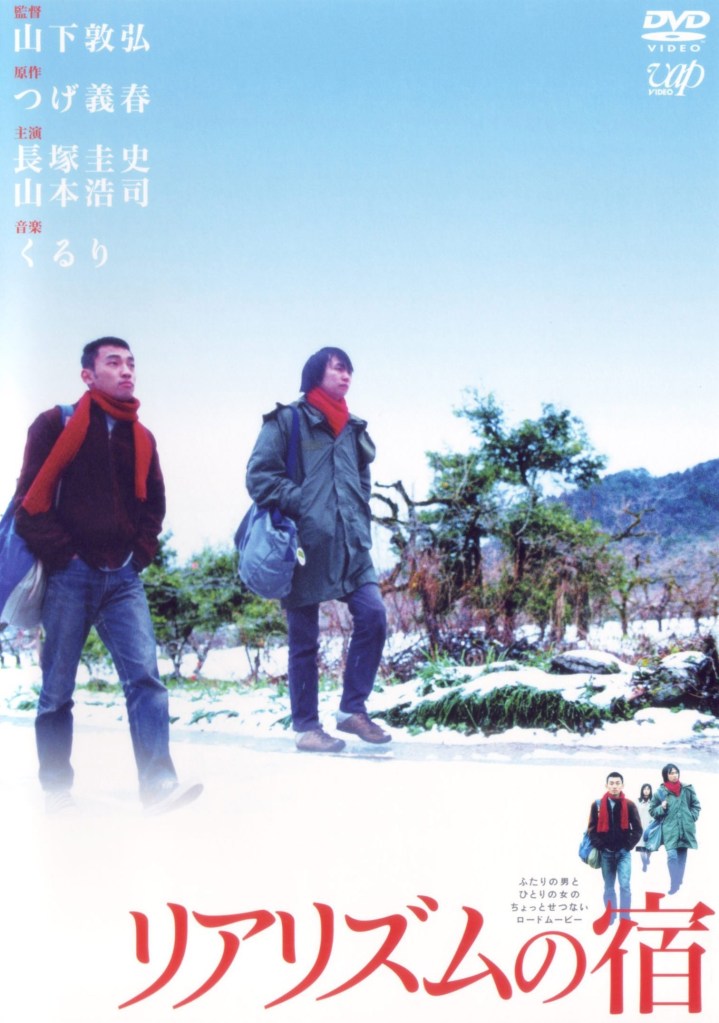
Ramblers (リアリズムの宿, Nobuhiro Yamashita, 2004)

ramblers-riarizumu-no-yado.39798

Nobuhiro Yamashita is well known for his low-key, naturalistic style often focusing on the everyday musings of youthful slackers. Ramblers (リアリズムの宿, Realism no Yado), his third feature film takes this idea and pushes it to the max as it follows two filmmakers wasting time in the mountains after their ultimate slacker actor friend lets them down at the last minute.

The two guys are Tsuboi, a screenwriter and the younger of the two, and Kinoshita – a director and a little bit older in his late twenties. The trip has been organised by a mutual acquaintance, Funaki, who’s an actor and the other two have met once or twice before but don’t exactly know each other. Funaki has overslept and will be late, or he might just come tomorrow or something. He tells the other two to go ahead without him. With nothing else to do the two guys wander off into the mountains to kill time while they wait for their Godot-like friend where they have various encounters with the strange mountain-folk all while a gentle friendship builds up in the background.

By far the most important episode occurs whilst the pair are sitting on the beach “rambling” on about nothing in particular when a scantily clad young woman, Atsuko, comes running towards them out of the sea. Hilariously, the pair try to run away as if she were some kind of terrifying sea monster but eventually decide to help her after she tells them that all of her belongings, including her wallet with her ID and money, have been washed away to sea. They end up adopting her for two or three days, paying for her new clothes, meals and board each a little taken with her but nothing untoward in mind. Suddenly this episode ends, leaving a curious hole in the young guys’ relationship.

Other than getting to know Atsuko, the guys waste time fishing, chatting with the interesting staff at the various inns they end up staying at and just generally hanging around wondering where the hell Funaki has got to. Having failed to arrange accommodation (slackers!) the pair decide to inn hop a little whilst roaming around the area though it’s definitely the off season. After their adventure with Atsuko the boys’ funds start to run down and they’re reduced to sharing meals which gets them noticed by a shady guy in cafe who insists they stay over with his friend – though it turns out to be not really his friend’s place at all and, feeling awkward, the pair attempt to find somewhere else last minute ending up at every traveller’s worst nightmare. The final “inn” is not even really a B&B, just a freezing room in someone’s house which is filled with children, a father who’s dying in the corner and a bathroom which would definitely not pass any kind of health and safety regulation. Getting a little fed up, the boys spend their final night laughing off the strange and sometimes rotten adventure they’ve been having – wondering first about Atsuko and then feeling annoyed about their “friend” who doesn’t seem to have been very invested in this particular enterprise.

As usual for a Yamashita movie, nothing really happens while quite a lot is happening. We get invested in Tsuboi and Kinoshita’s vacation as their friend pulls a Godot style stunt on them by repeatedly failing to appear but always promising to be there soon. Whilst travelling and killing time the two guys talk about various things and get to know one another better. Their time with Atsuko actually seems to bring them closer together rather forcing them into the roles of rivals, though a late stage revelation about Atsuko’s sudden disappearing act may also give them a collective sense of befuddlement mixed with mild guilt. The Ramblers ramble on for 83 minutes, though it never feels like an over extended stay. Once again Yamashita crafts a low-key, nuanced character piece that allows his naturalistic, humorous eye to shine through.


Suprisingly, you can actually buy this on UK iTunes with English subtitles!


The Grandmaster (UK Release) (UK Anime Network Review)

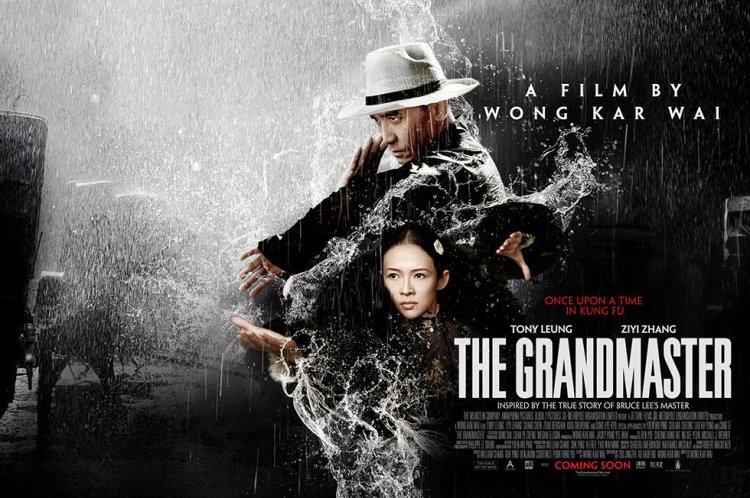
background_46481“Once upon a time in Kung Fu”? Really? “Inspired by the True Story of Bruce Lee’s Master”? Yeah, this poster tells you everything you need to know. 1000+ word rant Review of the Weinstein cut of Wong Kar Wai’s latest up at UK Anime Network.


You’d be hard pressed to find a more internationally well loved Chinese director than the achingly cool Wong Kar-wai. When it was revealed that Wong was going to tackle the story of legendary martial arts practitioner Ip Man with frequent collaborator Tony Leung along for the ride, excitement levels were obviously dangerously high and only set to rise. However, the project never quite seemed to get off the ground and, in fact, several other Ip Man movies were made in the meantime including the hugely successful series starring Donnie Yen the third of which is currently in development. The film finally found its way to the Berlin Film Festival in 2013 and received a brief cinema run in the UK last year but is only now reaching UK homes courtesy of Metrodome.

As usual with Wong who’s never quite managed to find the “save & quit” button, The Grandmaster exists in three different versions – the first being the original “Chinese cut” which runs 130 minutes, the second the “Berlin Cut” which runs 123 minutes and then there’s the “Weinstein Cut” which is 108 minutes long. If alarm bells are already ringing on hearing the name Weinstein, you are unfortunately correct – the UK release is limited to the shorter Weinstein cut. Not only is the film 18 minutes shorter than the longest version, it is an entirely different movie. Subplots have been streamlined or removed altogether, scenes have been reordered and rearranged and crucially additional voice over and explanatory title cards have been added for the “benefit” of an international audience. Seeing as few people will have the opportunity to see either of the other cuts of the film, there’s little point in explicating every last difference but suffice to say if you do have the opportunity to view the 130 minute Chinese version of the film it is a much better option than this overly accommodating “Ladybird Book” style international offering.

As for the plot of this Weinstein version, it runs more like a traditional martial arts thriller with Ip Man as the challenger who must fight various bosses to become the king of martial artists with some stuff about not kowtowing to the Japanese thrown in. The film has been “refocused” to centre more definitely on Ip Man himself as THE Grandmaster whereas the Chinese cut of the film situates him slightly to one side of things – almost an impassive observer of the chaotic events which over took Chinese society from the mid 1930s through to the early 1950s as seen through the mirror of the popularism of the kung-fu world both real and imaginary. In fact, in the Chinese  version the real story is arguably that of Zhang Ziyi’s Gong Er whose tragic life story serves as a metaphor for the dangers of a stubborn adherence to traditional values. Left with little to reflect on, this Ip Man’s story is relegated to a martial arts serial style retelling of the early adventures of the man who went on to train Bruce Lee which is both reductive and actually a little insulting.

The Chinese cut of the film is a sweeping, operatic epic rich with restrained emotions and barely suppressed personal, and implied national, tragedies. Most obviously the subtleties of the central love story between Ip Man and Gong Er are all but lost in this version as the scenes which allowed them to build up the necessarily emotional resonance have either ended up on the cutting room floor or been rearranged ruining the careful rhythms of their relationship and robbing the film of its beating heart in the process. Adding to the zombified feeling are the various title cards interspersed throughout the film which simply display a a few stage directions in an extremely ugly white font, almost like the kind you might see in the restoration of a rare film in which some reels are missing and the only way to fill in the blanks for the audience is to provide a scene synopsis for the intervening action. To put it bluntly, this is an extremely amateurish solution which both takes you out of the ongoing action of the film and adds to the feeling that one is being talked down to.

However, it isn’t all bad. The beautifully balletic fight sequences and often stunning cinematography have both made it through largely unscathed. The film has an undeniable aesthetic appeal and those action scenes are just as exciting as they are good to look at. Likewise, the central performances, though often frustrated by the problems raised by this new edit, are universally strong though it’s shame that Zhang Ziyi’s quite extraordinary work here is being unfairly disrupted by the butchering of her character arc. Coming to the film cold entirely unaware that another version exists, you may feel it’s a so so art house kung-fu movie with a bit too much talking, not enough fighting and altogether too much too much distance between the two but perhaps not find it altogether unenjoyable.

It’s a shame that the UK will likely never see the longer cut of The Grandmaster. Though apparently Wong Kar-wai worked closely with Harvey Weinstein to create a version that was more accessible to non Chinese viewers, it’s difficult to believe this extremely dumbed down approach could really be what he was looking for. After all, there is no dubbed track here – viewers opting to watch a subtitled film most likely aren’t looking for something familiar, they’ve chosen it because they’re interested enough in another culture to spend two hours exploring it. They almost certainly don’t need the kind of bald explanatory text offered here (though, really, who would?) and will most likely feel insulted at having been treated like children who need every last little thing explained in painful detail. Nevertheless, if this is the only way to see the latest film from Wong Kar-wai, there is still a fair amount to enjoy but be aware that it’s far from the true version of The Grandmaster and it may be worth your while to seek out the 130 minute Chinese cut to see Wong’s complete vision.


Branded to Kill (uk-anime.net review) / Masters of Cinema to release Suzuki’s Youth of the Beast

vlcsnap-2014-08-18-11h50m48s63

One of my favourite films – Seijun Suzuki’s Branded to Kill reviewed at uk-anime.net!


In the words of the bosses at Nikkatsu who chose to fire Seijun Suzuki immediately after the film was released in cinemas, Branded to Kill is ‘incomprehensible’. The same bosses then went on to add that they were stopping Suzuki’s monthly salary with immediate effect because his films never made any sense or any money and that he should probably give up being a film director because no one else was going to hire him. To be frank, it was their loss. ‘Incomprehensible’ is one way to describe the film, it’s almost fair though the plot and shooting style feel more straightforward than his previous film, the psychedelic yakuza movie Tokyo Drifter. Like Tokyo Drifter, Branded to Kill is the story of a tough guy killer but this time around our ‘hero’ turns out to be much less self aware.

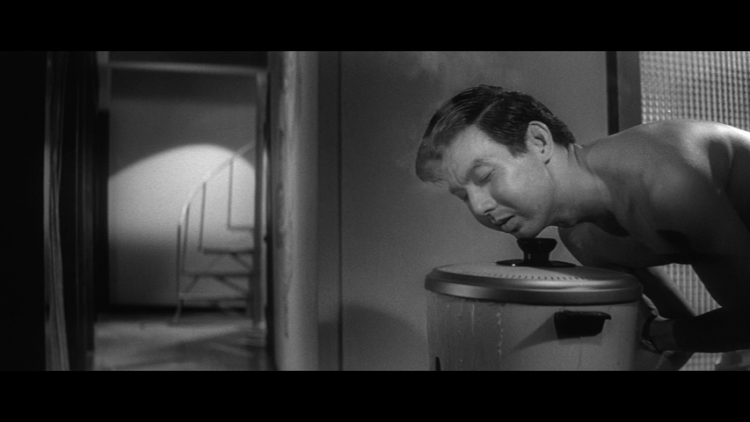
Hanada (Joe Shishido) is one of the top hit men operating in the Tokyo underworld (though perhaps not *the* best). His latest assignment is to escort a someone across town assisted by his alcoholic hit man friend. However, they’re ambushed and his friend is killed though the client reaches his destination safely. On the way home, Hanada’s car breaks down but a pretty girl, Misako, stops to give him a lift. Completely besotted, Hanada returns home to play odd sex games with his wife all over the house whilst sucking in the smell of boiling rice from the rice cooker to put himself in the mood. Becoming more and more obsessed with Misako, he agrees to take on an impossible hit which goes wrong after a butterfly lands on his sights. Accordingly, Hanada then loses his status as one of the top guys and begins to become increasingly insistent on claiming the number one slot for himself.

As you can see, the suits at Nikkatsu may have had a point. Essentially, Branded to Kill takes a fairly standard B-movie gangland plot where multiple guys duke it out for the top spot but it adds in multiple layers of quirky humour and surreality that were definitely not part of Suzuki’s brief. The first section of the film shows you Hanada’s tough and resourceful nature as he takes down the ambushers and completes his original mission in a cool headed fashion. His subsequent assignments have him showing a little more flair whether perfectly timing his shot to fire through the opening of a giant cigarette lighter on billboard, escaping via hot air balloon, or in the famous sequence in which he assassinates an optician by firing through the drainage pipes which lead to his sink. Unfortunately though, Hanada made a serious miscalculation when he accepted Misako’s job offer – as his friend told in him in the beginning, booze and women will get you killed. Stripped of his status and now a wanted man, Hanada’s fragile grip on his identity begins to crumble leaving him at the mercy of his own desires.

Misako herself is obsessed with death. She tells Hanada on their first meeting that her dream is to die and shows him the dead black canary she has hanging from her rear view mirror. Her house is filled with taxidermy birds and black butterflies and it’s hard not to see her as a kind of death goddess, luring Hanada from his certain path of simple but precise killing to one of neurotic questioning. Hanada’s relationship with his wife, Mami, also appears quite strange as in he seems not to care very much about her. He uses her for sex (whilst ordering her to cook him up a fresh batch of rice which, it seems, is what he really wants) but then seems faintly annoyed that she exists and barely seems to care when he telephones his boss but it’s Mami that answers the phone. She appears fairly devoted to him, though intolerant of his fetish for the smell of cooking rice, and is hurt by his lack of attentiveness. During the course of the film, both women will try to kill him and both will suffer directly or indirectly at his hands. Even the strangely homoerotic relationship he develops with the mythical No.1 is fuelled by death – what is it, really, that Hanada has been looking for?

Speaking of strange relationships, as part of this set Arrow have also provided the 1973 ‘Pink film’ remake of Branded to Kill, Trapped in Lust. Following Suzuki’s departure, Nikkatsu was taken over by new management who moved more into the realms of explicit sex and violence in the hope of recapturing an audience that was deserting the cinema for TV. Known as the ‘Roman Porno’ line Nikkatsu continued to pour out a series of explicit sex films, some of which were more ‘arty’ than others. Trapped in Lust is only loosely based on Branded to Kill but its protagonist is a more of a would be hit man who blows his chances by breaking the rules but still desperately wants to be taken seriously. Though it lacks Suzuki’s directorial flare, it makes up for it with sheer weirdness. How often can you say the villain turns out to be a ventriloquist and his doll in which you’re never quite sure which one is actually in control? These sorts of films have lots of rules about what can and can’t be shown including the prohibition on visible pubic hair which might explain the marker pen like scribble at one point where, presumably, the actress’ towel fell down unexpectedly. Pure wish fulfilment, Trapped in Lust has a slightly more upbeat ending (for the protagonist at least) and is worth seeing for its total bizarreness alone but is perhaps more interesting than actually enjoyable.

After being fired by Nikkatsu Suzuki entered a lengthy tribunal process (which he eventually won) and didn’t make another film for ten years. Strange, surreal and other worldly from its more straightforward beginnings to its boxing ring show down, Branded to Kill is one of the most perfectly constructed, but totally insane, B movie extravaganzas ever created. ‘Incomprehensible’? No. Well, a little bit – but only in the best possible way. Like all of Seijun Suzuki’s movies, Branded to Kill defies description or explanation and must be seen to be believed. A genre bending classic, Branded to Kill is a true must see and perfect example of late sixties weird cinema.


Also, hot on the heals of Arrow’s dual format DVD/BD combo of Branded to Kill, Eureka/Masters of Cinema announced today that they’ll be releasing a dual format release of Suzuki’s earlier colour film, Youth of the Beast!

http://www.youtube.com/watch?v=pk6H4r7FfVI

Everybody’s going Seijun Suzuki crazy which can only be a very good thing! Now someone hurry up and release the Taisho trilogy.