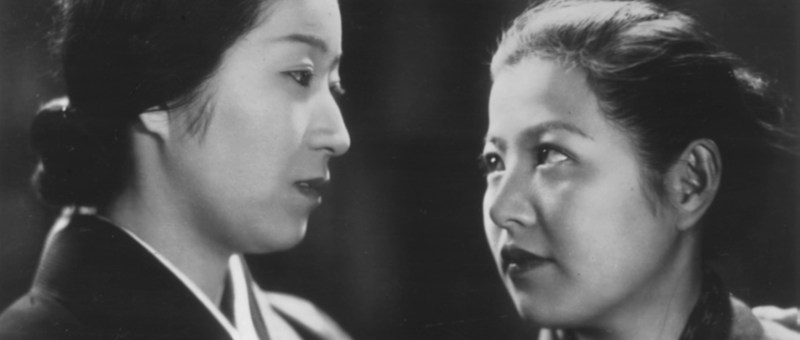
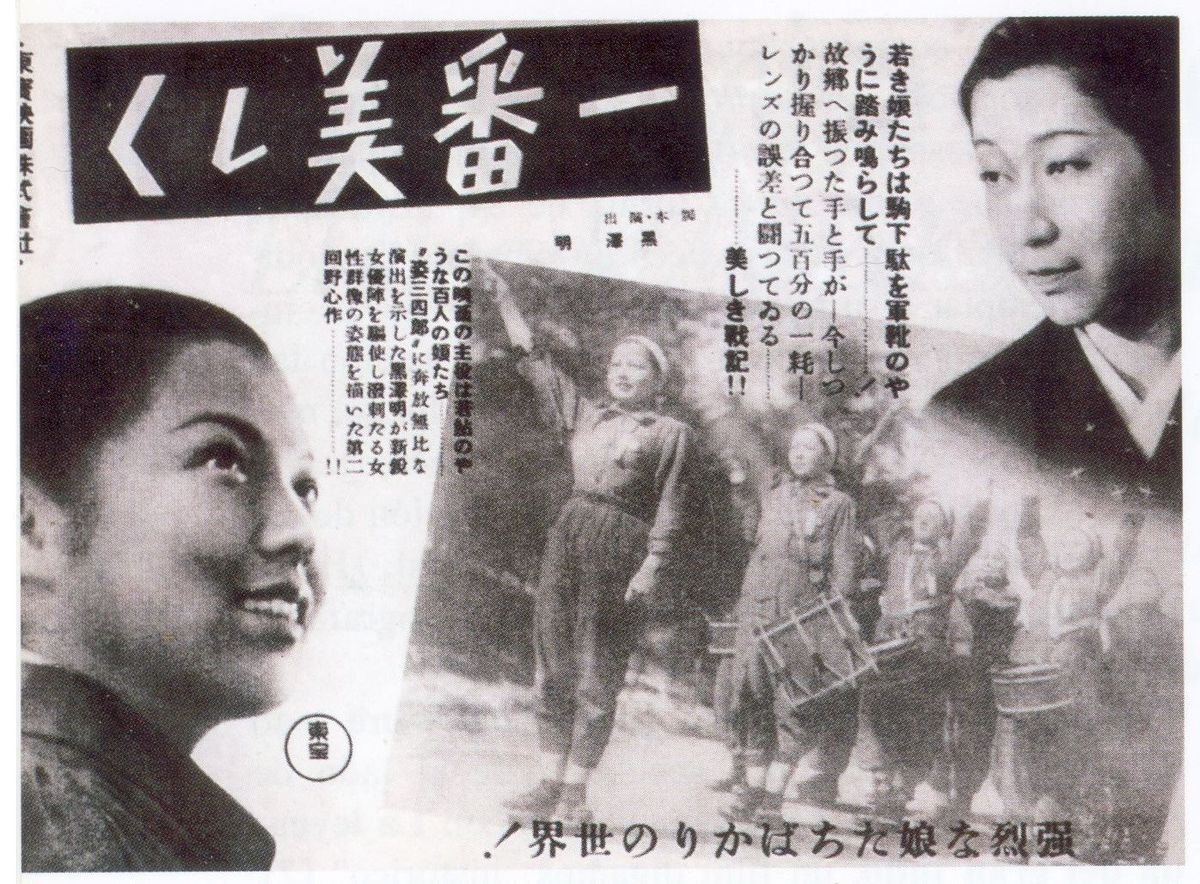
The Most Beautiful (一番美しく, Akira Kurosawa, 1944)

“One can’t improve productivity without improving one’s character” the manager of a factory crafting lenses for the military repeatedly insists, though by “character” he largely seems to mean a total erasure of the self in favour of service to the state. Kurosawa’s second feature is a National Policy Film intended to foster a spirit of patriotic fervour in which not only the factory girls at its centre but everyone else too must “become an outstanding human being” forgoing all human feeling to ensure Japan will win a war even the film seems to concede is already lost. 

Indeed, even for a relatively late propaganda film, The Most Beautiful (一番美しく, Ichiban Utsukushiku) makes little attempt to gloss over the undercurrent of defeat. At one point names of foreign territories fallen to the Americans briefly flash up on the screen leaving the girls looking increasingly bereft if resolving to work even harder. Then again even in the opening which sees all the workers lined up in military fashion it’s obvious that the factory is staffed by those who have not been deployed to more pressing duties, overwhelmingly teenage girls along with boys too young for the army, old men and those otherwise unable to serve in the military. 

Even so the atmosphere among the young women is often cheerful though the film is keen to show them overcoming their loneliness while bowing to photos of their far off parents, often farmers, in distant parts of Japan. They are looked after by a kind of nurse/chaperone, Mrs Mizushima (Takako Irie) whose husband has already been killed in the war marking her out as an example of the self-sacrifice that is being asked of the girls. Many of them have come of their own volition expressly to support the war effort and take their work incredibly seriously especially as the factory manager reminds them that the lenses they make are crucial to to production of military instrumentation and without them there would be no fighter planes or sniper rifles. 

So self-sacrificing are they that the girls go into huff when it’s announced that the factory will be entering a period of increased productivity (another thinly veiled hint that the war is not going well), yet they are upset not because they resent being asked to work harder, nor by the implication that they have more to give than they have been giving, but by the fact they’ve been underestimated having had their quotas increased by only 50% as opposed to the men’s 100%. Their leader, Watanabe (Yoko Yaguchi), explains that, though they know they cannot match the men, they are sure they can do better and will produce at least 2/3 more rather than just half. The managers seem to think that this is naive, but are wary of talking the girls down in fear of damaging their morale which they see as the most crucial thing when it comes to generating “productivity”. Yet that notion of “morale” is mostly a kind of internecine peer pressure brokered by petty competition and a desire not to be the one who lets everyone else down. Hence the girls continue working while they’re sick, which is no good at all for productivity if all they do is spread it around while unable to work at full capacity, afraid to tell anyone in case they get sent home to recover. 

Watanabe is tempted to to take a trip to see her family after receiving a letter from her father to say that her mother has been taken ill, though her parents are also fiercely patriotic and insist that she should not leave but stay and do her duty. She is guilted out of her temptation by another girl, Yamaguchi (Shizuko Yamaguchi), who is sickly by nature but has been hiding her suffering in order to be allowed to stay. Being out of the line fosters feelings of guilt and failure, not only in having let the country down but in increasing the burden on their friends who will now have to work harder in their stead. The “character” that they are supposed to be building, is in the end only in service of their “productivity” that they work to the point of collapse with no thought for themselves or their feelings wilfully sacrificing the opportunity to see dying relatives to prove their dedication. 

In what now might seem like subversive touches but just as well may have been sincere, Kurosawa often flashes signs and slogans which appear in the factory including one urging the girls to “follow the example of the war dead” suggesting that the only real way to prove your devotion is to die in the service of the emperor. On the other hand, the girls don’t actually seem to do a lot of factory work but are otherwise expected to participate in band practice banging out military marches on the drum or else improving their physicality through playing volleyball. In any case as they begin wear themselves out tempers begin to fray leaving the girls at odds, tired and resentful if not actively hopeless in beginning to realise they probably won’t make their overly ambitious quota as a tacit acceptance that Japan most likely is not going to win the war and all their efforts are for nothing. At the film’s conclusion, Mrs Mizushima exclaims that Watanabe has become “such a good girl”, ironically forced to abandon the directly filial for the national in prioritising her role as an imperial daughter rather than a biological one. Even so, the film discovers a much more comfortable sense of solidarity between the young women even if brokered by militarist fervour and a nihilistic bid for self-destruction in perpetual servitude. 


The Most Beautiful screens at the BFI Southbank, London on 1st & 9th January 2023 as part of the Kurosawa season.

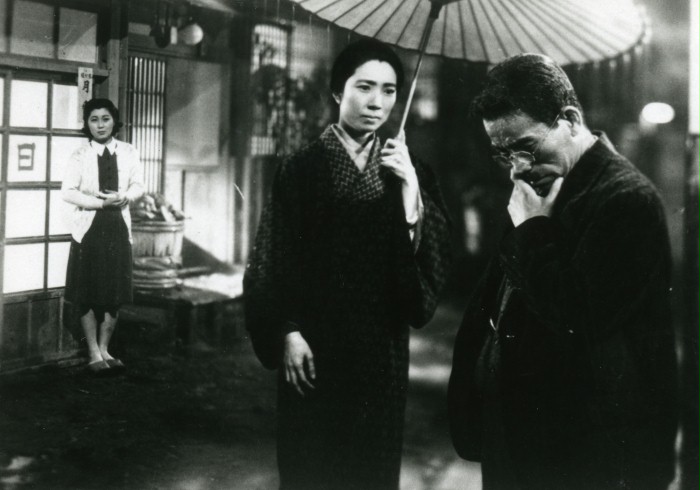
Army 陸軍 (Keisuke Kinoshita, 1944)

Dem-3 Photo. Helene Jeanbrau © 1996 cine-tamaris.tif

With a name like “Army”, you’d expect this to be a stridently propagandistic film about brave men fighting for their countries – some of whom will likely fall but will cover their families in eternal glory through their selfless sacrifice. Those are certainly the ideas behind Kinoshita’s 1944 film, the last film he’d be permitted to make before the war’s end, however any lingering feelings of pro-militaristic ardor are completely undercut by the film’s near silent closing moments.

Like The Living Magoroku, we begin in another historical era – one just as turbulent as the contemporary action. As people flee burning houses at the dawn of the Meiji era, a father and son shelter a wounded samurai who gifts them a set of historical encyclopaedias. Despite the changing times, the father is convinced a man’s highest duty is to his country and makes a deathbed plea that his son Tomohiko become a fine soldier. Tomohiko tries his best, as an infantry Captain through the several of Japan’s international conflicts of the early 20th century he’s certainly had ample opportunity to distinguish himself. However, luck is not on Tomohiko’s side as minor injuries, illness or simply failing to be selected have kept him safely away from the front lines. Eventually invalided out, Tomohiko tries to make a go of civilian life, finally ending up trying to run a pawn shop (before realising he’s not good at that either and leaving the heavy lifting to his more capable wife). Still convinced of the wisdom of his father’s philosophy, Tomohiko pushes his wishes for military glory onto his oldest son – the equally weedy Shintaro whose slight frame and kindly nature don’t exactly point to a future Field Marshall. Japan needs soldiers though, it’s time for every man and boy to stand up to defend her!

Final scene excised, Army would look like the most obviously propagandistic film in the box set. Full of references to the importance of military virtue and physical strength over book learning, Army brings home that a man who does not fight is not a man. He is weak and womanly and is to be shamed. Even those who are in poor physical health or simply not built for brute force attacks are expected to suddenly shape up and join every other young man in sacrificing themselves nobly for the Emperor. Mothers, even, are not permitted to grieve as their sons were never theirs in the first place – they were merely taking care of them for the Emperor. Now they’ve done their duty and returned their progeny to the father of the nation, they ought to feel nothing more than relief at a job well done, or so says Tomohiko’s wife, Waka. Wouldn’t it be shaming to have a grown up son still at home, after all, or even one that was far from the front line but relatively safe? Prepare for the worst or hope for it? It’s an oddly macabre way of thinking.

However, the last scene of the film which is played almost silently, undercuts this cold willingness to sacrifice and shows it up for its own hollowness. Having originally claimed not to be going to see the brigade depart because she’s a weak and emotional woman, Waka is suddenly overcome by something. She rises and follows the other townspeople drifting towards the noise of the parade with its crowds of cheering, flag waving supporters. Desperately, anxiously, she searches for her son in amongst the multitudes of other young men in identical uniforms marching off gleefully almost certainly not to return. Having pushed through the ranks of ecstatic civilians, she finally catches a glimpse of Shintaro who smiles at her before disappearing back into the ranks of anonymous infantrymen. Waka is left bereft, alone and terrified – her only recourse is prayer.

Unsurprisingly, the army didn’t really like this bit. In fact, one high ranking official marched right down to Shochiku and accused Kinoshita of treason! Luckily, not too much came of that but Kinoshita’s next script about kamikaze pilots was rejected and he wasn’t allowed anywhere near a camera until after the end of the war. Waka’s final uncertainty, her grief at losing her son to this faceless monster undercuts the entirety of the previous 80 minute celebration of glorious military history and masculine pride. All of a sudden it’s not a joyful celebration anymore, it’s a funeral peopled with grieving wives and mothers – hardly the sort of message you want to send out when you’re trying to give the barrel a final scrape when it comes to conscripting for the army. Army is a film that’s defined by its final minutes and is surprising in the level of ambiguity it was allowed to get away with given the strict censorship conditions in place. As a propaganda film it fails, but by design. Kinoshita once again refuses to depict his characters as unfeeling robots who can suppress their natural empathy in the name of duty or honour and a mother’s love proves the most dominant (if hopeless) force of all.

Jubilation Street 歓呼の町 (Keisuke Kinoshita, 1944)

20138117_1_IMG_FIX_700x700The third entry in Criterion’s Kinoshita and World War II box set takes a decidedly darker turn than either of its predecessors. Made a little later in 1944, Jubilation Street is surprising addition, not least because for the majority of its running time it’s hard to see how it could have ever have fulfilled the propaganda requirements of the time. Its title is almost ironic, there’s nothing here but an inevitable sadness and eternal partings both between people and between eras. It’s not until the closing moments of the film that anything even remotely “inspirational” occurs, and even then it’s all a little bit tacked on and feels like a token epilogue to please the censors. With far less obvious comedy moments Jubilation Street is taking us somewhere significantly darker, but is not without Kinoshita’s characteristic sympathy.

Jubilation Street is an old-fashioned row of modest housing home to a small community of families who’ve each lived there for many years. Now they’re all being “relocated” because the government wants the land for the war effort. Some are ready to leave, others are not – either because they feel too old to start again somewhere else or simply because they don’t want to be split up from the people they’ve shared their lives with. The family who own the printer’s shop want to finish their last few orders and wait until their baby is born, the crotchety old man who runs the bath house just doesn’t want to go anywhere and Mrs. Furukawa is afraid to leave in case the husband who walked out on her and their son ten years previously finally comes home. Shingo, Mrs. Furukawa’s son, is a test pilot in the air force and wants to marry childhood sweetheart Takako, though her parents are against it given his family circumstances and dangerous work. Just in the knick of time, Mr. Furukawa makes a shocking reappearance, unbeknownst to his wife and son but will his ten years away with nary a word damage his chances of a happy reunion? With the evacuation date drawing nearer, important decisions will have to be made, and made in a hurry.

There may have been hope and happiness in this little street once, but now there’s just waiting and desperation. Towards the beginning of the film, the war still feels something far off – the relocation programme might as well be for a new dam or a modern housing development as much as being down to a war. Shingo is the only person directly involved with anything military and though his work is dangerous in one sense he gets to live at home with his mother and nothing seems very different than before. Towards the end, however, a traumatic event will drop the devastation of war right into the middle of this little community with as much force as any bomb. Doomed romance, shattered dreams, a lifetime’s work going for nothing – there’s nothing to celebrate here. Having undergone a tragedy and forced out of their homes, the community each vow they’re going to honour the sacrifices made by each doing their best for the war effort, but it comes dangerously close to being insulting. “So you’ve lost people, you might have lost your home or your business or a child but that just means you have to work even harder to make your loss mean something”. A fairly bleak message, if understandable given the circumstances, but it’s debatable that it’s one a worried populace would have wanted to receive in the normally escapist realms of the cinema.

It’s remarkably ambiguous for a film of its time. Perhaps because, again, he kept the war effort in the background, Kinoshita was able to get away with showing a less “jubilant” group of people each facing their various difficulties with an enviable degree of stoicism (coupled with their determined resolutions at the end). There’s no way you could read Jubilation Street as a “pro-war” film. Though it stops short of any kind of direct criticism, war (and even in one case the whole idea of Manchuria) has ruined each of these people’s lives, destroyed their community and cast them adrift in an uncertain world. What sort of glorious nation is this, and was it worth all this sacrifice?

Jubilation Street is not as well preserved as either Port of Flowers or The Living Magoroku, though the actual film is fine for the most part the soundtrack is very badly damaged with strong hiss and distortion throughout. However, it doesn’t detract from the experience too much and given that it’s a minor miracle it survives at all you can’t complain. Kinoshita has once again tried to put the lives of ordinary people up on screen with all the warmth, empathy and truth that was permitted to him at the time. The last days of Jubilation Street were not altogether happy ones, but as a metaphor for a place and time it’s about as close as you’d be allowed to explore.

Arsenic and Old Lace

http://www.youtube.com/watch?v=2QvozC_uW-g


There is a happydale, far, far away….


This is one of  my most favourite films. Theatre critic and prominent anti-marriage advocate Mortimer (Cary Grant) has just married nextdoor’s vicar’s daughter, Elaine (Priscilla Lane). Understandably embarrassed, Mortimer is desperately trying to keep the marriage under wraps but nevertheless returns home to let his sweet maiden aunts know the good news. Unfortunately he’s not the only one with a surprise, as he discovers opening the window seat. Believing his uncle Teddy, who is under the delusion that he is Teddy Roosevelt, has finally gone too far and harmed someone, he confronts his aunts and suggests they look into finding a better place for Teddy. Casually they reveal the body is ‘one of theirs’ and our whole macabre farce kicks off. Oh and did I mention Mortimer’s sadistic older brother Jonathan, who’s had plastic surgery to change identities but wound up looking like Karloff in Frankenstein, the doctor who did that to him and their own guest they’re bringing to this bizarre gathering? Not to mention the police turning up, one of whom has theatrical ambitions! Hilarious!