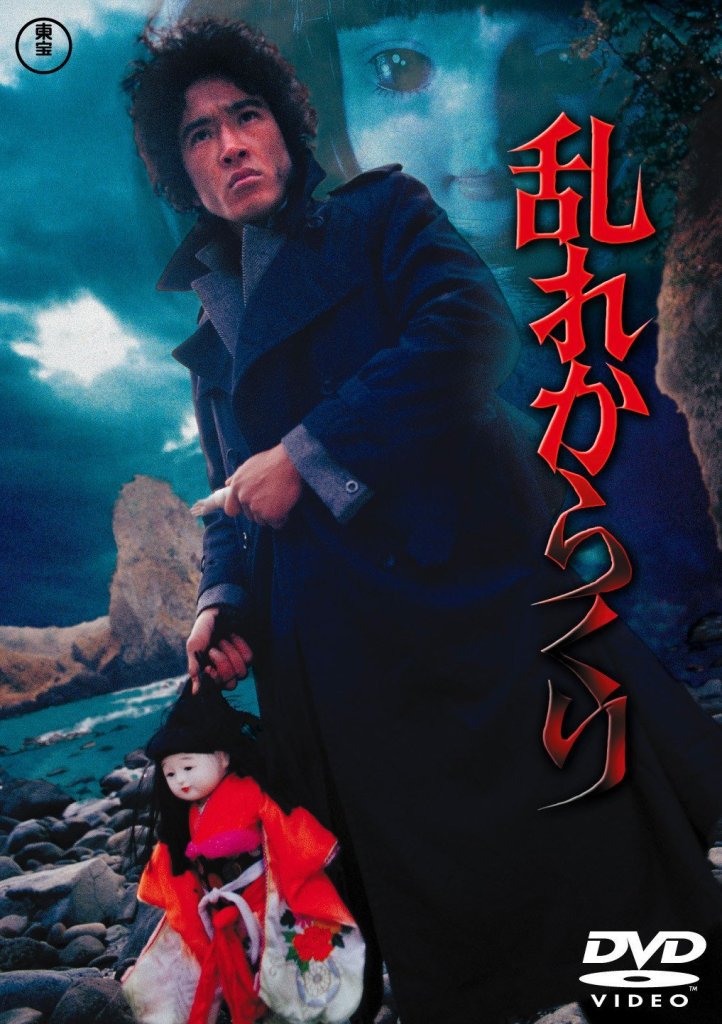
 Yusaku Matsuda was to adopt arguably his most famous role in 1979 – that of the unconventional private detective Shunsaku Kudo in the iconic television series Detective Story (unconnected with the film of the same name he made in 1983), but Murder in the Doll House (乱れからくり, Midare Karakuri) made the same year also sees him stepping into the shoes of a more conventional, literature inspired P.I.
Toshio Katsu has had a bad day at the bicycle races, almost losing his entire salary before thinking better of it and retuning his last betting slips to buy himself some ramen. Originally hoping to write detective thrillers, Toshio had studied literature at university but later dropped out fearing he had no real talent as a writer. Spotting an ad for jobs at a P.I. firm he thinks it’s worth a shot. When he arrives at the Udai detective agency he finds it’s just one tiny office led by former police woman Maiko Udai. Being short on help, she hires Toshio right away and puts him to work on her number one case – investigating some interfamilial conflict at a top toy company. However, when their target is killed during a car chase, Maiko and Toshio find themselves trapped inside a maze of complicated tricks and devious puzzles.
Matsuda plays it a little straighter here as an, admittedly laid back, master detective with a knack for always being in the right place at the right time. The case at hand concerns an elderly toy magnate and his factory which is run by his son Soji as the president and his nephew Tomohiro as the manager of production. As might be expected there’s a fair amount of conflict between the two men which is exacerbated by an incident in which a series of racing cars the company was due launch had to be pulled following safety concerns leading Soji and Tomohiro to hold each other responsible for the failure. The old man wants the detectives to keep an eye on Tomohiro in case he decides to launch some sort of coup but just about everyone is acting suspiciously in this weird mansion which was built as some kind of folly with hundreds of built in tricks like a lakeside woodland labyrinth and secret underground passages. Oh, and there might even be some hidden Edo era treasure too. Before long people start dropping dead in increasingly bizarre ways.
In the best traditions of Japanese mystery stories which place fiendishly elaborate plots at their centre, Murder at the Doll House more than succeeds as a classic detective story. We’re presented with a set of strange occurrences which our master sleuth will explain to us in a long lecture at the end and even if one or two twists are a little obvious, the satisfaction involved in having figured them out ahead of time outweighs any kind of disappointment. Toshio may say he wants to be like Philip Marlowe but in actuality his detective is a little more in the European mould – almost like a more active Poirot or a slightly less obtuse Sherlock Holmes. Still, donning a trench coat with a turned up collar yet eschewing the classic hat which would have obscured his giant ‘70s perm, Matsuda once again turns in a very “cool” performance as super smart private eye.
Welcome to the Doll House isn’t quite as action packed as some of Matsuda’s other roles from this era even if it does have a genuinely thrilling finale. Making up for physical excitement with a more cerebral approach which mixes in a few horror tropes with the creepiness of the old house and “murder by doll” scenario, Murder at the Doll House makes for an enjoyably strange mystery adventure which also adds in a little quirky humour along the way for good measure.
Based on the novel by Tsumao Awasaka (not currently available in English).
Matsuda does some detecting (unsubtitled)
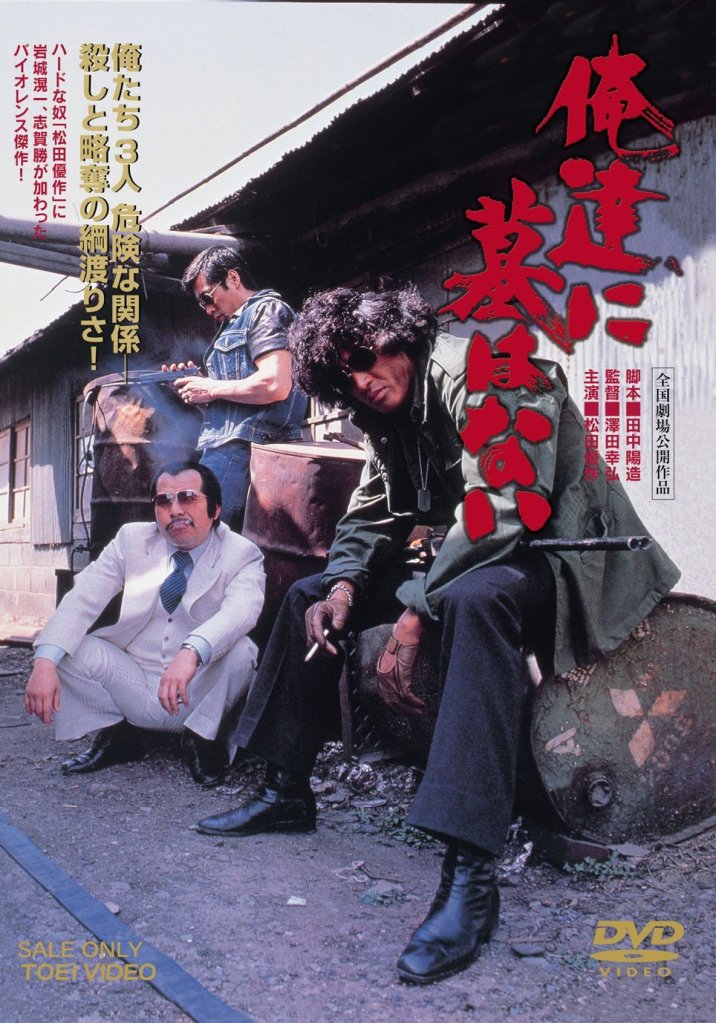 Though he might not exactly be a household name outside of Japan, the late Yusaku Matsuda was one of the most important mainstream stars of the ‘70s and ‘80s. Had he not died at the tragically young age of 40 after refusing chemotherapy for bladder cancer to star in what would become his final film, Ridley Scott’s Black Rain, he’d undoubtedly have continued to move on from the action genre in which he’d made his name. No Grave For Us (俺達に墓はない, Oretachi ni Haka wa Nai) is fairly typical of the kinds of films he was making in the late ‘70s as he once again plays a cool, streetwise hoodlum mixed up in a crazy crime world where no one can be trusted.
 Windows on Worlds