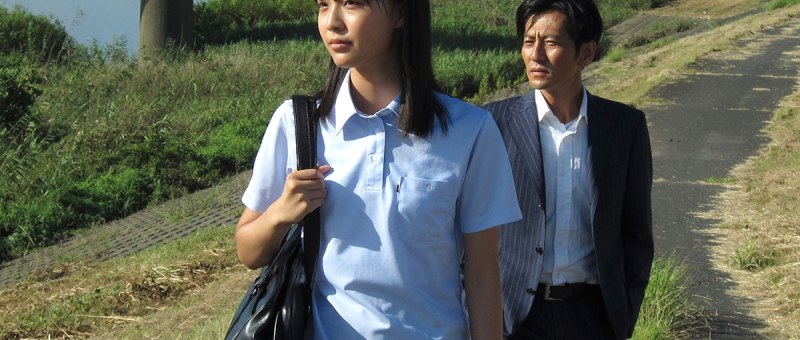
Ichiko (市子, Akihiro Toda, 2023)

If for some reason your name were taken from you and it became much easier to live by some other person’s name that you were compelled to use, would you be content to be them or be prepared to go to extreme lengths to reclaim your own identity? Based on his own play, Akihiro Toda’s Ichiko (市子) explores similar themes to his 2018 film The Name as the absent heroine fights to reassert herself just as we try to piece her together to a create semblance of the whole being we may never truly understand.

In many ways, it’s absence that defines Ichiko (Hana Sugisaki) who like the mysterious spirit of a fairy tale must be gone as soon as she is seen. Or at least, you could forgive Yoshinori (Ryuya Wakaba) for feeling this way when his girlfriend of three years suddenly disappears soon after he’d presented her with marriage papers. It’s not until he’s visited by a policeman, Goto (Shohei Uno), sometime later that he’s forced to admit he actually knew very little about her. He assumed she’d had a difficult past, and neither of them said too much about themselves so he doesn’t know if her parents are still alive, where she was from, or if she has any family or friends she might have gone to. What shocks him most, however, is that Goto informs him that on paper at least the woman named Ichiko Kawabe does not exist.

Flashing back across several years from Ichiko’s childhood to the present day, we see people call her by another name which she often tries to correct telling them that her name is Ichiko but it isn’t originally clear to us if this is because she’s being forced to live under false name or if she merely dislikes the name she was given and wishes to be “Ichiko” instead. In any case, she appears to have developed a healthy fear of letting anyone in thanks to her incredibly disordered home life. At times, would-be friends attempt to visit, but are either kicked out or merely horrified by what they see there and leave soon afterwards putting an end to the friendship. That might in itself explain why she may wish to be someone else, but in fact what she wants is the right to be herself.

Gradually it becomes clear that because of the way Japanese society works, Ichiko has been forced to live two lives as one and can live neither fully. It’s not quite right to call it a double life or to say that she multiple personalities but more that she cannot quite locate herself within herself and is increasingly distressed in being forced to answer to a name which is not her own and live someone else’s life for them. Later she explains that all she wanted was a “normal” existence though this is the very thing denied her in part because she is denied her rightful identity though there is something quite poignant in her remaining innocence. Her touching description of finding happiness in the scent of miso soup wafting from ordinary houses at dinner time expresses her desire for the comfort and safety of a conventional family she never really had or may perhaps have experienced for a brief moment in early childhood. 

Ironically enough, she exclaims that she likes walking in the rain because it washes everything clean though for her it will spell disaster in quite literally revealing the skeletons buried in her past and with them exposing the precarious web of lies on which her adult life was based in an attempt solely to recapture the authenticity of her essential identity. A further irony may be that the identity she ends up with may not even be her own but that of someone else who decided they no longer wanted theirs, perhaps because the world had also been unkind to them and so they did not understand its worth. As the policeman says, she did what she had to do survive whether that be lying about who she was or otherwise burying her other self literally or metaphorically. Dark and melancholy, Toda’s twisty psychological mystery has its poignant qualities but ultimately asks whether living as your true self is worth the price or it’s better just to accept the name that fate and society have dealt you.


Ichiko screened as part of this year’s Nippon Connection

Original trailer (English subtitles)
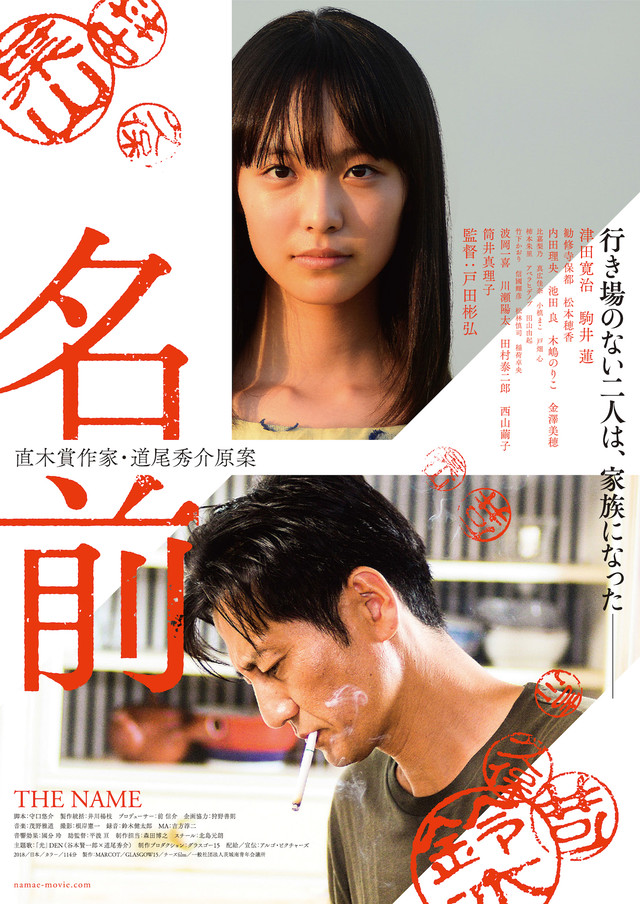
The Name (名前, Akihiro Toda, 2018)

b5_ol

Names are a complicated business. Most people do not choose them for themselves, yet they come to define an identity or at least provide a substantial peg on which to hang one. If you give someone a fake name you are by definition shielding your essential self from view, refusing connection either in fear of discovery or intention to harm. The protagonist of Akihiro Toda’s The Name (名前, Namae) adopts several different titles as a part of his increasingly disordered everyday life in which he takes a hammer to his original identity in an ongoing act of guilt-ridden self harm. Meanwhile, his teenage would-be saviour, engages in a little role play of her own hoping to discover an essential truth about herself only to be disappointed, in one sense, and then perhaps find something better.

Masao Nakamura (Kanji Tsuda), if that is his real name, is not just leading a double life but is currently engaged in a number of iffy scams each compartmentalised under a different title and in which he plays an entirely different version of himself. Once a successful businessman, personal tragedy, marital breakdown, and bankruptcy have left him a floundering, cynical mess living in a rundown rural hovel with a pernickety neighbour and a decidedly lax approach to housekeeping. Masao’s main “job” appears to be working in a recycling plant where he’s managed to wangle a preferential contract by telling the higher-ups that his (non-existent) wife is seriously ill in hospital. Just as Masao’s scheme is about to be discovered, a mysterious teenage girl suddenly appears out of nowhere and plays along with Masao’s sob story, claiming to be his daughter come to remind him that he needs to leave earlier today because mum has been moved to a different hospital (which is why his boss’ contact had never heard of her).

Emiko Hayama (Ren Komai), as we later find out, is a more authentic soul but has decided on a brief flirtation with duplicity in observing the strange and cynical life of the morally bankrupt Masao. Facing similar issues but coming from the opposite direction, the pair meet in the middle – regretful middle-age and anxious youth each doing battle with themselves to define their own identities. Like Masao, Emiko is also living in less than ideal circumstances with her bar hostess single-mother, forced into adulthood ahead of schedule through the need to take care of herself, purchasing groceries, cooking, and keeping the place tidy. Thus her approach to Masao has, ironically enough, a slightly maternal component as she tries to get him back on his feet again – cleaning the place up and giving him something more productive to do than wasting his idle moments in bars and other unsavoury environments.

Masao’s current problems are perhaps more down to a feeling of failure rather than the failure itself. Once successful, happily married and excited about the future, he felt it all crash down around his ears through no real fault of his own. Nevertheless he blamed himself – his intensive work ethic placed a strain on his relationship with his wife and his all encompassing need for success blinded him to what it was that really mattered. By the time he realised it was already too late, and so it’s no surprise that he longs to escape himself through a series of cardboard cutout personalities, enacting a bizarre kind of wish fulfilment coupled with masochistic desire for atonement.

Now cynical and morally apathetic, Masao lets Emiko in on a secret about the grown-up world – it’s all lies. You have to put on disguise or two to get by; the world will not accept you for who you really are. Teenage girls might know this better than most, though Emiko is a slow learner. She might tell Masao that pretending to be other people is fun, but the one role she hasn’t yet conquered is that of Emiko Hayama – something which particularly irritates the demanding director of the theatre club she’s been cajoled into joining. Like Masao, Emiko’s life begins to fall apart through no fault of her own as she finds herself swallowed up by a typically teenage piece of friendship drama when her best friend’s boyfriend dumps her in order to pursue Emiko. Branded a scheming harlot and ejected from her group of friends, berated by the director of the theatre troupe, and having no-one to turn to at home, Emiko finds herself increasingly dependent on the surrogate father figure of Masao who is happy enough to play along with the ruse so long as it is just that.

Through their strange paternal bond, Emiko and Masao each reach a point of self identification, figuring out who it is they really are whilst facing the various things they had been afraid to face alone. Lamenting missed opportunities while celebrating second chances, The Name makes the case for authenticity as a path to happiness in a world which often demands its opposite. Melancholy but gently optimistic, Akihiro Toda’s peaceful drama is a heartwarming tale of the power of unexpected connection and the importance of accepting oneself in order to move into a more positive future.


Screened at the 20th Udine Far East Film Festival.