A Useful Ghost (ผีใช้ได้ค่ะ, Ratchapoom Boonbunchachoke, 2025)

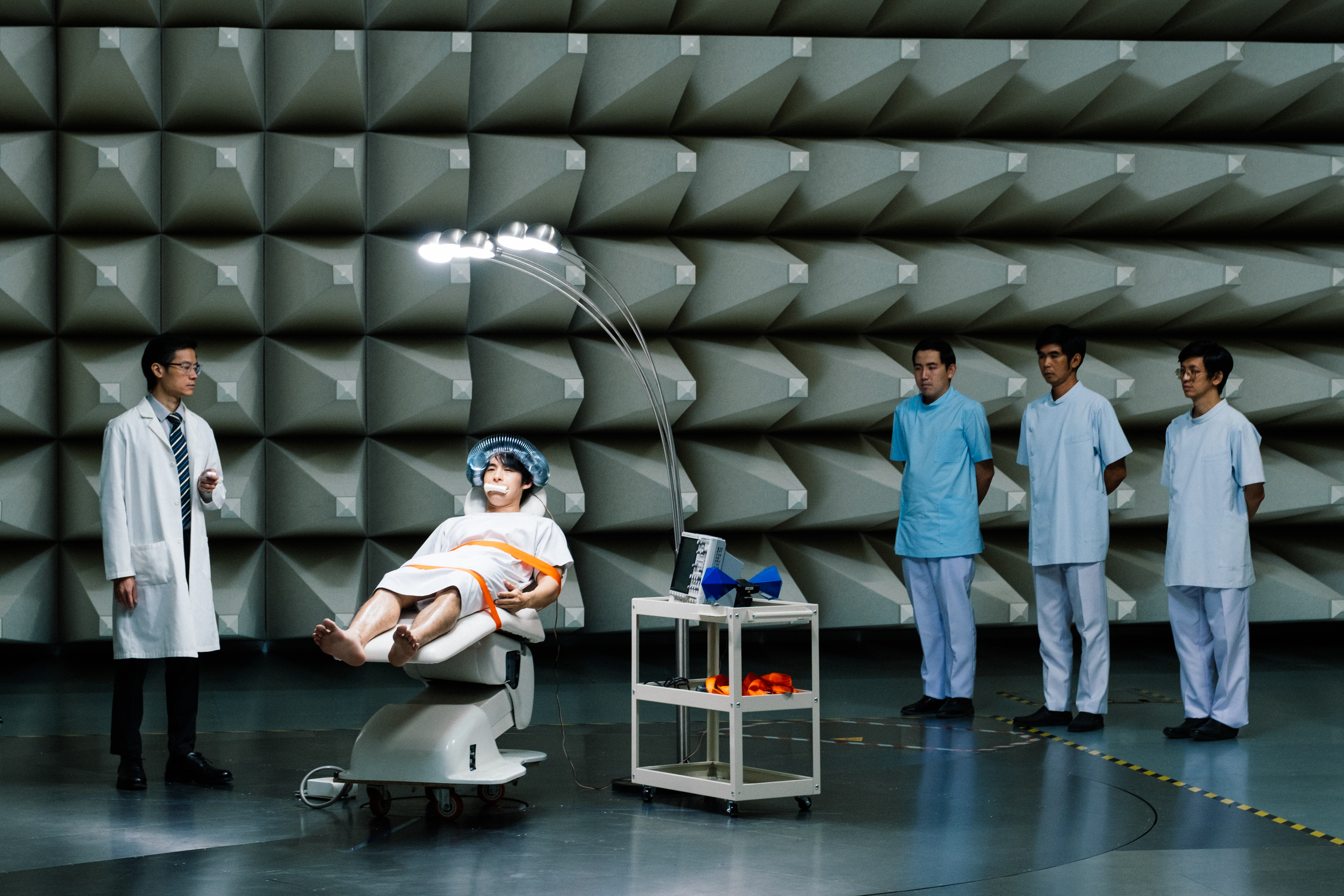
Right at the beginning of Ratchapoom Boonbunchachoke’s A Useful Ghost (ผีใช้ได้ค่ะ, Phi Chaidai Kha), we see a man creating a classical-style relief that’s positioned in a tranquil spot surrounded by nature. It features people from all walks of life, a mother and her child, a monk, a scholar, a soldier, a labourer and so on, as well as a goat, and is later revealed to have the title “democracy monument”. But as soon as it’s put up, it’s brought violently down as developers move in to replace this oasis of peace with a modern shopping mall. 

The construction gives rise to more “dust” which is what’s polluting the country, directly linking rampant capitalism with the erosion of democracy. Even the home lived by the self-proclaimed “Academic Ladyboy” (Wisarut Homhuan) may one day be consumed as the traditional streets are replaced by yet more upscale shopping opportunities. In an effort to get rid of the dust that’s plaguing him, he buys a vacuum cleaner, but it turns out to be haunted and coughs in the middle of the night, spitting out all the dust he made it swallow. 

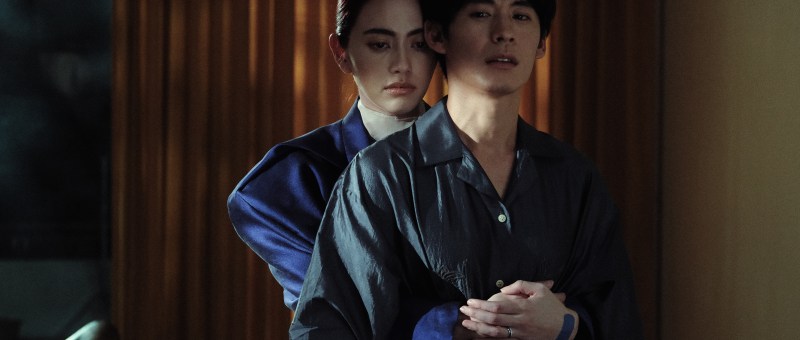
“Dust” is also a term that’s come to stand in for those exploited by this increasingly capitalistic society whose lives are afforded little value, such as factory worker Tok who died after being exposed to too much dust while working at a factory producing vacuum cleaners. Meanwhile, the factory owner’s son has just lost his pregnant wife, Nat (Davika Hoorne), to a respiratory illness caused by dust. Nat has also possessed a vacuum cleaner and reunites with her broken-hearted husband, March (Witsarut Himmarat), but finds herself increasingly compromised after sucking some of the dust out of a government minister’s eyes.

Nat’s desire to stay in the mortal realm longer than is proper is reminiscent of the classic ghost Nang Nak, but what she also becomes is a kind of class traitor increasingly involved with the oppressive regime and betraying her own people to ensure her personal survival. Government minister Dr Paul gets her in on his programme chasing ghosts through dreams and banishing them from people’s memories in order to erase their existence and history. When people refuse to give up their ghosts, he has them given electroshock therapy so that they forget them, as he once tried to do to March before Nat made herself useful to him. And so “dust” and “ghosts” have now become metaphors for those who resist as the souls killed not only during the 2010 massacre but Thammasat University massacre in 1976 rise again to make their presence felt. 

According to the Academic Ladyboy, that these ghosts came back at all is itself an act of resistance, as if these memories themselves could become reminders that resistance is possible and things weren’t always this way. He loathes Nat for the choices that she made in turning on her own, but she was also facing other kinds of oppression in never being accepted by her husband’s upperclass family who in themselves become a symbol of autocratic elitism. Her mother-in-law, Suman (Apasiri Nitibhon), who owns the factory and is unsympathetic towards Tok insisting his death was nothing to do with the working environment, submits herself to them too because like Nat she didn’t belong either and felt she had no other choice. Her eldest child Moss was taken away from her because she spoke a Northern dialect and they feared the child wouldn’t learn standard Thai. Now she tries to talk to her son’s Australian husband in Teochew, only for Moss to roll his eyes and say no one knows how to speak that outside Thailand. Just as they rejected Nat for being an outsider, they rejected Moss for being gay until he became useful to them.

The longer Nat stays beyond her allotted time, the more it corrupts her so on restoring her corporality she would betray even March, who has come to sympathise with the ghosts, in order to be allowed to stay and maintain her position. She’s the “useful ghost”, from a certain point a view, but from another, all the others are “useful” too in keeping the spirit of resistance alive. Quirky and surreal with its tales of haunted hoovers, obsessive bureaucracy, and factories where singing is randomly banned, not to mention truly awesome shoulder pads, Ratchapoom Boonbunchachoke’s deadpan absurdist drama is deadly serious where it counts right until its intensely cathartic conclusion.


A Useful Ghost screens as part of this year’s BFI London Film Festival.

Trailer (English subtitles)
Phobia 2 (5 แพร่ง, Paween Purijitpanya, Visute Poolvoralaks, Songyos Sugmakanan, Parkpoom Wongpoom, Banjong Pisanthanakun, 2009)

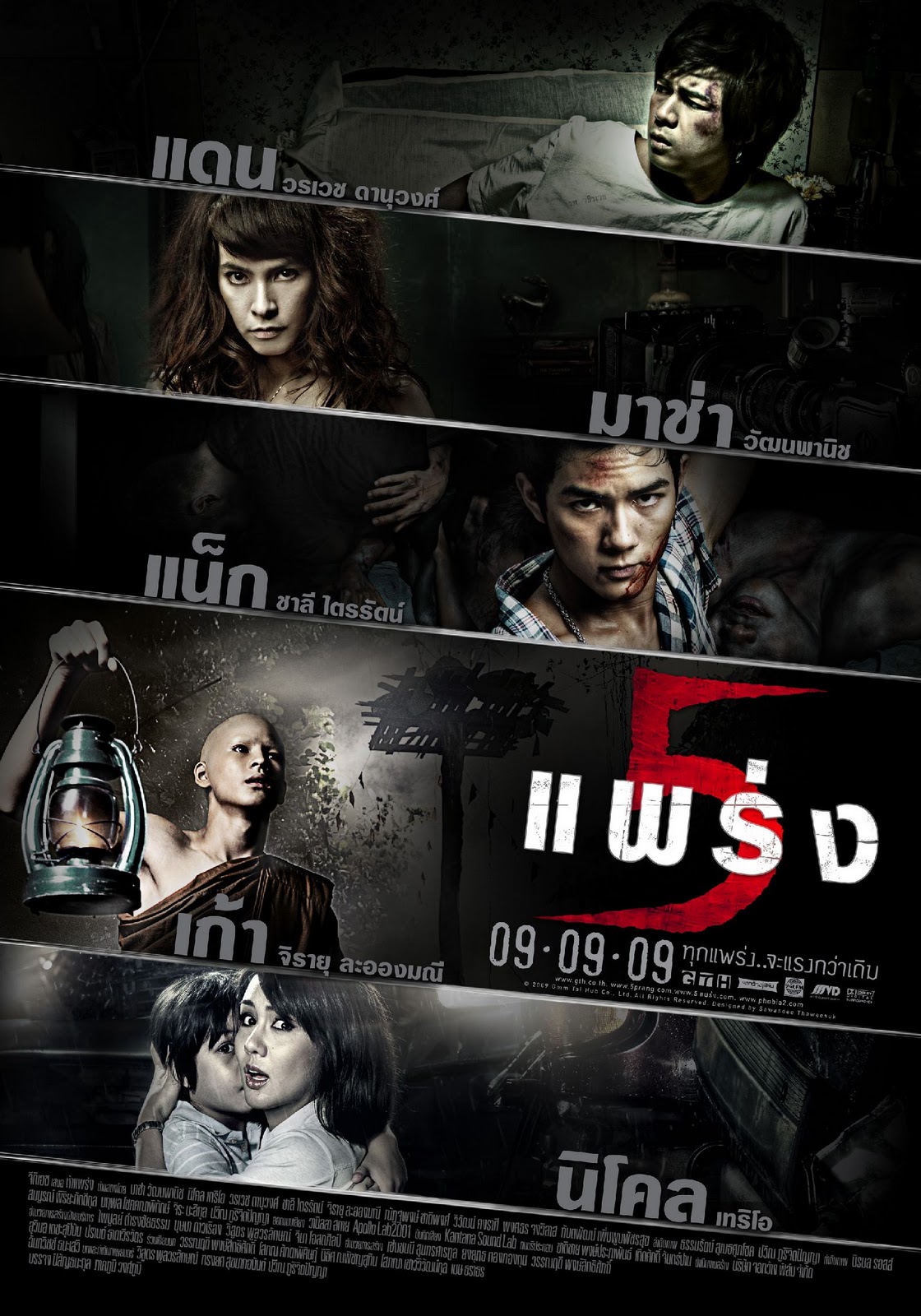
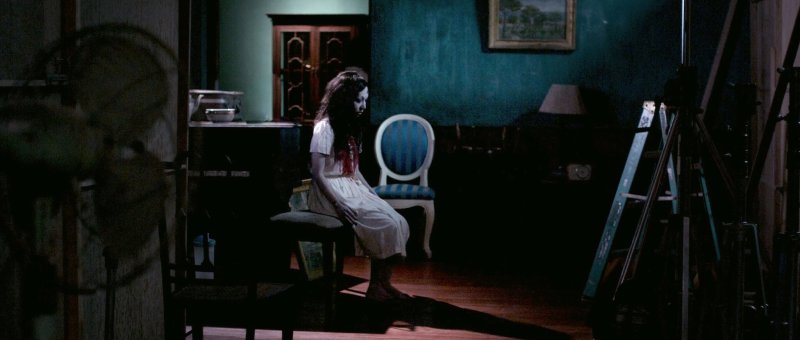
Aptly termed “5bia” but retitled in English as Phobia 2, this sequel to the original four-part anthology adds an additional director for five tales of Thai horror. Unlike the first film, there aren’t any particular linking details though they each someway turn on an anxiety towards cars and other forms of transportation along with exploring the effects of unresolved guilt and natural justice in the form of karma.

Thus in the first sequence, Novice, a young man, Pey (Jirayu Laongmanee), is sent to a temple to hide out after being involved with a crime. He evidently did not want to become a monk and is resentful towards his mother and stepfather for bringing him here. But what he soon becomes involved with is a haunting, a hangover from the hungry ghosts festival that confronts him with his unresolved feelings towards his mother and lingering guilt over the crime he committed. Elegantly lensed, the film has a creeping sense of dread and eerieness as Pey begins to accept responsibility for his actions even if as it seems he must also pay for his lack of respect towards traditional custom.

Continuing the theme, in the second part, Ward, a young man, Arthit (Worrawech Danuwong), with casts on both of his legs is intrigued by the patient in the next bed, a former priest who it seems is not quite ready to move on. Rendered vulnerable by his incapacitation, Arthit can only watch as a weird ritual seems to unfold while the hospital staff do not seem to take his distress seriously. Despite its grim strangeness, there is a dark humour underpinning the action along with a kind of absurdity in the oddness of this weird black magic.

There’s nothing quite so supernatural in the third instalment, however, as a pair of Japanese hitchhikers are unwittingly picked uo by a people trafficker whose entire cargo turns out to be dead because his son tried to use them as drug mules. The film might have something small to say about exploration and the devaluing of the human life, but soon slips into zombie drama as the truckers try to outrun the consequences of their actions while the tourists pay a heavy price for their naivety. 

Just as in the earlier sequences, Salvage too finds a source of fear in the car but this time its largely because it’s haunted, both literally and by the spectre of amoral capitalism embodied by the boss’ attempts at corning cutting. Nuch (Nicole Theriault) has largely been making her money by buying wrecks and selling them as second-hand without telling the new owner they were involved in a fatal accident. After being taken to task by a mother who complains her son was nearly killed, she can’t find her son Toey anywhere and while looking at him is confronted by the ghosts of the various people who’ve been killed by her cars. It’s a neat indictment of the various ways capitalism is killing us even if ending on a note of improbable cruelty.

The fifth, final, and best instalment meanwhile takes on a meta quality. Directed by Shutter’s Banjong Pisanthanakun, it follows the action on the set of a sequel to his film Alone and stars the same actors as his segment in 4bia which Banjong Pisanthanakun humorously references while inverting its structure. After the supporting actress is taken ill, a rumour begins that she has in fact died only for her to turn up on the set provoking terror from the boys who become convinced she’s s vengeful ghost.In any case, it turns out it wasn’t the supernatural they really needed to look out for but a sleepy, overworked driver. Like Man in the Middle, the gentle camaraderie between the guys and zany humour help carry the witty tale alone as the gang start suspecting each other and acting irrationally in an attempt to escape “the ghost.” All in all, it’s a fitting way to end the series, concluding on a note of cosmic irony as the real threat turns out to be all too human and an exmplifcation of an exploitative employment culture rather than a vengeful spirit seeking revenge from beyond the grave.


Trailer (English subtitles)

Happy Old Year (ฮาวทูทิ้ง..ทิ้งอย่างไรไม่ให้เหลือเธอ, Nawapol Thamrongrattanarit, 2019)

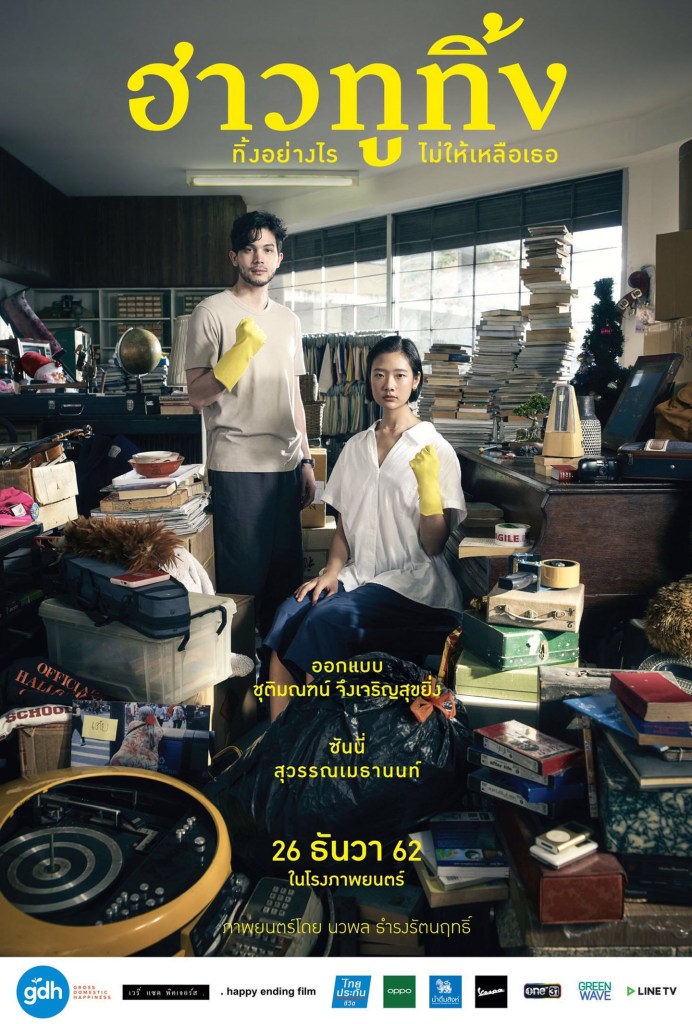
“Some things won’t go away just because you pretend to forget all about it” the heroine of Happy Old Year (ฮาวทูทิ้ง..ทิ้งอย่างไรไม่ให้เหลือเธอ) is reminded by an exasperated friend preparing to forgive her once again for another thoughtless hurt. According to Jean (Chutimon Chuengcharoensukying), “Minimalism is like…a Buddhist philosophy. It’s about letting go”, only her minimalism has been of an emotional kind and in essence the very opposite of letting go. Her approach to life’s many difficulties has been to throw them into a mental black bag, consign them to a black hole of memory, and then simply walk away, but there’s only so much space for delayed trauma and one day you’ll have to start opening some of those bags so that you can finally let go for real. 

20-something Jean has been living in Sweden for the past few years and has recently returned to Thailand, more or less against her will. For some reason, she seems to have asserted ownership over her family’s home which once housed her father’s musical instrument repair shop. Without bothering to ask her mother (Apasiri Nitibhon) or brother, Jean has decided to radically redesign the property’s ground floor into an office space, sending her remaining family members upstairs. Talking things over with her old friend Pink (Padcha Kitchaicharoen) who seems to be involved in construction, she wants to get the work started shortly after New Year not least because the new job she’s just been offered wants to make an office visit the following month. They’ve got a scant few weeks to clear 30 years’ worth of clutter so the builders can do their thing. 

Jean’s plan is basically to sweep everything into bin bags and dispose of them without giving it too much thought. Coming round to the idea, her brother Jay (Thirawat Ngosawang) starts watching Marie Kondo videos to get into the mood, but “complains” that everything he touches sparks joy. He can’t bring himself to part with the myriad “tacky” souvenirs he’s amassed over a lifetime because it’s the thought that counts and throwing them out is like throwing away kindness. According to Jean, “being emotional only brings trouble”, though she is perhaps a little troubled bagging up an oversize teddy gifted by a friend at graduation with a card that reads “take care of me”. She gets her comeuppance when Pink notices a CD she once gave her with a message inside lying on top of a to go pile and is understandably hurt. To Jean it’s just a meaningless object. No one listens to CDs anymore, but to Pink it doesn’t matter that it was gift from years ago, throwing out the CD is like erasing a moment in time, negating the importance of their teenage friendship. 

Pink’s reaction is Jean’s first clue that her wholesale bag and toss philosophy might be problematic. When she finds a scarf she’d knitted for Jay in his to go pile, she gets a taste of her own medicine. Reassessing her possessions, she realises she has more than a few items technically intended for other people that she has selfishly never passed on. Inspired by Pink and in a bid to find some kind of closure, she decides the best thing is to start returning the “borrowed” items to their rightful owners, but quickly discovers that not everyone is thrilled to have the past suddenly presented to them in the form of a random object. An attempt to return a double bass she was supposed to get her dad to repair goes very badly indeed, to the extent that Jean must simply have forgotten or just not realised how badly she had injured her friend. 

Emotionally immature, Jean has an almost childlike view of interpersonal relations, firmly believing that just saying sorry will make everything alright again (even you don’t really mean it). Her most difficult task is returning a camera and unused rolls of film to the high school boyfriend (Sunny Suwanmethanont) she dumped by ghosting after going to Sweden. Too cowardly to go in person, she tries mailing it, but when the parcel comes back return to sender she knows she has to try face to face. Aim listens to her heartfelt confession and seemingly forgives her, inviting her inside for tea with his new girlfriend Mi (Arisara Buaprang), but what Jean really wanted was a blazing row so she could expiate her guilt. 

Later, a slightly less magnanimous Aim points out that Jean’s quest to prove that she wasn’t selfish person is actually incredibly selfish. What she’s been doing, in essence, is dumping all of her emotional baggage on her friends and then walking away leaving them to deal with it on their own. The apology she made was for herself, not him. If she really cared, she’d have found a way to carry her guilt without burdening others. 

Nevertheless, some objects do have presence. “It seemed like an ordinary photo and now it’s priceless” Aim remarks on helping to find one of Jean’s errant objects, the first photo of a couple of high school sweethearts now about to get married. Another photo calls up memories of a supposedly happier time in Jean’s childhood but it’s a memory she can’t bear to keep or delete. While her mother doggedly clings to her father’s piano despite the fact that no one can play it, Jean wants to bulldoze everything, erase their history as a family by replacing their cluttered home with crisp white walls and shiny steel. Only too late may she realise what she’s losing, that with every discarded object a piece of her goes too and soon there may be nothing left at all. Turns out that trying to deal with your abandonment issues by abandoning things isn’t as sound a strategy as it might sound. “This is the era of cloud storage”, Jean points out, but in many ways it’s our orphaned files who make us who we are. Minimalism might be about letting go, but you need to remember to keep hold of yourself in the knowledge that memories don’t belong to you alone but connect you to the world through a thousand shared kindnesses and tiny hurts trapped inside the most banal of objects.


Currently available to stream on Netflix in the UK (and possibly other territories)

International trailer (English subtitles)