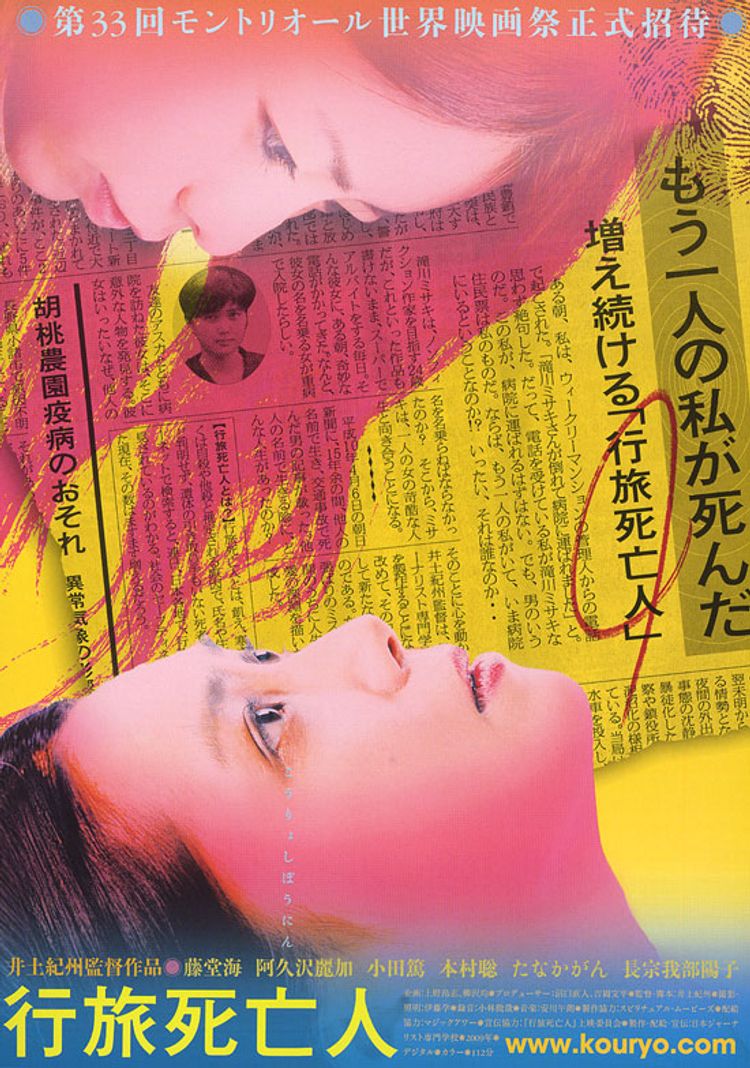
The Faceless Dead (行旅死亡人, Kishu Izuchi, 2009)

If you suddenly got a phone call one day to tell you that someone with your name living at your address had been taken ill, how would you feel? Sponsored by the Japan Journalist College, Kishu Izuchi’s mystery drama The Faceless Dead (行旅死亡人, Koryo Shibonin) sends its aspiring investigative reporter through a murky world of crime and identity theft to discover why someone would need to discard their name and live a life of constant inconvenience in an ever modernising society. 

As she explains in her opening voiceover, Misaki’s dream is to become an investigative reporter working on important social issues exposing scandals such as contaminated blood supplies, mislabelled food, and people trafficking but has found little interest from publishers when pitching her ideas. Currently she regards herself as a “job-hopper” working part-time at a local supermarket which has recently been taken over by a larger conglomerate intent on introducing a new creepily cult-like corporate mentality. With her lease about to expire, Misaki is feeling desperate only to receive a weird phone call from another apartment building informing her that “Misaki Takigawa” has been taken ill and is currently in hospital. Obviously this comes as quite a surprise to Misaki as she tries to explain she is Misaki Takigawa and she feels fine to the dumbfounded man on the phone. On venturing to the hospital to find out what’s going on she discovers that the person using her identity to rent a flat is a woman she worked with at a publishing company some years ago, Yasuko. 

Misaki can’t figure out why or how Yasuko would be using her name and documentation but is both curious and feeling a sense of obligation to find out not least because Yasuko also had a bank book with a substantial amount of money in it that’s in her name. Her quest leads her on a meandering path discovering that it obviously wasn’t the first time the woman she knew as Yasuko who had always seemed kind and honest had been living under an assumed name even though it’s something quite difficult and inconvenient to do in contemporary Japan because it makes it all but impossible to access medical care, rent an apartment, or even get a mobile phone all of which require verified documentation. Having access to Misaki’s employment record presumably enabled her to get what she needed to sign a lease and open a bank account in her name and perhaps explains one reason why she elected not to get treatment when a routine workplace checkup highlighted possible medical concerns, the other reason being a sense of guilt which also explains why she chose to live in austerity saving all her money and later instructing Misaki to send it to an older couple living in a remote country village. 

More and more, Misaki is forced to admit that she really didn’t know Yasuko at all even if she felt indebted towards her for having taken her under her wing at her first job, or perhaps that she did in a sense know “Yasuko”, the persona she had adopted at the time, but not the woman underneath it. Apparently based on a real case, Misaki’s quest for the truth takes a rather dark turn that eventually intersects with the weird company that has taken over her supermarket intent on turning all its workers into soulless drones who live only to serve, the boss ominously instructing his subordinate to inject their new philosophy directly into the arms of the unenthusiastic shop staff after failing to achieve their desired sales goals. 

Maybe you could say it was all done for love and Yasuko is simply a hopeless romantic willing to sacrifice her identity but not her life in order reclaim past happiness but even if every life has a price as she reflects in a moment of desperation you can’t simply buy someone else’s no matter how much you’ve lost or suffered in the one you’ve been given. Through her quest to ascertain Yasuko’s true identity along with the original one, Misaki is forced to reflect on and reconsider her relationships with others as well as her own identity while hoping to prove her journalistic skills investigating this very strange and ultimately sad case as borne out by the post-credits sequence which finds her, perhaps strangely, still working at the supermarket trying to organise her life goals around her financial responsibilities in an intransigent society. 


Original trailer (no subtitles)
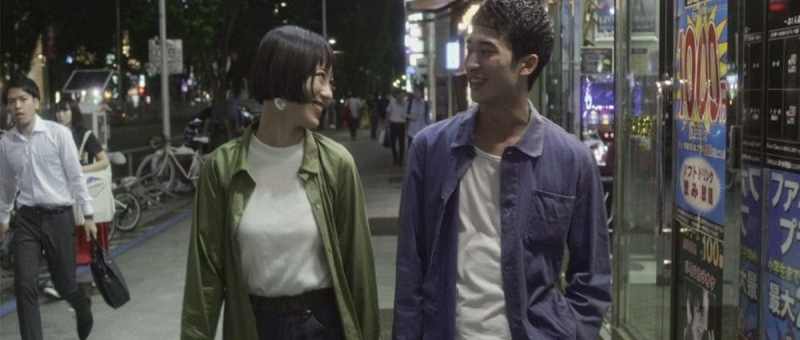
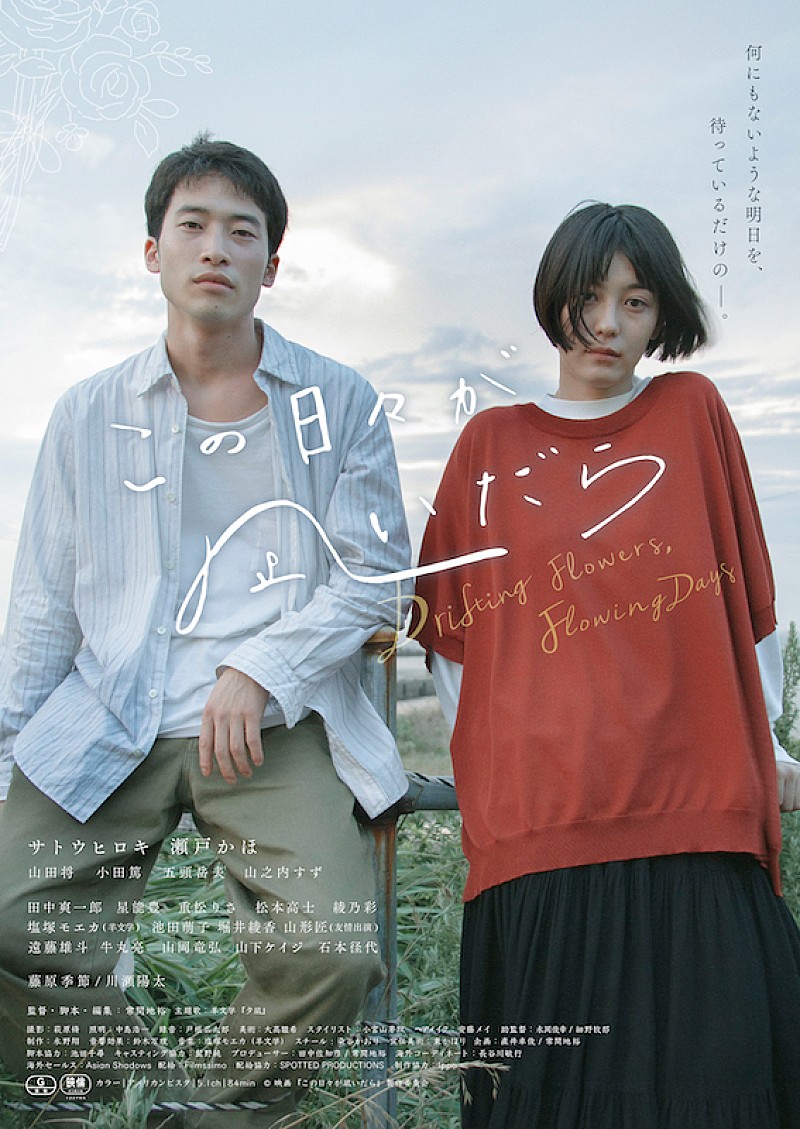
Drifting Flowers, Flowing Days (この日々が凪いだら, Yutaka Tsunemachi, 2023)

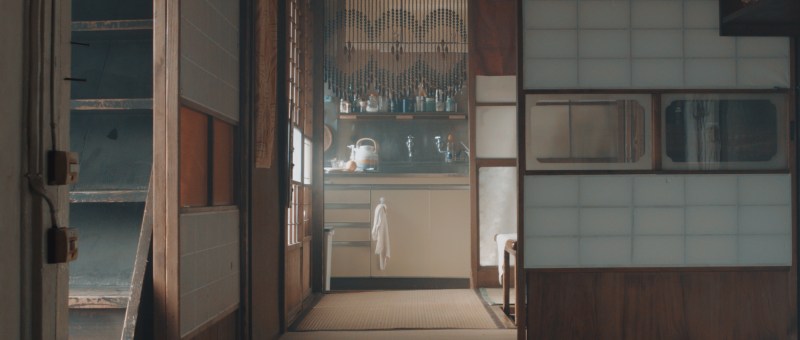
Life goes on as usual, until it doesn’t. The couple at the centre of Yutaka Tsunemachi’s debut feature Drifting Flowers, Flowing Days (この日々が凪いだら, Kono Hibi Ga Naidara), are about to hit the crisis of youth in which they begin to think seriously about their futures and fear that their lives can no longer continue simply as they were but also struggle to find direction while torn between what society views as a successful life and their own desires.

The crunch point comes when Hiroto (Hiroki Sato), a construction worker, and Futaba (Kaho Seto), who works in a florist’s, learn that their rundown apartment block is going to be demolished and they have six months to find somewhere else to live. While Futaba idly looks at wedding rings, she isn’t really sure how Hiroto views their relationship or if he’s even assuming they’ll finding somewhere new together. The financial strain of an unexpected move also has her wondering if she should give up her job in the florist’s, which she enjoys due to her love of flowers, and start looking for a regular company job but an attempt to talk about it with Hiroto only results in petulance born of male pride as he takes it as her complaining he doesn’t earn enough with his job as a casual labourer. 

Another source of friction is that Hiroto seems reluctant to meet Futaba’s family while refusing to introduce her to his hinting at longstanding childhood trauma stemming from a legacy of domestic abuse and a father who lost himself in drink. Even so, he’s drawn to an older man at work, Haruo, who soldiers on despite his decreasing physical capability. When he is unceremoniously fired, the Haruo takes his own life having lost his both his means of supporting himself and his sense of purpose. Haruo might remind him of father though Hiroto feels somewhat guilty that he didn’t do very much to help while he was alive and resentful towards his heartless boss and colleagues who did nothing more than make fun of him. 

This idea of people being disposable tools of corporate entities is further born out by the experiences of his hometown friend, Daigo (Masashi Yamada), who is feeling burned out by his dream job in the city largely thanks to a bullying boss and overbearing work culture. A friend who experienced something similar tells him she just quit her job and feels much better so if he doesn’t feel appreciated he should leave, but it’s not really that simple. Not only does he need a steady income to survive but there’s a degree of shame and trepidation in not following the conventional path, the same shame and trepidation that has Futaba worrying she’s being irresponsible in following her dream of opening a florist’s of her own rather than using her degree to get a better paid job and start saving for the next phase of adulthood while still uncertain if Hiroto is going to want to get married and settle down. 

Experiencing another crisis that forces him to confront his childhood trauma, Hiroto sighs that his future is shrouded in darkness and he wishes that it was all set out for him an ironic inversion of the crisis experienced by others his age that they resent being railroaded into a life of conventional success that in fact does not make them happy. In any case, he emerges with a little more clarity about the kind of future he might want no longer so frightened of commitment or suspicious of familial bonds. What the youngsters experience is a perhaps premature end to their youth symbolised by the literal tearing down of their world in the soon to be demolished apartment block that forces them out of their inertia and onto a path towards a more settled adulthood. But equally that doesn’t necessarily mean that they have to abandon their dreams or live up to an ideal of conventional success if it’s not what they want but can begin to find other futures for themselves outside of the mainstream that are valid and satisfying. Tsunemachi follows them with a hazy detachment but captures something of the anxieties of contemporary youth still struggling to find accommodation with demands of living in a judgmental and uncertain society. 


Drifting Flowers, Flowing Days screened as part of the 18th Season of Asian Pop-Up Cinema.

Original trailer (English subtitles)

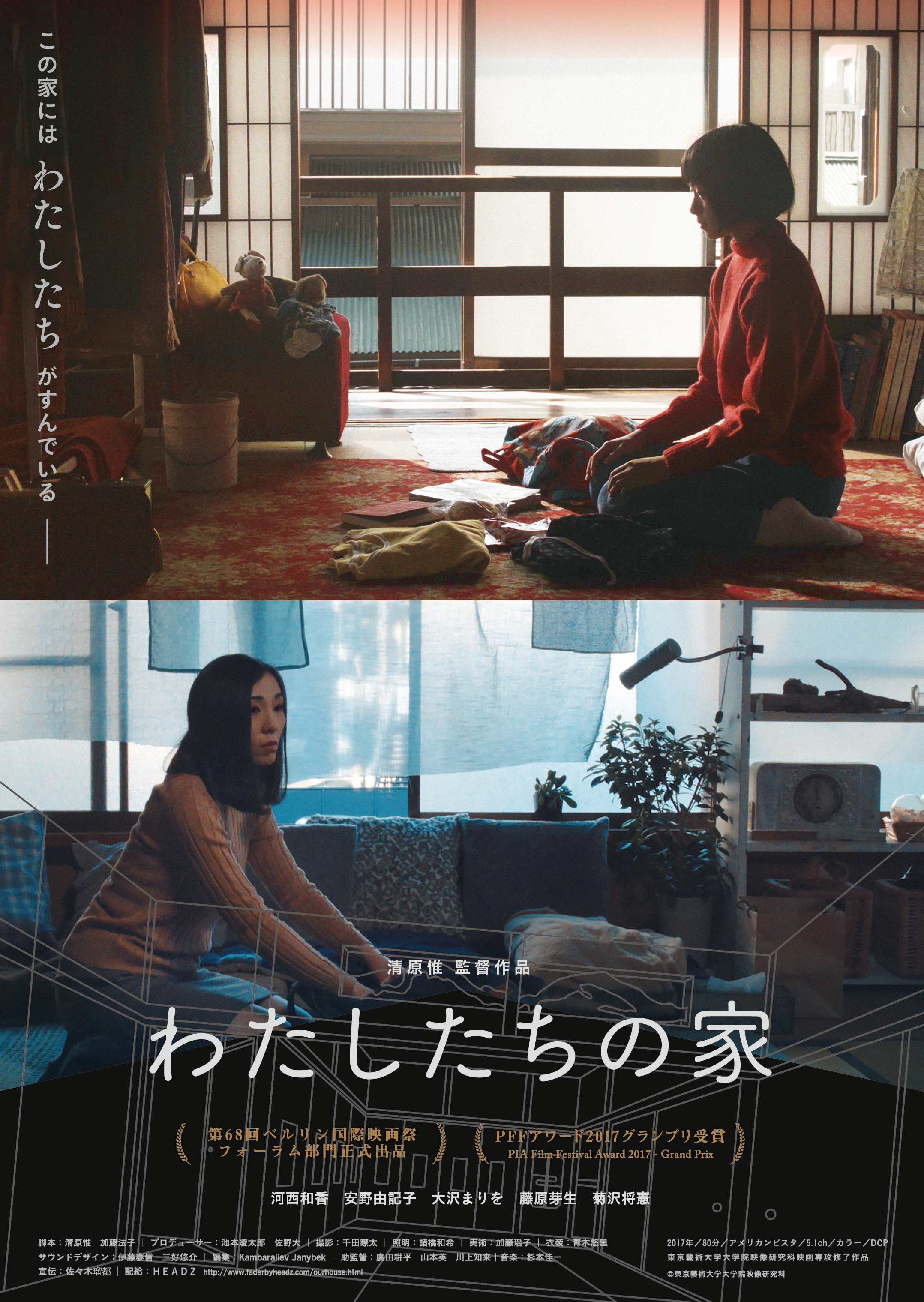
Our House (わたしたちの家, Yui Kiyohara, 2017)

our house posterIs the definition of “space” defined by absence as much as presence? Do we carve out pieces of the world to inhabit, or simply shift into an idea of place which we construct entirely around ourselves? Yui Kiyohara’s feature debut Our House (わたしたちの家, Watashitachi no Ie), completed as part of her graduation project for a masters at Tokyo University of the Arts, hints at the eeriness of a shared existential continuum as four women bridge inter-dimensional connections while living in the “same” two-storey house in Yokohama.

We begin with 14-year-old Seri (Nodoka Kawanishi) dancing cheerfully with a few of her friends presumably on a sleepover wearing incongruously old-fashioned nightgowns like the heroines of a gothic boarding school drama. The fun stops however when Seri thinks she hears a funny noise, half convinced the house is haunted. Her friends tell her it’s all in her mind, but something seems odd and she can’t seem to shake the sense of presence in the house.

Part of that might be because, though Seri’s father appears to have left long ago, she still dwells on his memory and perhaps feels the echo of him in their family home. It may seem particularly poignant to her right now because her mother, Kiriko (Yukiko Yasuno), has found a new man – Takashi (Toshio Furuya), who drives the local rubbish truck. Kiriko wants to get married again, and Seri, entering adolescence herself and playfully teasing her friend about a possible romance, cannot quite accept that her mum’s moved on.

Changing tack, a young woman wakes up on a ferry with seemingly no memory of how she got there or of her previous life aside from her name, Sana (Mariwo Osawa). Another woman on the boat, Toko (Mei Fujiwara), stops to ask if she’s alright and then offers to let her stay at her place, which happens to be an identical house to the one in which Seri and her mum live, until she remembers who she is.

Though Seri’s story has its whimsy, it remains firmly within the realms of the natural while there’s something decidedly odd about the world Toko and Sana inhabit. There is, however, a strange symmetry to their relationships. Both sets of women are keeping things from one another if for slightly different reasons. There are after all secrets which must exist between a teenage girl and her mother, so perhaps Kiriko doesn’t quite discuss her relationship with Takashi with her daughter, and Seri doesn’t talk to her mother about the kinds of things she talks to her friend about, but there are also additional communication difficulties in their shared reluctance to talk about the “ghost” of Seri’s absent father or about Seri’s various anxieties which manifest in her preoccupation with a possible haunting.

With Toko and Sana there is of course the issue of amnesia, but in this case it’s Toko who appears to be keeping secrets in her well concealed paranoia and illicit activities which see her handing over plain envelopes in dingy corridors and asking pointed questions about water pollution. Does she know more about Sana than she lets on, or is Sana perhaps a spy herself faking her amnesia to get close to Toko? In any case, Toko seems to want to keep her around, letting her know she can stay for as long as she wants, but it’s not entirely clear if that’s altogether a good thing or if Toko has more or less kidnapped a friend to keep safely at home. When she recommends drinking from the bottled water in the fridge rather than from the tap, we’re apt to wonder which source it is that might be “polluted”.

In that sense, both environments, hitherto exclusively female spaces, are eventually “polluted” by unexpected male intrusion. The spectre of Seri’s father may be ever present in the home, but it’s Takashi who places a strain on the relationship of mother and daughter, whereas Sana’s coffeeshop buddy Natsuki (Masanori Kikuzawa) sets off Toko’s alarm bells in more ways than one as he simultaneously encourages her to doubt her new friend, become jealous on an emotional level, and then anxious on a professional one as she wonders if Natsuki has befriended Sana to get into the house and look for a mysterious “something” she quickly tells him is no longer there. 

“Things embedded in the mind can never be lost” Toko reassures Sana, but also affirms that “nobody can prove who they are”, which might be true but doesn’t do much to help her identity-shorn friend. Natsuki too, claiming that Sana resembles someone he used to know, describes his old acquaintance as if she were “filled with a light that can’t be seen” perhaps alluding to the hidden depths he could only be aware existed within her but was never permitted to see. Toko says she lives the way she does so that she “won’t be defeated by gravity” but offers no reply when asked if she knows of anyone who has ever successfully defied it.

What we’re left with, is two mutually dependent realities though we’ve no way of knowing if each is located in the same temporal space or if one is past and another future. There’s a curious timelessness to Seri’s innocent world of birthday parties and walking on the beach with a friend, whereas Toko’s odd attire and slightly robotic manner of speaking hint towards a kind of retro futurism. The space, it seems, remains the same. Seri’s aunt, looking around, notices cracks in the walls but admires the house’s resilience prompting Kiriko to describe it as “still healthy”, as if it were a living entity which envelops them rather than a space they shape themselves. Yet the space is what connects them, one location existing at an intersection between two worlds. Events mirror each other, actions begin to have effect on each side though unknowingly. The curious symmetry might go someway to explaining life’s uncanniness, the sense of echoing we all feel on entering a dark and empty room, but it also provides a mechanism for harmony as items find themselves transferred to the place in which they are most needed. The space defines itself, but then perhaps it really is all “our house” – a shared universe in which we remain aware of each other but painfully unable to connect.


Available to stream via Mubi (UK) until Sept. 27.

Original trailer (English subtitles)

Dual City (デュアル・シティ, Yokna Hasegawa, 2015)

dual cityCyberpunk and Japan are a match made in heaven though, it has to be said, it’s often been much more an inherited influence in international pop culture than something which has originated directly in Japan. Yokna Hasegawa’s Dual City (デュアル・シティ) puts this to rights a little with a politically infused tale of Japan in 2034 – a nation divided and engaged in a wider information war with the little guy at the mercy of evil corporate giants.

The year is 2034, following a civil war Japan has been divided in two with a north/south border located at the feet of Mount Fuji. Our protagonist, Yoriko, is a nurse and mother working in the North sector which is definitely thought of as the least advantageous place to be. When her hospital is raided by guerrilla soldiers, Yoriko finds herself in the relatively lucky position of last survivor but is then charged with assisting this “resistance movement” by taking over from the soon to be dead insurgent, Gou, and completing his mission of carting a mysterious suitcase across the border.

Once in the south, we’re introduced to the rest of the band including the dynamic Ayumi who can’t seem to forgive Yoriko for the loss of Gou. The gang’s ultimate goal is to expose the shady Nephe corporation who, aside from their business interests of arms dealing and android production, have begun building a virtual world known as “information life” which is constructed through harvesting the memories of Northern corpses. Yoriko lost her daughter to terrorist aggression and the idea that she might be able to see her again, albeit in virtual form, is one which she is unable to pass up.

Adding to the intrigue is the love story between a resistance member and an android which may or may not come to be a liability and the hacker group’s involvement with the steady stream of illegal migrants somehow making the dangerous cross border journey into the relative safe haven of the South. Many of these people have injuries or ailments that would be best served by a doctor, but having no proper papers they can’t risk a hospital and so the care that Yoriko can provide becomes another useful asset for the group.

Drawing parallels with other “divided” nations, Dual City looks at a multitude of contemporary social and philosophical problems from dealing with refugees fleeing an oppressive regime to the power of multinational corporations and the eternal quality of a mother’s love. Nephe (represented in a futuristic ad campaign starring Third Window Films’ Adam Torel as its heinous CEO) commits the very worst kind of identity theft as it steals and repurposes the very soul of those that it has killed by sucking out their memories and using them to create artificial counterparts in their online world. Are these ghosts in the machine any less “real” than their flesh counterparts were? A standard question of the cyberpunk world and one which still has no clear answer, but Dual City continues to explore it in a mature and nuanced manner.

Though an undoubtedly low budget, indie movie Dual City makes a decent job of creating its realistically grimy cyberpunk world with its interactive video screens and invisible techno warfare. Special effects, though sparse, are effectively achieved and never call attention to themselves. Dual City is actually the second part of a projected trilogy with the overarching title of Japan Year Zero (following the 2014 short Illuminations) but is perfectly intelligible even without knowledge of the previous film and manages to create a sense of a bleak, oppressive society which travels along with Yoriko from the totalitarian North to the supposedly freer South. Eventually Yoriko’s love for her daughter transforms and becomes something larger, an eternal and infinite love for all mankind that represents our last, best hope for peace. It only remains to be seen if the troubled society of 2034 can can learn to follow a similar road.


Reviewed as part of the SCI-FI London Film Festival 2016.

On a side note, Illuminations seems to be the film Hoshi Ishida was talking about when I interviewed him (for UK Anime Network) a couple of years ago. Small world! I would like to see the movie but it doesn’t seem to be available anywhere, maybe one day. Here is a trailer for Illuminations:

You can also keep up with director Yonka Hasegawa’s work via her website and twitter feed!