Trespassers (侵入者たちの晩餐, Itaru Mizuno, 2024)

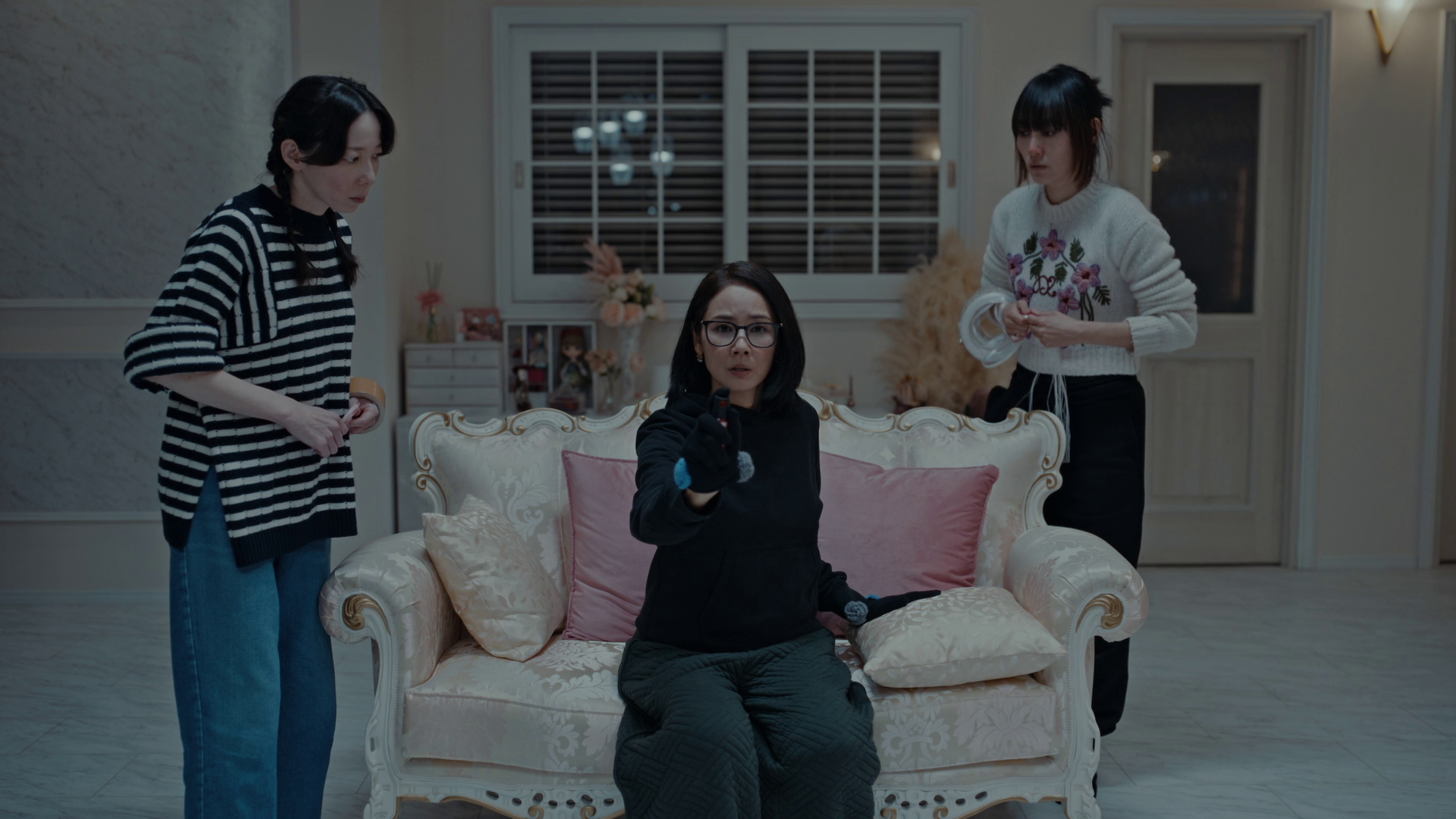
Trespassing. Somehow, it doesn’t sound that serious, does it? You’re always hearing about people being accused of trespassing simply for walking along a footway that someone believes to be on their land. It just means you were somewhere you had no right to be. Not doing anything, just being there. That’s exactly how it is for the heroines of Trespassers (侵入者たちの晩餐, Shinnyuushatachi no Bansan) who basically enter a home without permission, nosy around, then feel guilty and decide to clean the place to make up for it but accidentally find a burglar hiding in a corner! Could happen to anyone, really. 

Of course, there’s a little bit more to it than that. Middle-aged divorcees Akiko (Rinko Kikuchi) and Megumi (Kami Hiraiwa) work for the same exploitative housekeeping company which pays them a pittance while the boss, Natsumi (Mai Shiraishi), a former pin-up model turned influencer and entrepreneur, lives the high life. Though she claims to be an ally to working mothers, she also refuses to hire them because they have additional responsibilities that make it difficult for them to stick to her schedule, apparently. Megumi has heard a rumour that Natsumi is really into tax evasion and is hiding a large amount of undeclared money in her luxury flat, which is a rental in the company’s name that she also writes off. Of course, if someone were to steal that money, Natsumi could hardly go to the cops because then she’d have to admit she’d been cheating on her taxes. Why she wouldn’t just put it in a secret offshore account like everyone else is anyone’s guess, but everyone has their peculiarities and perhaps she just likes to have it handy. 

On entering with a cloned key and joined by Megumi’s yoga friend Kanae (Yo Yoshida) who “knows a lot about criminality”, the trio fail to discover the money or any evidence of tax evasion. Rather, Natsumi seems to have several certificates thanking her for donating large amounts of money to various charities which leaves the ladies feeling guilty for doubting her. Akiko had been the most morally conflicted about taking the money and was only persuaded on the condition that they would be giving the majority of it to worthy causes, so they were “helping people” like Robin Hoods rather than just helping themselves like greedy thieves. Megumi meanwhile had been less so and swayed by the rationale that Natsumi was exploiting them twice over by paying them such low wages and then depleting the public purse by thieving the money that should have been paid in taxes. Kanae, just seems to be along for the ride while hoping to open a yoga school with the money, but in a giant and unfortunate coincidence discovers another reason that Natsumi must pay.

Even the burglar, Shigematsu (Sosuke Ikematsu), a failed businessman with massive debts working as a food delivery guy to pay them off, has a sob story, but as the ladies point out it doesn’t really match the righteousness of their tax evasion whistleblowing mission. There is something quite wholesome about how bad they all are at “crime”, and how good Natsumi secretly is at it. It doesn’t even occur to the ladies that Natsumi’s willingness to forgive them is possibly because they’re right and she doesn’t want the police poking round because they might find something she doesn’t want them to. Meanwhile, it’s a little sad that each of them lament it’s been a while since they ate at home with other people rather than at restaurants and there’s something quite nice about their collective decision to make it a tradition though at one of their own homes rather than that of a suspected tax evader.

Indeed, as Akiko says, the real prize was the friends they made along the way. In many ways, they made everything better. Natsumi gets her comeuppance, they get improved working conditions, revenge, friendship and female solidarity too. What they found in Natsumi’s apartment was a family, though sadly they did not discover her hidden stash of hoarded gold. Bakarhythm’s typically witty script addresses a series of societal problems in a lighthearted way from the difficulties faced by middle-aged women and divorcees trapped in low-paying jobs, to hypocritical and exploitative CEOs peddling positive messages of success and empowerment but actually ripping off an entire society while laughing all the way to the bank. Maybe the ladies weren’t the ones trespassing after all when Natsumi too was where somewhere she had no right be.


Wedding High (ウェディング・ハイ, Akiko Ohku, 2022)

“Today is the best day of our lives” a couple exclaim seconds before taking their marital vows, but if you think about it, isn’t that just a way of saying that it’s all downhill from here? Even the determined wedding planner at the centre of Akiko Ohku’s ensemble comedy Wedding High (ウェディング・ハイ) admits that a good wedding day doesn’t amount to a good marriage and it’s certainly true that almost everyone in attendance has rather overhyped the occasion insisting that it’s a grand turning point in their lives even if they aren’t the ones swearing eternal devotion at the altar. 

Groom Akihito (Tomoya Nakamura) didn’t even really want a wedding, they are after all expensive and time consuming, but is paranoid that not having one, or having one that’s not quite right, will eventually poison his relationship with his soon-to-be wife Haruka (Nagisa Sekimizu). For him the day has to go well, or at least Haruka has to feel as if she’s had the best day of her life, or their marriage will get off to a bad start. Meanwhile they’re under pressure from friends and family members trying to decide on a guest list especially considering that key guests are expected to handle entertainment with both sets of fathers and an eccentric uncle keen to get in on the action while it’s also customary to invite one’s boss to give a brief speech at the reception. 

Akihito’s boss Zaitsu (Katsumi Takahashi) doesn’t exactly try to steal the day but does invest it with a surprising degree of personal significance, oddly touched that Akihito has asked him despite his having been disgraced at work because of a sleazy scandal in his personal life. Zaitsu sees the wedding speech as a chance for a comeback, obsessively studying standup comedy determined to deliver a genuinely funny routine that will make everyone laugh and perhaps conclude that he’s not such a bad guy after all. For Akihito’s schoolmate Shinji (Akiyoshi Nakao) the wedding becomes something similar, allowing him to regain his creative mojo after hating himself for being trapped in variety television having dreamed of becoming an arthouse movie director when Akihito tasks him with directing a wedding video to be shown at the reception. Even one of Haruka’s friends from high school dance club launches into a story about how this is their big chance to make up for their final performance being cancelled due to injury by performing it again at Haruka’s wedding.

A subplot sees Haruka’s uni ex (Takanori Iwata) decide this is his big day too, planning to storm the ceremony and win her back. He’s convinced himself they only broke up because he reacted in the wrong way when she mentioned her parents’ wanted to introduce her to a guy for an arranged marriage and thinks she’s sent him a coded message that she’s being pressured into an unwanted union and needs rescuing before it’s too late. Somehow Maho (Ryoko Shinohara) manages to keep everything running smoothly, springing into action when the couple’s big day gets derailed by competitive speech making and pretty much everyone else trying to have their moment, yet as her colleagues remind her it’s the next couple’s big day too and the last thing they want to do is spoil that by trying to save Akihito and Haruka’s wedding from falling into complete chaos. 

Like most Japanese ensemble comedies, the resolution turns on the team pulling together to make everything work out. In this case, Maho’s speed wedding strategy leads to something genuinely beautiful and better than the original plan in allowing the couple’s friends and family who may not have known each other before to present a united front of support that neatly symbolises their union as a couple and makes their special day a little more special than it might have been if everything had gone smoothly. Almost everyone does indeed get something from the big day even if it wasn’t what they originally thought they wanted, seizing the chance for a new beginning or to put the past behind them. Asked to boil her speech down to the bare minimum a high school teacher (Hairi Katagiri) offers the simple advice “be happy” while Maho reflects on her role in the proceedings admitting that a good wedding day doesn’t necessarily mean you’ll have a good marriage but at least you’ll have a few good memories if it all goes wrong somewhere down the line. 


Wedding High screens at Japan Society New York on Nov. 11 as part of The Female Gaze: Women Filmmakers from JAPAN CUTS and Beyond

Original trailer (no subtitles)

Images: © 2022 Wedding High Film Partners

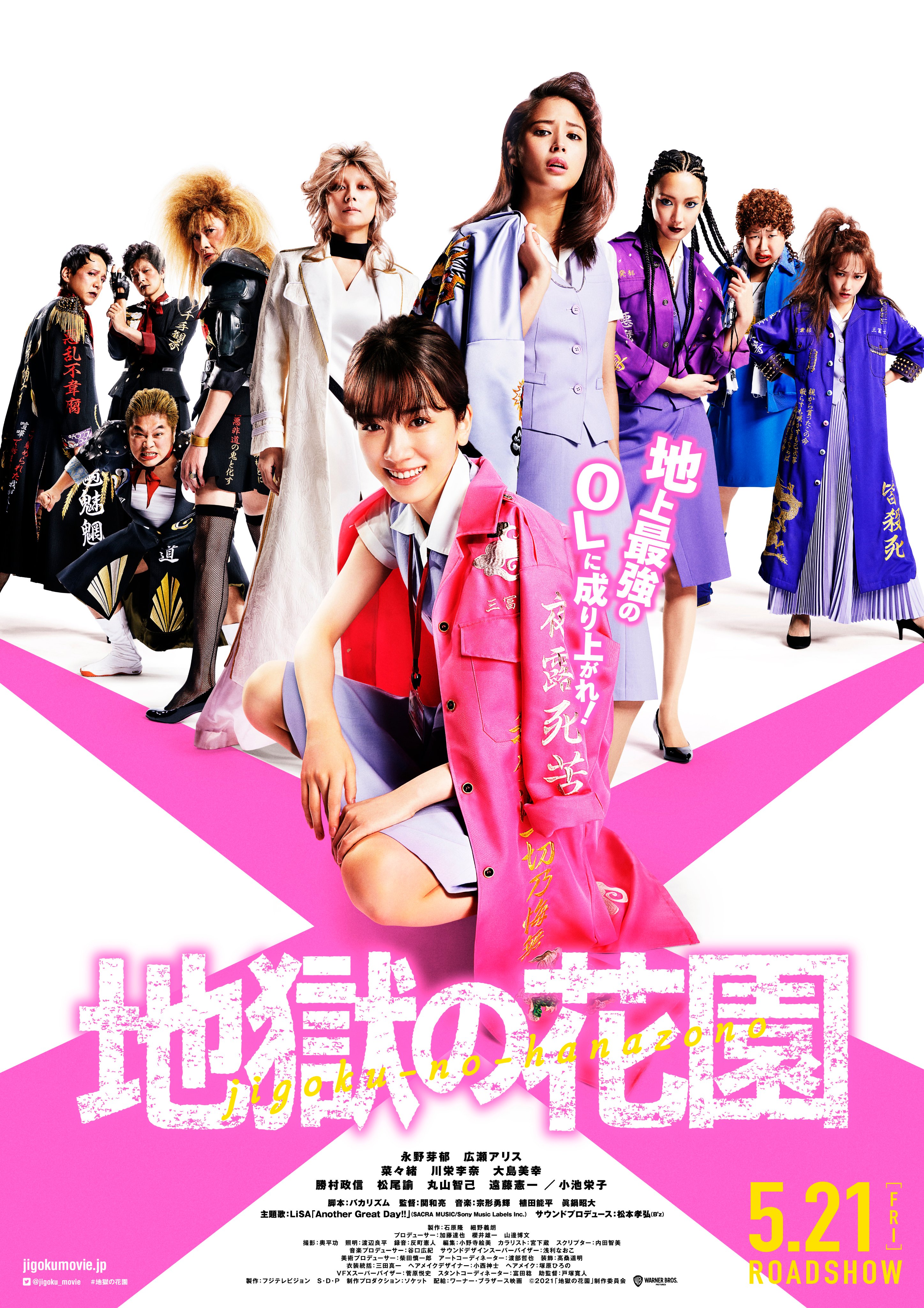
Jigoku-no-Hanazono: Office Royale (地獄の花園, Kazuaki Seki, 2021) [Fantasia 2021]

The OL, or “office lady” occupies a peculiar place in Japanese pop culture if not the society itself. The evolution of the typing pool, the OL exists to one side of office life, treated as domestic staff in the corporate environment and in many ways expected to be invisible. As such, an OL performs stereotypically feminine tasks in the office such as keeping the place clean and their male bosses looked after in addition to handling often dull and pointless admin work. It goes without saying that in general being an OL is a young woman’s job with the expectation that most will either find a way to transition onto a more viable career track or simply leave the world of work behind to marry and become a regular housewife. 

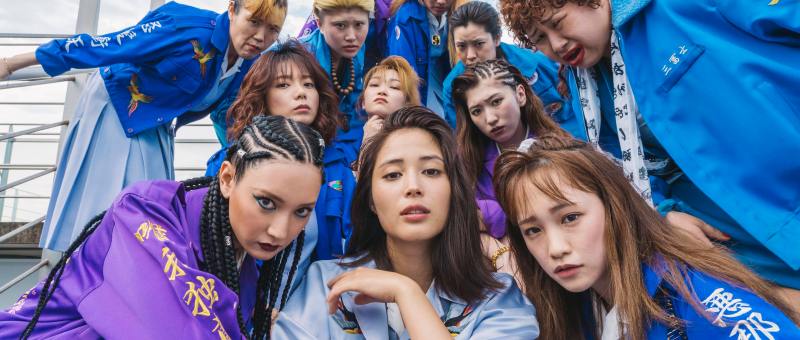
It’s this image of the OL as the embodiment of bland geniality that is at the centre of Kazuaki Seki’s zany comedy Jigoku-no-Hanazono: Office Royale (地獄の花園, Jigoku no Hanazono), a repurposing of “yankee” high school delinquent manga for the world of the office lady scripted by comedian Bakarhythm. A devotee of yankee manga, 26-year-old OL Naoko (Mei Nagano) explains that even office ladies have their warring factions outlining the tripartite fault lines at play in even her small company where the head OLs from Sales, R&D, and Manufacturing constantly vie for hegemony through physical dominance. She however merely observes from the sidelines defiantly living her “ordinary” office lady life. That is until new hire Ran Hojo (Alice Hirose) arrives to upset the precarious workplace power balance. 

Naoko first catches sight of Ran after she challenges some of the OLs from her company as they harass a timid male employee in the street though they don’t become best friends until after Ran spots a salaryman trying to upskirt her at a bus stop and decides to teach him a lesson. Despite being a yankee, it seems that Ran is also trying to live a normal OL life, bonding with Naoko over their shared love of a TV drama, but is not exactly good at the job and regards fighting as her one and only skill. Perhaps speaking to an inner insecurity born of being a woman in a conformist and patriarchal society, each of the women struggle to see themselves as protagonists in their own lives rather than mere supporting players unwittingly both playing the role of the ditzy best friend to the competent hero. 

In one of her many meta quips commenting on the action and how it would play out if she were a character in a yankee manga, Naoko laments her status as the “comic book hero’s boring friend” which is extremely ironic seeing as she is certainly the heroine of this movie given that it’s her voiceover we’re hearing and her POV we generally adopt. Yet Seki sometimes undercuts her by shifting to a rival voiceover offered by Ran herself doubtful of her proper place in the narrative and eventually descending into an existential crisis after an unexpected setback shatters her sense of self. 

Nevertheless, even if as the de facto leader of her company’s OLs Ran advocates for equality insisting there are no bosses and no underlings only women standing together, Office Royale generally embraces rather than attacks societal sexism particularly in its somewhat unexpected conclusion which ends in ironic romance rather than female solidarity. Even so, it’s interesting that the OLs lose interest in delinquency once the hierarchy of fists has been fairly decided, acknowledging the superior skills of a better fighter and thereafter living peacefully rather than continuing the internecine determination to sit at the top of the pyramid which is the hallmark of the high school yankee manga. 

While the final arc strays into some potentially problematic territory with the uncomfortable humour of four male actors playing the top fighters of a rival gang of OLs from another company, Office Royale offers a series of surprisingly well choreographed fight scenes even if eventually descending into manga-esque cartoonish violence while much of the humour stems from Naoko’s adorably nerdy voiceover musing on what would happen next if this were a yankee manga. In the end, however, it’s less a tale of office lady infighting than of a pair of young women coming to a better understanding of themselves even if they do so through the potentially destructive medium of pugilism. 


Jigoku-no-Hanazono: Office Royale streamed as part of this year’s Fantasia International Film Festival

Original trailer (English subtitles)