The BFI’s LGBTQ+ film festival, BFI Flare, has announced the full programme for this year’s edition which runs at the BFI Southbank 15th to 26th March. This year there are a few features from East Asia included in the lineup including four from South Korea.
Cambodia
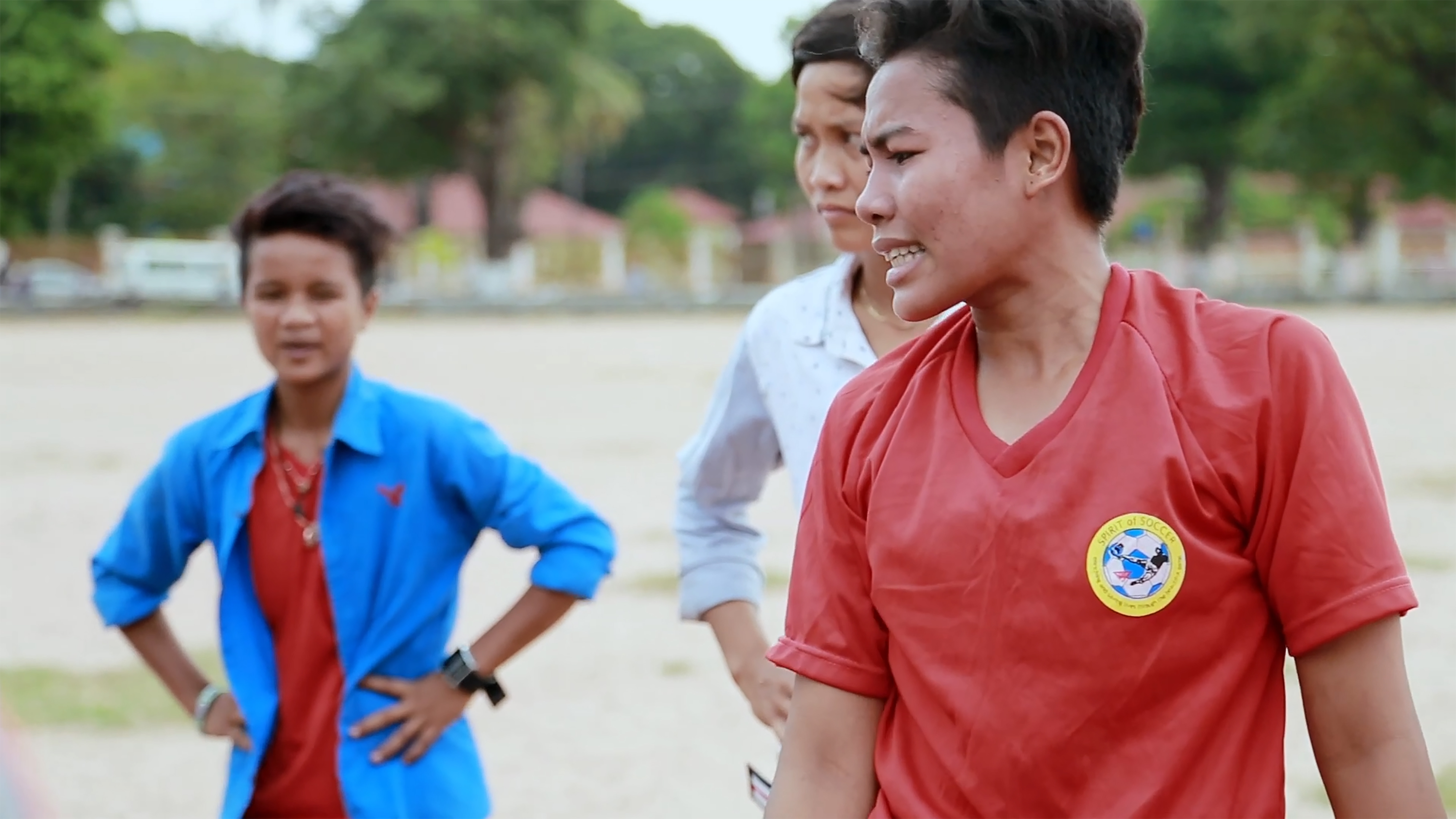
Lotus Sports Club – documentary filmed over five years following a trans man in his 60s who formed a football team for LGBTQ+ youth.
South Korea
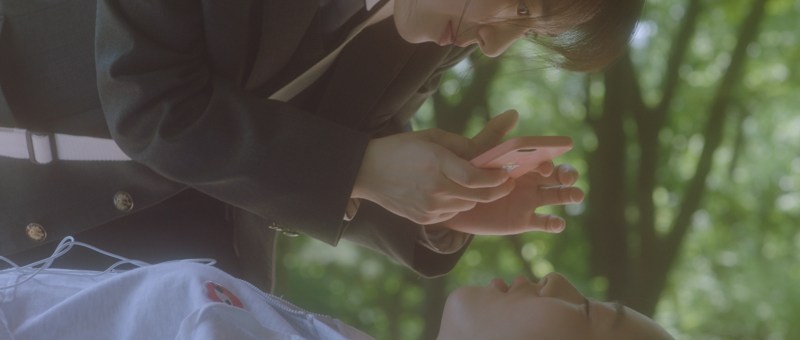
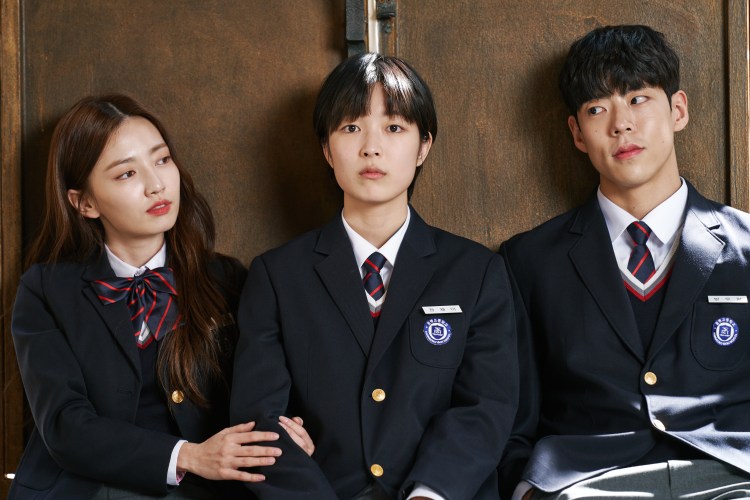
The Dream Songs – etherial drama following two high school friends over the course of a day.
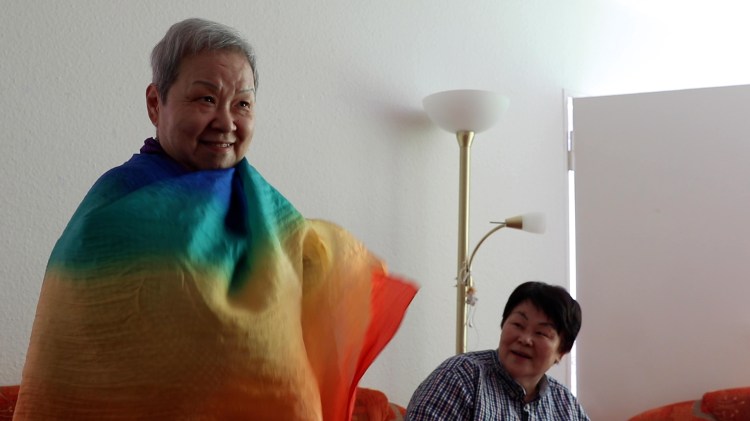
Life Unrehearsed – documentary following two Korean women who met each other at a summer camp in Germany in 1986 and have stayed in the country together ever since.
PEAFOWL – drama following a trans woman who is tasked with performing the memorial dance at her estranged father’s funeral.
XX+XY – teen comedy following an intersex high schooler who finds themselves at the centre of a love triangle.
BFI Flare runs at BFI Southbank 15th to 26th March, 2023. A small number of short films are also available to stream via BFI Player. The full programme can be found on the official website where tickets are already on sale. You can also keep up to date with all the latest news via the festival’s Facebook page, Twitter account, Instagram, and YouTube channels.
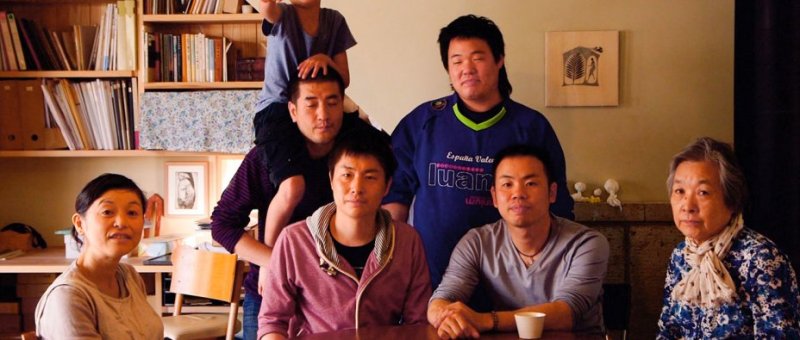
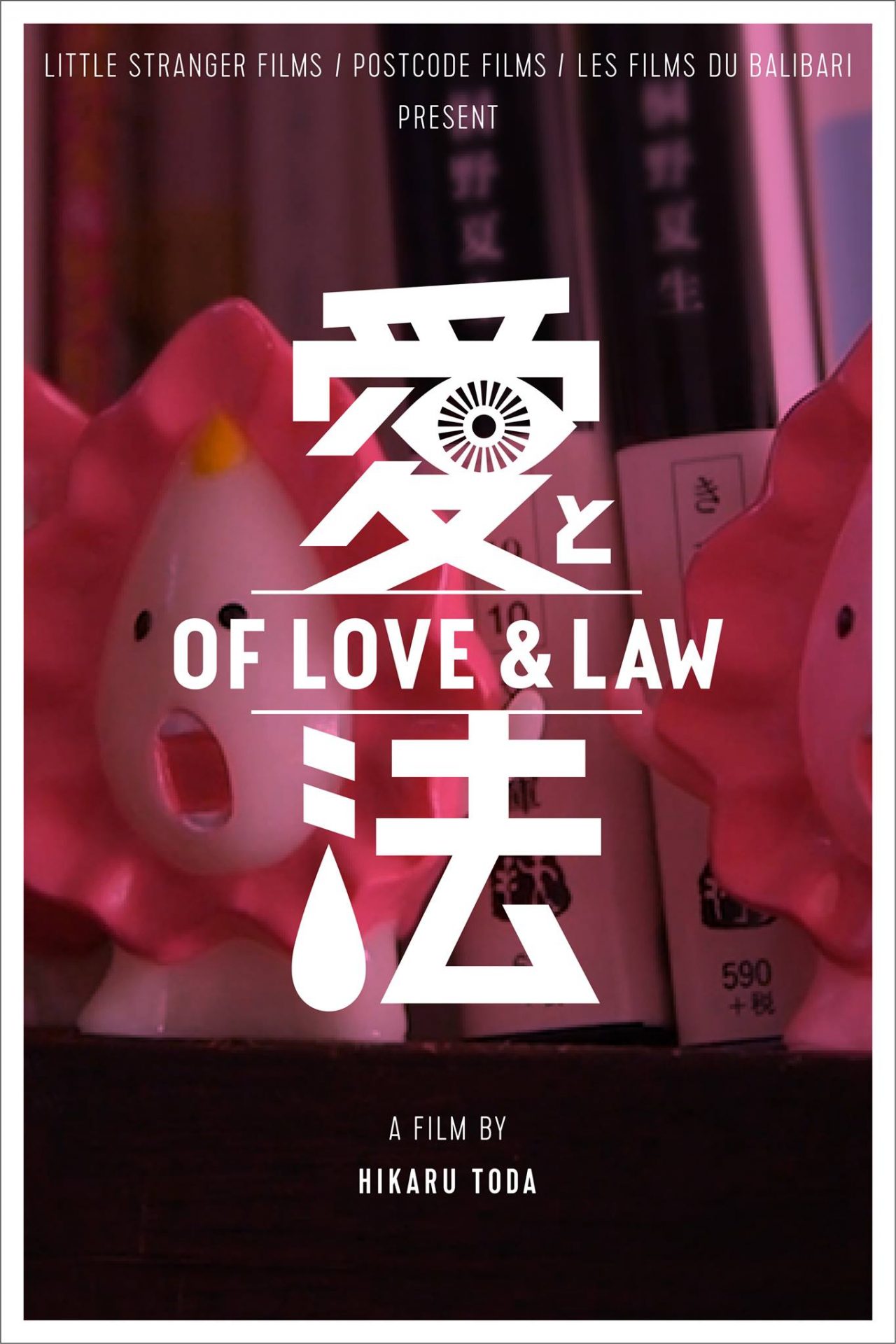
In Japan the nail which sticks out is hammered down. Conformist societies promise mutual support, but all too often only when it suits the collective – those not deemed part of the club are wilfully left to fend for themselves with the dangled promise of readmission if one promises to reform and abide by the rules. We first met the couple at the centre of Hikaru Toda’s Of Love & Law in her previous documentary, Love Hotel, which documented their struggles with discrimination in frequently being turned away by establishments who did not wish to rent a room to two men. A same sex married couple in Japan’s second city of Osaka, Kazu and Fumi run their own law firm and operate under the mission statement of representing those who often find themselves without a voice in a culture which favours silence.
Opening at a local Pride event, the camera attempts to capture some talking heads but no one will bite. Asked for comments, the visitors each refuse to show their faces, revealing that they aren’t fully out, fearing that it might cause problems for them at work, or just embarrassed to go on the record about something so taboo. Though the law practice is not limited to representing LGBT issues, they are clearly a key concern to Fumi and Kazu who spend their “free” time engaging in outreach projects trying to foster a little more education and understanding of sexual minorities. Kazu brings this home when he tells his own coming out story in which his stunned mother exclaimed that she’d never heard of anything like this and therefore could not understand it. The problem wasn’t prejudice, it was ignorance mixed with fear.
Ignorance mixed with fear could equally well describe most of the cases brought against Kazu and Fumi’s clients. The protagonist of the second strand – artist and mangaka Rokudenashiko whose legal troubles even made the foreign press, attributes many of these issues to an inability to “read the air” or aquedately understand the unspoken rules of society and then silently abide by them. The law firm makes a point of defending those who have chosen to fly in the face of social convention, flying a flag for the freedom of choice in a society which often deliberately suppresses it.
The freedom of choice is certainly a key issue for the teacher suing the Osakan school that fired her for refusing to stand for the national anthem. Arguing that standing when one is forced to stand is hardly a declaration of patriotism and fearing the lurch to the right which has made even implicit indifference to the Imperial family a hot button issue, the teacher puts her foot down but finds that few will listen. Similarly, Rokudenashiko finds herself arrested for obscenity regarding her vagina themed artwork while the court undermines its own argument by accidentally proving that her work has socio-political merit.
Yet Rokudenashiko and the teacher have each, in a sense, made a firm decision to challenge the intransigence of their society, hoping to prevent a further decline even if not overly hopeful of improvement. Other clients on the roster include a fair few who are accidentally undocumented through no fault of their own thanks to Japan’s arcane and idiosyncratic legal system which makes it difficult to register births of children born out of wedlock or in difficult family circumstances meaning that youngsters sometimes grow up without the proper papers leading to problems with accessing education, employment, healthcare and welfare provisions. Getting someone a birth certificate who doesn’t currently “exist” can prove a taxing ordeal, especially as government officials often regard children born to “immoral” women as “unworthy” of care or attention.
Getting a call from the mother of a victim, Fumi is shocked when she makes a point of enquiring about the nationality of the perpetrator. He is unsurprised but disappointed in witnessing the various ways one oppressed person (both the victim and plaintiff are from impoverished, single parent backgrounds) can turn their oppression back on others as an odd kind of social revenge. Luckily, however, there are good people everywhere such as the fine young man Fumi and Kazu end up temporarily fostering after his care home is unexpectedly closed down. Kazuma accepts their relationship without a second thought, enjoys learning to cook from Fumi and blends right into Kazu’s extended family who each seem as warm and accepting as the couple themselves. Family is not about a register, it’s having a place to go where they’ll always take you in. Fumi doesn’t trust society because society shirks its responsibilities, but thankfully there are those who know better and continue on in hope tempered with patience.
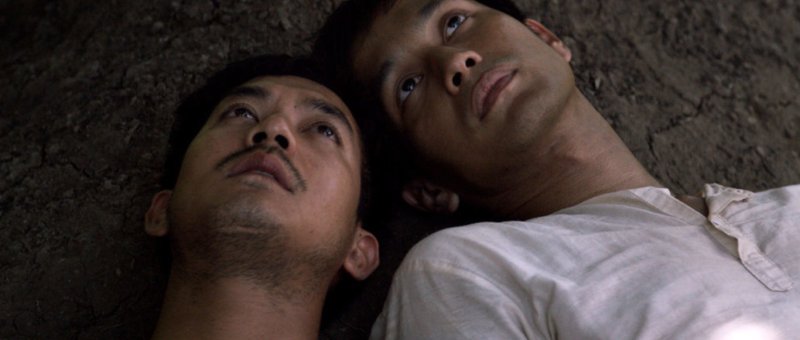
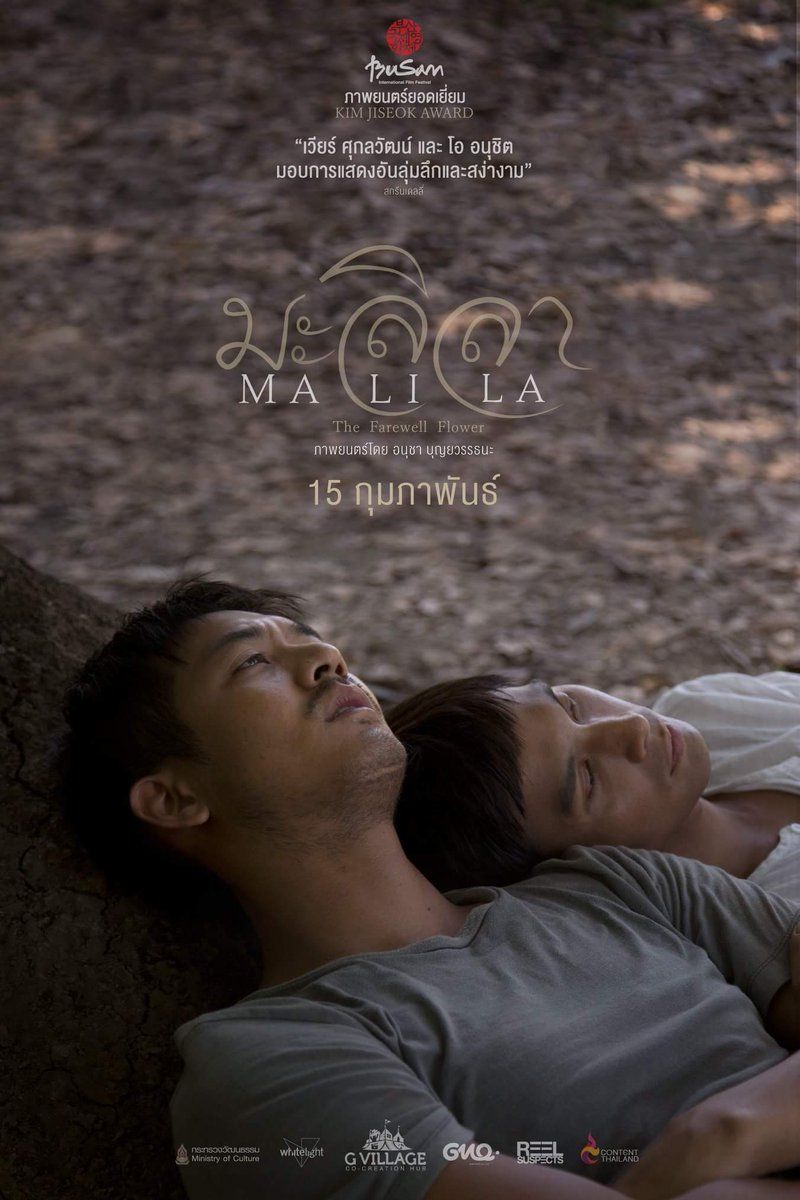
Anucha Boonyawatana’s second feature, Malila: The Farewell Flower (มะลิลา), opens with a quotation from a 19th century poem. The poem laments that even a Baisri painstakingly created to honour the gods will eventually be cast away once it has served its purpose. No longer divine, its soul departed, the ornament is just another thing to be disposed of. Like the beautiful Baisri, two men’s souls will briefly intertwine only for the flowers of their love to wither on the vine, fading away with the great work still incomplete. This incompleteness, the lingering sense of absence and irreconcilable longing, propel the one left behind onto a spiritual journey hoping to discover if the answers to his need lie within or are not to be found at all.
Shane (Sukollawat Kanarot), the owner of a jasmine plantation, has recently begun to rebuild his life following a period of heavy drinking during which his wife left him and his young daughter was killed by a python in the jungle. Reuniting with his former lover, Pich (Anuchit Sapanpong), Shane is distraught to find out that he is terminally ill with lung cancer and has decided to give up on conventional medicine and devote the rest of his life doing the things that make him happy. Pich’s one form of “treatment” is in his constant making and dispatching of “Baisri” – ornaments constructed from leaves and flowers for ceremonial occasions which, painstakingly created, must be sent away on the river after they have fulfilled their purpose.
Jasmine flowers are, as Pich remarks, too weak – they wither before the Baisri is completed. Though the two men are able to rekindle their romance, their time is limited. Shane contemplates becoming a monk in the hope that his good karma can be transferred to Pich but it is not to be. Alone, he sets out on a spiritual journey guided by another monk hoping to encounter the ghosts of himself and of his loves to absolve himself of his guilt and loneliness.
Set against the beautiful Thai landscape, Malila is a tale of fading flowers and eternal regrets. The art of Baisri requires intense focus and dedication in order to repurpose and reorder nature into something essentially manmade but beautiful. Later, during his quest, Shane will be met with a terrifying though no less intense experience when his guide and fellow monk instructs him in the art of corpse meditation. The sight of the body, putrid and infested with hungry maggots busily going about their business, presents a strong contrast with the otherwise idyllic scenery and forces a more literal contemplation of the process of decay as the human form dissolves leaving only memory and a ghost of past emotion in its place.
Ironically, or perhaps not, a Baisri is intended to mark a new beginning – a “farewell” on an onward journey. Shane sets off on a spiritual quest, suffering nobly in the forests with their frequent rainstorms and learning to be in the moment in the company of the comparatively better experienced monk who guides him, a former soldier now on the spiritual path. His search is internal but illuminated by the world around him and his gradually increasing connection with it.
Eventually transcending this world for another, Shane begins to find his answers and finally cleanses himself of his loss and suffering. Mixing lyrical poetry with beautifully photographed naturalism, Anucha Boonyawatana tells a painful tale of love lost and found, hearts broken and repaired, and finally of acceptance both of one’s self and of the transience of all things. Malila: The Farewell Flower is a parting gift to a departing love, filled with sorrow and regret but also with beauty even in decay.
This area has a weird magnetic field, claims one of the central characters in Takuro Nakamura’s West North West (西北西, Seihokusei), it’ll throw you off course. Barriers to love both cultural and psychological present themselves with almost gleeful melancholy in this indie exploration of directionless youth in modern day Tokyo. Three young women wrestle with themselves and each other in a complex cycle of interconnected anxieties as they attempt to carve out their own paths, each somehow aware of the shape their lives should take yet afraid to pursue it. The Tokyo of West North West is one defined by disconnection, loneliness and permanent anxiety but it is not the city which is the enemy of happiness but an internal unwillingness to find release from self imposed imprisonment.
After beginning with the twilight scene of a city in fog, Nakamura cuts to Iranian student Naima (Sahel Rosa) leaving the visa bureau with something on her mind. An attempt to call a friend strikes out when she discovers her with her fellow Chinese students busily chatting away in a language she does not understand. Taking refuge in a coffee shop, Naima spots another similarly depressed woman silently crying at a table in the very back corner.
Striking up a conversation, the two women unexpectedly begin a tentative friendship but Kei (Hanae Kan) has problems of her own. Trapped in a toxic relationship with fashion model Ai (Yuka Yamauchi) whose possessive, jealous, and entirely self-centred behaviour have turned her into a nervous wreck, Kei is acutely preoccupied with her lack of forward motion, feeling as if she’s just been somehow pushed out into the world with no clear idea of what it is she’s supposed to be doing.
Kei and Naima have much more in common than it might at first seem. Culturally displaced, Naima is at odds with her surroundings despite her native level language abilities but she finds a kind of ally in the taciturn Kei when an emotional outburst in the cafe causes commotion with an unpleasant fellow customer who objects either to the “inappropriate” loudness of her phone call or that it’s in another language. Naima is a retiring sort and mortified to have caused a fuss but Kei, coming to her rescue, is bored with accepting other people’s intolerance. Having felt so alone, pushed away from her only other real friend by an impenetrable barrier of culture and language, someone arriving and actively taking her side is an almost miraculous development.
Bonding instantly in their shared melancholy, the two women share a deepening sense of recognition as Naima begins spending more time with Kei, sleeping on her sofa and getting her to look after the pet bird which she refuses to name so that it will hurt less when they are eventually forced to part. Kei’s prejudices and preconceptions are pushed by Naima’s fierce attachment to her religion, but her eventual decision to casually state that she has a girlfriend meets with only mild surprise rather than rejection or moral questioning. Attempting to clarify Kei’s vague reply, Naima asks directly if Kei is a “lesbian” only for her to irritatedly deny the label – it’s just that she only falls in love with women, she says. Naima’s reasoned response that that’s pretty much the definition of “lesbian” leads to Kei quickly exiting the scene in confusion, not wanting to pursue this line of thought any further though it perhaps sends Naima in exactly the opposite direction.
Kei’s intense insecurity regarding her sexuality is one reason she seems to find it so hard to break things off with high maintenance girlfriend Ai despite her obvious unhappiness with the relationship. Ai, a low level fashion model, has a series of intense insecurities of her own though these have less to do with sexuality and more with power and control. Having realised that Kei is not as attached to her as she is to Kei, Ai’s jealous rages have Kei in a permanent state of fear from which she attempts to hide at a local pool only to have a full blown panic attack on receiving an unexpected phone call from her girlfriend.
An awkward hospital waiting room conversation with Ai’s mother explains much of her behaviour as she begins to lay out the various failings of her child and desire for her to give up modelling and live a “normal” life. Ai had not shared the fact that her lover was another woman, leaving her mother to feign politeness even whilst feeling he need to voice her “disgust” that her child had “these kinds of feelings”. Indifferent to Kei’s ongoing discomfort, Ai’s mother has a few home truths for the woman who’s corrupted her daughter, advising her to break up with Ai as soon as possible seeing as the relationship is doomed to failure.
In principle, Ai’s mother might have offended Kei but she has to concede that she has a point. Kei is not happy with Ai, but Ai will not let her go. Ai’s jealousy is both the catalyst and barrier for Kei’s growing feelings for Naima as she seeks a kindred spirit and gentle soul in refuge from Ai’s emotional violence. An awkward dinner party between the two makes plain the degree to which they are ill suited when Ai berates the sullen Kei for a lack of emotional readability ironically missing that Kei needs someone to understand her feelings instinctively – a level of connection on which self-centred Ai is ultimately unwilling to engage.
Ai’s attempt to warn off Naima in a worryingly threatening “stay away from my girl” speech eventually forces her to confront her own feelings and what exactly Kei is to her. Both women are repeatedly asked to provide a definition of their relationship, faltering each time, but Naima’s crisis runs deeper as she’s forced to confront herself on a more profound level. A group job interview provokes an unexpected moment of introspection as she’s cruelly asked what exactly she’s learned during her time in Japan and is thrown into silence before admitting that she does not know. Naima may indeed have learned or perhaps confirmed a few things about herself, but if she has she is still unable to accept them.
Beautifully played by Sahel Rosa, Naima’s isolation is palpable in her pain filled eyes and longing looks as she finds herself captivated by the more certain yet diffident Kei. Hanae Kan’s Kei is equally trapped within herself, essentially kind yet reserved, afraid to break things off with the controlling Ai yet confused by her growing feelings for the increasingly conflicted Naima. Returning to the fog filled cityscape, Nakamura leaves things as he finds them, refusing resolution as each of the central characters compromises themselves in one way or another, settling for something that seems “right” but feels essentially wrong. The melancholy greyness of a wintery sunset descends once again, leaving each of the three women rudderless but with an added burden of self knowledge tinged with regret and sorrow.
Reviewed at BFI Flare 2017.
Original trailer (English subtitles)
If you happen to understand either Japanese or German there’s an interesting video interview with director Takuro Nakamura produced for the Munich Film Festival:


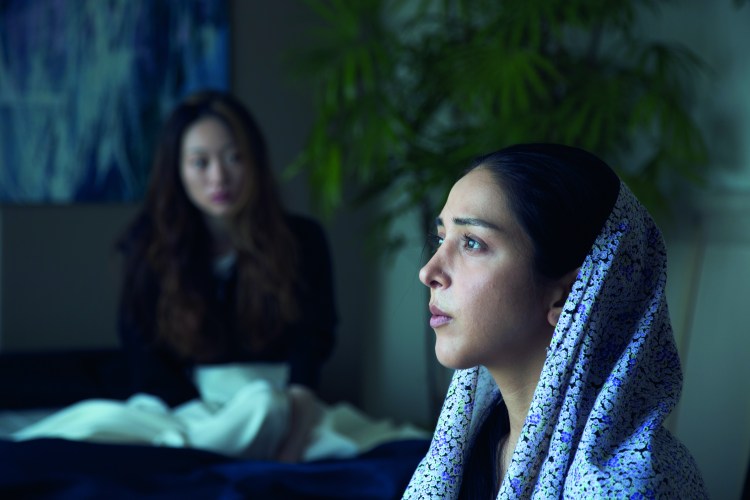 This area has a weird magnetic field, claims one of the central characters in Takuro Nakamura’s West North West (西北西, Seihokusei), it’ll throw you off course. Barriers to love both cultural and psychological present themselves with almost gleeful melancholy in this indie exploration of directionless youth in modern day Tokyo. Three young women wrestle with themselves and each other in a complex cycle of interconnected anxieties as they attempt to carve out their own paths, each somehow aware of the shape their lives should take yet afraid to pursue it. The Tokyo of West North West is one defined by disconnection, loneliness and permanent anxiety but it is not the city which is the enemy of happiness but an internal unwillingness to find release from self imposed imprisonment.
 Windows on Worlds