Leonor Will Never Die (Ang Pagbabalik ng Kwago, Martika Ramirez Escobar, 2022)

A grief-stricken screenwriter resolves to write her way out of self-imposed inertia while trapped in a world of her own creation in Martika Ramirez Escobar’s meta dramedy Leonor Will Never Die (Ang Pagbabalik ng Kwago). Drawing inspiration from the action exploitation films of the 1980s, the film asks some big questions about grief and agency and the role stories play in our lives while celebrating a sense of community in cinema along with the accidental immortality it may grant. 

Once a successful screenwriter of action films, Leonor Reyes (Sheila Francisco) is now an elderly lady who has largely shut herself away following the tragic death of her eldest son, Ronwaldo (Anthony Falcon). Her youngest, Rudie (Bong Cabrera), still lives with her but as she later reveals there is distance between them and a sort of repellant dependency in which each resents the other and longs for freedom while simultaneously afraid to chase it. When Leonor “forgets” to pay her electricity bill and is berated by Rudie, she is handed a newspaper by the ghost of Ronwaldo containing an ad for a screenplay competition and decides to dust off the script she broke off when he died. While taking a cigarette break, she is hit on the head by a flying TV thrown out by the man next-door fed up with his wife’s addiction to soap operas and finds herself falling into the world of the film hoping she can save the hero, also named Ronwaldo (Rocky Salumbides), from his tragic fate. 

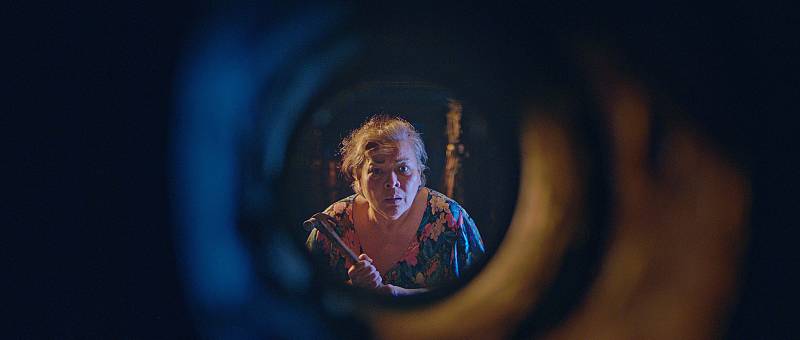
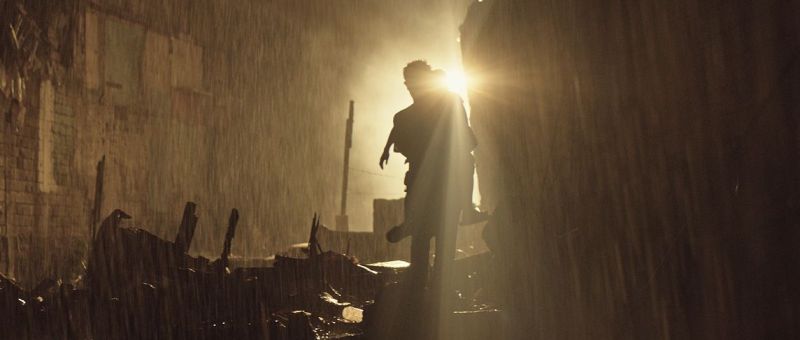
Shifting into a grainy 4:3 with mono aural sound, Escobar perfectly recreates the world of retro action drama but subtly updates it from its Marcos-era backdrop in replacing activists with drug users, her authoritarian thugs carrying out extrajudicial killings for reasons of intimidation. The movie Ronwaldo is set on revenge against a corrupt mayor and his vigilante son who shot his brother and then placed a pistol and a small packet of drugs next to the body, resisting authoritarianism in a way it may not have actually been possible to do so directly in the movies of the past. In any case, Leonor slips into her own screenplay as an awkward omnipotent force writing as she goes but struggling with her own role and agency before picking up a hammer and venturing into danger to rescue the hero and his love interest herself.  

From the other side of the screen, Rudie asks her if she’d be OK with someone else finishing her screenplay which is in a way asking her if she’s alright with her final decisions being made for her. That might be what Leonor is trying to decide for herself by rewriting in real time, searching for the right ending for her life’s story. Rudie had resented his mother, blaming her for keeping him behind when he planned to apply for an overseas work visa to join his boyfriend abroad but she wonders if he isn’t just using her as an excuse while afraid to take the risk. She by turn insists she can manage alone, but is perhaps afraid she can’t which, along with the grief she feels over Ronwaldo’s death, leads her to push him away. 

Leonor’s coma perhaps brings them both clarity that allows them to discover what it is they really want, Rudie finally handing agency back to his mother in telling her do what she has to do in a world of her own creation while she tells both her sons to be sure they write their own lives. The doctor had told Rudie that Leonor was trapped in a world between sleeping and waking and that you can’t wake someone who is not asleep, they will have to find a way to escape by themselves something which in one way or another Leonor perhaps does coming to terms with Ronwaldo’s death and breaking free of her grief through recapturing her creative spirit if writing a poetic end for herself. Then again as an authorial voice breaks through, life is never as simple as narrative and we’re rarely given the opportunity to edit our own stories or decide the way in which they end, perhaps Leonor isn’t either but even so passes into a world of joy and song in which there are no real endings only a great expanse of cinema. Charmingly surreal and filled with good humour, Leonor Will Never Die is at once the story of an old woman rediscovering herself while letting go of her grief and a celebration of escapist pleasures as paths towards self actualisation. 


Leonor Will Never Die screens in Amsterdam on 30th October as part of this year’s Imagine Fantastic Film Festival.

US release trailer (English subtitles)
Smaller and Smaller Circles (Raya Martin, 2017)

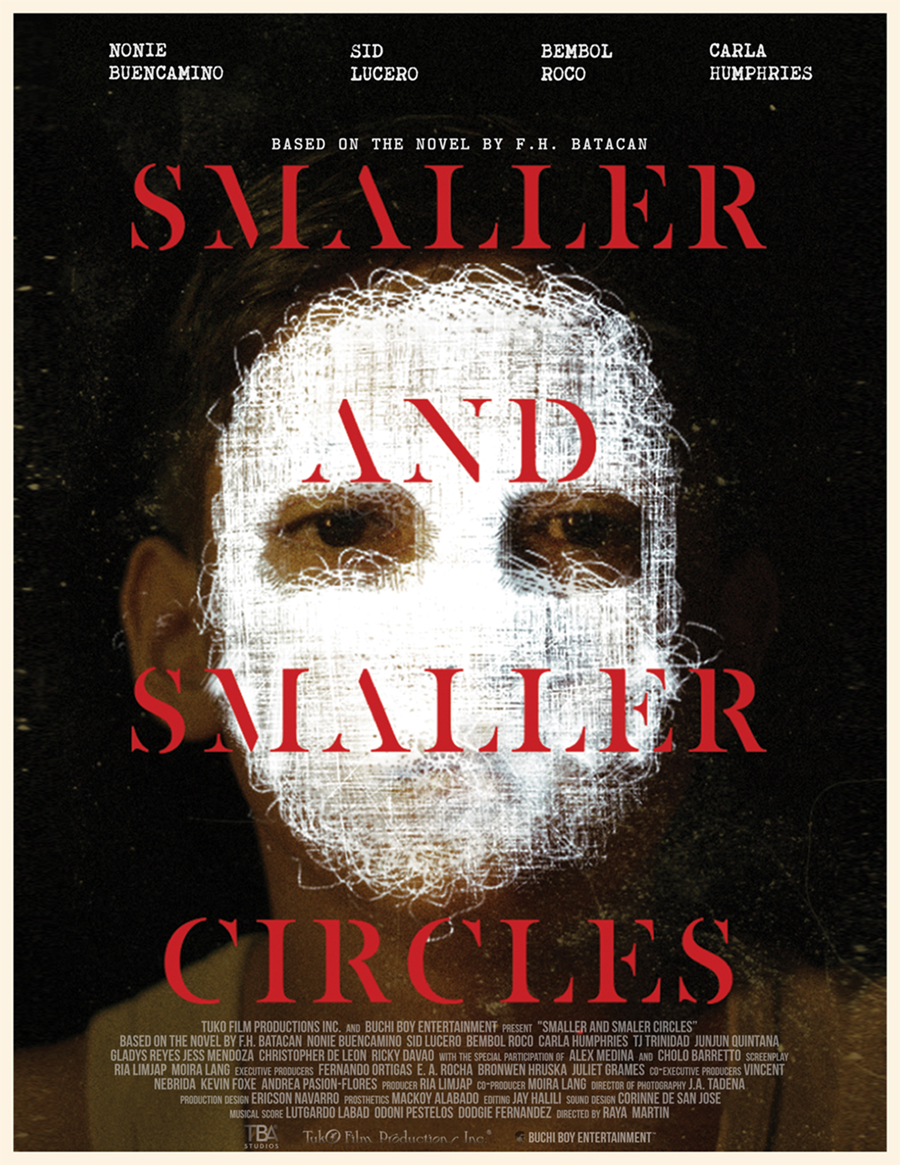
Smaller and Smaller circles poster“Time and forgetfulness are the allies of abusers” – a Catholic priest reminds his students as part of a history lesson regarding the supposedly bloodless revolution that led to the end of the Marcos regime. Festival favourite Raya Martin dials things back a little in adapting the award winning novel by F.H. Batacan, Smaller and Smaller Circles. Batacan’s novel is often described as the first real Philippine crime novel – something echoed in the ridiculous views of a lazy and self serving police officer who believes there are no serial killers in the Philippines, yet the Smaller and Smaller Circles of the title lay the blame for the heinous acts its centre not at the feet of an evil madman but at those of the society which so progressively damaged his soul as to render it irreparable.

Our hero is himself a priest. Father Gus Saenz (Nonie Buencamino) is a man of faith and compassion who, despite all the failings he can see in it, still believes the Church is the best way to help those in need. He is sickened and appalled by the institution’s intransigence when it comes to bad priests and is preoccupied by one in particular – Father Ramirez, whose inappropriate conduct with children he has doggedly reported for more than a decade only for him to continually escape punishment. In addition to the priesthood, Father Gus is also a teacher of philosophy and a forensic scientist who works as an occasional consultant to the local police. It is in this capacity that he comes to discover a series of murders involving young boys whose bodies were discarded on a local rubbish dump deprived of their hearts, genitals, and faces. With the assistance of his junior priest, Father Jerome (Sid Lucero), and a reporter (Carla Humphries) who was once his student, Gus attempts to solve the mystery behind this horrific series of murders before the killer strikes again.

Martin breaks with genre norms by giving us an immediate insight into the killer’s psychology as we witness the prelude to the killings while listening to his own explanations of why they must occur. The picture he paints of his childhood quickly frames his crimes as a murder of the self as the killer indulges in a compulsion to kill the weak, targeting teenage boys and stealing from them not only the breath of life but the spirit of it too. The first of our circles is the Church – the bad priests whose abuses are sanctioned by their organisation and mitigated by the “good” they leave behind. Father Ramirez was shuffled on and now works for a children’s charity but Father Gus’ attempts to warn the charity’s director fall on deaf ears and then cost him his funding. Only when Father Ramirez’ financial improprieties are discovered is his position finally questioned.

The second ring is poverty. All of these boys were poor and many of them were not identified right away because aside from their parents (if they had them) nobody was going to miss them. The film opens with a scene of children running over a rubbish dump and as the father of the first victim explains, his son was one of many who supported their struggling families by combing over the left overs of the better off looking for anything which might still be useful. Our third ring is bureaucracy – when Fathers Gus and Jerome meet the local councillor, they are surprised to find that she is efficient and committed, keen to do whatever it takes to look after her constituents even if it means going up against the Church or the wider government. However, she knew nothing of the murders and though she is quick to grant Father Gus all the access he needs, it is partly her own efforts to provide essential services to the poor which have enabled the crimes as those who claim to want to help others are really only helping themselves and wilfully turning those same mechanisms back on the people who need them most.

As a man of faith Father Gus does his best, refusing to give up on the killer, trying to ease his burden whilst in grave physical danger. Set in the Philippines of the late 90s, Smaller and Smaller Circles is filled with those still trying to come to terms with the traumatic past but finding its unpleasantness echoing in unexpected places. As such it finds unexpected resonance in the world of 2017 in which life is once again cheap and compassion thin on the ground.


Smaller and Smaller Circles is screening as part of the seventh season of Chicago’s Asian Pop-Up Cinema on 19th September at 7pm, AMC River East 21, plus introduction and Q&A with director Raya Martin.

Original trailer (English subtitles)