The Loved One (Irene Emma Villamor, 2026)

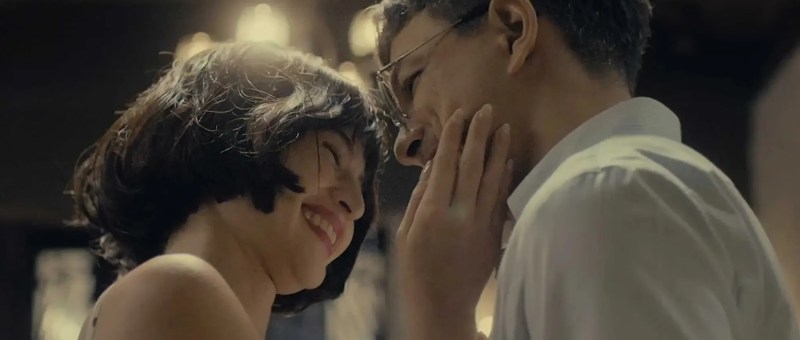
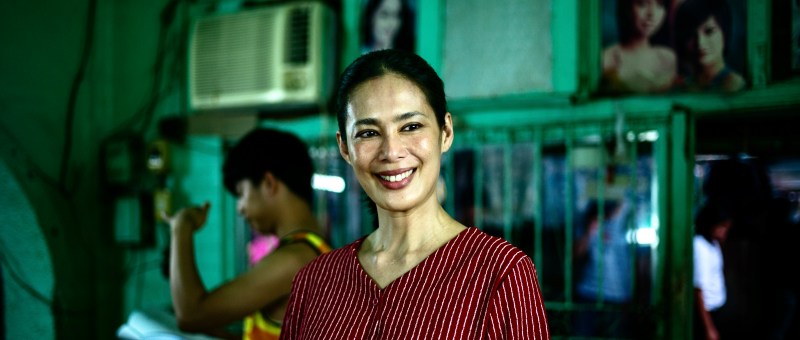
It may be true that within every relationship there is the lover and the one who is loved and that love is generally unequal. At least, Eric (Jericho Rosales) feels himself to have been the lover and is resentful that Ellie (Anne Curtis) did not seem to love him as much as he loved her, but the irony is that Ellie may feel the same. She kept trying to get through to Eric, but he never really seemed to listen to her nor did she feel him to be very interested in who she actually was as opposed to what he wanted her to be. 

In any case, it’s clear from the offset that Eric and Ellie are entirely unsuited. The qualities that once drew them to each other are exactly those which later drive them apart. Told mainly from Eric’s perspective, the film nevertheless paints him as an incredibly dull person, which wouldn’t really be a problem in itself if he didn’t resent other people’s desire to go places and do things quite as much as he does. He’s a bit of a fuddy-duddy and, as his mother puts it, “traditional” which is to say socially conservative with some fairly right-wing, authoritarian views which are in direct contrast to Ellie’s bohemian outlook. Eric’s attracted to her because she’s a free spirit, a dynamic and mysterious young woman who likes to have fun but also wants to make a difference in the world. 

But Eric’s also insecure in himself and at the end of the day wants Ellie to lead a more conventional life. Ellie comes from money, and Eric can’t escape the sense of inferiority he feels around her upper-class parents who disparage his occupation on their first meeting and make no secret of the fact they think he’s not good enough for their daughter only to come round to him later. In some ways, Ellie may be attracted to him because he reminds her of her father and aside from his working-class background is exactly the sort of man she’s told she’s supposed to want. Nevertheless, he becomes jealous and controlling. He pushes marriage with thinly veiled desperation, as if by putting a ring on her finger he’d have won her forever. Ellie, meanwhile, tells him she doesn’t want to be “trapped” by him and has no interest in getting married. All she wants is to live with him, though Eric isn’t all that keen on the business of living so much as the external validation of social success through ticking off milestones like marriage and children and career achievement. 

Ellie doesn’t care about any of that. When she tells Eric that she’s quit her office job because the corporate life isn’t for her, he looks on in total horror as if he can’t believe someone would do something so foolish as to quit their job with no plan for the future. He puts up with it when she starts doing humanitarian work, but thinks of it as a hobby or a passing fancy and never takes it seriously. It doesn’t occur to him that something that doesn’t make money or improve one’s social standing could be fulfilling, and worse than that, he resents what he sees as Ellie’s unseriousness thinking that it’s born of the confidence and security that comes with privilege. If he once thought of her as a free spirit, he comes to see her as flaky and fails to notice that she is always growing and changing as she pursues the person she’s supposed to be while he remains defiantly as he is, resenting that everything is changing all around him. 

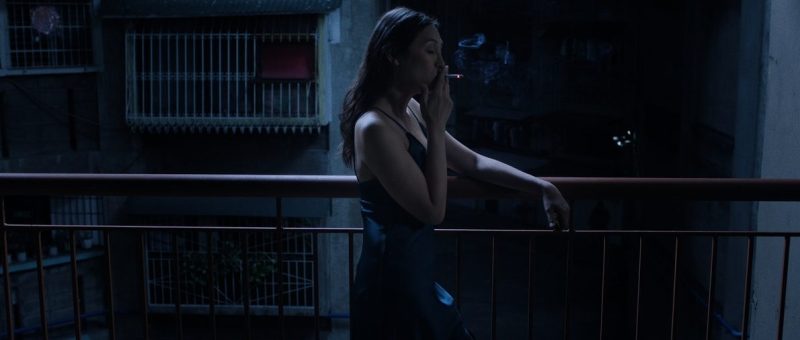
Still, Ellie keeps trying even though this relationship is clearly not working for her. She begins smoking to deal with her anxiety which mainly seems to be bundled up with her relationship with Eric and breaks down in tears listening to a woman trapped in an abusive marriage tells her of her struggles to leave while working at a women’s association. Eric is often cruel and thoughtless, selfish and controlling, pissed off when she talks to other men but flirting with a woman at work with whom he almost starts an affair. He thinks that “almost” is his saving grace, but really it doesn’t matter. Eric has treated both women disrespectfully and already cheated on Ellie emotionally if only in his reluctance to go home knowing that she’s there. The generous conclusion that Ellie comes to that they were both too much for each other. At the wedding where they reconnected, Ellie asked Eric if he thought their friends’ relationship would last and love was enough to see them through. Eric thought so, though she wasn’t so sure. It worked out for their friends who might not have had such a tempestuous love story and settled into a much more conventional married life, but no matter how much they may have loved each other, Eric and Ellie’s romance was always doomed. “How did they survive each other?” Ellie asks as she and Eric look on at an older couple celebrating a birthday surrounded by children and grandchildren, while all they’re left with is the smouldering embers of a failed love.


Trailer (no subtitles)

Moonglow (Isabel Sandoval, 2026)

A conflicted policewoman is placed in charge of investigating a crime that she herself committed in Isabel Sandoval’s moody noir, Moonglow. In many ways about the deadening quality of life under authoritarianism, the film contemplates complicity and resistance along with the “paradise of progress” that is touted as the modern Philippines though it faces many of the same problems as in 1979. You may think of yourself as some kind of moral crusader, Dahlia’s aunt warns her, but you’re no match for them.

Sister Therese may have a point. The news is full of stories of abandoned bodies and mysterious fires. Dahlia (Isabel Sandoval) characterises her theft as an act of rebellion and retribution. She does not keep this large sum of money taken from her corrupt boss’ safe for herself, but gives it to her aunt, a nun, with the instruction that it’s to be used to help the victims of a slum fire that later turns out to have been orchestrated by the police chief who is getting kickbacks from construction firms and envisions a bright future for himself in politics. 

Going into politics seems to be the ultimate goal for many. Charlie (Arjo Atayde) was also being groomed for office, but chose to emigrate instead after being confronted by the ugly side of his family’s elite status. The nephew of police chief Bernal, he’s just returned from America to look after his ailing father having become a lawyer rather than law enforcement official. Nevertheless, Bernal appoints him to the investigation presumably assuming he’s a safe person to ask because he’s family and therefore no threat to him. Old flame Dahlia, however, remarks on meeting him again that he now wears glasses, as if signalling Charlie’s ability to see things with more clarity than those around him whose vision has been blurred by continued exposure to life under the Marcos regime.

Dahila, who chose to stay rather than leave with Charlie, has indeed been compromised and is to an extent at least complicit as an agent of authoritarian power and according to some Bernal’s right hand woman. She says herself that she’s summoned in ghost in Charlie’s return and is haunted by the person she was before along with that of lost love. Each of them have repeated flashbacks to a lavish party shortly before Marcos took power which seems to hint at the coming future as Bernal introduces a man soon to be governor who echoes the contemporary radio broadcasts speaking of an era of prosperity hovering the horizon.

Alvaro manipulates Bernal with promises to make him his political successor, while it’s clear that any “prosperity” to come will only be for some. They burn slums to seize the land for shopping malls and luxury apartments leaving hundreds of people homeless and others of them dead. Alvaro later implies that some of the stolen money has been used to get the victims legal representation to challenge the government, a power that he also believes to have been “stolen” in that they have no right to it. Indeed, the authorities silence contrary voices without compulsion offing an investigative journalist reporting on the fires and later coming after Dahlia. Charlie reminds her that Bernal would sacrifice anyone, and indeed later implies he may do so with him when he starts asking the wrong questions about how much money went missing from the safe. 

Yet Dahlia’s tragedy is that in the end she can’t escape herself or her past. She can’t make all of this right through her act of rebellion, but neither can she accept the ways in which she did not resist or leave as Charlie had. That other life is also haunting her. Sandoval’s frequent use of dissolves signals the foggy quality of life under authoritarianism in which it becomes impossible to think or see clearly when every moment is self preservation or active complicity. Past, present, and future come to co-exist with Dahlia stuck somewhere in between, longing for a return to an elusive past while fearing that the future is no longer possible. She and Charlie are now, as she says, different people. Their romance belongs to another era which has now become inaccessible, or perhaps existing only in the realms of memory as a painful reminder of that which could have been.


Moonglow screens in Amsterdam 11th/12th April as part of this year’s CinemAsia Film Festival.

Trailer (English subtitles)
Republic of Pipolipinas (Republika ng Pipolipinas, Renei Dimla, 2025)

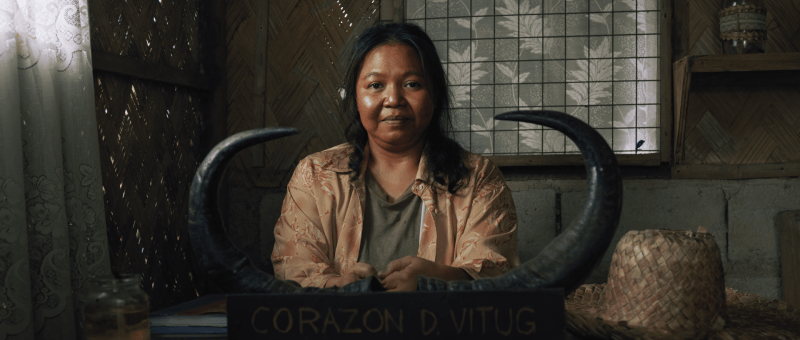
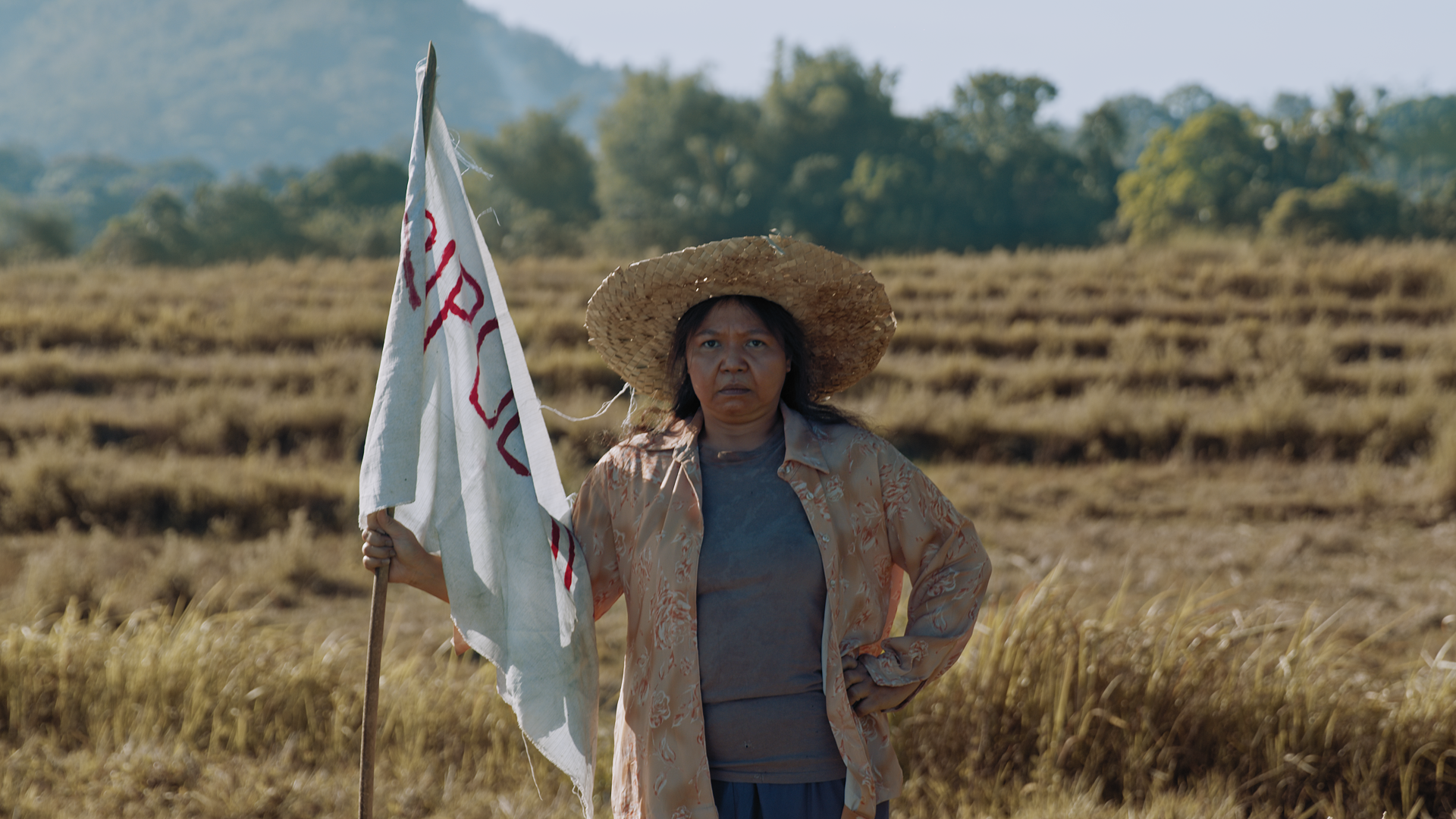
Declaring herself sick of being a Filipino, disillusioned farmer Cora decides to secede from the Philippines and start her own nation which she calls the “Republic of Pipolipinas”. She chose this name, she says, in memory of the People Power Revolution in 1986 which showed her that anything is possible when people work together for the nation. She may have spelled “people” in a non-standard way, but really what does that matter if it sounds right and you know what she means?

A mocumentary shot in the style of Parks and Rec, Renei Dimla’s deadpan satire uses its heroine’s zany idea to explore the contemporary reality of the Philippines in which many others are also sick of being Filipino and want to start again. What Cora most objects to is that the local authorities are trying to take her land which her family have been farming since the days of her great-great-grandfather. They say they have deeds going back to the Spanish colonial era saying the land is theirs, but Cora points out that’s really just neocolonialism. How can they tell a Filipino woman that this land doesn’t belong to her? Her children are buried there, and so she refuses to move, sending letters from the office of the President of the Republic of Pipolipinas to the mayor telling them that if they come on her land she’ll charge them with trespassing which incurs a fine to be paid in ducks, chickens, and cows.

In a way, that might demonstrate that Cora is living in the past, but she has a point when she says that she doesn’t want money in the Republic of Pipolipinas because that’s when you start getting corruption. Most of her neighbours think she’s a bit mad, but see her as a local eccentric, except for the few who think she might have killed her abusive husband with rat poison. Nevertheless, many of them are mired in poverty. The lady at the local shop lets Cora pay in eggs, but another woman comes and asks to add to her tab because there’s nothing to feed the children and her husband hasn’t been paid again. Local boy Ogie has dropped out of school because his mother’s ill. She’s refusing to see a doctor because they can’t afford it. Cora puts back some of her purchases and asks for the money instead which she gives to Ogie so his mother can get medicine. 

Many of the people who later join the Republic of Pipolipinas have similar problems. One woman has lost a son to extrajudicial killing. A man working as a tour guide hates himself for greeting people so warmly when he knows the country is in a bad way and the vision they sell to tourists is a lie. But once the Republic of Pipolipinas starts to grow, the same kind of issues appear. Led by actress Alessandra de Rossi playing a version of herself, the new citizens become frustrated with Cora’s lack of sophistication and begin talking about constitutions and what kind of nation they want the Republic of Pipolipinas to be while vying for power.

Cora asks herself why they’re expected to die for the nation when the government’s job is to keep people safe from harm. After discovering that her farm is to be bulldozed to build a waste treatment centre, or really a landfill site filled with rubbish imported from Korea and other wealthy nations, she discovers corruption in the local government and tries to expose it only to end up being accused of embezzlement herself, which is ironic because she consistently rejected the presence of money precisely because it leads to corruption. Even a local official who refuses to believe Cora would do something like that sheepishly admits that it’s difficult to avoid temptation once in power, as if corruption is an inevitability that can’t be resisted. But even collaborators aren’t exempt from the wrath of the regime. The mayor believes he’ll weather this storm just fine and continue to “serve the people” while throwing his underlings under the bus.

At heart, Cora isn’t really sick of being Filipino, she just wants the Philippines to be a better place for the children to grow up. She can’t stand the flag ceremonies and enforced patriotism, the expectation that they must serve a nation which no longer serves them. What she holds onto is a lesson that her father taught her during the People Power Revolution, that the nation is not abstract concept but collection of people who can still turn this thing around no matter how hopeless it might seem now.


Republic of Pipolipinas screens in Amsterdam 10th/11th April as part of this year’s CinemAsia Film Festival.

Trailer (English subtitles)

April (丟包阿公到我家, Freddy Tang Fu-ruei, 2025)

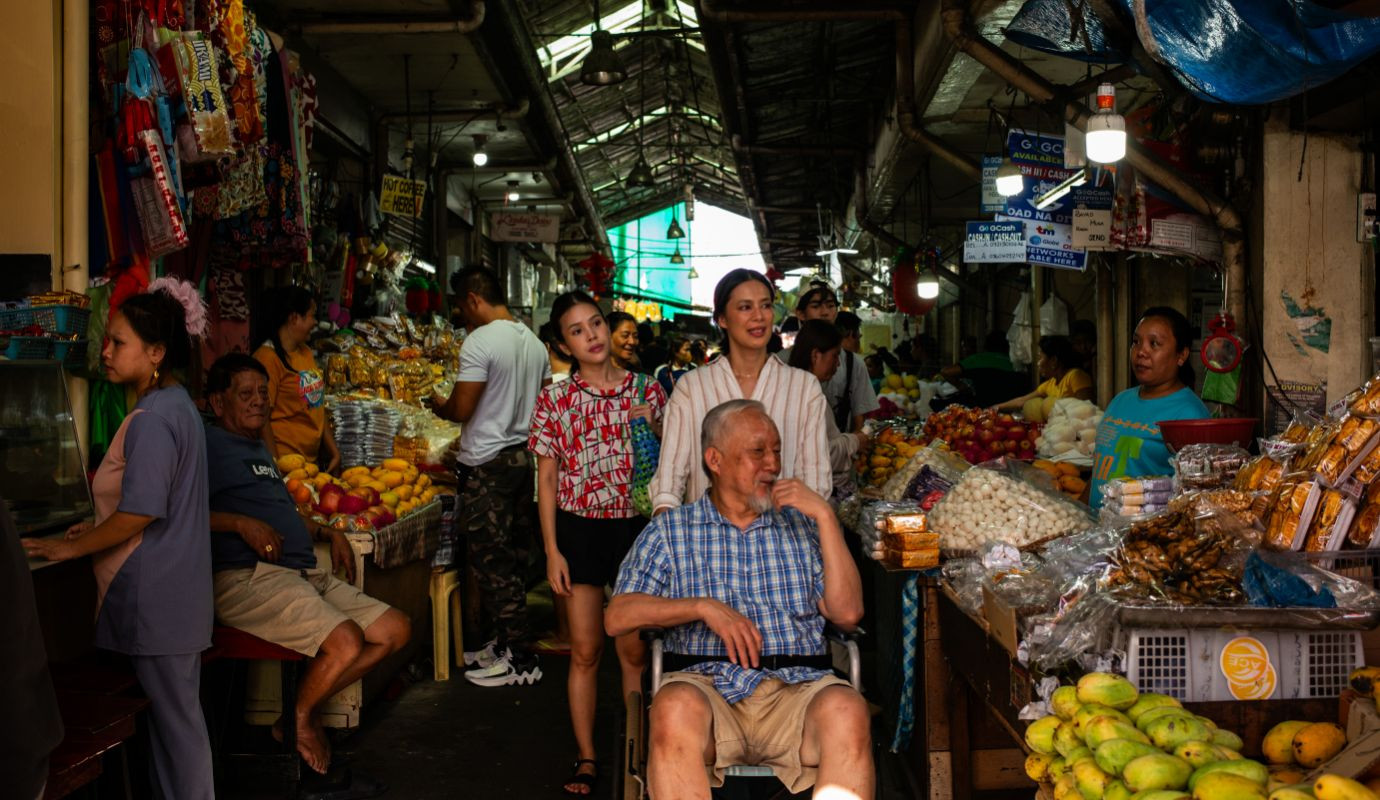
Ah-Ting (Zhang Xiao-xiong), an elderly man whose children mistakenly think is living with dementia because they just don’t really have anything to say to each other, says that he feels like a ball no one wants that they’re trying to kick as far away as possible. When his long-term carer April (Angel Aquino), who they call “Ah-po” because they can’t really be bothered with her name, wants to go back to the Philippines to see her dying mother, the children are reluctant to let her go and even go as far as saying that dying takes ages, so there’s no need to rush back. They have their own lives and don’t want to take care of their father nor do they want to have to pay someone else to cover April’s absence.

In the end, the only way that April can return to the Philippines is if she takes Ah-Ting with her. It’s an unusual arrangement, but highlights the way in which each of them has become somewhat abstracted from their families and exists only as a shadow presence hovering on the edges. Ah-Wei (Liu Kuan-ting), Ah-Ting’s youngest son who has just been released from prison, also feels like an unwanted ball to be kicked down the road, and may ironically come to identify with his father despite the animosity that’s existed between them since he was a child. Having nowhere else to go, Ah-Wei goes home, but is sort of relieved that his father isn’t there while the empty house gives him a place to reset and figure out how to start again as someone with a criminal conviction who can’t find conventional employment and is viewed with suspicion. 

The irony is that, as someone who worked abroad looking after someone else’s family, April was separated from her own but fails to see the gulf that’s emerged between her children and herself. While she resumes her role as their birth mother, they point out that she didn’t raise them. The image she has of her son and daughter is self-constructed, while she is fixated on providing a “better” future for them that neither of them want. In her absence, her daughter Luisa has essentially been forced to take on a maternal role looking after the house and her younger brother as well as her bedridden grandmother. April keeps pushing her son Diwa to study, citing a childhood dream of becoming a police officer which is quite obviously not what he wants to do now, while Luisa needles her that there was never any money available for her to study nor would she have been able to with all of these other responsibilities.

Still just as Ah-Ting rejected Ah-Wei, April reasserts her authoritarian parenting style in trying to push her children towards futures she thinks are better while her husband reminds them that everyone’s happy as they are, which is presumably what she wanted when she decided to sacrifice herself for the family by going abroad. In an ironic touch, Ah-Ting had told the neighbours Ah-Wei had become a doctor in Taipei rather than have them know his son was in prison, while April had wanted to be a doctor but had to give up her studies because she became pregnant with Luisa, had to get married, and resign herself to domesticity. Her life was defined by the conservative and patriarchal social codes of the Philippines, yet she pushes them onto her children at the same time harbouring a degree of resentment that she had to sacrifice her dreams for motherhood. She makes her husband fire his apprentice after finding out he’s dating Luisa because she thinks she can do “better”, while disparaging her husband’s line of work by complaining that he’s “just” a carpenter. She tells her neighbours that she works in a factory rather than admit she’s a maid as if she were ashamed to be working in service. 

It’s not exactly that the children are ungrateful, but as Diwa points out they never asked for this sacrifice to be made on their behalf and may have perhaps preferred a less comfortable life with their mother as opposed to feeling indebted as if they’re expected to do as their mother wants because of all she’s done for them. But what both April and Ah-Ting learn is that their rigid parenting styles haven’t done them any favours. They have to let their children be free and support them on their own paths rather than insisting that they do as their parents say. Through spending time with April’s family, Ah-Ting begins to learn to embrace his own, while Ah-Wei begins to accept himself by being accepted by a local woman. Which is to say, there’s an implication that this kind of care probably shouldn’t be outsourced, but no real solution proposed for how to manage caring for each other with all the economic pressures of the contemporary society. Nevertheless, there is a genuine sense of warmth in the remaking of these families as supportive and accepting rather than ruled by a sense of obligation or aspiration.


April screens in Chicago 2nd April as part of the 20th edition of Asian Pop-Up Cinema.

Trailer (English subtitles)
Warla (Kevin Z. Alambra, 2025)

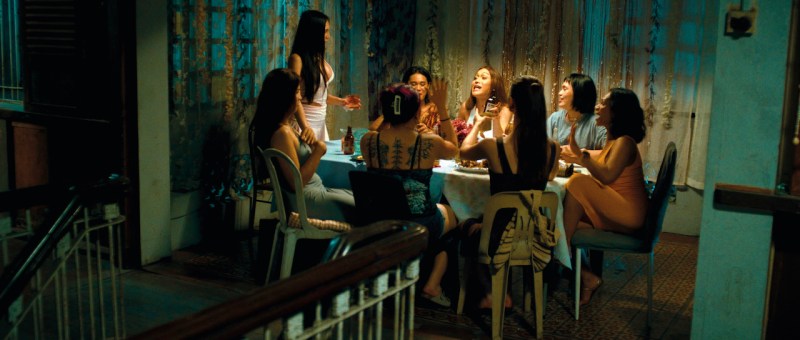
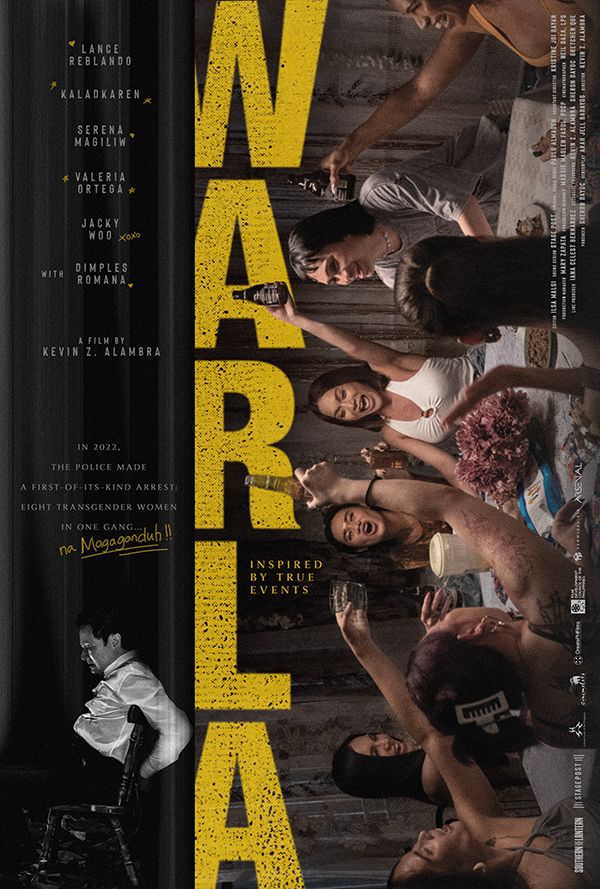
A group of transwomen attempts to turn the tables by kidnapping wealthy foreign businessmen and blackmailing them to fund their surgery, but a newcomer to the group forces them to confront their hypocrisy in turning the violence inflicted on them back on the patriarchal society. Inspired by a real life case, Warla explores the marginalisation of transpeople in a country so imbued with Catholicism and toxic masculinity as the Philippines where all they really have to rely on is each other.

The violence of that society is evident from the very first frames as a body begins to drift into view. Mother Leila has been murdered in a brutal fashion for the crime of existing. Kit-Kat (Lance Reblando), rejected by her conservative father and brother, is cast adrift with no other means of affirming herself. When her father kicks her out, she’s taken in a family of transwomen led by Joice (KaladKaren), but what she didn’t know is that their business model is meeting foreign businessmen on dating apps, kidnapping them, beating them up, and blackmailing them by threatening to tell their wives, families, and employers. In doing so, they’re turning the prejudice they face back on those who rejected them, but as Kit-Kat points out, it’s as if they’ve joined the system rather than beating it. She doesn’t want anything to do with the violence, with ends up partially going along with because it she wants to remain part of the group and has nowhere else to turn.

As Joice points out, having nowhere else to turn is why they’re doing this. There is no social support for them in the Philippines and they struggle to even get casual jobs in fast food restaurants just by virtue of being transpeople. Barbie Ann (Serena Magiliw) has a son from her previous marriage which ended when she decided to embrace her trans identity, but her former wife, Kate (Francesca Dela Cruz), has met someone else and wants to move in with him. Roger (Jel Tarun) is evidently a much more conservative man and is already beginning to distance Kate from Barbie by banning her from the house. When she tries to talk to him on the street, he tells her that she’s filling her son’s head with a lot of nonsense about how people like her are okay which will lead to him getting bullied. He thinks that, as he’s accepted the child and will now be providing for him, he should have a greater say over what he’s taught to think. Barbie’s existence is dangerous precisely because of what she was teaching son, challenging the social order by undercutting the patriarchy.

Ning (Valeria Kurihara), meanwhile, struggles to maintain a relationship because she wants to wait until she’s had her surgery to become intimate. Experiencing extreme dysphoria, she doesn’t want her partner to see the part of herself that she hates, but he gets fed up and leaves her for a cis woman. He tells her that their relationship was always doomed because his father wouldn’t accept her. With his new girlfriend, he can post pictures on social media and doesn’t feel the need to sneak around. Getting the money together to go to Thailand for her surgery becomes an obsession in part so that she can get Lance back, but also so that she will finally feel whole. Barbie also wants the surgery to avoid the kind of violence she inflicts on their victims. Kit-Kat says she isn’t interested in surgery which places her at odds with other members of the group such as Barbie who suggests it’s alright for her because she presents as more obviously feminine and so isn’t subject to the same levels of violence and rejection.

Though they may feel that they’re only playing these men at their own game, they bite off more than they can chew with a short-fused Japanese businessman who talks like a yakuza and flies off the handle with wait staff. Most of the other men gave in quite quickly because of the shame they feel and the fear they have of their transgressions being exposed, but Isamu (Jacky Woo) was like them in that he had nothing left to lose and soon realised he’d been set up. In the end, Joice is forced to make the ultimate maternal gesture to try and save her girls, while Kit-Kat must reckon with where this dark path has taken her. Though she knew that her mother loved her but was unable to stand up to her father’s patriarchal violence, she eventually finds solace in the fact that she can still hold her hand and call her by her true name even if the rest of the world refuses to recognise her.


Warla screened as part of this year’s BFI Flare.

Trailer (English subtitles)
Sunshine (Antoinette Jadaone, 2024)

“Don’t drag me into this,” a boy says after hearing that his girlfriend is pregnant, having already questioned if the baby’s really his. Miggy signals his lack of responsibility by directly asking Sunshine what “her” plan is, making it plain that she’s on her own and he does not see himself playing an active role in a predicament he essentially sees as nothing to do with him. Aside from Miggy’s father Jaime, who happens to be a protestant pastor, men are largely absent from Antoinette Jadaone’s Sunshine and even when they appear rigid figures of patriarchal control. 

Sunshine implies that she’s only in this mess because Miggy pressured her into unprotected sex, but she’s left to deal with the fallout on her own. Still in school, she’s about to take her last shot at getting onto the Olympic rhythmic gymnastic team but risks losing everything she’s worked so hard for if her pregnancy is discovered. Even when she goes to buy a pregnancy test, she’s asked for ID and judged by the woman behind the counter while it’s otherwise true that abortion is illegal in all circumstances in the Philippines, meaning Sunshine’s only options are finding and paying a wise woman for medicine to provoke a miscarriage. 

It’s the reactions of other women that Sunshine most fears from her otherwise supportive coach, whose ambitions also rest on her performance, to her best friend who does in fact shun her on her mother’s insistence, and her older sister who is caring for the whole family and seems to be a single mother herself having had a baby at a young age. Like a grim siren, Sunshine’s niece won’t stop crying as if echoing the alarm of her impending maternity and her own discomfort with it. It’s a network of women that she turns to for solutions if not for advice. There’s no one Sunshine can ask for that, because what she’s looking for is illegal. All she can do is stand outside the church and pray that God take mercy on her by allowing her to wake up from this nightmare. There’s something quite ironic when she’s told to ask forgiveness from God “the father” by a religious and judgemental female doctor as if laying bare the patriarchal and oppressive underpinnings of the entire society. 

Yet cast onto a surreal odyssey through Manila in search of solutions, Sunshine finds herself becoming the supportive presence she herself doesn’t have. While pursued by a very judgmental little girl who echoes her inner confusion by branding her a “murderer” and questions her decision making, Sunshine is approached by another little girl who appears to be heavily pregnant and is begging for money to see a faith healer whom she hopes will help her end her pregnancy. Despite her own experience, Sunshine asks her why she doesn’t ask her boyfriend for help but the girl explains that he’s not her boyfriend, he’s her uncle, so she’s even more powerless and alone than Sunshine is. No one’s going to do anything about the Uncle Bobots of the world, but they’re only too happy to criminalise and abandon a little with no one else to turn to. 

Realising that the girl was trying to abort her child, the male doctor at the hospital refuses to treat her knowing full well there is a possibility she may die. Only a sympathetic female doctor is later willing to help. Sunshine too almost dies after her first attempt at taking an abortion pill which she does all alone at a love hotel where the woman on the counter didn’t want to give her a room because people who go to hotels on their own are a high risk for suicide. When she does eventually find out, Sunshine’s sister is actually sympathetic and stands up to Jaime on her behalf when he makes a bid to take over her life and force her into maternity by getting Miggy to apologise and unconvincingly insist that he actually loves her and their baby while leveraging his wealth and privilege against her by recommending that she be cared for by his family doctor and the best hospitals at his expense. It does however provoke a degree of clarity in Sunshine’s insistence that she doesn’t want to be a mother and has no intention of becoming one while rediscovering herself in rhythmic gymnastics and making peace with her younger self. A sometimes bleak picture of young womanhood in the contemporary Philippines, the film nevertheless finds relief in pockets of female solidarity and the conviction that it doesn’t have to be this way for the younger generation who should be free to pursue their dreams and make their own choices about what they do with their bodies.


Sunshine screens April 26 & 30 as part of this year’s San Diego Asian Film Festival Spring Showcase.

Manila by Night (Ishmael Bernal, 1980)

Contemporary youth is swallowed by the darkness of the Marcos-era capital in Ishmael Bernal’s meandering nocturnal epic, Manila by Night. So bleak was its vision that it was blocked from release by first lady Imelda Marcos who objected to the film’s characterisation of her beloved city and insisted that all references to Manila be removed which is why the film was retitled City After Dark in an attempt to distance itself from the realities of urban life under the authoritarian regime. 

Bernal opens however with a scene of aspirational suburban living at the home of a wealthy family as they prepare for an evening out attending a live gig by eldest son Alex (William Martinez), an aspiring folk singer. In a quiet city bar he performs a wholesome cover of the ’69 Crosby, Stills & Nash classic “Teach Your Children”, but the otherwise serene atmosphere is abruptly shattered by gunshots ending the performance and scattering the spectators. The choice of song is in itself instructive in hinting at the generational divide between the apathetic Alex and his respectable middle-class suburban mother Virgie (Charito Solis) who we later discover is carrying a degree of shame over her past as a sex worker and has perhaps overcompensated in her desire to ensure her children become successful members of a conservative society. 

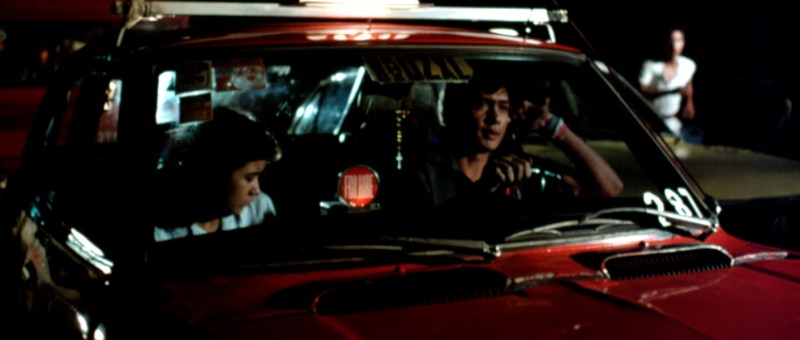
As the song says, Alex too is incapable of understanding his parents’ youthful suffering and finds himself lost in the nighttime city. On the one hand he’s dating a young woman of a similar social class who may be joking when she talks about their marriage but is evidently more serious about the relationship than he is while they retreat to a hotel room experimenting with sex and drugs. On the other hand he’s also experimenting with a gay man, Manay (Bernardo Bernardo), who is also in an awkward relationship with bisexual taxi driver Pebrero (Orestes Ojeda) who has two children and a wife while simultaneously dating naive and innocent country girl Baby (Lorna Tolentino ) currently working as a waitress at a diner where a sleazy pimp keeps hassling her to become a sex worker promising megabucks from wealthy Japanese clients. 

The presence of the Japanese as external economic force is in its own way a reflection of the desire many of the young people have to leave the Philippines, such as that of blind sex worker Bea (Rio Locsin) who is also involved with Alex but hoping to move to Saudi Arabia with her boyfriend Greg (Jojo Santiago) who has been offered employment there but later discovers that he’s been scammed, temporarily stranded in Bangkok until managing to arrange his passage home. Mass unemployment is a constant spectre, Baby’s father also out of work but lamenting the only job prospect he’s found pays so little and is so far away as to be economically pointless. Lack of other options later causes Greg to attempt to manipulate Bea into participating in live sex shows without her full consent while many of the women are forced into sex work in order to support their families. When Baby falls pregnant, realises Pebrero won’t marry her, and is sacked from the diner she too is pushed into accepting the sleazy customer’s offer but ultimately cannot go through with it. Meanwhile, Pebrero’s wife Adelina (Alma Moreno) is also exposed as a sex worker catering to wealthy Japanese clients rather than the nurse she had claimed to be leaving every day in a crisp white uniform for the hospital and later paying a heavy price for her duplicity. 

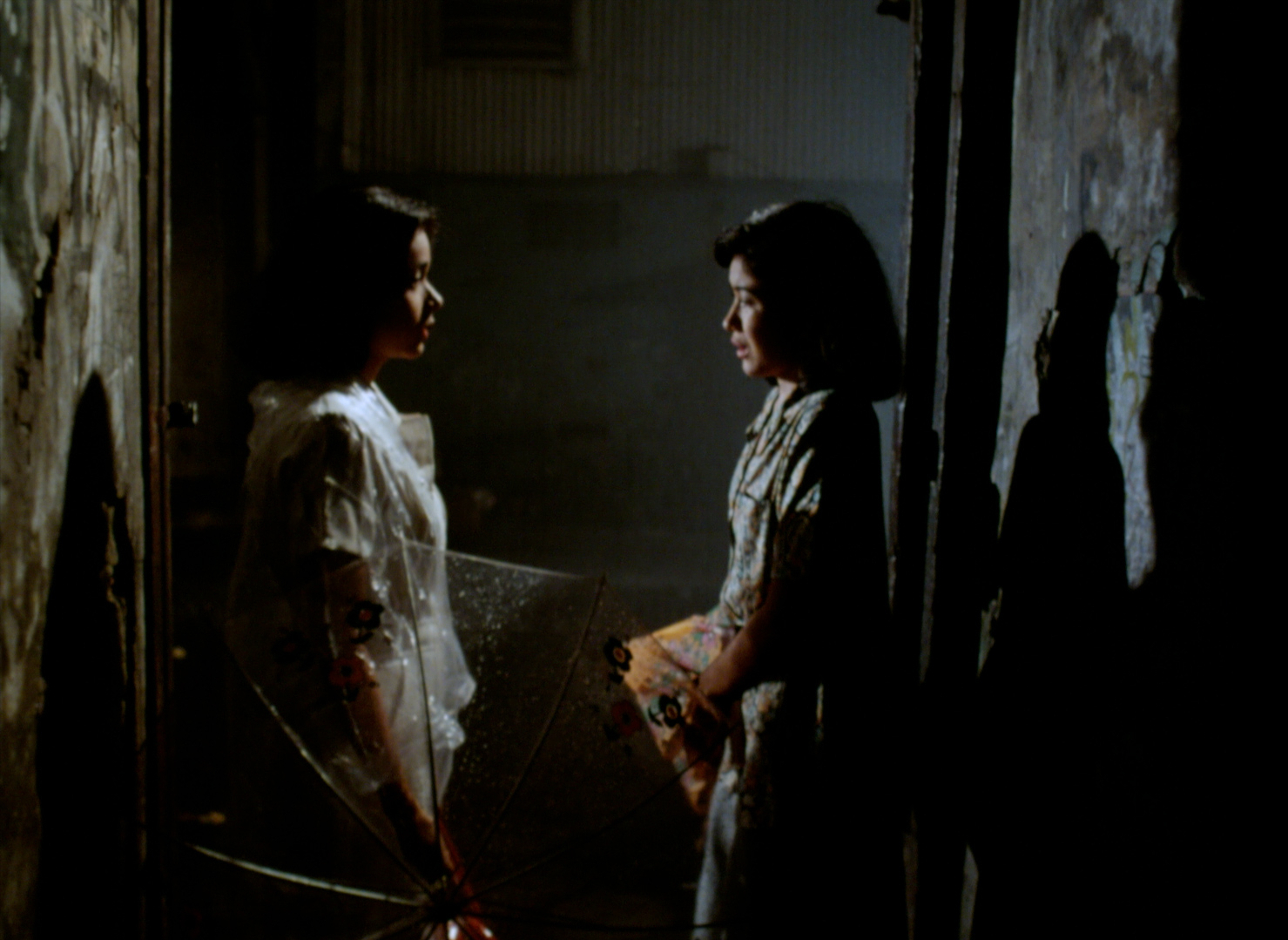
The crowded tenements inhabited by Baby and Adelina where several members of a large family share a single room stand in stark contrast to Alex’s well-appointed suburban home complete with servants his mother makes a point of talking down to, but what may start for him as a reckless curiosity rebelling against his comfortable life becomes a self-destructive odyssey through midnight Manila in which he eventually becomes addicted to drugs. In a climactic scene, Virgie and her husband batter him with nearby objects while the camera cuts ironically to a series of religious icons and a large statue of Jesus looking down on the scene of chaos before Alex abandons his family to reunite with Manoy. The capture of his friend Kano (Cherie Gil), a tomboyish lesbian in love with an unreceptive Bea, by the police is framed as a kind of crucifixion, the torturing of youth by an implacable authority which restricts its freedom and presents it only with despair. 

Adelina had tried to warn Baby that in order to survive Manila she would need to become “wiser than the men”, but the city is itself full of duplicities and secrets and Baby perhaps ironically the only one finally able to escape its false promises. The perhaps more hopeful coda in which a less curious Alex appears to awaken from his slumber lying peacefully in the light of a new dawn was apparently a concession to the censors but still leaves him lost in a kind of limbo neither in one place nor another but perpetually wandering. At once a portrait of a city lively and free with its series of gay discos and drag nights, weird cults in parks, and nighttime callisthenics classes, and of a place marred by exploitation and hopelessness, Bernal’s odyssey through through Manila by night finds only an elusive hedonism born of internal despair in the intense repressions of authoritarianism.


Trailer (dialogue free)

Bona (Lino Brocka, 1980)

Towards the end of Lino Brocka’s Bona (Nora Aunor), the heroine recounts a dream she had in which she tries to escape a fire but finds herself met only by more flames. The inferno she attempts to outrun is that of the oppressive patriarchy of a fiercely Catholic society in which men can do as they please, but women are held to a different standard and in the end have little freedom or independence. 

Brocka opens with a lengthy sequence of a religious festival in which the suffering Mary is carried through the streets on the shoulders of men. Teenager Bona looks on but worships at a different altar, that of Gardo (Phillip Salvador), a struggling bit-player trying to make it in the Philippine film industry. What becomes apparent is that her fascination with Gardo is borne of her desire to escape her family home and the tyrannical reign of her authoritarian father (Venchito Galvez) who berates her for not helping her mother out enough with her business and later whips her with his belt because she stayed out too late. 

Though her family is quite middle class, Bona instals herself in Gardo’s home in the slums in search of greater freedom but ends up becoming his skivvy or perhaps even a kind of maternal figure patiently taking care of him while he continues to bring other women home and even charges her with taking another teenage girl he’s got pregnant to the doctor (who charges him “the same as before”) for an abortion. It’s possible that in Gardo she sees a different kind of masculinity, a performance of manliness, but gradually comes to realise he’s nothing more than an opportunistic lothario with no emotional interest in women let alone her. 

But by then, it’s too late. She’s stuck in a kind of limbo barred from returning home to her family because of her status as a fallen woman who has shamed them by living with a man she is not married to. Even once her father dies, her mother warns her to avoid her brother because his rage is indescribable and he does indeed drag her out of the funeral by her hair while issuing threats of violence. Perhaps what she was looking for was greater independence or an accelerated adulthood with the illusion of freedom, but she can only find it by relying on Gardo rather than attempting to chart her future alone. We can see that other women in the slum are in much the same position, loudly arguing with their husbands who cheat, laze around drinking, and permit them little possibility for any kind of individual fulfilment. 

Yet there is a moment where Bona seems free, ironically dancing at the wedding of a young man, Nilo (Nanding Josef), who she’d turned down but now perhaps regrets it comparing the conventional married life she might have had with him to the prison she’s designed for herself in her life with Gardo. Nilo may be the film’s nicest man, but at the same time he’s still a part of the system that Bona can’t escape. In fact, the only woman fully in charge of herself is a wealthy widow who later buys Gardo’s, not exactly affections, but perhaps loyalty. “She’ll do,” he less than romantically explains after admitting to marrying her for the convenience of her money oblivious of the effect the news may have on the by now thoroughly humiliated Bona whose rage is just about to boil over. 

Unable to free herself from this fanatical devotion or to find possibility outside it, Bona is trapped by her desires and marooned in a kind of no man’s land in which she cannot exist as an independent person but only as servant to a man. “I’ll just serve you,” she explains on moving in and thereafter slavishly catering to all of Gardo’s whims while he largely ignores her. She hasn’t so much escaped her father’s house, but built a prison for herself from which she cannot escape despite her oncoming displacement. A creeping character study, the film finds the titular heroine searching for a way out of the fire only to find herself engulfed by flames with no real prospect of salvation amid the ingrained misogyny of a fiercely patriarchal society.


Bona screens Nov. 14 as part of this year’s San Diego Asian Film Festival.

Trailer (English subtitles)
The Missing (Iti Mapukpukaw, Carl Joseph E. Papa, 2023)

The title of Carl Joseph E. Papa’s meta animation The Missing (Iti Mapukpukaw) most obviously refers to the hero’s uncle with whom his mother has lost contact, but in a deeper sense refers to the protagonist himself and the various things he too is missing which notably includes his mouth. Shot in a rotoscope style, Eric’s (Carlo Aquino) mouth is literally blurred out as if it had been erased and smoothed over. He can no longer speak but uses a dry erase board to communicate with those around him.

His troubles start just he’s about to go on a sort of date with coworker Carlo (Gio Gahol) which ends with them discovering the body of his uncle who has apparently passed away in a lonely death. It’s it at this point that Eric is plagued by an alien who keeps trying to abduct him claiming that they have unfinished business. Eric later asserts that he’s afraid the alien is trying to take over his body, hinting at a deeper childhood trauma and anxiety over bodily autonomy and intimacy. The alien’s attacks seem intensify as he grows closer to Carlo, frustrating their tentative romance as if it actively trying to obstruct it. 

The alien’s presence leads to what may seem to others like strange or inconsiderate behaviour. He disappears on Carlo, locks him out of his flat, and seemingly drops out of contact for days on end causing him not an inconsiderate degree of worry given he’s just lost his uncle and appears to be in a state of emotional distress. Yet the most surprising thing is even on being told about the alien Carlo decides to just go with it, taking Eric’s explanation at face value and trying to help him evade it for as long as possible. He eventually admits that he can’t see what Eric sees and they aren’t where he thinks they are but otherwise provides a safe and non-judgmental presence that quietly supports him while he battles his internal demons. His mother Linda (Dolly De Leon) does something similar apparently aware of the alien’s existence, but not what lies behind it or what it really might mean.

Just as reality and fantasy begin to blur for Eric, Papa uses the medium to express his mental state as the world seems to literally crumble around him. The alien steals parts of his body and they literally disappear, a missing ear and blurred out eye along with a blankness where his hand should be. When Eric begins to recall his childhood memories, the animation style switches from the sophisticated rotoscoping of the rest of the film to something much simpler echoing a child’s drawings. In these sequences, the face of Eric’s uncle is always scribbled over in black pen echoing his more literal refusal to see and accept the past. He has been literally silenced by his trauma but now finds it banging on the doors of his mind demanding to be let in.

Yet the reason he is able to overcome it is precisely because of the love an acceptance he receives from his mother and Carlo who never question his reality or attempt to break him out of it, instead deciding to join him there and help him in his quest to get rid of the alien that has plagued him since his childhood. Only this way can he begin to reclaim the parts of himself that were missing, digging through the buried past to retrieve what was taken from him and eventually recovering his voice. 

His quest has a gently absurd quality as parts of him suddenly detach themselves and run away, leaving it unclear for much of the film if Eric’s alien is “real” in a more concrete sense or merely a representation of his childhood trauma and very much inspired by logics and aesthetics of a small child who has been forced to keep a secret out of fear and shame and thereby unable to communicate his pain. In the end it’s love that brings him out of it, a gentle, patient and unconditional love that takes him as he is and gives him the space to find his own way out his trauma. Filled with a sense of warmth despite the darkness of its centre Carl Joseph E. Papa’s strangely poignant film for all its talk of aliens and destruction is remarkably human allowing its protagonist to finally begins to recover himself thanks to the loving support of those around him.


The Missing screened as part of this year’s Osaka Asian Film Festival.

Original trailer (English subtitles)
As If It’s True (John Rogers, 2023)

An influencer enters into a mutually exploitative relationship with a vulnerable musician only to find herself falling for him for real, or perhaps not, in John Rogers’ non-rom-com As if It’s True. Taking aim at the wilful inauthenticity of influencer culture, Rogers explores the ways in which romance is really just performance while mutually beneficial relationships can nevertheless contain a power imbalance that adds to their emotional volatility. 

It could be said that Gem (Ashley Ortega) is permanently on the rebound. A subject of a viral meme after an ex filmed her having a mental breakdown after being fired from her job, Gem went on to harness her fame becoming a popular YouTube vlogger. But then fame seems to have got the better of her. Gem’s girlfriend Yara left amid rumours of her toxic behaviour and her feeds are now full of trolls berating her. Hoping to recapture the magic, Gem recruits Anthony to be her “boyfriend” though he soon tires of the arrangement, taking up with Gem’s friend Cielo.

Anthony resents the limitations placed on his romantic freedom by his empty relationship with Gem, though it seems that she may at least have harboured some “genuine” feelings for him. At a Halloween party, Gem meets melancholy musician James (Khalil Ramos) who is wearing the same Harry Potter costume as she is and undergoes a moment of romance that is equal parts flirtation and role play. A photographer asks them if they’re a couple and they don’t quite know how to respond but then each accept the label. It’s here that things start to get weird as Gem asks James to punch Anthony. He jokingly agrees but didn’t think she was serious, until she offered to compensate him for his efforts. 

The original meeting is then consumed in confusion and contradiction in which neither party is entirely sure what was really going on between them aside from a genuine sense of attraction. Gem wants James to get back at Anthony and also boost her ratings, while James seems like he’s interested in a more genuine romance but captivated by Gem’s wealth and illusionary power. The pair find themselves playacting romance for the cameras, coming up with a fake story of how they met while filming a series of couples moments to prove how in love they are. 

But the flaw in the plan is that the fans don’t take to James, seeing him as bland and taking an instant dislike to his coffee-shop style music. James begins to worry that Gem won’t like him if the fans don’t, while she becomes fed up with what she sees as his lack of drive. A climactic dinner tables fight provokes a series of harsh words on both sides as James complains he’s nothing but a pawn in Gem’s game and she accuses him of being a golddigger yet the rawness of the fight suggests two people who can’t be honest with themselves about how they feel let alone with each other.

Rogers plays with our own ability to discern the reality, leaving us unsure which scenes might be “real” and which are simply part of the skit. Trapped in Gem’s confusing world of inauthenticity, James begins to lose grip on himself, lost in a kind of dream world while Gem exploits his insecurity to prank him by suggesting she may leave him for another woman. They each at times claim that the relationship is now “real” and they’ve developed genuine feelings for each other but seemingly can’t quite accept them or escape from the performative quality of their romance.

As much becomes plain when Anthony and Ceilo get engaged, Cielo looking a little sheepish showing off the ring while implying that James must have something up his sleeve to one-up Anthony in the romance stakes, further fuelling his sense of jealous resentment and fragile masculinity. Even a “real” relationship is also performative in its empty gestures such as random flowers and cheerful selfies. Gem puts on act to meet James’ mother, but then who isn’t on their best behaviour to meet a potential in-law? She ends up liking her, finding something in her that her own parental figures may have lacked in the childhood trauma she shares only with James (or so she claims) that explains why she is the way she is. 

James has also had his fair share of mental health issues, something Gem recklessly exploits in getting him to make a video in which he “opens up”, while otherwise growing tired of feeling like Gem’s pet just trotted out to look cute on the internet while his attempts to use her to further his music career largely flounder. Then again, we have to wonder about the authenticity of what we’re seeing as Gem once again seems primed to put something together in the great highlight real of their “relationship”. Perhaps this is all a bit too, Gem “coming clean” about her real fake romance with James seemingly nowhere to be seen. Raw and embittered, Rogers’ anti-rom-com resents the digitalisation of love in which romance has become a public act defined by deed rather than feeling and the fake affirmation of social media clout has itself begun to trump human connection.


As If It’s True screens Nov. 3 as part of this year’s San Diego Asian Film Festival.

Original trailer (English subtitles)