

Looseley inspired by the experiences of star Irene Wan, Tracy Choi’s meandering drama Lonely Eighteen (我們的十八歲) charts the friendship between a pair of women trying to make their way in the ‘80s Hong Kong entertainment industry. Somewhat incoherent, the film positions itself awkwardly in its complicated gender politics while also ambivalent about the heroine’s commitment to her art and the things it may have cost her if also selling a mild message about female empowerment and independence.
Elaine and Ying meet as children, each from poor families and bonding in a shared sense of frustration. While Ying later moves away, Elaine’s family plan to sell her to a wealthy man though this does not appear to actually take place and she remains under the roof of her incredibly moody and abusive father. It’s her father who wanted to sell her and who makes her life a misery, yet the later part of the film will focus heavily on her love for him and guilt that her job prevented her from getting to the hospital in time when he passed away. In any case, after reuniting as teenagers, Ying introduces Elaine to a film producer she’s met through her clubland connections and the pair are signed as fledging starlets at a studio that mainly produces Cat III erotic movies.
The film is very clear on the dichotomy between Elaine, wholesome and transcending her humble origins, and Ying who is earthier and trapped by the bad patterns of her childhood. Elaine soon progresses towards success as an actress, but Ying is somewhat traumatised by being cajoled into full frontal nudity by producer Ben and thereafter unable to shake off the label of erotic actress. Meanwhile she’s also trapped by her relationship with Shing, a guy she met at the club and wants to spend her life with but has a destructive gambling problem that disrupts her career.
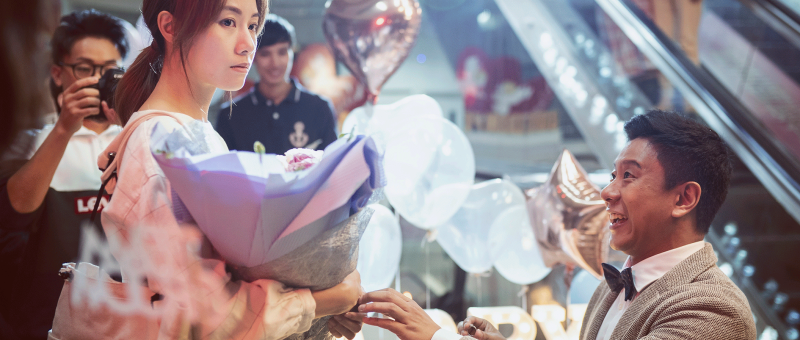
In the film’s present day, it’s Elaine (now in her 50s) who is vacillating over marriage and what it might mean for her work as an actress and independence as a woman. Her manager seems to imply she won’t be getting work after the wedding, though her fiancé also seems rather controlling and disapproving of her career preferring she become a stereotypical housewife. It’s this that Elaine begins to rebel against, wanting to rediscover herself as an actress by taking on more challenging work even if her agent would prefer she stick to the commercial, while uncertain if she really wants to get married at the price of her career. The film ends with a fantasy wedding that reechoes the film’s lowkey conservative attitudes as Elaine’s fiancé effectively gives her permission to continue acting but only if she’s “transparent” with him.
Elaine keeps saying that she wasn’t successful as an actress and feels guilty about letting her father down, though she appears to be working steadily and lives in a well appointed home whereas Ying has struggled with mental health issues and now works part time in a supermarket. The pair of them are subject to a hypocritical double standard and the vagaries of a sexist, largely unregulated industry. Ying never escapes the label of erotic actress, while Elaine’s attempt to break out of stereotypical roles in TV drama by agreeing to appear nude in a CATIII slasher backfires and leaves her exasperatiedly explaining that what she’s made is art and not porno.
There are rumblings in the background, mentions of the Handover and the clearing of the slum where Elaine grew up which her father defiantly resists, yet the film can’t seem to find much of a through line or sense of purpose save the implication that the two women’s lives were largely defined by their family background with the perhaps unpalatable suggestion that Elaine used hers to propel herself forward while Ying’s continued to drag her down. Meanwhile, it’s also implied that Elaine’s “obsession” with acting has cost her in terms of her relationships, not only with Ying but not having said goodbye to her father because she needed to finish a scene while also remaining childless and unmarried at a comparatively late age. The resolution may point to her gaining the best of both worlds, claiming happiness on her own terms but also skews somewhat conservative in her fiancé’s chauvinism and the notion that she should be married even if she doesn’t really want to be. Even so, it does gesture at the enduring qualities of female friendship as Elaine and Ying patch up their differences while preparing to move on to a happier future.
Lonely Eighteen screened as part of this year’s London East Asia Film Festival.
Original trailer (Traditional Chinese / English subtitles)
 Windows on Worlds