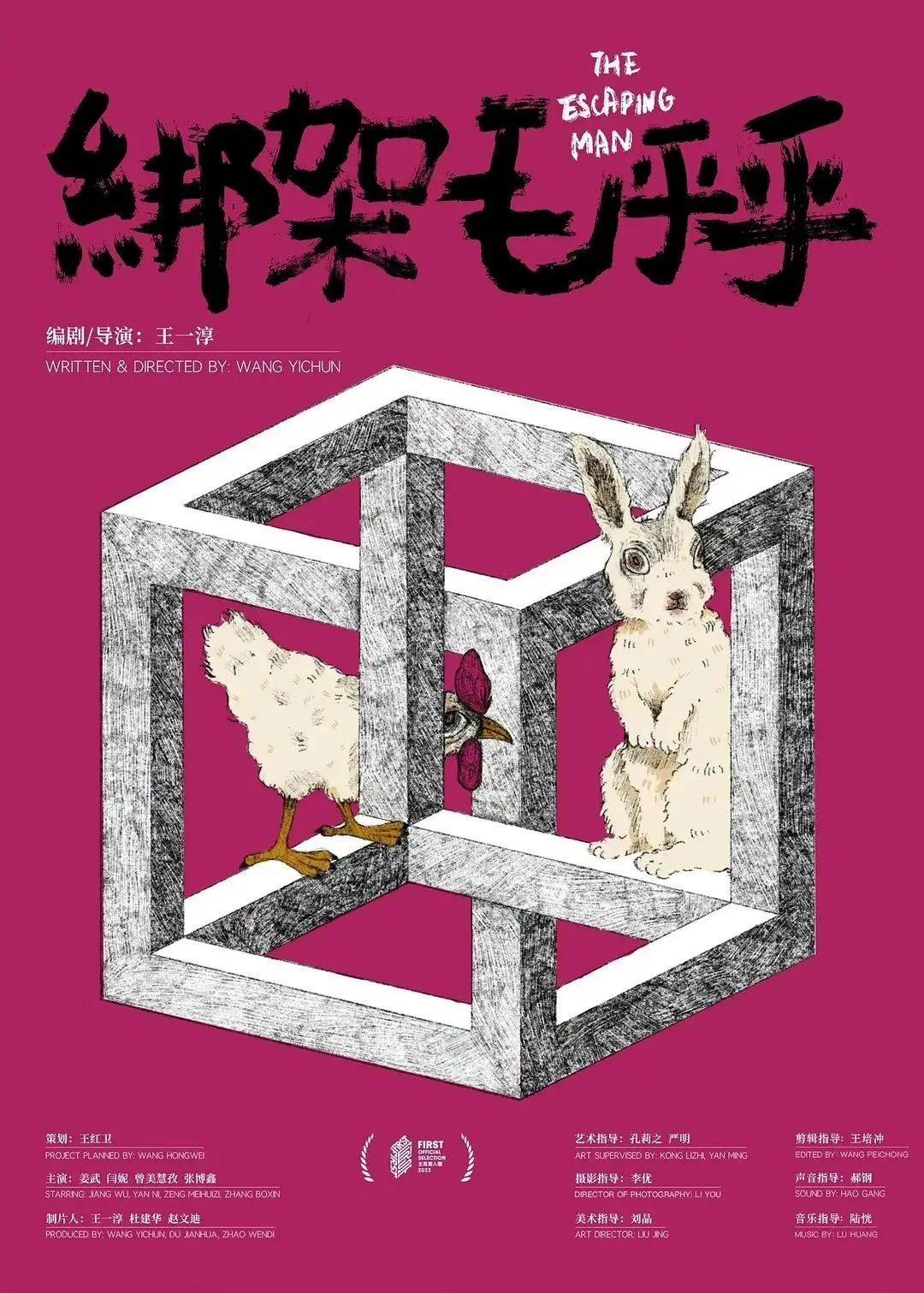
The Escaping Man (绑架毛乎乎, Wang Yichun, 2023)

“Life isn’t much better on the outside,” according to Sia (Zeng Meihuizi), the heroine of Wang Yichun’s deliciously ironic dramedy, The Escaping Man (绑架毛乎乎). Escaping men is in part what she’s tried but otherwise failed to do while constrained by the socio-economic conditions and entrenched patriarchy of the modern China. All of the men in the film are, as many call them, “idiots”, but all things considered it might not necessarily be such a bad thing to be even if their guilelessness makes them vulnerable to the world around them albeit in much different ways to Sia.

At least its this boundless cheerfulness and inability to see the world’s darkness that caused Fluffy (Eric Zhang) to be rejected by his status-obsessed mother (Yan Ni) who seems to have got rich by becoming what in charitable terms might be called a motivational life coach though others might describe her as a cult leader. She’s determined to get Fluffy into an elite primary school so he can “win at the starting line,” a buzzword in the contemporary society which basically means engineering privilege for your child so they can elbow other kids out of the way before the race even starts. The irony is rammed home by the fact that Sia, who works as the family’s live-in nanny/housekeeper also has a daughter named “Fluffy” who is one of China’s left behind children living with her seemingly bedridden grandmother in the provinces while Sia is in the city earning money to support the family having apparently divorced her daughter’s father. 

20 years previously, Sia’s mother had accused her lover of rape and had him sent to prison where he’s remained ever since having apparently gone along with the legal process in the mistaken belief Sia would eventually clear up this misunderstanding. She later later says the police wouldn’t let her and that she was never actually interviewed, but also continues to insist that they live in a “law-based society,” and nothing can be done without evidence. On his release, Shengli (Jiang Wu) comes straight to find his former lover in order to confirm that he did not in fact rape her and their relationship was consensual which she agrees it was. This determination is symbolic of his romanticism in continuing to believe in his dream of love despite all he’s been through, convincing himself he can start again with Sia while she continues to manipulate him with the almost certainly false promise of a happy joint future.

But then you can’t really blame her. A little way into the film, Sia is dressed in a white outfit very similar to the one worn by her boss when she goes to see Fluffy in a school play in which, at his own request, he played a tree. Sia is every bit as a accomplished and she has a warm and loving relationship with Fluffy which seems to elude his haughty mother. Later in the film she reveals that she came third in the national university exams but was prevented from going because she was born in a small rural province rather than the big city like her employer Mrs Mao. The fates of the two women are easily interchangeable depending on the circumstances of their birth while Mrs Mao continues to wield her privilege to ensure Fluffy can win at the starting line despite her resentment towards him for his lack of academic acumen or the things that denote conventional success in the modern China. Though he is cheerful and kind, she sees these qualities as actively harmful to his future success rather than embracing the little ray of sunshine he actively is.

Then again, Fluffy’s guilelessness also leaves him vulnerable which is why he cheerfully walks off with Shengli when he agrees to Sia’s kidnap plot and even rejoices in the grave-like pit they’ve dug to keep him in rechristening it as his underground fortress. He’s so nice that he doesn’t even realise the other kids are bullying him for being “stupid” and thinks they’re his friends, just happy to be included in the game. In this way, he and Shengli are alike, a pair of hapless fools living in a world that’s nowhere near as good as they think it is. The irony is that though Shengli perhaps begins to wake up to the realities of his relationship with Sia, his last wish for Fluffy is that he get into the fancy primary school and win at the starting line so he won’t end up like him. Suddenly it seems ironic that Shengli was a breakdancer because in the end he cannot break free of the prison that is the modern China. Filled with a darkly comic humour, the film is a fierce critique of the inequalities of the contemporary society and gentle advocation for the right to just be nice in world in which kindness has become a character flaw.


The Escaping Man screens July 26 as part of this year’s New York Asian Film Festival.

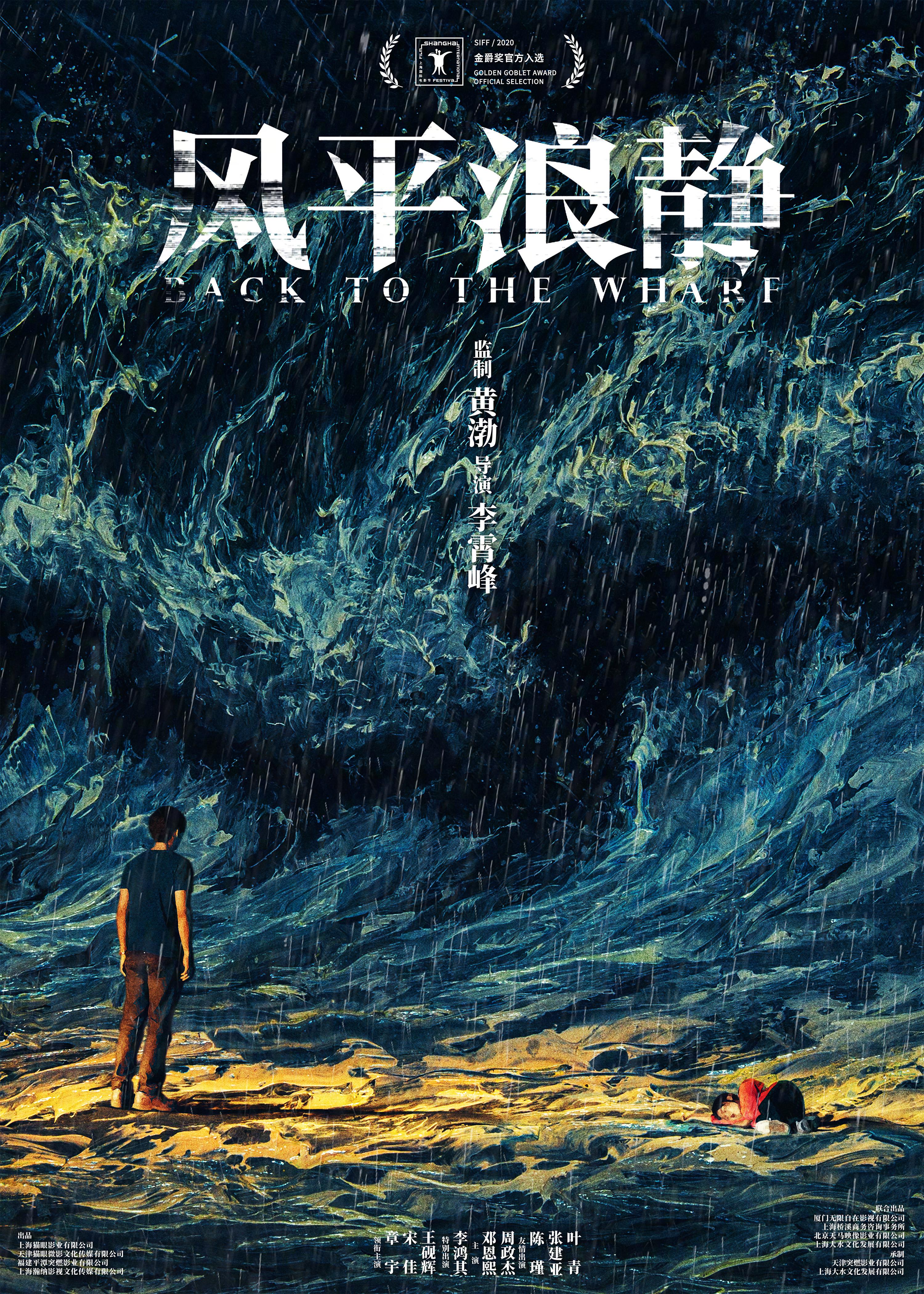
Back to the Wharf (风平浪静, Li Xiaofeng, 2020)

“How dare you want to live when your existence is pointless” a father admonishes his blameless son, deflecting his own willing complicity in the persistent decline of the modern China. Repeatedly abandoned and betrayed firstly by his society, then by his friend, and finally by his father, the hero of Li Xiaofeng’s moody neo-noir Back to the Wharf (风平浪静, Fēngpínglàngjìng) first chooses self-exile only to eventually return and wonder if his crime has been forgotten allowing him to live again before discovering that nothing really changes, there is no escape from the whims of the rich and powerful in an increasingly feudal society. 

Quiet and studious, Song Hao (at 17: Zhou Zhengjie / at 32: Zhang Yu) first wakes up to life’s unfairness in 1992 when he’s called into school on a holiday by his headmaster who breaks the news that he’s losing his guaranteed university place supposedly because his grades are good enough to get there on his own and others need it more. “I like to prioritise the collective over the individual” he explains, reminding him that an extra person from the school going to a top uni can only be a good thing though it’s obviously a blow to Hao not to mention his ambitious father Jianfei (Wang Yanhui) who immediately rings up to complain and discovers that the place is going not to a needy student but Hao’s best friend Li Tang (Lee Hong-chi), son of the local mayor. Angry and confused, father and son set off on circular journeys to confront their respective counterparts, but there’s a storm raging and Hao accidentally wanders into the wrong house after noticing the door flapping in the wind. After walking past a baby sleeping upstairs he runs into an old man who mistakes him for someone else and soon lashes out, shoving fruit into his mouth and trying to suffocate him at which point Hao picks up a knife and stabs his attacker in the belly. Taking flight in terror Hao believes he has just killed a man and orphaned a little girl, never knowing that his father arrived a few minutes later and finished the old man off to stop him talking or that Li Tang was watching the whole thing from a window in the opposite building. 

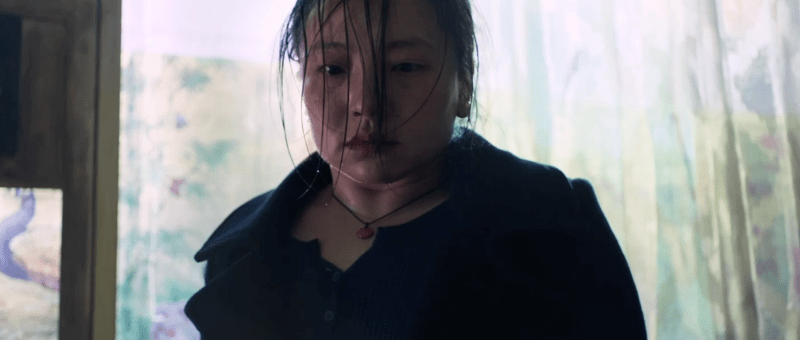
Returning 15 years later for his mother’s funeral, it’s Li Tang who is most pleased to see Hao when he runs into him by chance at the ruins of the scene of his crime now a future development site for the young real estate tycoon, that is if the now young woman (Den Enxi) the orphaned baby has become whom Hao had been following out of guilt-ridden curiosity would agree to vacate her family property. While Hao has been languishing as a lonely construction worker, Tang has prospered off the back of the 90s economic boom largely thanks to an entrenched network of local corruption that runs from his father the mayor through Hao’s father Jianfei who was handed a fat promotion presumably to placate him over the uni places scandal. Tang has, in a sense, stolen his future leaving him quite literally displaced wandering in the ruined landscape of a haunted past while his father, he discovers, had divorced his mother and remarried in order to have another son. “Your upbringing was a failure” he cooly explains, he needed another male heir to salvage the family reputation and restore his name. Jianfei has, however, done pretty well out of the arrangement now a wealthy man with a separate apartment Hao is not welcome to visit but planning to send his wife and child abroad and retire to Australia. 

Intending to leave as soon as possible, Hao nevertheless starts to wonder if it hasn’t blown over and he might in a sense be allowed to seek happiness, bamboozled into a romance with an old school friend (Song Jia) apparently carrying a torch for him all this time. The past, however, will not let him go. The corruption runs deeper than he even suspected as does Li Tang’s insecure greed and duplicity, attempting to force friendship through blackmail. An embodiment of post-70s fuerdai Li Tang is an amoral capitalist willing to do anything it takes in pursuit of wealth, but at heart a coward ashamed that he owes everything to his father’s machinations and perhaps projecting all of his resentment onto his old friend Hao whose future he so casually stole.   

Yet the message seems clear, men like Hao will always be at the mercy of men like Tang. Perhaps this is the bargain his father has made, but it’s one that Hao can no longer tolerate once Tang forces him to destroy the roots of his redemption. The only sane response to the madness of the modern China, he seems to say, is to go mad in one way or another. Even so, this being a Mainland movie, the nihilistic fatalism of the inevitable conclusion is somewhat undermined by the brief coda in which a policeman reassures a young woman that the crime has been investigated and the wrongdoers punished while the now familiar title card explains to us who went to prison and for how long for their many and various moral transgressions. Hao’s existence is rendered “pointless” because he is unable to live by the rules of a corrupt society, yet his self-destructive act of rebellion does perhaps bring about change if only in the names involved. Beautifully shot with brief flashes of expressionism amid the rain drenched streets of a decaying city to the melancholy strains of a noirish jazz score, Li’s fatalistic takedown of the inequalities of the post-90s society is an exercise in style but one which lets few off the hook as its nihilistic conclusion stabs right at the heart of patriarchal corruption. 


Back to the Wharf streamed as part of the Glasgow Film Festival.

Original trailer (simplified Chinese subtitles only)