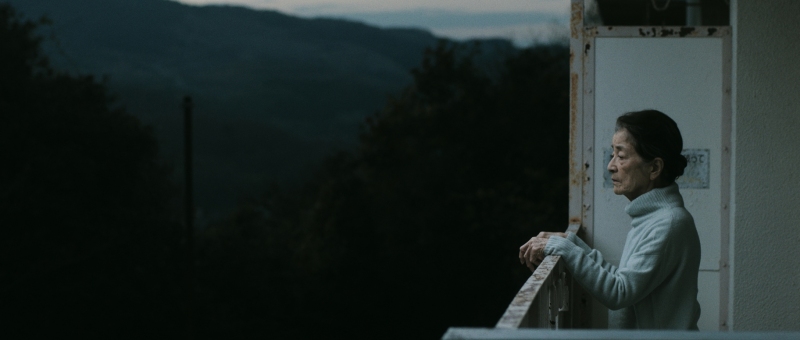
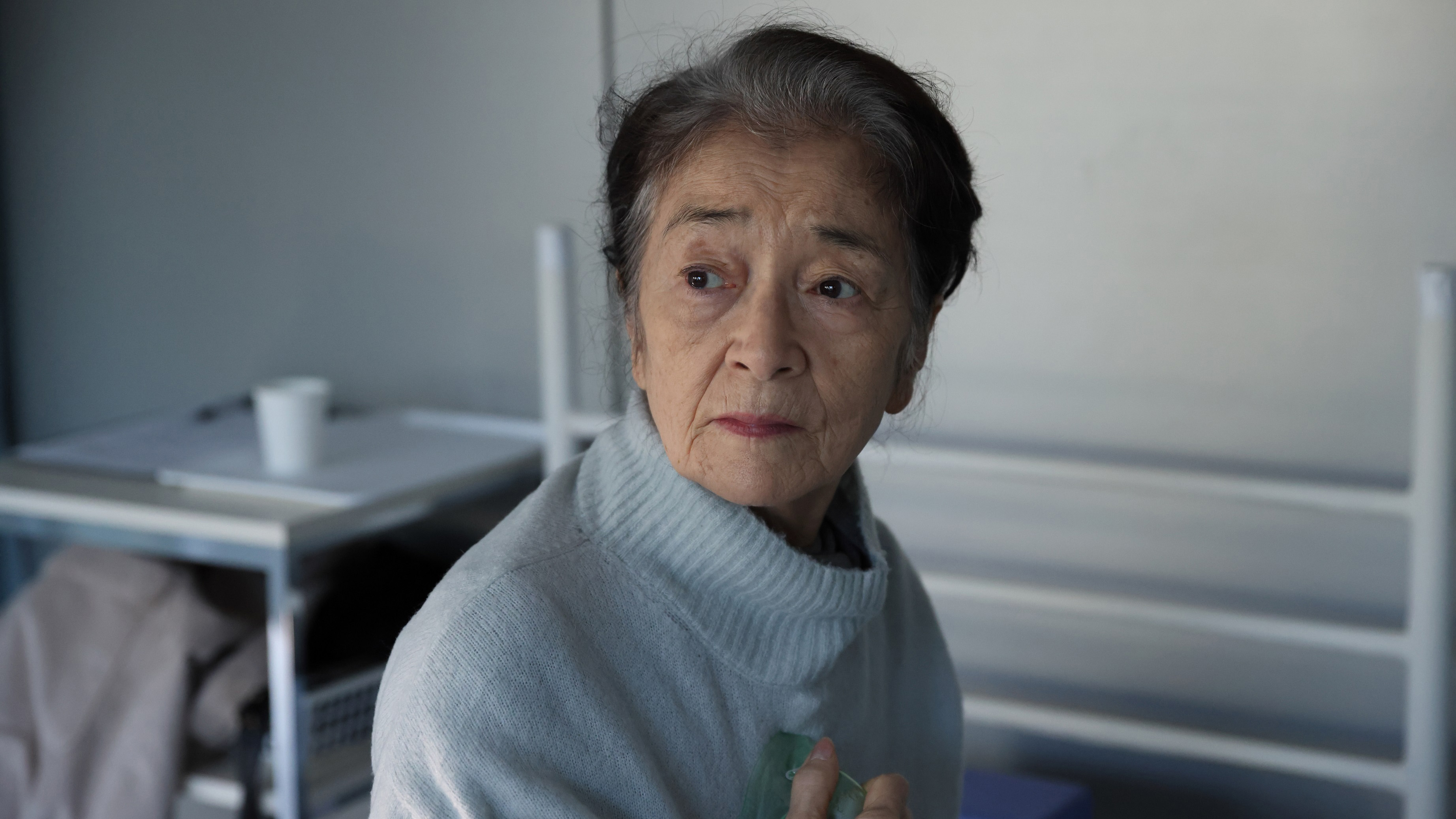
With Plan 75 about to open in US cinemas, we sat down with director Chie Hayakawa to discuss her thoughts on the implications of her dystopian festival hit.
So I thought maybe we could start with talking a little about your path into filmmaking?
Chie Hayakawa: I studied photography in New York in art college. And then I was thinking about studying filmmaking in Japan or working as an assistant director on set after graduating college in New York but then I found out that I was pregnant so I had to change my life plan although I really wanted to get into the film industry. Becoming a film director was my lifelong dream since I was 13 years old, but I couldn’t really spend time on it in my 20s and early 30s. After giving birth to two kids and raising them in New York I came back to Japan and started working at a broadcasting company but I still wanted to make a film so I went to film school at night for a year while still doing my full-time job. My thesis film got into Cinéfondation in Cannes in 2014. That opened up doors for me to get into the film industry. Then I got to work on one of the segments of Ten Years Japan in 2018. I quit my job and became a full-time director.
So you got the job on Ten Years Japan through the short film that got into Cannes?
Yes. It was a student film called Niagra that got into the student section in Cannes. Until then I didn’t know anyone in the film industry but after going to Cannes I started meeting producers and taking part in filmmakers workshops so gradually I got to know people and I met this producer who was working for Ten Years Japan. She asked me if I wanted to apply for a closed competition for young directors to come up with a story for the anthology. At the time I already had the concept of Plan 75 as a feature film, but I thought it fit the concept of Ten Years Japan because it’s a story about the future of Japan after 10 years so I decided to make a shorter version first as a kind of pilot.
One I thing I noticed is that the short and feature end in quite similar ways with the civil servant who’s been working for Plan 75 but is conflicted stands with his family looking out at the plot where his house will be while all this bright sunshine is coming towards him, and at the end of Plan 75 Michi also has bright sunshine coming towards her, but the kinds of “hope” they’re finding are very different. Was that something you reflected on when you were making the film?
Yes, in the short version it’s not really a “hopeful” ending because he knows his guilt. His family looks happy from the outside but both of them know what they’ve done to the mother so have to live with the guilt for the rest of their lives. It’s kind of a dark ending because they’re the only ones who know what they’ve done. The emptiness of the place is a kind of symbol or a trace of the people who left there, maybe they went to Plan75 to make space for the younger people to take over. So the ending of the short version is very dark.
But in the feature film with Michi looking at the sunrise it’s not exactly a “happy” ending because Plan75 will keep existing. One small hope is the fact that Michi chose to live by herself, she made the choice. That’s the kind of hope that I wanted to convey. She found the beauty of life by watching the sunrise and decided to continue to live. It’s not because she was scared of being dead, but she’s upset about the inhuman way people have to die in that facility because she witnessed the old man dying alone without dignity. She got really upset watching it and realised this isn’t the right thing for people to do. So that kind of anger made her change her mind. She’s strong willed and decides what she wants based on what she wants to do . That’s a big change for her because before she only thought about others, she didn’t want to be a burden to anyone. She changes her attitude at the end so the ending is more hopeful than in the shorter version.
When you were in the process of expanding the short into a feature, what led you to switch the main focus from a young man to an elderly woman?
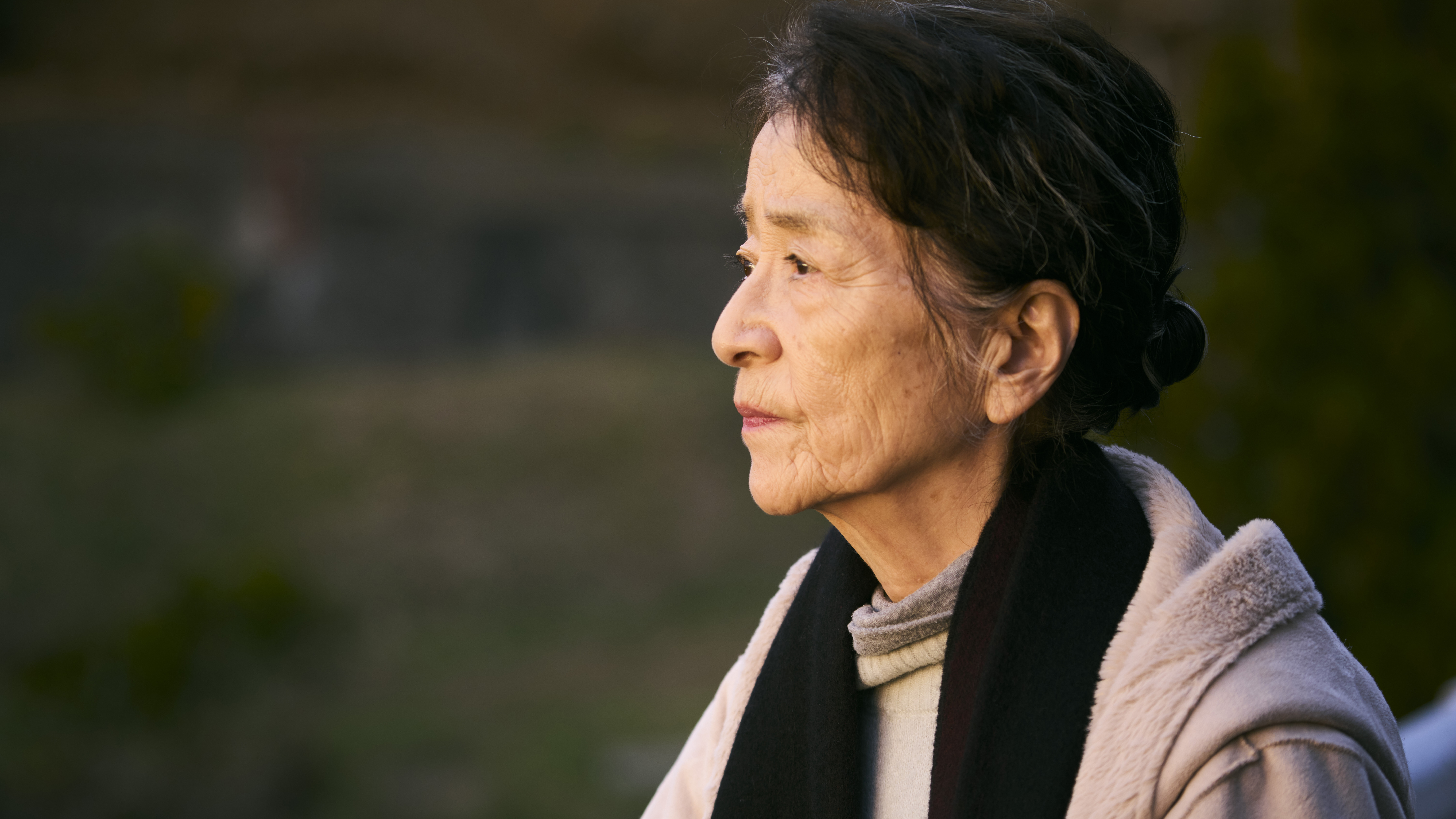
Actually I had five main characters when I first thought about the film. But when I had to make the short version first I thought five was too much, so I focussed on one person, the salesman. Then when I expanded to feature I narrowed down to three main characters. Michi was already in my mind when I first made the short version.
Obviously Chieko Baisho is a fantastically famous actress in Japan and very much loved, did you always have her in mind for the role? What was it like working with her, how did she come to be involved with the project?
The protagonist’s experience is so harsh and the story is very dark but I didn’t want her to look miserable. I wanted her to seem strong in her spirit even though she is in a difficult situation so the audience would feel more compassion for her. They will naturally feel that they don’t want her to die so I wanted someone who could make this role believable as an old lady who still has a job at the age of 78. A lot of the actresses in that age group in Japan look beautiful, like movie stars, but Chieko Baisho is an actress who can play ordinary people. She can play believable characters so I immediately thought of her as someone who could play this role but she’s a legendary actress in Japan and I’m a first time director. It’s not all that likely that such a well-known actress will star in an indie film for a new director, but she read the script and said she wanted to meet the director before deciding whether to accept the role or not. We had a meeting and I explained to her the concept and why I wanted to make this film along with who Michi is. We had a really nice conversation. She said it’s also good for me as a director to know about her current physical condition and that’s why she wanted us to meet. She’s very professional and she knows what’s best for the film. I was really amazed by how she is still so professionally generous. Then a few days later she accepted the role so that’s how she became involved with the project.
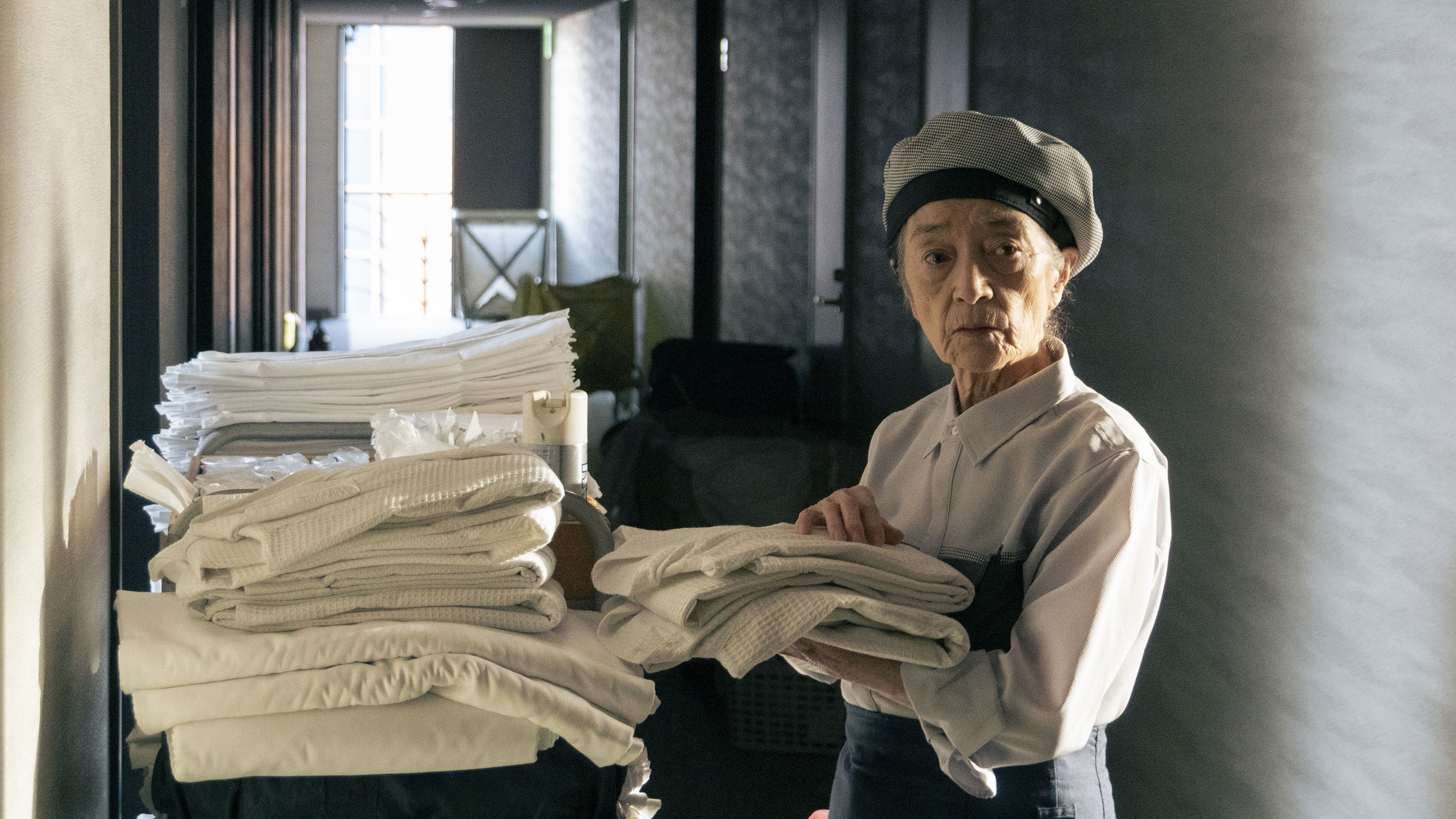
I thought that was something that was very interesting, that you deliberately chose someone who absolutely wasn’t the kind of person that Plan 75 was targeting. When Michi’s let go from the hotel she loses not only a means of supporting herself but her social outlet as well. I wondered if you could talk a little about the contradictory ways in which older people viewed, on the one hand regarded as a “drain on resources” but on the other people don’t like to see them employed at such a late stage of their lives?
Yes it’s contradictory. The attitude is changing compared to when I was a child. Back then we showed more respect towards the elderly and people thought living long was a good thing. But these days many people including the elderly themselves feel that being old could be a burden to society so it’s more difficult emotionally for the elderly to live. They’re really afraid of becoming a burden to others or to their family. In the old days it was natural that everyone take care of the elderly so they still have a degree of mixed feelings. That’s why some people say that the elderly shouldn’t work at that age but in this film I wanted to put that element in a sarcastic way. People may say that they feel compassion to the elderly, they feel sorry them that they have to work, but there’s some people that cannot stop working because they don’t have enough pension or any family so need to support themselves. So what I wanted to show is that many people lack the imagination to understand other people’s situation.
When you think of it that way, something like Plan 75 seems like an inevitable conclusion in a society in which social worth is only defined by “productivity” where people who aren’t seen as “contributing” are excluded from the system entirely, either just abandoned or actively eliminated. We see Hiromu trying out devices to keep homeless people from sleeping on park benches and there’s a poster later on that says you don’t even need a fixed address to apply for Plan 75. Do you think we’re already moving more quickly towards the sort of world where something like Plan75 becomes a possibility than most people would like to think?
I think so. The things Hiromu was trying out on the public bench have been in use in Japan for more than 20 years. When I came back from the States, I was so surprised when I noticed them. It was so obvious that they wanted to get rid of the homeless people. What scared me is the people actually making things like that don’t feel guilty about what they’re doing. They’re doing it because it’s their job. That kind of insensitivity and lack of imagination are likely to create a system like Plan 75. That kind of atmosphere already exists in Japanese society.
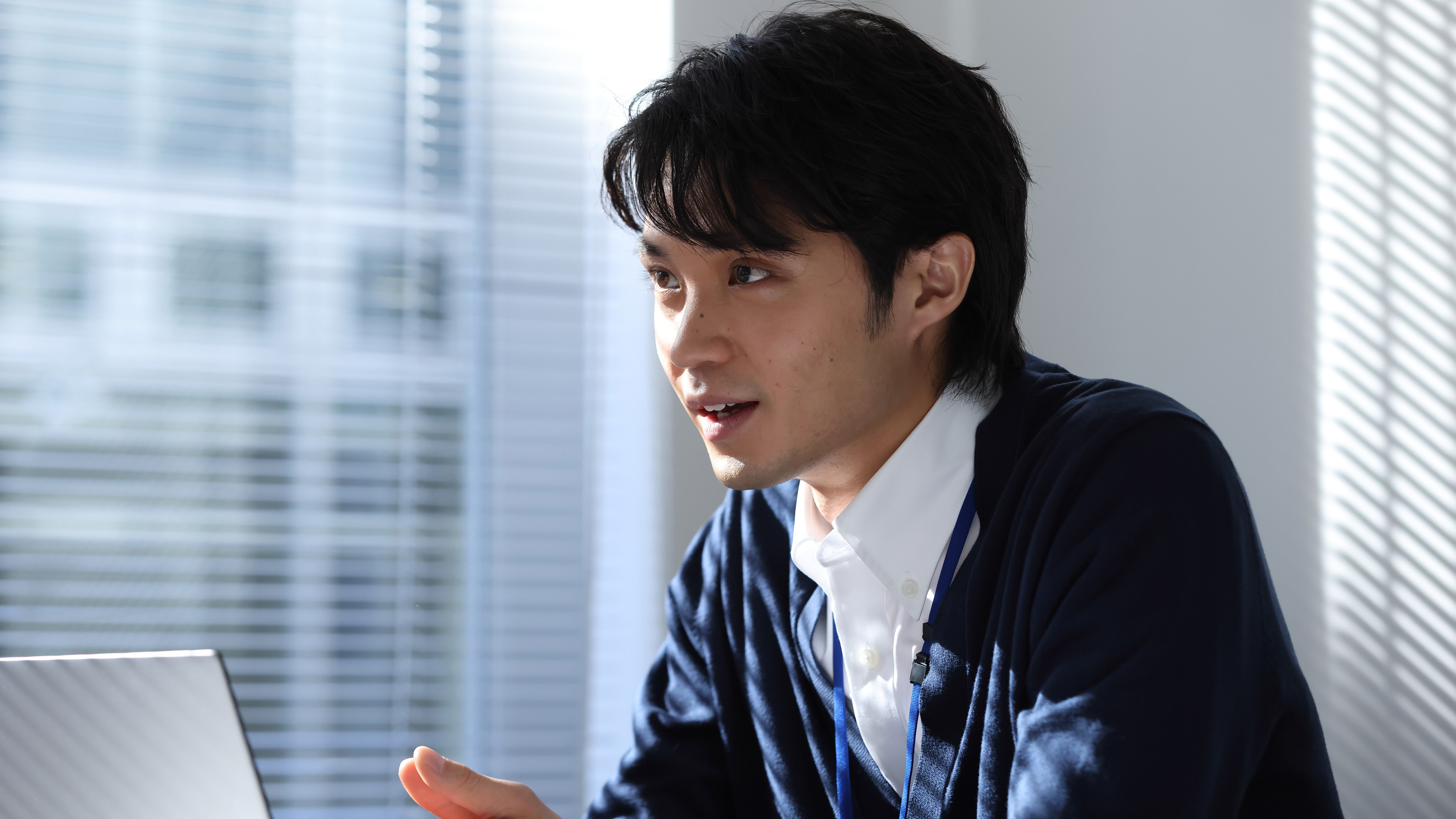
The film opened with a reference to a real life event in which a young man went on a mass killing spree against disabled people and said that it was for the “social good” because he thought they were a “drain on society”, but obviously when that happened in reality it was rightly condemned straight away. I just wondered why in the film the government decides to listen to the killer and introduce legislation that’s in line with what he was asking for?
It’s not so much that the government listens to what he says, they use the incident to make people understand and accept this kind of system. The government would say that this kind of incident or violent act should be prevented by having a system like this. What the killer does and Plan 75 look very different, in general, but when you look carefully what they said under this concept it’s exactly the same. But people tend to forget, or cannot see the truth or realise what’s going on. So the government uses that situation and says we should prevent such violence towards the elderly by creating this kind of system. It could solve the situation. That’s what they will say.
It’s quite interesting too that the the man who commits the crime channels all of his resentment towards “the elderly” without challenging the government or the social system. Could you talk a little about why you think that might be?
Yes it actually happened in real life. There’s a growing hatred towards the elderly from the other generations because they think they are paying more money for tax to support the great amount of elderly and also the media and television fuel the anxiety of people about being old. So somehow the hatred, anger, and anxiety towards the social system is directed towards the elderly not to the government. That’s a very strange phenomena, I feel. Young people’s anger tends to go directly to the elderly in real life.
Plan 75 must be very expensive to run. The government has all these resources geared towards helping people to die but they aren’t really prepared to use them to help people live. There’s a particularly irony there in the case of Hiromu’s uncle who couldn’t really have a family life of his own because he was living this very nomadic lifestyle travelling all over Japan working on various construction projects in the post-war era, but he feels abandoned by the society that he helped rebuild and enrols in Plan 75 on his 75th birthday. Hiromu’s boss thinks that’s a very “noble” thing for him to have done, but I was wondering how you see it?
Especially the older generation have the strong mind for contribution to the country and people died for the nation during the war. Devoting their lives to the emperor and the country was a virtue. Hiromu’s uncle was a close generation to these people so he naturally feels that he wants to contribute to society, that’s why he’s been giving blood donations and he’s very proud of having helped to rebuild the country by working in construction. He has a lot of pride in his contribution and in being beneficial to the country. For him using Plan 75 is another form of contribution. So that’s why I wanted to have that particular character.

Plan 75 has quite an insidious quality in that it’s framed as a voluntary programme but there’s a huge amount of social pressure to participate. The money they give the applicants is not a large enough amount to act as an enticement, but taking it makes it much harder psychologically to change your mind, while the call centre system leverages a sense of loneliness among the older generation but the call centre staff are told not to get too close in case the elderly person begins to feel more connected to life and decides to drop out. How do the elderly people themselves react, do a lot of them feel the same as Hiromu’s uncle that its good and noble to sacrifice themselves for the younger generation or are there some like the old man who angrily shuts the the television showing the Plan 75 ad down who might feel privately resentful?
There are several kinds of people. Maybe some will feel very upset about Plan 75 and being treated like a burden on society although they are the generation who built the Japanese economy, and also the people who recognise how inhuman the system is. And on the other hand there is a certain group of people who are willing to sacrifice themselves for the younger generation and the society. They want to feel useful and be nice people for them. And then there’s another group of people who think about themselves. When they think about being old, they are very scared about being in trouble if they get sick, or they get dementia or become a burden to their family or don’t have enough money to live, if they live alone in an apartment who is going to find them if they die? They have a lot of anxiety so they like the idea of Plan 75 to have that option for their own security. it doesn’t mean that they want to get rid of elderly people, they just want to have that option for themselves. So there are many layers of people who feel differently about this system, that’s why it’s so complicated.
In some ways Hiromu’s just doing his job and it doesn’t occur to him what the implications are, and the same for the call centre assistant Yoko. They don’t give it a lot more thought than that until they interact with someone more personally. Do you think something like Plan 75 is only really a possibility because society has already become very disconnected?
Yes, it’s one of the reasons that a system like Plan 75 is easily accepted and a lot of people demand to have it. One of the problems here is the lack of compassion for others. If Hiromu or Yoko could imagine what would happen to these old people after they step out from the office they wouldn’t be able to keep doing their jobs. And also the people, not only the people working in the system, but also the people who accept it including me and the audience, they are just too ignorant or too insensitive or too apathetic to what’s happening in the society and what the government is trying do. We have to be more keen to what’s going on in society.
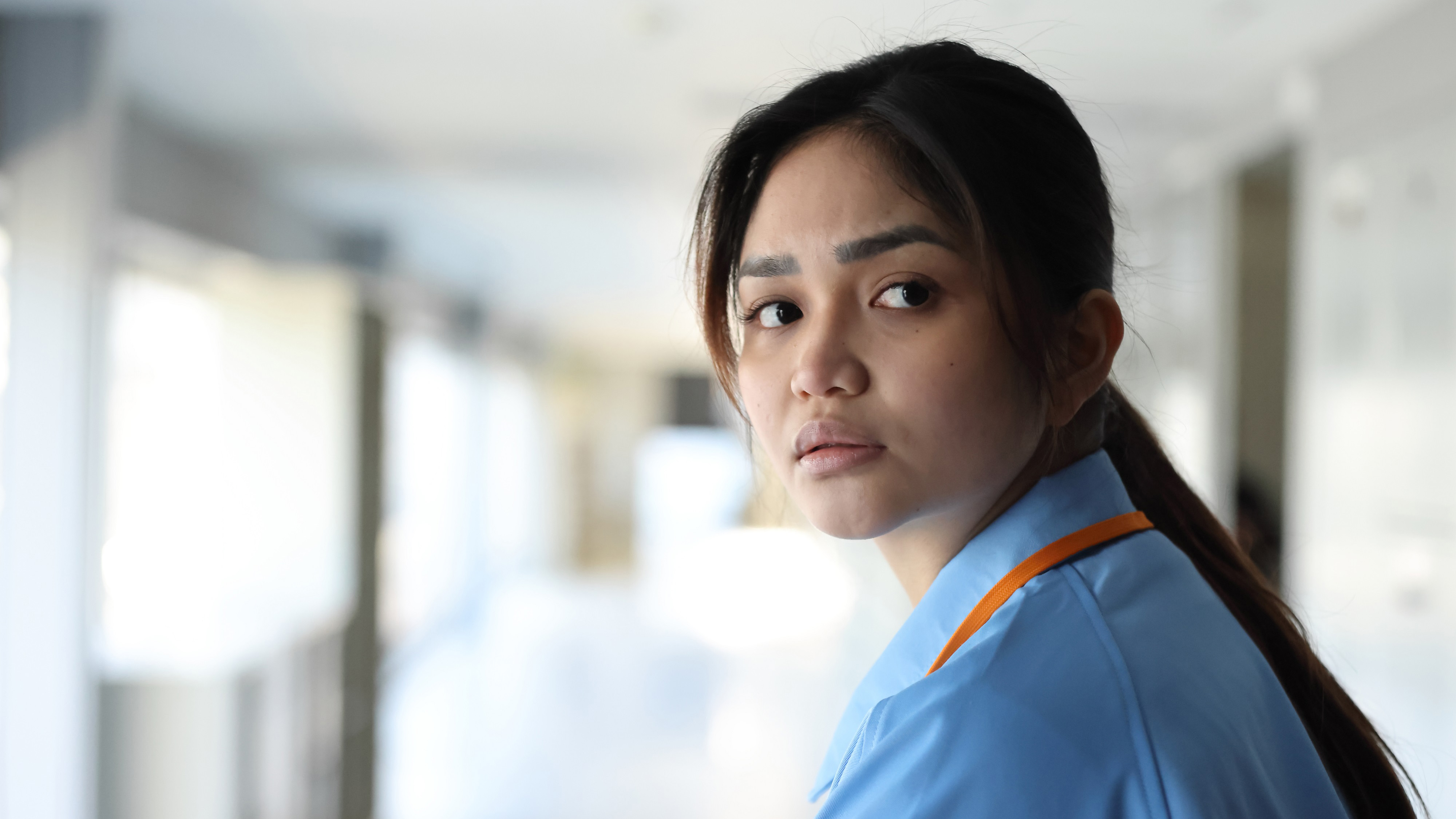
There’s quite a strong contrast there as well with the Filipina careworker who even after she’s come to Japan has a very warm community around her who are very willing to help, but at the same time because she’s living overseas she isn’t able to care for her own family and with so many healthcare workers travelling abroad where the wages are higher it means there are fewer resources available in the Philippines. I was wondering if you could talk a little about the contrast between the two cultures?
Yes, the reason I wanted to have Maria’s character as a Filipina is because I think Filipino people have a strong bond between the community and family. I heard that they don’t really have old people’s homes in the Philippines because it’s common that the family take care of the elderly. If someone needs help, everyone like family and friends tries to help them without any hesitation. But in Japan we tend to hesitate to ask for help because we don’t want to be a burden to others. There’s a very strong pressure or psychological characteristic of Japanese people and we’re losing a community bond. More and more people are becoming apathetic to others so I wanted to make that contrast between Japanese people and Filipino people. Filipino people in Japan even though they’re living in a foreign country they have a strong bond and make a community, they go to church and they try to help each other even though they’re not family. So that’s why I wanted to have Maria’s character, and also Maria is the only person in this film who acts based on what she believes. Other Japanese characters act based on the rules and what others will think. They try to read the atmosphere and cannot act based on their will. So that’s a big contrast between Filipino and Japanese culture in this film.
The film has been very successful on the festival circuit and has been shown in many different countries, I wondered if you noticed a different reaction in Japan and elsewhere and particularly in the Philippines?
I found a difference in the Philippines compared to other countries. The Philippines is the only place where people said Plan 75 will not happen in our country. That’s what they said, it would never happen. But other countries they said could happen, so I was surprised and happy to hear the Philippine people say that. That was very interesting.
You touched on this a little bit before that you wanted the feature film to have a more hopeful ending, even though obviously Plan 75 still exists and the society itself hasn’t changed. Will society walk back from Plan 75 or will it continue on the same path to Plan65, Plan55 and so on?
Maybe instead of going down in age to 65 or 60, the government will try to open the gate wider to include disabled people or sick people, the poor in that kind of way. That’s why I made the 75 in the title logo blurred, I wonder if you noticed it? In the opening scene the number in the Plan 75 logo is blurred, it means that it could expand to include other people the government or society feels are “useless”, or “unproductive”.
It looks like we’re getting to the end of our time so I’ll just ask one final question. Are you working on something else right now, what are you up to next?
Yes I’m working on my next film. Because Plan 75 is kind of an issue-driven film I wanted to make something really different next. So I’m working on the story of a teenage girl. It’s a kind of coming of age story based on my personal childhood experiences about a girl who makes a promise to her dying father.
Plan 75 opens in New York on April 21 with director Chie Hayakawa in attendance for a series of post-screening Q&As at IFC Center April 21 – 23. The film will also open in LA on May 5 with a wider US release to follow courtesy of KimStim.


 Windows on Worlds